

Bananas grow quickly in warm Australian gardens and can produce heavy bunches when they have enough sun, water and food. A banana clump renews itself from the underground corm. Each pseudostem fruits once and then dies back; selected suckers take over as the next fruiting stems.
Keep the strongest suckers for future crops and remove or propagate the extras where biosecurity rules allow. With that simple cycle in place, one clump can keep producing for years.
- Botanical name: Musa spp.
- Also known as: Banana plant
- Category: Fruit tree
- Lifecycle: Perennial clumping herb; each pseudostem fruits once
- Climates: tropical, subtropical, temperate
- Position: Full sun with good airflow and some shelter from damaging wind.
Quick Facts
- Botanical name: Musa spp. and cultivated hybrids
- Plant type: Giant perennial herb
- Position: Full sun with protection from strong wind
- Soil: Deep, fertile and well drained
- Water: Regular moisture during active growth and fruit development
- Harvest: Cut mature bunches while the fruit is still green
Banana Plants Aren’t Trees
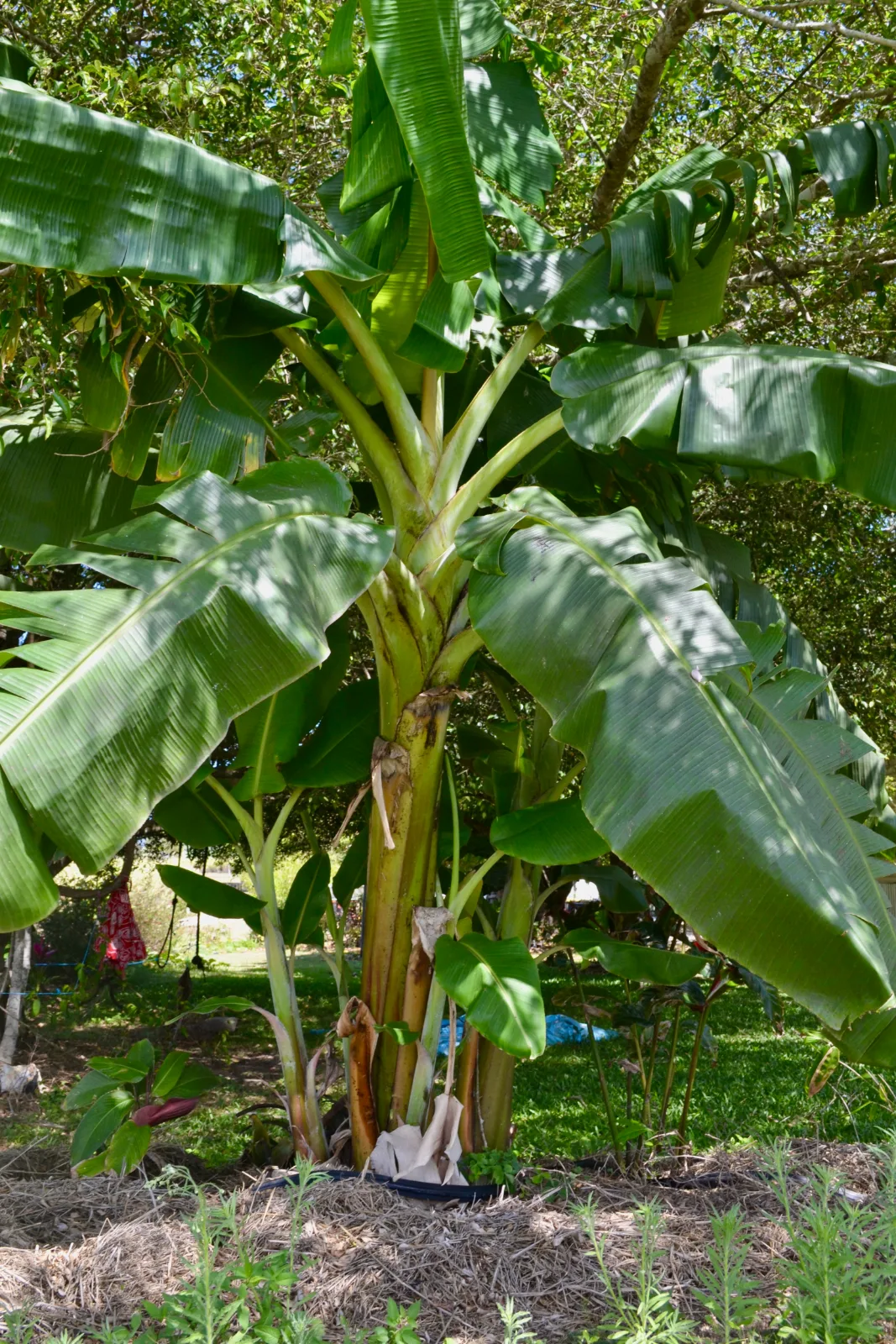
Bananas look like trees, but botanically they are giant herbs.
The upright 'trunk' is a pseudostem made from tightly wrapped leaf bases. Below ground is a corm that produces roots and new suckers.
Each pseudostem flowers and fruits only once. After you harvest the bunch, that stem can be cut down. Another sucker then becomes the main fruiting stem.
This is why sucker management matters. You are managing a clump rather than one permanent trunk.
Where Bananas Grow in Australia
Bananas grow best in tropical and subtropical Australia, but they can also be grown successfully in warm protected positions farther south.
Warm temperatures give you faster leaf growth, earlier flowering and quicker bunch development. Cool weather slows the plant considerably, and frost can damage both leaves and pseudostems.
In temperate areas, use the warmest frost-protected position you have. A north-facing wall, sunny courtyard or sheltered corner can extend the growing season.
Dwarf cultivars are particularly useful in cooler gardens because they are easier to shelter and protect.
Check Banana Biosecurity Rules Before Planting
Bananas are subject to important biosecurity rules in parts of Australia because plants, suckers and soil can spread serious diseases.
These include Panama disease tropical race 4 (TR4), bunchy top, black Sigatoka and banana freckle.
Rules vary between states, territories and biosecurity zones, so check the current requirements for both your location and where the plant is coming from before buying, moving or sharing banana plants.
Use reputable disease-free planting material rather than taking an unknown sucker from another garden.
Soil can also carry banana diseases. Clean tools and equipment before moving them between banana-growing areas, particularly in regulated banana districts.
Choosing a Banana Variety
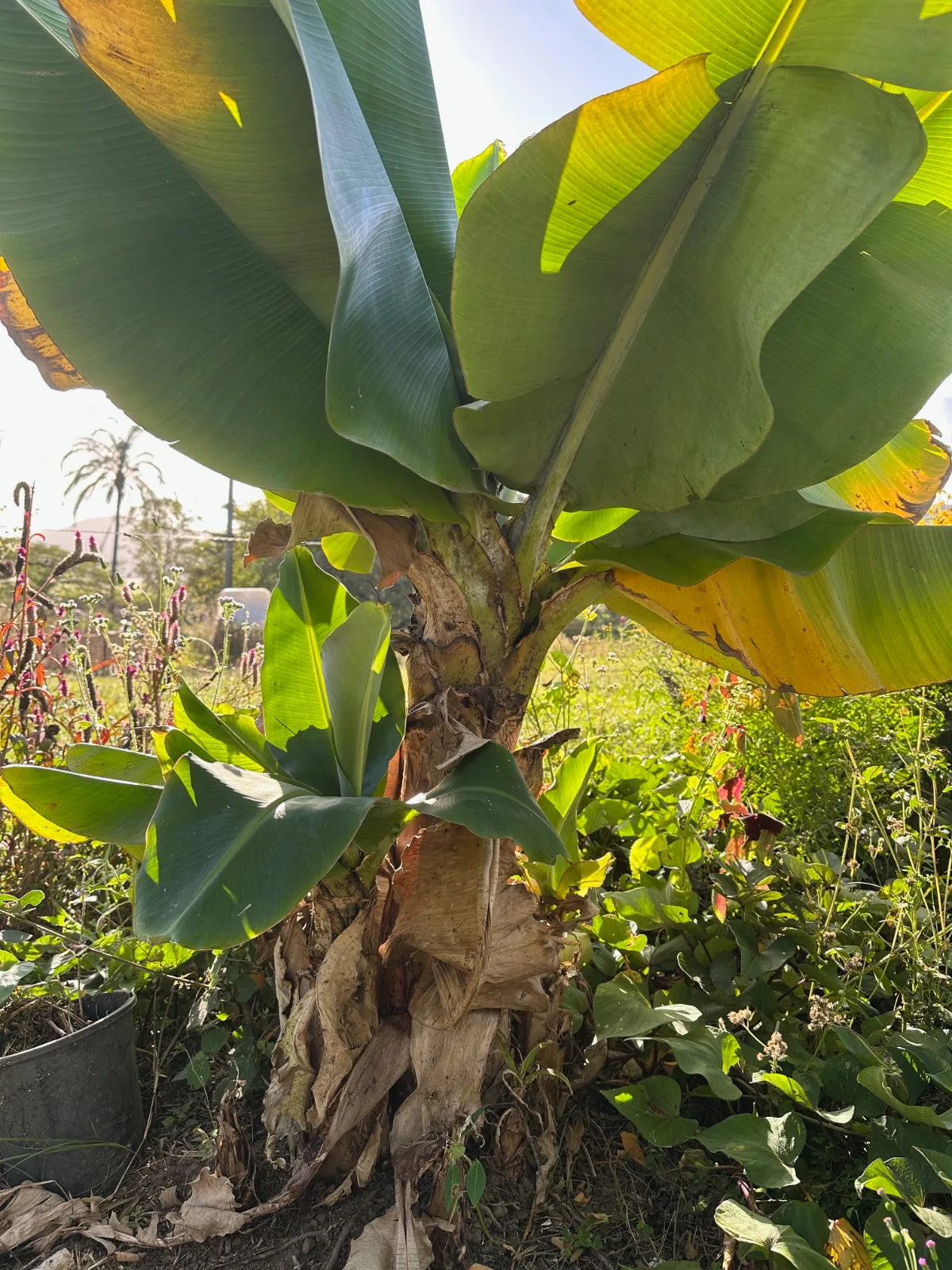
Choose the cultivar for your climate, available space and local biosecurity rules.
Lady Finger is a popular backyard banana with sweet fruit. Ducasse types are another good home-garden option. Cavendish cultivars dominate commercial production, while home growers may also find Blue Java, Pisang types, plantains and other specialty bananas.
Height matters more than it first appears. Large cultivars can become difficult to prop, bag and harvest, particularly beside buildings or in windy areas.
Dwarf cultivars are easier to manage in smaller gardens and containers.
When to Plant Bananas
Plant bananas when the soil is warm and the new plant can establish quickly.
In tropical gardens, warm wet-season conditions can give rapid establishment, provided the site drains well.
In subtropical areas, spring and early summer are good planting times. You can also plant at other warm times of year if you can supply reliable water.
In cooler climates, wait until frost risk has passed and the soil has warmed.
Avoid planting into cold, saturated soil.
How to Plant a Banana
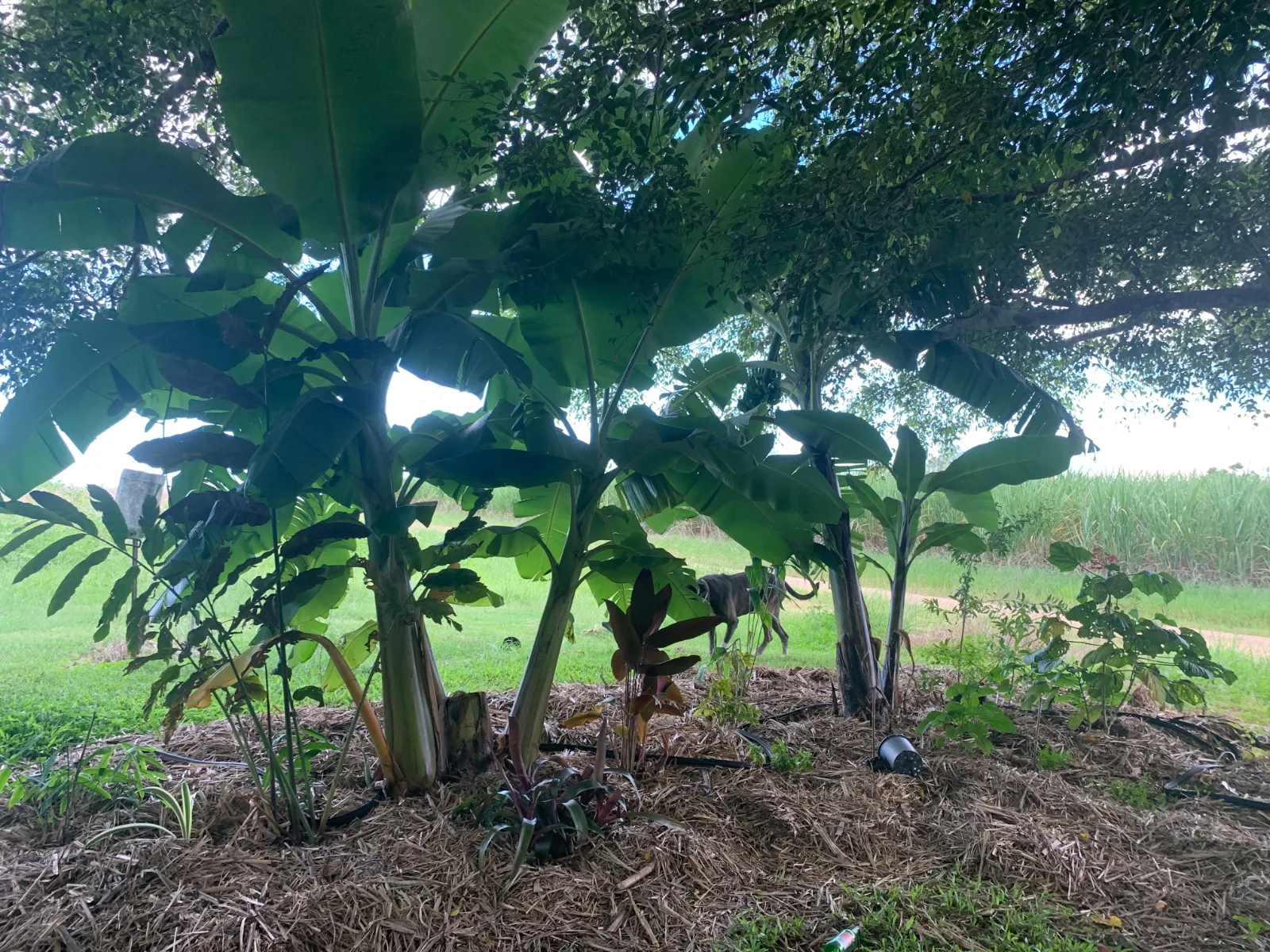
Choose the position before digging because mature banana clumps take up considerably more room than young nursery plants.
Loosen the soil over a broad area rather than digging a narrow deep hole. Mix mature compost or other well-rotted organic matter through poor soil.
On heavy or slow-draining ground, plant on a broad mound or raised area.
Plant at approximately the same depth as the plant was growing in its pot. Firm the soil gently and water thoroughly.
Mulch around the plant to conserve moisture and add organic matter, but leave some space around the base of the pseudostem.
Large banana cultivars may need several metres between clumps. Dwarf cultivars need less room, but still leave enough space to access the plant, manage suckers and harvest the bunch.
Sun and Wind
For reliable fruit production, grow bananas in full sun.
They will tolerate some shade, particularly in hot tropical climates, but heavier shade generally means slower growth and smaller crops.
Wind is often a bigger problem than sun. Banana leaves tear easily, and strong wind can damage or topple a stem carrying a heavy bunch.
Choose a position protected from the strongest prevailing winds while still allowing good airflow.
Some leaf splitting is completely normal. The problem is constant strong wind that repeatedly damages new leaves or pushes over fruiting stems.
Soil
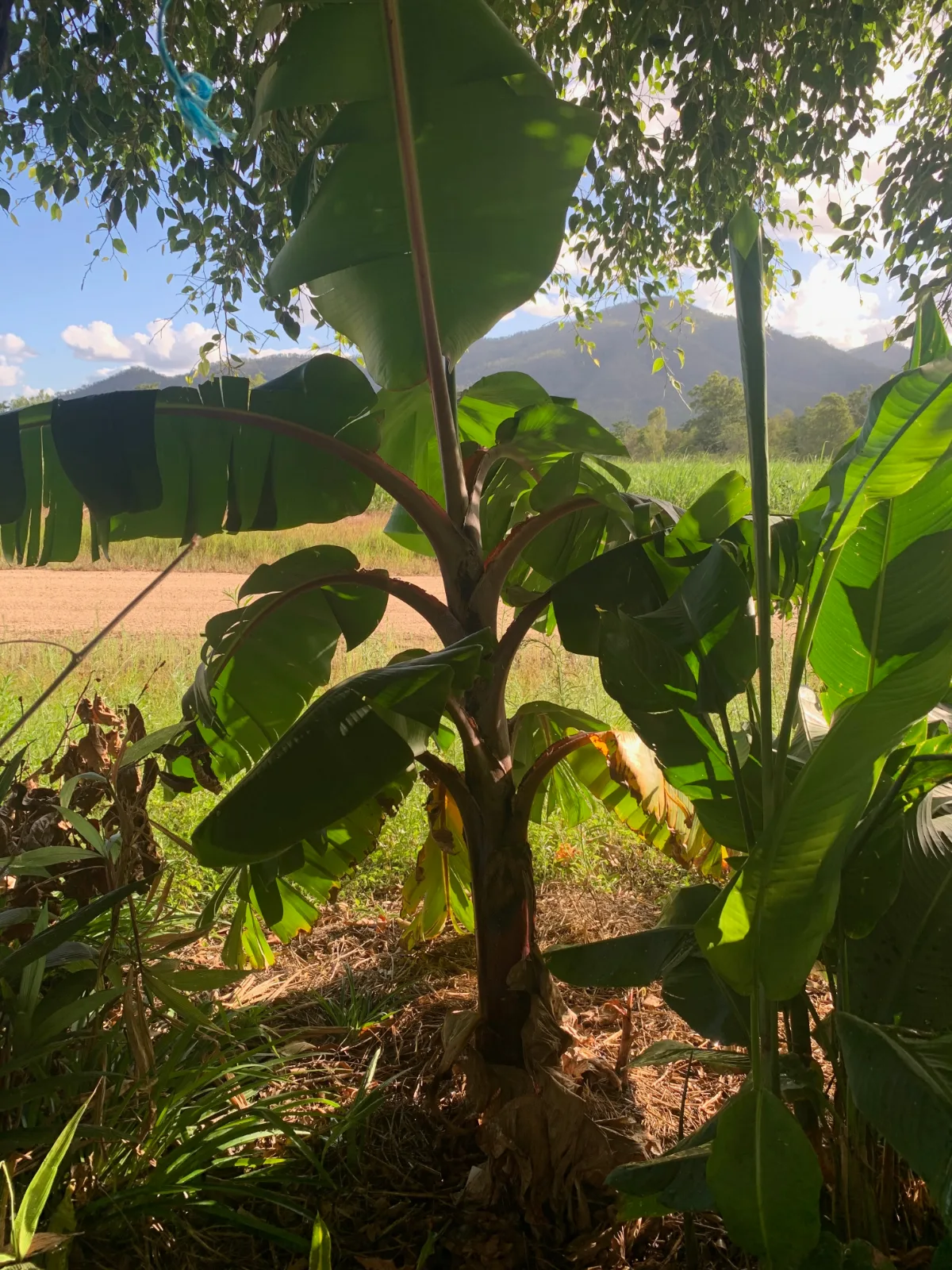
Bananas grow best in deep, fertile soil with plenty of organic matter.
They make a large amount of foliage and fruit, so poor soil quickly limits growth.
Compost, aged manure and other well-rotted organic materials are useful around established plants.
Good drainage is just as important as fertility. Bananas use plenty of water, but roots still need oxygen.
If water remains around the root zone after heavy rain, improve the drainage or raise the planting area.
Watering
Bananas need reliable moisture while they are actively growing.
Water deeply enough to wet the active root zone rather than giving frequent light sprinkles.
Keep a good layer of mulch around the clump to reduce evaporation and buffer soil moisture.
Water becomes particularly important while a bunch is developing. Repeated wilting during this stage can reduce fruit size and slow development.
In tropical wet seasons, natural rainfall may supply more than enough water. Check beneath the mulch before irrigating rather than watering automatically.
Avoid keeping the soil permanently saturated.
Feeding Bananas
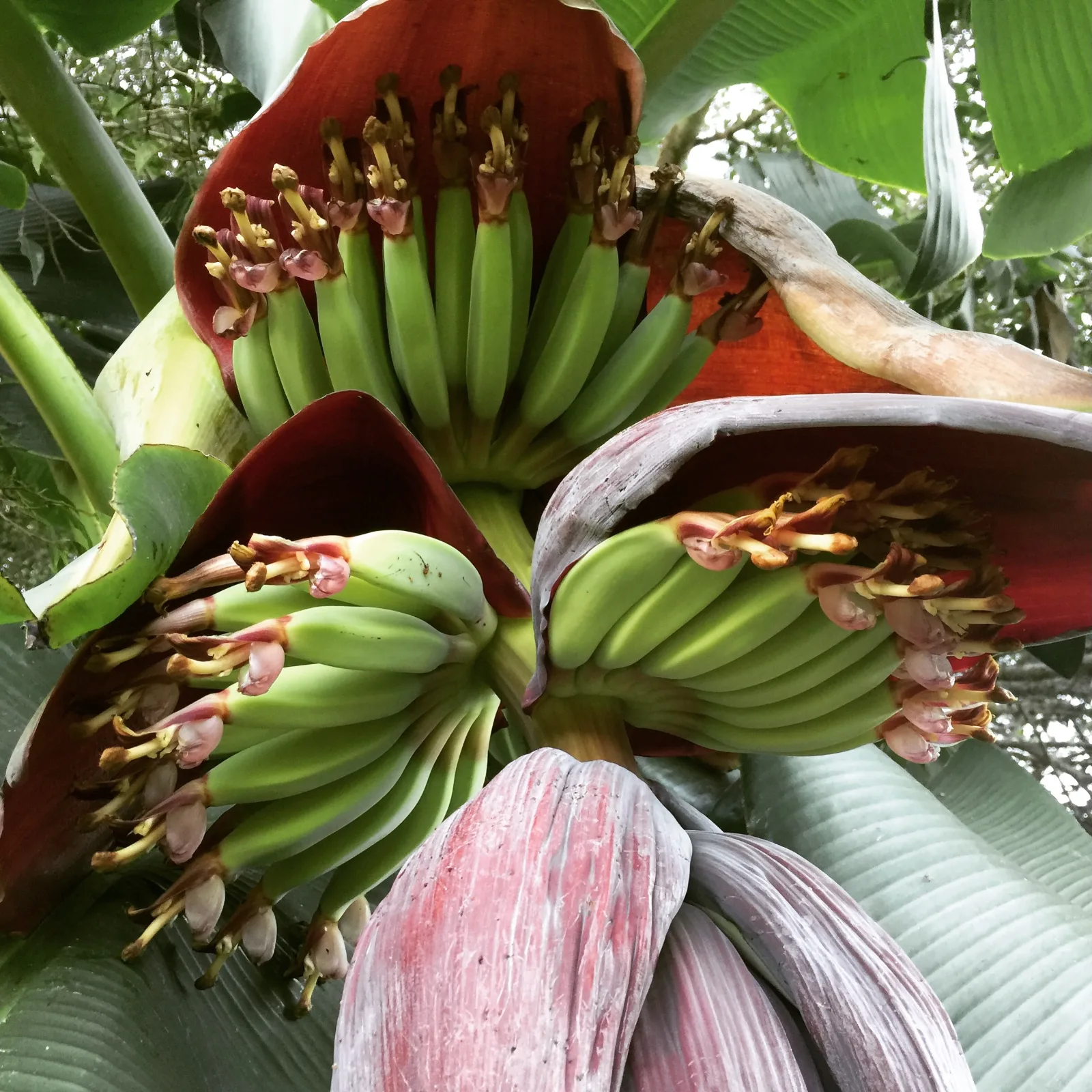
Bananas are heavy feeders.
Regular additions of compost and organic matter help maintain the soil, but productive plants will often benefit from a complete fertiliser during active growth.
Nitrogen supports leaf growth, while potassium is particularly important as the plant approaches flowering and fills a bunch.
Apply fertiliser over the active root area rather than piling it against the pseudostem.
Follow the product rate. More fertiliser does not automatically mean a larger bunch.
Water after feeding if rain is not expected.
Grow a Little Wild
New plants to try, useful growing tips and a few garden jobs based on what you grow.
Managing Banana Suckers
A healthy banana clump will keep producing suckers.
You do not need to destroy every extra sucker — they are useful for maintaining the clump and, where movement rules allow, for propagation. The aim is simply to stop too many large stems competing in the same small space.
A practical fruiting clump usually has:
- one main stem approaching or carrying fruit
- one strong follower
- one younger sucker coming along behind
If there is plenty of room and fertility, you can keep more.
Extra suckers can be removed while small. Where biosecurity rules allow banana plants to be moved, suitable suckers can also be replanted.
A strong sword sucker, with narrow upright leaves when young, generally makes a better future fruiting stem than a weak broad-leaved sucker.
From Flower to Banana Bunch
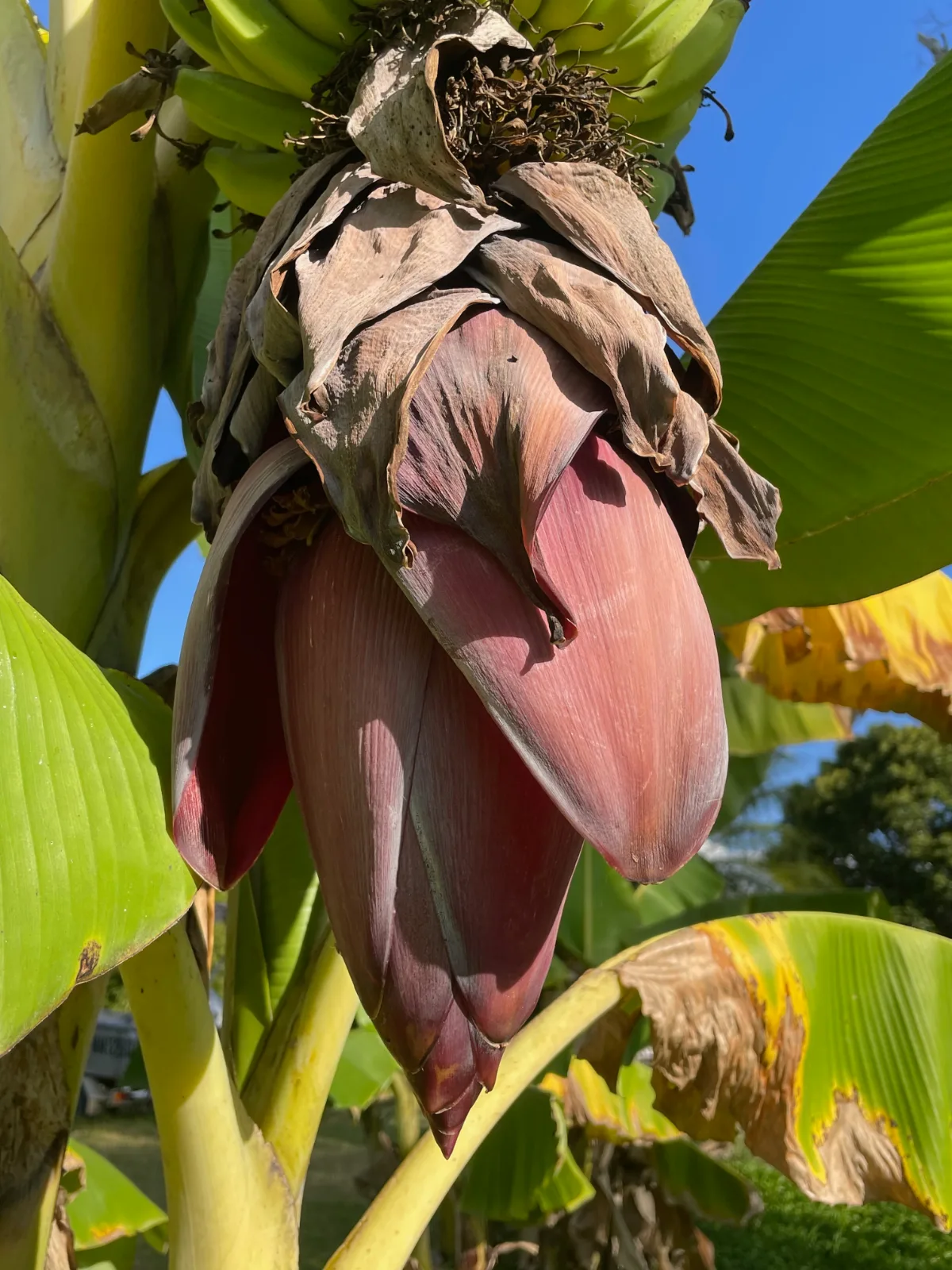
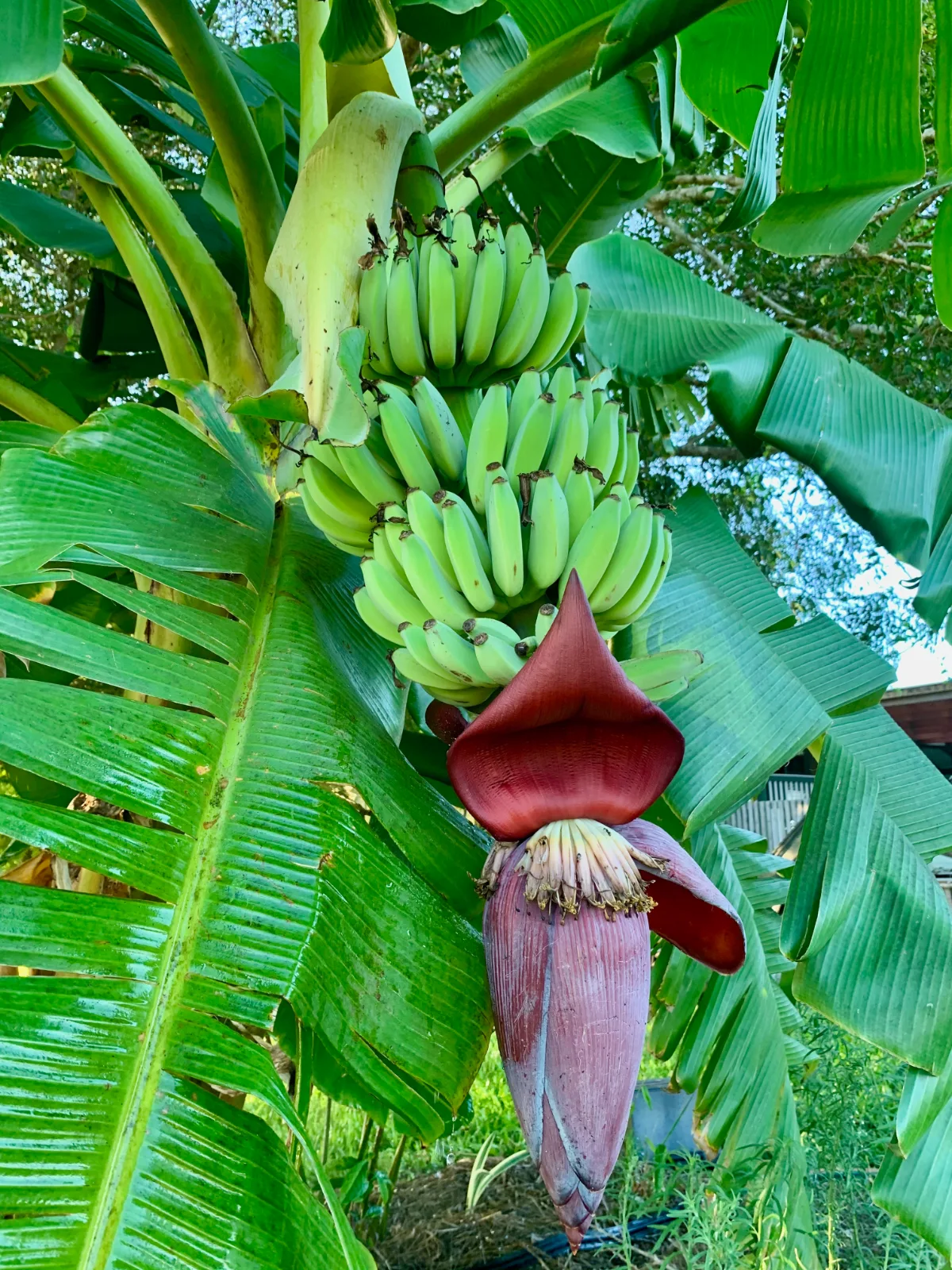
When a pseudostem reaches maturity, the flower stalk grows up through its centre.
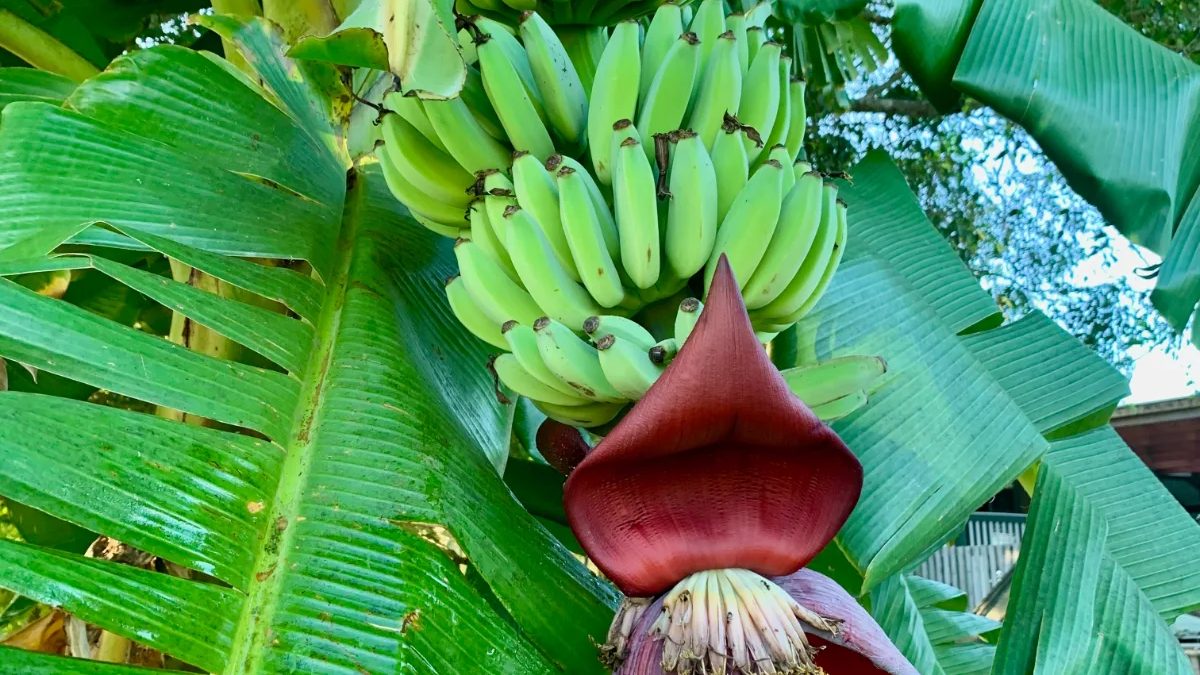
The female flowers develop into the hands of bananas. The purple-red banana bell continues hanging beneath the young bunch.
Once flowering starts, keep water and nutrition steady.
There is plenty of advice about removing the banana bell after the last useful hand has formed. It can be done, but it is not essential for every backyard plant. Local advice on insects and plant diseases may also affect what is recommended in your area.
Supporting a Heavy Bunch
Banana bunches become very heavy.
A fruiting pseudostem may need support, particularly with large cultivars, exposed plants or after heavy rain and wind.
Prop the stem before it starts folding rather than waiting until it is already leaning badly.
Commercial banana props work well, but strong timber or bamboo can also be used if it is secured properly.
Fruit bags can protect developing bananas from rubbing, sun damage and some wildlife or insect damage. Use a breathable banana bunch bag and leave room around the fruit.
Take care when harvesting. A full bunch can weigh far more than expected.
When Are Bananas Ready to Harvest?
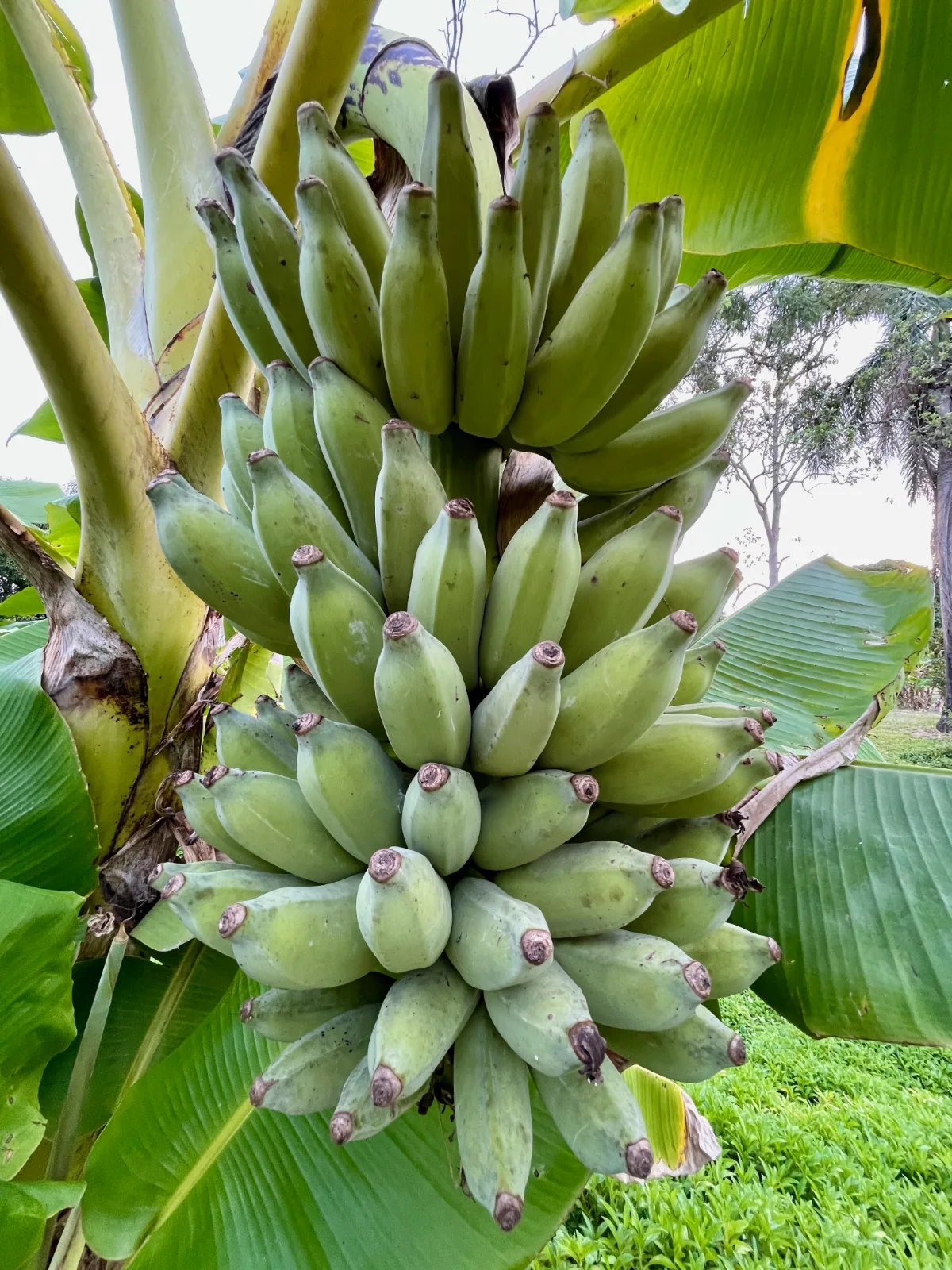
Bananas are usually harvested while they are still green.
Watch the shape of the fruit rather than waiting for yellow colour.
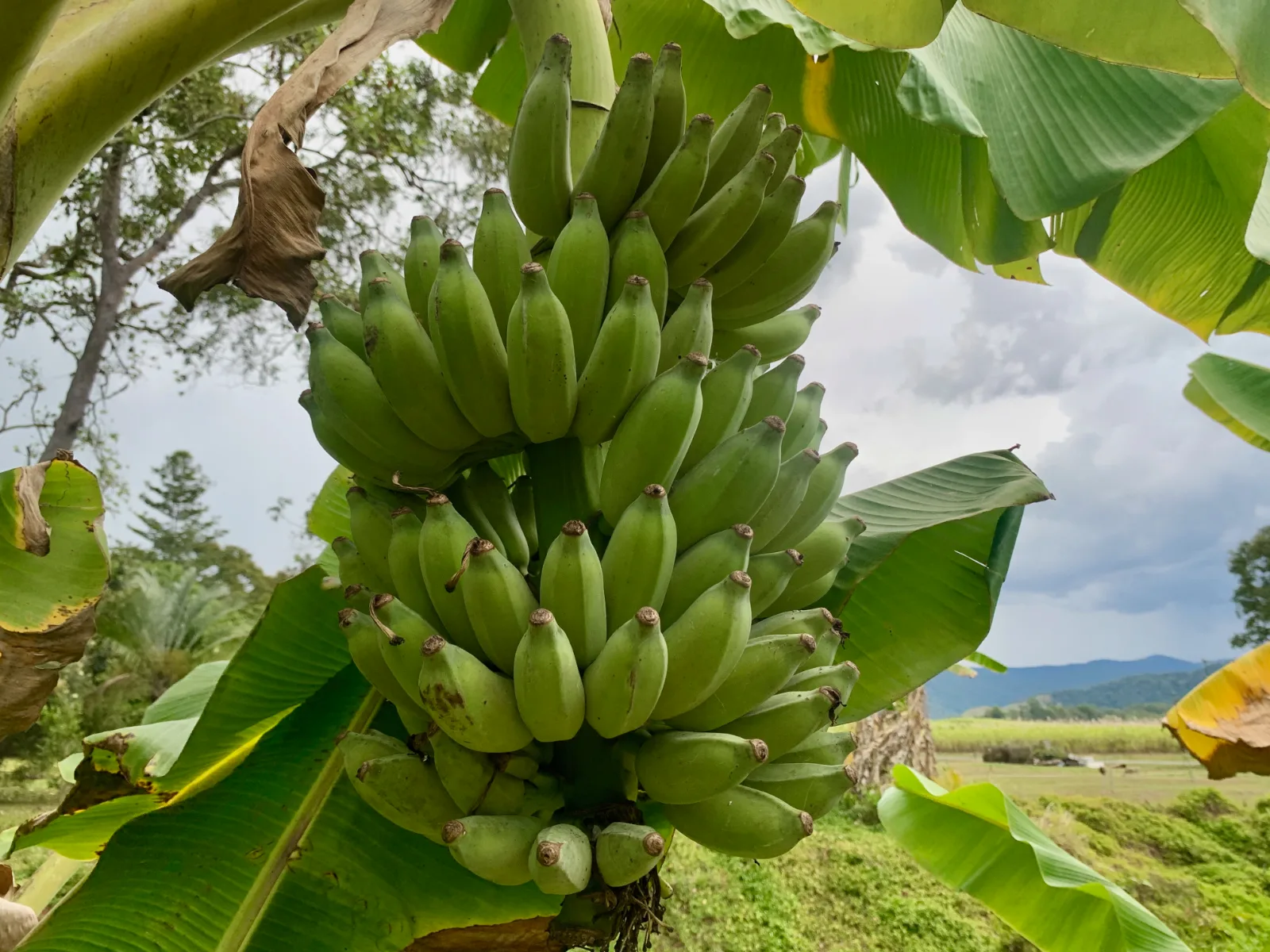
Young bananas have fairly obvious angular sides. As they mature, the fingers become fatter and more rounded.
The dried flower remains at the tips also become easier to rub off as the fruit matures.
If you are uncertain, you can cut one mature hand first and see how well it ripens.
Leaving a mature bunch on the plant for too long increases the chance of fruit splitting, storm damage, wildlife losses or the stem collapsing under the weight.
Ripening Bananas After Harvest
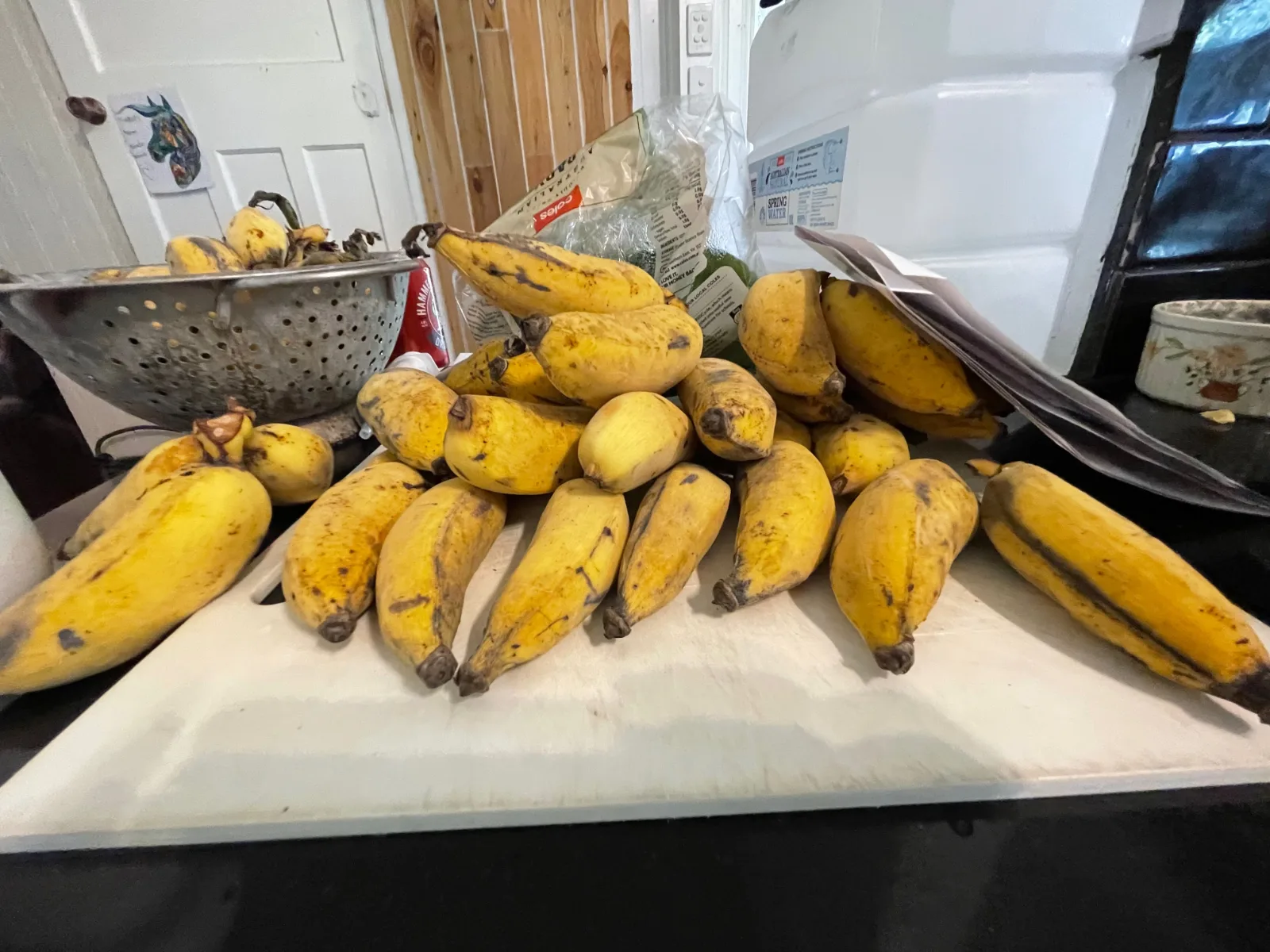
Mature green bananas ripen well after harvest.
You can cut the bunch into individual hands and bring them inside as required.
Leave them at room temperature in a dry, airy position.
A paper bag will speed ripening if you want bananas ready sooner.
Avoid sealing damp fruit in plastic. Damaged or wet bananas can rot quickly.
What to Do After Harvest
Once a pseudostem has fruited, it will never fruit again.
Cut the finished stem down and allow the selected follower to take its place.
Banana pseudostems contain a huge amount of soft organic material. Where disease and local biosecurity requirements allow, chop the stem and use it as organic matter in the garden.
This is also a useful time to remove dead leaves and reassess the suckers around the clump.
Growing Bananas in Pots
Dwarf bananas can grow and fruit in containers.
Use a genuinely large, stable pot with good drainage and a quality potting mix.
Container-grown bananas dry out and run short of nutrients faster than plants in the ground, so check water and feeding regularly during active growth.
Place the pot in good sun and protect it from strong wind.
A heavy mature plant with large leaves can become top-heavy, so avoid lightweight pots that tip easily.
Growing Bananas in Cooler Australia
Bananas can grow well outside the tropics if you give them a suitable microclimate.
Choose a sunny, protected position and avoid frost pockets.
A north-facing wall can provide extra warmth and wind protection.
Growth may slow almost completely through winter in cool districts. Reduce watering when the plant is not actively growing, particularly if the soil stays cold and wet.
Do not assume a slow winter plant has failed. Warm spring weather can restart strong growth.
Expect fruiting to take longer than it would in tropical or subtropical conditions.
Common Banana Problems
Small bunches: Check sun, water, feeding and competition from nearby stems.
Torn leaves: Some tearing is normal. Repeated severe damage usually means the position is too exposed.
Yellow leaves: Check drainage, watering, temperature and nutrition before adding fertiliser.
Leaning fruiting stem: Support it early before the bunch becomes heavier.
No fruit: Young plants, cool conditions, heavy shade, poor nutrition or regular water stress can all delay flowering.
Sudden wilting, abnormal leaves, streaking or collapse: Treat unusual symptoms seriously. Banana diseases are an important biosecurity issue in Australia. Do not dig up a suspicious plant and transport it elsewhere for identification. Contact the relevant state agriculture or biosecurity authority for current advice.
Propagating Bananas
Edible bananas are normally propagated from suckers or tissue-culture plants rather than seed.
Tissue-cultured plants are widely used because they provide clean, uniform planting material without moving soil from another banana patch.
Suckers can also produce excellent plants, but movement restrictions are important.
Do not assume you can legally dig up a banana sucker and take it to another property. Check the current rules first.
Keep the Clump Productive
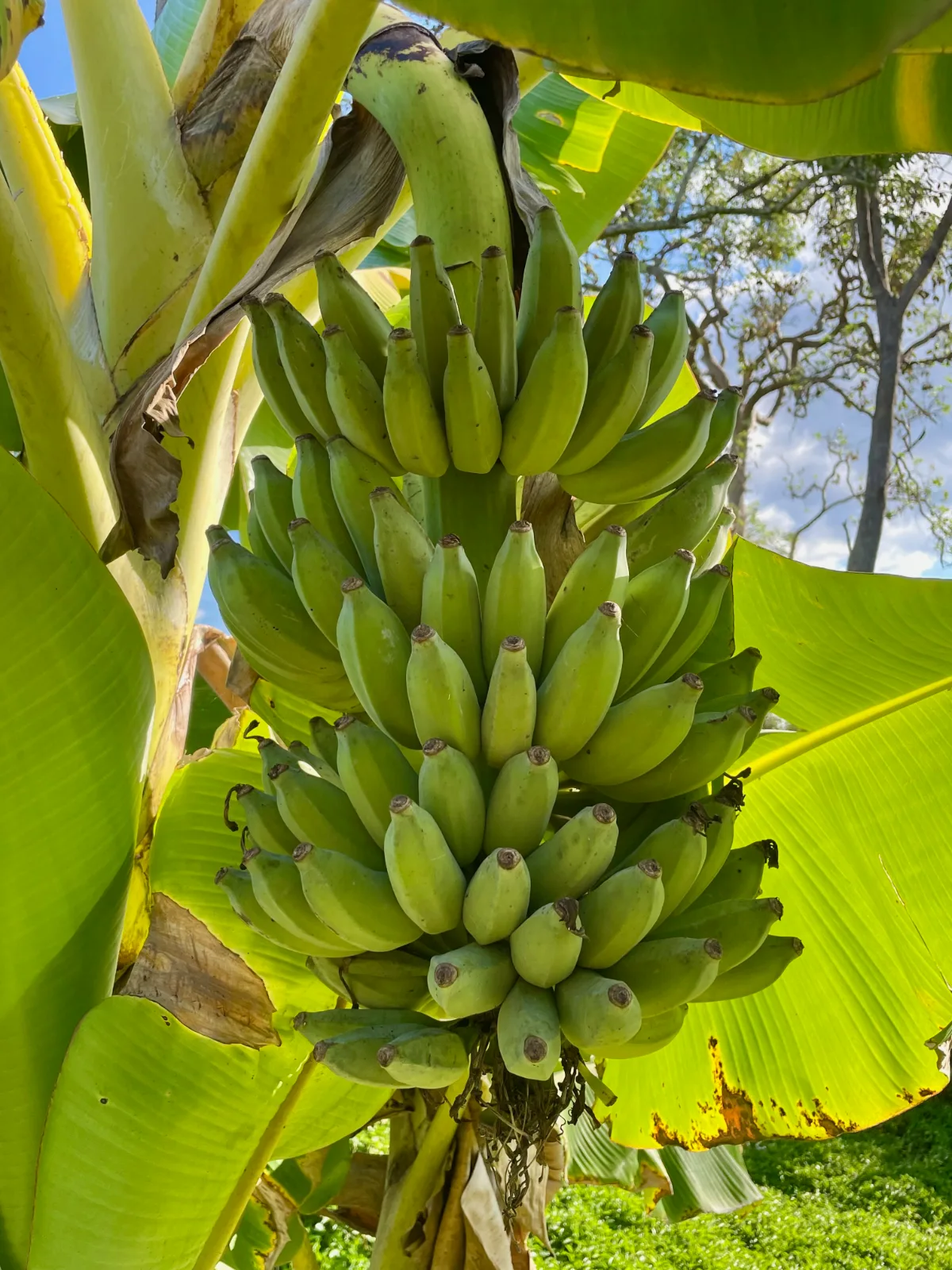
Give bananas sun, plenty of organic matter, reliable water and regular feeding during active growth. Keep useful suckers coming through at different stages, remove or propagate extras where permitted, and cut each pseudostem down after it fruits. Once you work with that natural cycle, banana plants are straightforward to manage.
Questions People Ask
- How long does a banana plant take to fruit?
There is no useful Australia-wide answer because temperature makes such a large difference. Warm tropical and subtropical plants grow and fruit much faster than bananas in cool climates. Cultivar, water, nutrition and planting size also affect timing.
- Does a banana plant die after fruiting?
The pseudostem that produced the bunch dies after fruiting. The underground corm remains alive and produces new suckers, so the banana clump continues growing.
- How many banana suckers should I keep?
For a compact productive clump, keep a main stem plus one or two followers at different stages. If you have plenty of space and fertility, you can manage a larger clump.
- Can bananas grow in pots?
Yes. Dwarf cultivars are the easiest choice. Use a large container, good drainage and regular feeding and watering.
- Do bananas need full sun?
Full sun gives the strongest growth and fruit production. Some light shade is fine, particularly in very hot climates, but heavy shade reduces performance.
- When should I cut a banana bunch?
Harvest once the fingers are full and rounded and have lost much of their sharp angular shape. Mature bananas can be harvested green and ripened off the plant.
- Can I take a banana sucker from another garden?
Only if current biosecurity rules allow it. Banana plants and attached soil can spread serious diseases, so check your state or territory requirements and any local banana biosecurity-zone restrictions before moving plants.
- Why are my banana leaves splitting?
Banana leaves naturally split in wind. A moderate amount of tearing is normal. Severe ongoing damage means the plant would benefit from a more sheltered position.
Grow Banana
Add it to My Garden for practical jobs matched to your climate and the season.