
Plant profile
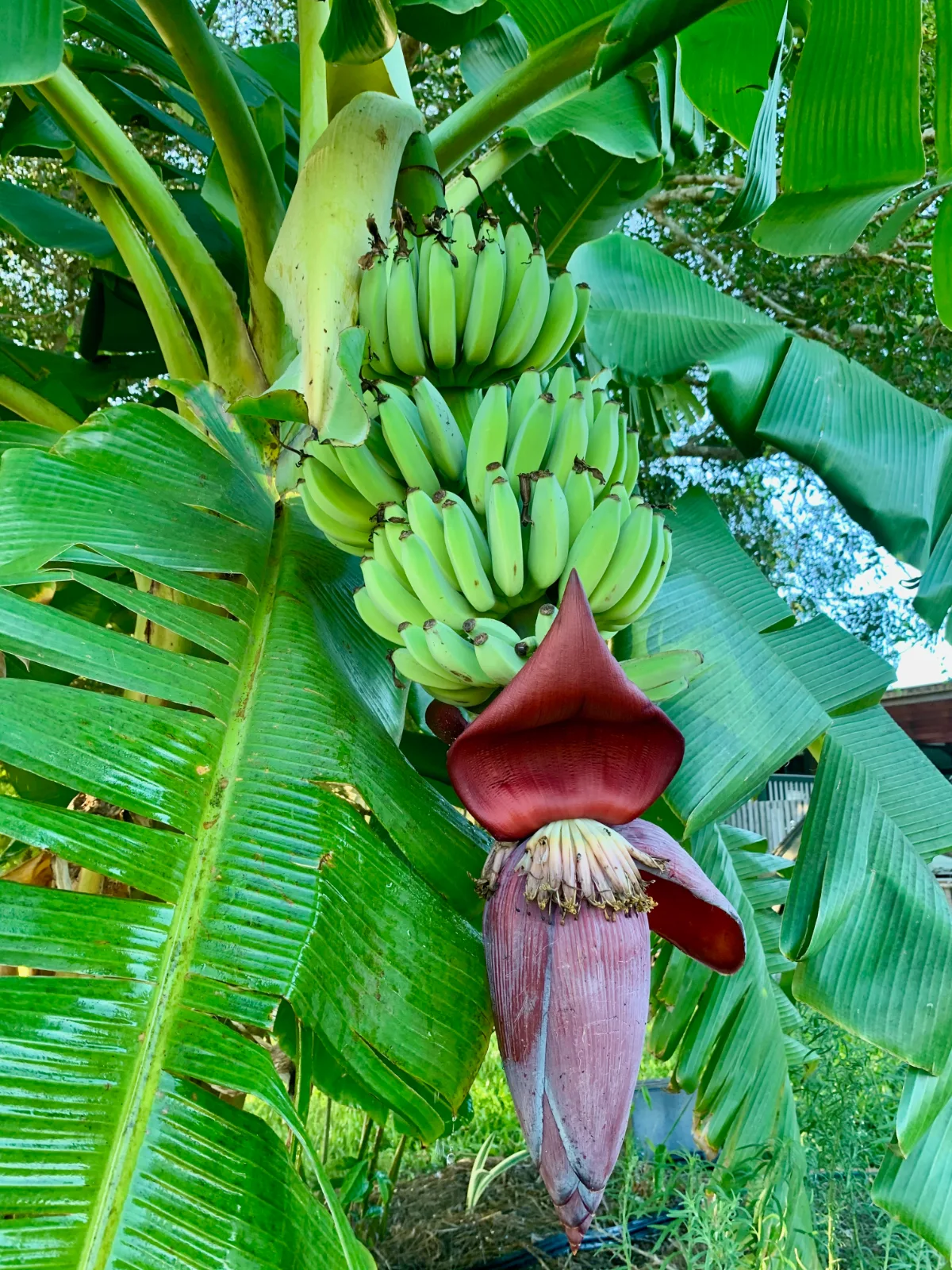
Banana
Musa spp.
Also known as Banana plant.
Bananas grow best with warmth, sun, regular feeding and plenty of water. Keeping only a few well-spaced suckers helps the clump produce good bunches.
Check local movement rules before planting. Read the details
- Grows well in
- Tropical, Subtropical, Temperate
- Lifecycle
- Perennial herb
- Light
- Full sun
- Mature size
- Usually about 3.5–6 m tall, depending on variety; dwarf cultivars stay smaller.
- Spacing
- About 4–5 m apart for full-sized backyard bananas.
- Growth habit
- Fast-growing, clumping herbaceous perennial that produces suckers from an underground corm.
- Native range
- Tropical and subtropical Asia to northern Australia and the western Pacific, depending on species and hybrid ancestry
- Natural habitat
- Humid tropical forest, forest clearings and river valleys.
When to plant
In tropical Australia, the wet season is a good time to plant bananas. In cooler frost-free areas, plant once conditions are warm so the plant has plenty of active growing weather ahead.
Full growing guide
How to Grow Banana Plants in Australia
Banana plants need warmth, water, food and room for a small family of suckers. Learn how to establish a mat, manage pups and carry a bunch through to harvest.
Read the full growing guidePlanting
Use disease-free planting material from an approved or reputable source and check local biosecurity rules before moving banana plants or suckers. Plant when warm growing conditions are beginning; in the tropics this often lines up with the wet season.
Position and light
Full sun with good airflow and some shelter from damaging wind.
Soil
Rich, free-draining soil with plenty of organic matter. Bananas need moisture but should not sit in waterlogged soil.
Watering
Bananas use a lot of water during active growth and bunch development. Water deeply in dry weather, using rainfall and soil moisture to decide how often.
Feeding
Feed regularly during active growth. Bananas use substantial nitrogen and potassium, but home-garden rates should follow the product label and local soil conditions.
Pruning
Manage the clump rather than pruning leaves for shape. Keep one main fruiting stem with one or two followers and remove excess suckers. Cut out each pseudostem after it has fruited.
Harvest
A bunch is close to harvest when the fruit has filled out and the sharp ridges become rounder. Heavy bunches may need support. Hands can be cut and ripened indoors as they mature.
Propagation
Bananas are propagated from approved suckers or tissue-cultured plants rather than seed. Biosecurity rules apply to movement of banana planting material in parts of Australia.
Common problems
Banana weevil, nematodes, leaf diseases and serious regulated diseases can occur. Buy clean planting material and report unusual symptoms where required by state biosecurity rules.
Safety notes
Banana sap stains clothing and can irritate skin. Bunches and pseudostems are heavy; use care when cutting them down.
Worth knowing
Each pseudostem fruits once. After harvest, cut that stem down and let a strong sucker take over as the next fruiting stem.
Featured In
Grow Banana with Brancho
Add it to My Garden and Brancho works out what it needs next, timed for your climate.
How it grows around Australia
Growing this too? Share what you've noticed in your garden.
Grow a Little Wild
New plants to try, useful growing tips and a few garden jobs based on what you grow.