

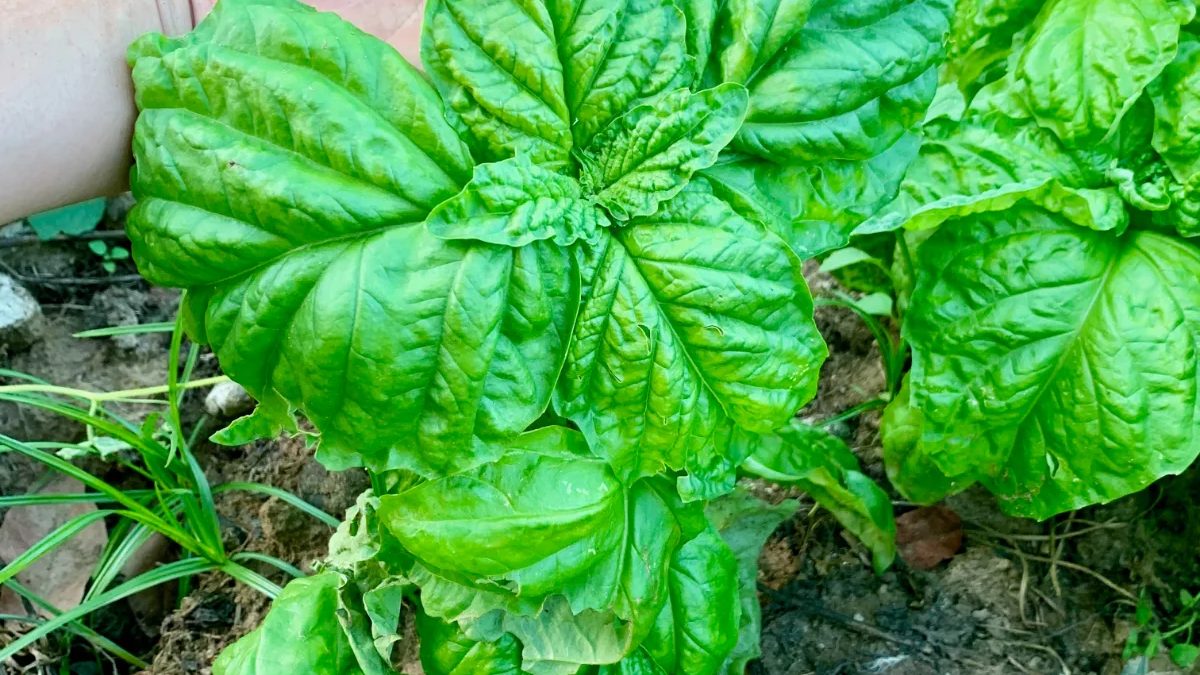

Basil grows quickly through warm weather and responds well to regular picking. Give it warmth, sun, fertile free-draining soil and enough water to keep new growth moving.
There are many basils worth growing beyond standard green sweet basil. Thai basil, Greek basil, lemon basil, purple and red basil, holy basil and perennial basil all bring different flavours, colours and growth habits to the garden.
This guide covers planting, pots, watering, feeding, pruning, flowering, harvest and the different basil types you can grow in Australia.
- Botanical name: Ocimum basilicum
- Also known as: Sweet basil
- Category: Herb & spice
- Lifecycle: Warm-season annual herb
- Climates: tropical, subtropical, temperate, cool / mountain, arid inland, Mediterranean
- Position: Full sun in mild weather. In very hot climates, morning sun with some afternoon shade can keep leaves in better condition.
Basil Growing Conditions
Basil grows best with warmth, good light, regular moisture and soil that drains properly. Most sweet basil varieties grow strongly once nights are warm and the soil has lost its winter chill. Cold weather slows growth, and frost usually finishes an annual plant.
Good basil growing conditions come down to:
- warm weather
- plenty of direct light
- fertile, free-draining soil
- regular water without constantly wet roots
- enough airflow around the plant
- frequent picking
In tropical and subtropical areas, basil can grow through a much longer season than it does in southern Australia. Heat, humidity, heavy rain and leaf disease become more important than frost. Give plants enough space for air to move through the foliage, especially through humid weather.
Does Basil Need Full Sun?
Generally, yes, but Australian sun needs a bit of context.
In mild weather, basil does well with six hours or more of direct sun. Strong light keeps plants compact and productive.
In very hot climates, full afternoon sun can be excessive. Basil growing against a western wall or sitting in a heat-trapping position may wilt badly, scorch or produce smaller, tougher leaves.
Morning sun and some afternoon protection often works better in very hot parts of Australia.
Too little light causes a different set of problems. Plants stretch, stems become weak and there are fewer leaves to harvest.
If a basil plant is tall, pale and leaning heavily towards the light, it probably needs a brighter position.
When to Plant Basil in Australia
Plant basil once the weather is properly warming up.
There is little advantage in putting seedlings into cold soil early in spring. They tend to sit still, struggle or rot while a basil planted a few weeks later can race past them.
In temperate areas, spring and summer are the main growing seasons.
Cool and mountain areas generally need to wait until frost risk has passed.
Tropical and subtropical gardeners can grow basil for much more of the year, although extreme wet-season humidity or very hot weather can make some varieties harder to manage.
Mediterranean and inland climates suit basil well through the warm months, provided plants get enough water and some protection during severe heat.
When to Plant Basil in Melbourne
In Melbourne, basil is best treated as a warm-season plant.
Late spring is generally more reliable than early spring. Wait until frost risk has passed and night temperatures are becoming consistently mild.
Seed can be started earlier in a protected spot, then the young plants moved outside once conditions improve.
How to Plant Basil
Basil grows easily from seed or seedlings.
Sow seed shallowly into seed-raising mix or warm garden soil. Keep the surface damp while the seed germinates, but not saturated.
Thin crowded seedlings rather than leaving them in a dense clump.
Most full-sized sweet basil plants do well with roughly 20–30 cm between plants. Compact Greek basil needs less room, while large perennial types may need considerably more.
Plant seedlings at about the same depth they were growing in their pot.
A little compost added before planting is usually enough to get them started well.
Supermarket Basil
Those lush supermarket basil pots are often packed with many seedlings rather than containing one large basil plant.
They look good for sale, but the plants soon compete with each other for water, nutrients and space.
You can gently split the clump into smaller groups and replant them. They may droop for a few days after being disturbed, but they generally recover well.
One supermarket pot can give you quite a few basil plants.
Growing Basil in Pots
Basil grows very well in pots. A pot around 20–25 cm wide will hold an ordinary basil plant, but a larger pot is easier to manage in hot weather because it holds moisture for longer.
Use a good-quality potting mix and make sure water drains freely from the bottom. Small pots can dry very quickly on a hot afternoon, especially once the plant has filled them with roots.
If basil keeps wilting despite regular watering, move it into a larger pot rather than watering more and more often. Empty saucers after watering so the roots are never left standing in water.
How Often Should You Water Basil?
No fixed watering schedule works in every garden. Water basil when the root zone is beginning to dry, then soak it thoroughly. A plant in a large garden bed may go several days before it needs water again; basil in a small pot during hot weather may need checking every day.
Use the soil as your guide. Basil can droop temporarily during intense heat even when the roots still have moisture, so check the mix before watering again. Constantly wet soil reduces oxygen around the roots and can lead to yellowing, weak growth and root disease.
In humid climates, water the soil rather than regularly soaking the leaves. This keeps moisture where the roots can use it and reduces disease pressure on the foliage.
Best Soil for Basil
Basil grows best in fertile soil that holds some moisture and still drains freely. Compost is useful in sandy or tired garden soil because it improves both water-holding and nutrient supply.
Heavy clay needs enough structure for water to drain away from the root zone. A raised bed can help in wet gardens, and pots are a good option where the ground stays saturated after rain.
For pots, use a quality potting mix rather than garden soil. Mulch can keep the root zone cooler and slow water loss; leave a small gap around the stem.
Does Basil Need Fertiliser?
Basil grows strongly with moderate fertility and regular picking. Plants in healthy garden soil with compost may need very little extra feeding, while potted plants use up their smaller nutrient supply more quickly.
A light liquid feed during active growth is usually enough if you are harvesting often. Very high nitrogen can produce soft growth and will not solve problems caused by low light, poor drainage or cold weather.
If the plant is dark green and growing strongly, keep the feeding light.
How to Make Basil Bushy
This is one of the most useful things to know about growing basil.
Don't just pull individual large leaves off the plant.
Instead, cut or pinch the growing tip just above a pair of leaves.
Look closely at the point where those leaves join the stem. There are small buds there. Once the tip above them is removed, those buds can grow into two new branches.
Repeat the process on those branches later and the plant becomes wider and bushier rather than growing as one long stem.
Start early.
A small basil plant that is pinched regularly usually becomes much more productive than one left to grow tall before its first proper harvest.
Grow a Little Wild
New plants to try, useful growing tips and a few garden jobs based on what you grow.
Should You Let Basil Flower?
If you're growing basil mainly for leaves, remove most flower buds.
Once annual basil starts putting a lot of energy into flowers and seed, leaf production slows and the leaves often become smaller and stronger in flavour.
That doesn't mean flowers are bad.
Basil flowers are useful to bees and other insects, and you obviously need flowers if you want seed.
I like the practical compromise: keep most of the plant pinched for leaf production and let a few healthy stems flower.
Or leave one spare plant entirely to the insects and seed.
How to Harvest Basil
Harvest basil by cutting the top section of a stem just above a pair of leaves.
That gives you a useful handful and encourages branching at the same time.
Regular light harvesting keeps the plant productive.
Avoid stripping nearly every leaf from a small plant. It still needs enough foliage to photosynthesise and recover.
If you need a large amount for pesto, take several stems from a mature plant rather than picking it bare.
The more consistently you harvest basil, the easier it is to stop it turning into a tall, flowering stick.
Different Types of Basil
There isn't just one basil.
Some of the plants sold under the name basil are cultivars of Ocimum basilicum. Others are different species or hybrids.
That matters because they can taste different, grow to very different sizes and behave differently in the garden.
Sweet Basil
Sweet basil (Ocimum basilicum) is the familiar soft-leaved basil used in pesto, pasta, salads and sauces.
Genovese basil is one of the best-known forms.
The leaves are large, tender and strongly aromatic.
Most sweet basil is grown as an annual.
Thai Basil
Thai basil has narrower leaves, firmer stems and usually some purple colouring.
Its flavour has a noticeable spicy, anise-like character and it holds up better in cooked food than soft Genovese basil.
It's an excellent choice for warm Australian climates.
Holy Basil
Holy basil, or tulsi, is generally Ocimum tenuiflorum.
It isn't simply another flavour of Genovese basil. It has its own flavour, growth habit and long history of use across South and Southeast Asia.
Plants enjoy warmth and can become quite substantial in a suitable climate.
Check botanical names when buying unusual basil varieties. Common names get used fairly loosely.
Greek Basil
Greek basil is a compact, small-leaved basil that naturally grows into a dense rounded plant.
The leaves are tiny but strongly flavoured.
It's a good choice when you want basil in a smaller space, and the little leaves need very little chopping.
Lemon Basil
Lemon basil has a distinct citrus fragrance.
It's particularly useful in salads, Asian cooking, dressings and dishes where standard sweet basil can feel too heavy.
Plants are usually finer and more delicate-looking than big Genovese basil.
Red and Purple Basil
Red basil and purple basil include a number of dark-leaved Ocimum basilicum cultivars.
Colours range from reddish purple to very dark burgundy.
They work well as culinary basils as well as decorative plants.
The flavour varies between cultivars and can be a little stronger or spicier than ordinary sweet basil.
Perennial Basil
Perennial basil is particularly useful in warm parts of Australia.
The name isn't very precise. Nurseries may use it for different perennial species and hybrids, so check the botanical name on the label.
Perennial basil plants are generally larger, tougher and woodier than annual sweet basil.
In frost-free climates they can live for several years and develop into sizeable shrubs.
They don't necessarily taste like Genovese basil, so I wouldn't automatically treat perennial basil as a direct substitute in every recipe.
Where it shines is reliability.
Instead of starting again from seed every year, you can have a large established plant producing leaves and flowers for a long time.
Most perennial basils also strike easily from cuttings.
How to Grow Basil From Cuttings
Basil is very easy to propagate from soft cuttings.
Take a healthy shoot that isn't flowering and remove the leaves from the lower part of the stem.
Place that section into water, keeping the leaves above the surface.
Once a decent set of roots has formed, pot it into moist potting mix.
Cuttings can also be rooted directly in propagation mix.
This is especially handy for perennial basil or a particular variety you don't want to lose.
It also means a good basil plant can turn into half a dozen basil plants with very little effort.
Basil Companion Plants
Basil often appears on companion-planting lists beside tomatoes, capsicums and eggplants, but some of the claims go well beyond the evidence. Planting basil nearby does not make tomatoes sweeter or create a shield against leaf-feeding insects.
There are still good reasons to grow them together. Basil and many summer vegetables use similar conditions: warmth, sun, fertile soil and regular water. Flowering basil also attracts bees and other insects.
Give each plant enough light, root space and airflow rather than squeezing basil into every empty gap.
Common Basil Problems
Basil grows quickly in warm weather, so a sudden slowdown is worth checking.
Yellow Basil Leaves
Yellowing can follow constantly wet soil, old potting mix, nutrient deficiency, root damage or the normal ageing of lower leaves. Look at the whole plant before deciding what has changed. Two old yellow leaves at the base mean something very different from a plant turning pale from the ground up.
Basil Wilting
Check the soil first. Dry basil wilts, and so can basil with damaged or waterlogged roots. Plants can also droop for a few hours during intense heat even when the root zone still has moisture.
Brown or Black Leaves
Cold weather can darken basil leaves quickly. Bruising after harvest, sun scorch, leaf disease and physical damage can also leave brown or black patches. The pattern and recent growing conditions usually tell you more than colour alone.
Holes in Basil Leaves
Snails, slugs and caterpillars commonly chew basil. If chunks disappear overnight, check after dark. During the day, look underneath leaves and along stems for caterpillars before reaching for a spray.
Leaf Disease
Warm, wet and humid conditions favour several basil leaf diseases. Give plants space for airflow, remove badly affected leaves and avoid keeping the foliage wet for long periods. If disease repeats in the same spot, move the next crop elsewhere.
Basil Keeps Flowering
Annual basil eventually flowers as it matures, and heat or stress can speed that up. Remove flower buds early if leaf production is your priority. Once an old plant becomes woody and flowers continuously, start a younger replacement so the harvest keeps going.
How to Store Basil
Basil doesn't store as well as tougher herbs.
The leaves bruise easily, dislike being wet for long periods and can blacken in cold storage.
Freshly cut stems can be kept in a glass or jar with a small amount of water.
Don't wash basil until you need it if you're trying to keep it fresh.
If it does need washing, dry the leaves gently and thoroughly.
The best answer to how to store basil is still: don't store it for very long if you can avoid it.
Harvesting what you need gives you better flavour and much better-looking leaves.
Can You Freeze Basil?
Yes.
The texture changes completely after freezing, so don't expect thawed basil to behave like fresh leaves in a salad.
For cooked food, it works very well.
You can freeze chopped basil in small portions, freeze it with a little oil, or turn it into pesto first.
Ice-cube trays are handy for portioning chopped basil or pesto, then the frozen cubes can be moved into a sealed container.
Frozen basil is useful for pasta sauces, soups and other cooked dishes where texture doesn't matter.
Is Basil Safe for Cats and Dogs?
Common sweet basil (Ocimum basilicum) is generally regarded as non-toxic to cats and dogs.
That doesn't mean pets need to eat large quantities of it. Too much plant material can still upset the digestive system.
Also keep the plant itself separate from basil essential oil.
Essential oils are highly concentrated products and shouldn't be treated as equivalent to a few fresh basil leaves.
With unusual basil species or hybrids, check the particular plant rather than assuming every plant sold as basil is identical.
Questions People Ask
- Is basil easy to grow?
Yes. Give it warm weather, good light, decent drainage and regular water and basil grows quickly. Cold soil and overwatering cause far more trouble than lack of fertiliser.
- How long does a basil plant live?
Most sweet basil is annual and completes its life cycle within one growing season. Perennial basil species and hybrids can live for several years in suitable climates.
- Can basil survive winter?
Ordinary sweet basil is very sensitive to cold and frost. It may keep growing through winter in warm frost-free areas, but in cooler climates it is generally replaced each spring.
- Why is my basil tall and skinny?
Usually not enough light, not enough pruning, or both. Pinch the growing tips above pairs of leaves and move the plant into stronger light.
- How often should you harvest basil?
Often. Once the plant is established, regular light harvesting encourages branching and slows down flowering.
- Should you pick basil leaves from the top or bottom?
Harvest shoot tips from the top, cutting just above a pair of leaves. This encourages new branches. Continually stripping large bottom leaves gives you a much less productive plant.
- Can you eat basil flowers?
Yes. Basil flowers are edible. They tend to have a stronger flavour than the leaves and are also valuable to visiting insects.
- Can you grow basil from supermarket basil?
Yes. The pots often contain many crowded seedlings. Divide them into smaller groups, replant them and give the roots more room.
- Does basil grow back after cutting?
Yes, provided healthy leaves and nodes remain below the cut. Cutting just above a pair of leaves encourages new shoots to grow from that point.
- Can you freeze fresh basil?
Yes. The leaves lose their fresh texture but remain useful for cooking. Chopped basil, basil with oil and pesto all freeze well.
- How do you keep basil fresh after picking?
Harvest stems rather than loose leaves and keep them in a small amount of water. Avoid bruising the leaves and don't wash them until you need them.
- Is basil safe for cats?
Common sweet basil is generally considered non-toxic to cats, although eating a lot of it may still cause digestive upset.
- Is basil safe for dogs?
Common sweet basil is generally considered non-toxic to dogs. Fresh leaves and concentrated basil essential oil are not the same thing.
Grow Basil
Add it to My Garden for practical jobs matched to your climate and the season.