

Plant profile
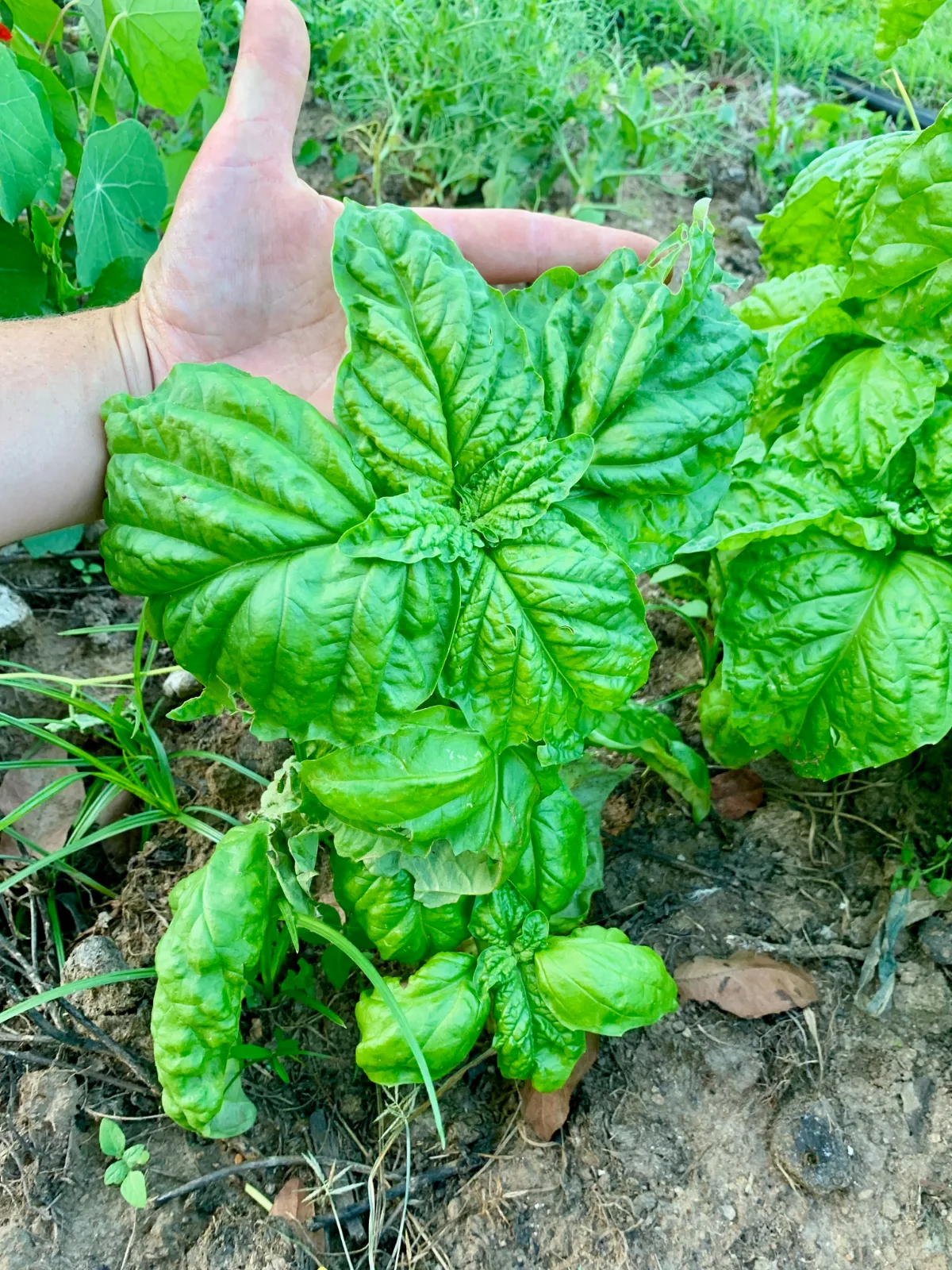
Basil
Ocimum basilicum
Also known as Sweet basil.
Basil grows quickly in warm weather and likes regular picking. Remove flower buds for a longer leaf harvest, or leave some flowers if you want seed or food for pollinators.
- Grows well in
- Tropical, Subtropical, Temperate, Cool / mountains, Arid / inland, Mediterranean
- Lifecycle
- Warm-season annual herb
- Light
- Full sun, Part shade
- Mature size
- Most sweet basil grows about 30–60 cm tall and roughly as wide, although compact and perennial types vary considerably.
- Spacing
- About 20–30 cm apart for ordinary sweet basil; give large vigorous varieties more room.
- Growth habit
- Bushy, soft-stemmed herb that branches readily when the growing tips are pinched.
- Native range
- Tropical and subtropical Asia to northern Australia
- Natural habitat
- Seasonally dry tropical habitats, including open woodland, grassland and disturbed ground.
When to plant
Tropical
March–November
Subtropical
September–April
Temperate
October–March
Cool / mountain
November–February
Arid inland
September–April
Mediterranean
September–April
Full growing guide
How to Grow Basil Plants in Australia
Basil grows quickly once the weather warms. Learn when to plant it in your climate, how to keep plants bushy and productive, and when to let a few stems flower for seed.
Read the full growing guidePlanting
Sow seed or plant seedlings after frost risk when soil and nights are warming. Seedlings are usually ready to plant out several weeks after sowing.
Position and light
Full sun in mild weather. In very hot climates, morning sun with some afternoon shade can keep leaves in better condition.
Soil
Rich, well-drained soil or good-quality potting mix. Compost before planting and keep weeds down.
Watering
Water regularly enough to keep plants growing without leaving the soil constantly saturated. Pots dry faster than garden beds.
Feeding
In fertile soil basil needs only light feeding. A dilute liquid feed can help plants that are being harvested heavily.
Pruning
Harvest by cutting just above a pair of leaves to encourage branching. If leaf production is the goal, remove flower heads as they form. If you want seed or flowers for pollinators, leave some flower stems. Pinch out flower spikes if leaf production is the priority, or leave selected spikes for bees and seed. Cutting back leggy stems above a leaf pair encourages fresh side shoots.
Harvest
Pick young shoot tips and leaves often. Flavour and leaf production usually decline once plants put more energy into flowering and seed.
Propagation
Grow from seed or soft cuttings. Let selected flower heads dry if you want to save seed.
Common problems
Cold, frost, prolonged waterlogging, snails, caterpillars and leaf diseases can damage basil.
Worth knowing
Pinching the tips regularly makes basil bushier and delays flowering. Once it starts setting lots of seed, leaf production usually slows.
Grow Basil with Brancho
Add it to My Garden and Brancho works out what it needs next, timed for your climate.
How it grows around Australia
Growing this too? Share what you've noticed in your garden.
Grow a Little Wild
New plants to try, useful growing tips and a few garden jobs based on what you grow.