


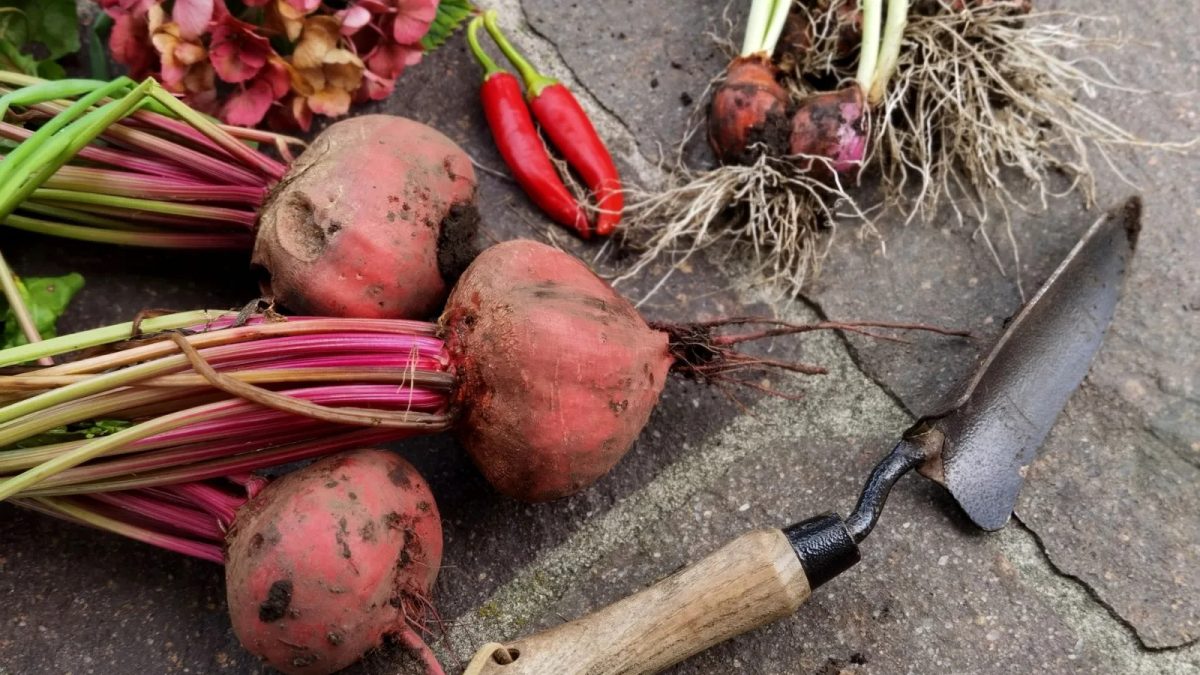

Beetroot grows well through the milder parts of the year across most of Australia, and you can harvest both the roots and the leaves. It is easy to fit into vegetable beds because it does not need much room, and small sowings every few weeks can keep roots coming for months.
The main things are loose soil, enough spacing for the roots to swell, steady moisture and the right planting time for your climate. In warm areas, beetroot is generally best through the cooler months; in cooler districts, the growing season is much longer.
- Botanical name: Beta vulgaris
- Also known as: Beet, garden beet
- Family: Amaranthaceae
- Plant type: Biennial grown as an annual vegetable
- Climate: All Australian climate zones; best grown through mild weather
- Position: Full sun; light afternoon shade can help in hot climates
- Spacing: Thin to about 7–10 cm for full-sized roots
- Harvest: Often from about 8–10 weeks; timing varies with variety and conditions
When to Plant Beetroot in Australia
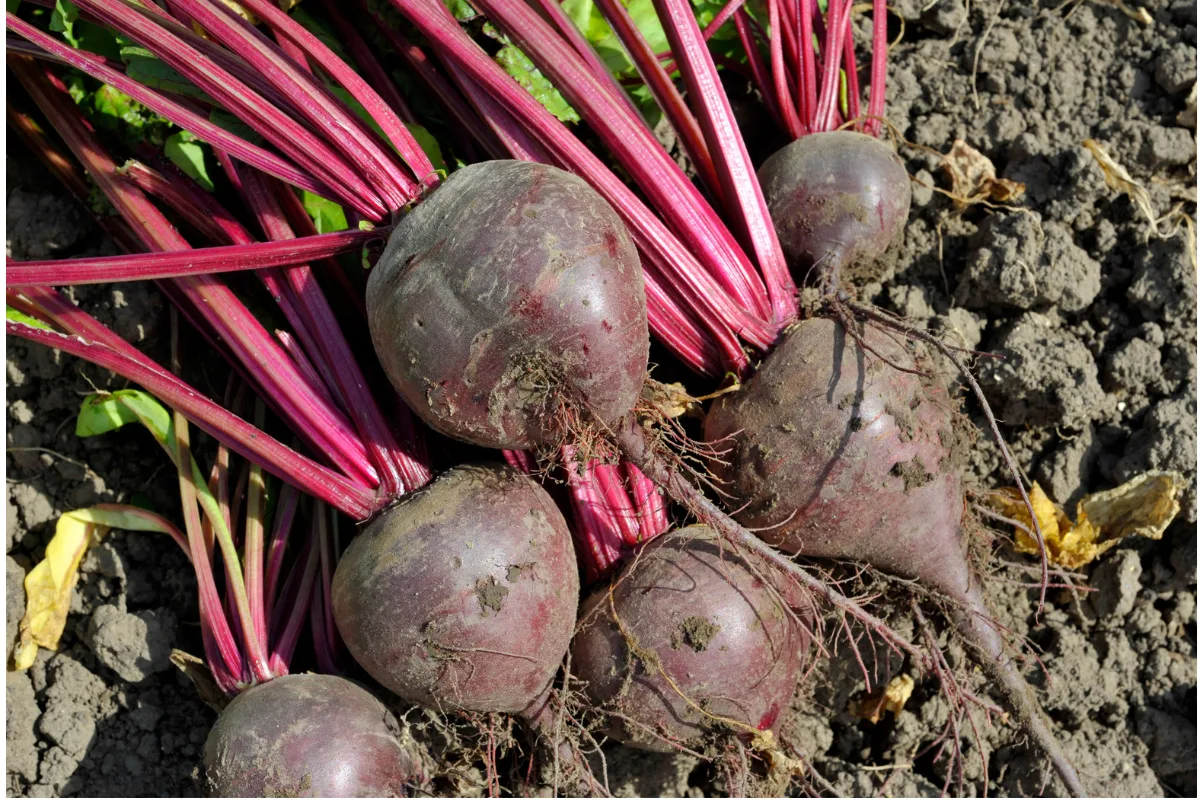
Beetroot grows across Australia, but the best sowing window shifts with climate. Mild weather usually gives the best root growth.
In cool and temperate districts, sow from late winter or spring through autumn, avoiding periods when the soil is frozen or summer heat is severe. In subtropical areas, autumn through spring is usually the easiest stretch, although you can often keep sowing longer in a cooler position with some afternoon shade.
In tropical areas, grow beetroot mainly through the dry season as temperatures become milder. Arid and Mediterranean gardens also have a long sowing season, but the cooler months are the better choice where summers are very hot.
Rather than sowing the whole packet at once, plant a small row every three to five weeks. That gives you roots at different stages instead of one large harvest all at once.
Beetroot Varieties to Grow
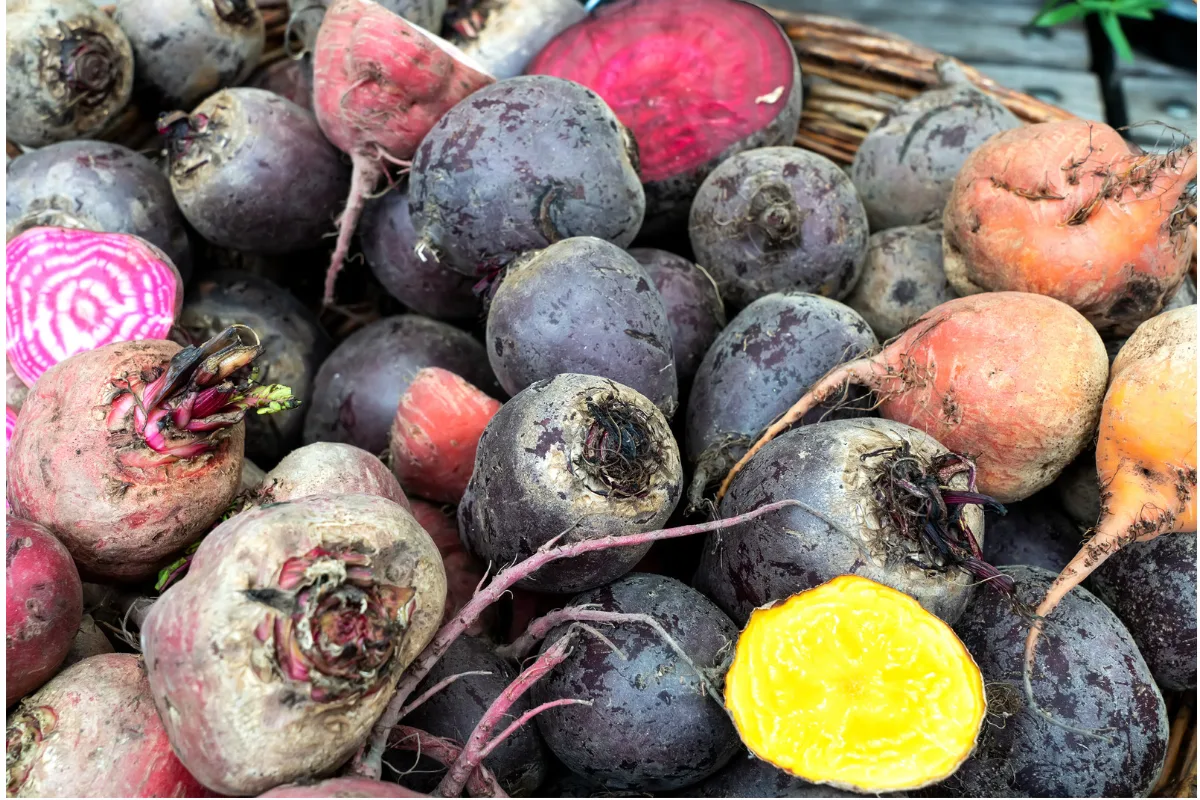
Crimson Globe and other round red types are reliable all-rounders for roasting, boiling and pickling. Chioggia has pink-and-white rings through the root and is particularly good sliced raw, while Bull’s Blood gives you deep red roots and dark red-purple leaves.
Cylindra and Forono produce long cylindrical roots instead of round ones. They are easy to slice evenly and fit neatly into narrow rows. Golden varieties such as Burpee’s Golden have yellow-orange flesh and do not stain your hands and chopping board like red beetroot.
Harvest time varies between cultivars, so use the seed packet as your starting point rather than assuming every beetroot will be ready at the same age.
How to Sow Beetroot Seed
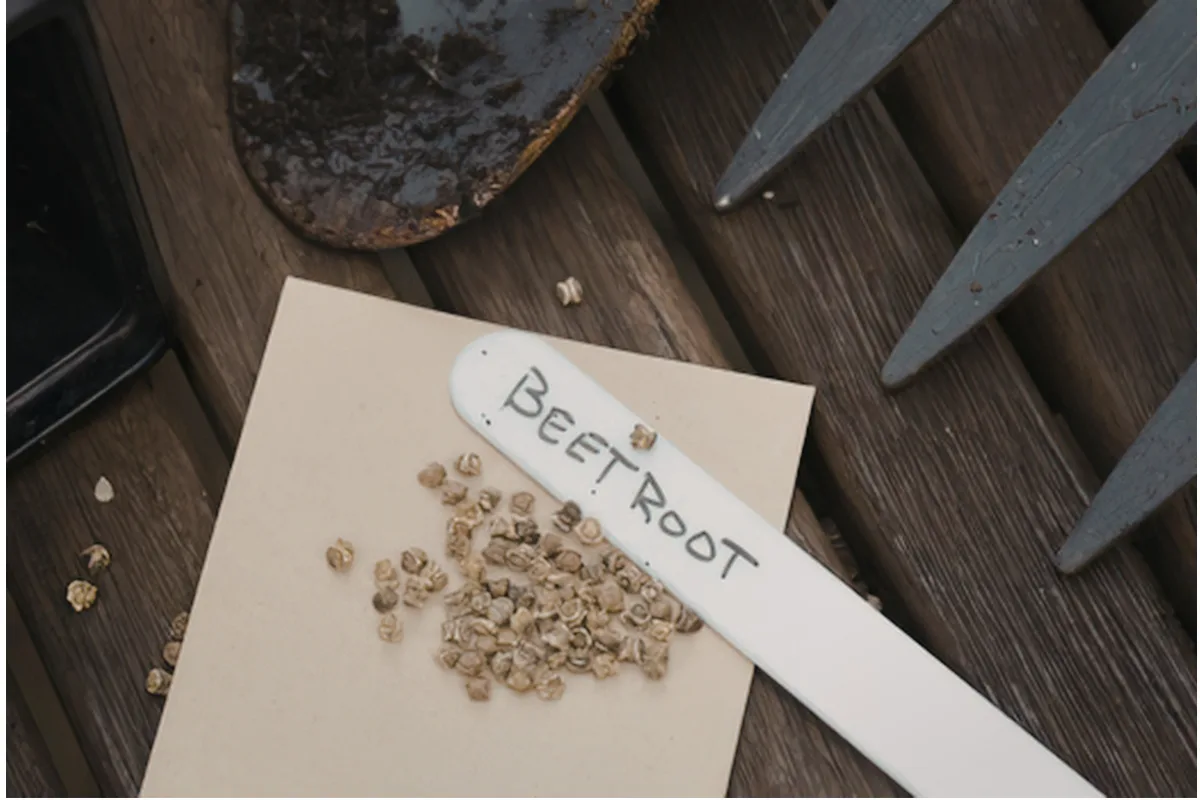
Direct sowing is the simplest method because the root can develop without being disturbed. Make a shallow furrow about 1–2 cm deep and sow the corky seed clusters roughly 5 cm apart, then cover lightly, firm the soil and water.
What looks like one beetroot seed is usually a cluster containing more than one seed, so several seedlings can emerge from the same spot. Once they are large enough to handle, thin them to around 7–10 cm apart if you want full-sized roots.
The young thinnings are edible, so use them in salads or cook them like other leafy greens.
You can soak beetroot seed clusters for a few hours or overnight before sowing to help speed germination, but it is optional. If you sow them dry, keep the upper soil evenly moist while they germinate.
Can You Transplant Beetroot Seedlings?
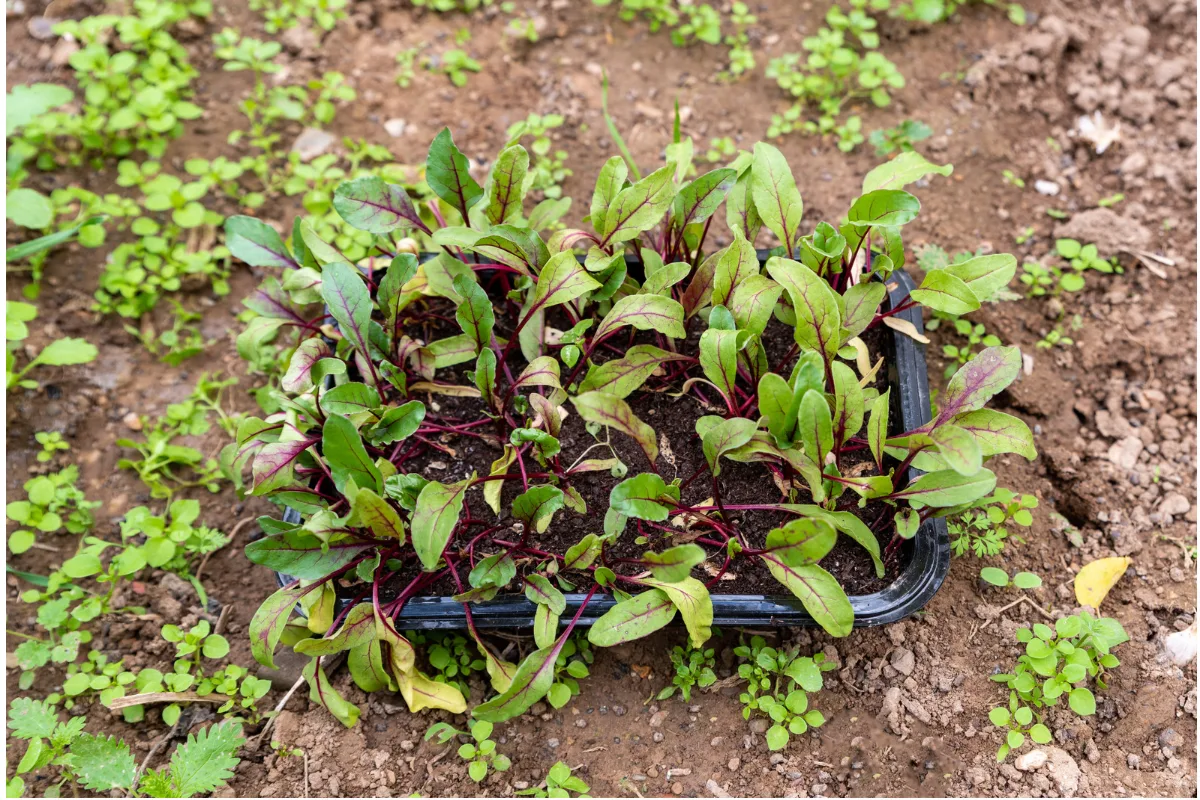
You can transplant beetroot, but direct sowing is usually simpler and avoids disturbing the developing root.
If you start beetroot in seedling trays or small pots, move the seedlings while they are still young and handle the root ball carefully. Small multi-seeded clusters can also be transplanted together if you want baby beets, but plants grown for larger roots need more room around them.
Seedlings removed while thinning a direct-sown row can sometimes be moved into gaps elsewhere. Replant them promptly, water them in well and expect a little more variation in root shape than you would get from plants left where they germinated.
Soil Preparation for Good Beetroot Roots
Loose soil gives beetroot room to swell evenly. Work mature compost through the bed before sowing and break up hard clods, especially in compacted clay.
Avoid loading the bed with high-nitrogen fertiliser. Beetroot needs nutrients, but too much nitrogen can give you a lot of leaf growth with a small root underneath. Fresh, concentrated manure is better composted before it goes into a root-crop bed.
Beetroot grows well in soil around neutral to slightly acidic. If growth is poor or leaves show unusual deficiency symptoms across the bed, test the soil before adding individual trace elements. Boron, for example, is needed in very small amounts and has a narrow margin between deficiency and excess.
How Much Sun Does Beetroot Need?
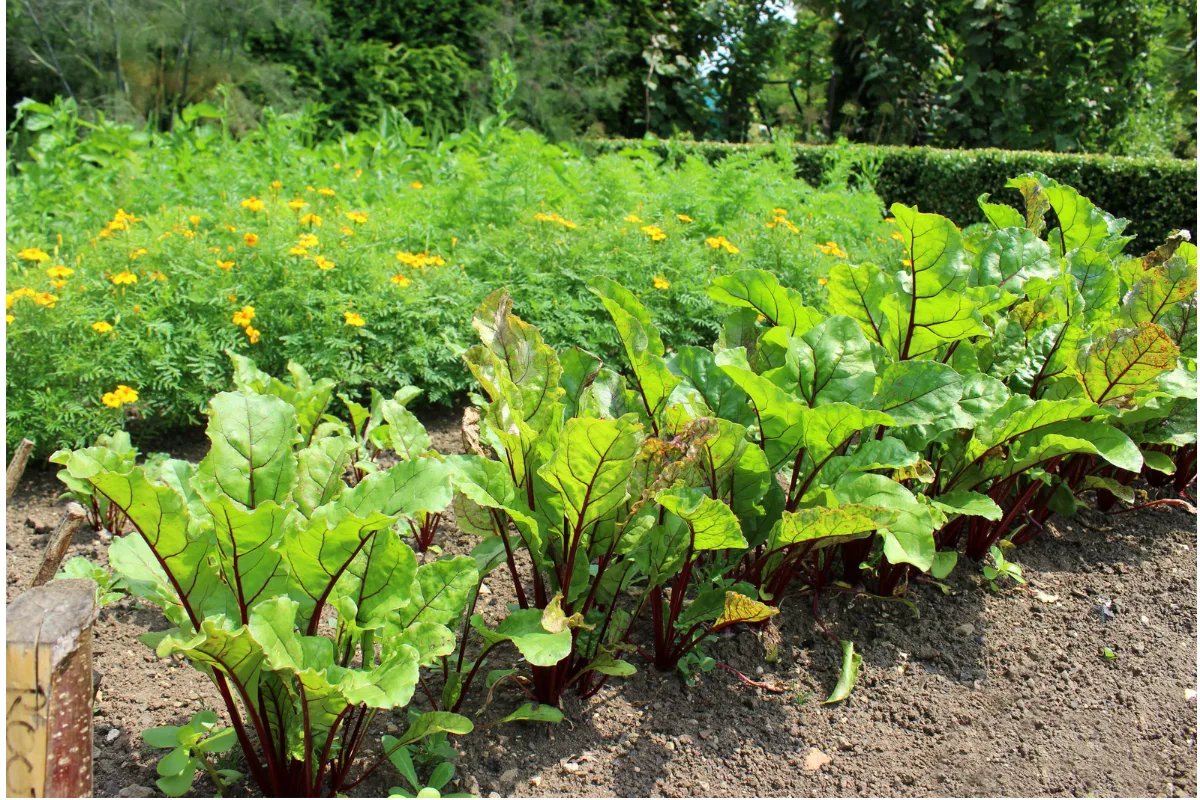
Full sun gives the strongest root growth in mild weather. Aim for at least several hours of direct light each day.
In hot subtropical, tropical and inland gardens, some light afternoon shade can extend the growing season and reduce heat stress. Deep shade will usually give you slower growth and smaller roots, although you may still get useful leaves.
Watering Beetroot
Keep moisture fairly even from germination through to harvest. Young seedlings have shallow roots, so the seed row can dry quickly and germination becomes patchy if the surface repeatedly dries out.
Once the plants are growing strongly, water deeply enough to wet the root zone, then water again as the soil begins to dry. Large swings between very dry soil and heavy watering can reduce root quality and contribute to cracking.
A light layer of organic mulch helps slow evaporation once the seedlings are established. Keep it loose around the crowns rather than piling it over the growing point.
Feeding Beetroot
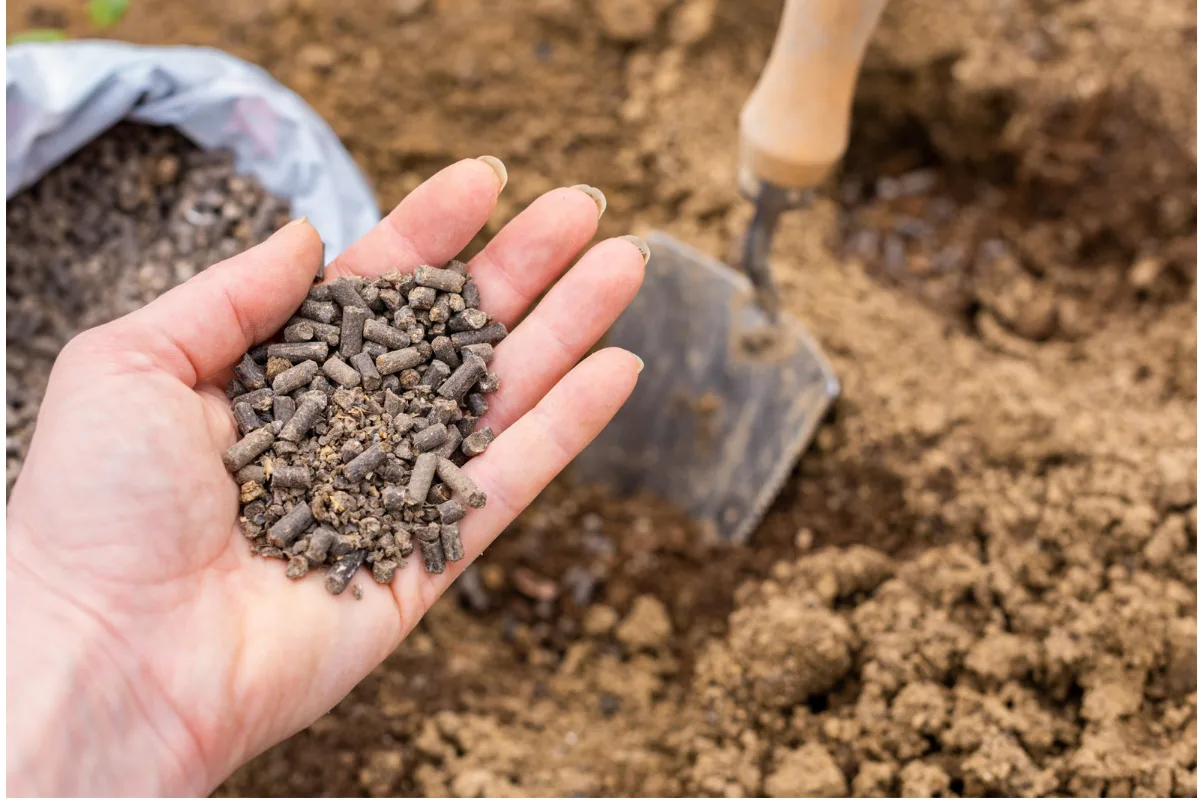
A bed prepared with mature compost often needs very little extra feeding for a short beetroot crop.
If your soil is poor, use a modest amount of balanced vegetable fertiliser rather than a high-nitrogen feed. Too much nitrogen can push leaf growth while the root stays small.
Beetroot in pots may need a dilute complete liquid feed during active growth because nutrients wash out of potting mix more quickly. Follow the product rate rather than feeding heavily. If the leaves are growing strongly but the roots are not sizing up, check spacing and nitrogen levels before adding more fertiliser.

Grow a Little Wild
New plants to try, useful growing tips and a few garden jobs based on what you grow.
Growing Beetroot in Pots and Raised Beds
Beetroot grows well in pots because you can give the roots a loose, even growing medium from the start.
For ordinary round varieties, choose a pot around 20–25 cm deep with enough surface area to space the plants properly. Long cylindrical cultivars benefit from a deeper container.
Fill the pot with quality potting mix, sow directly and thin the seedlings just as you would in a garden bed. Pots dry faster than open soil, so check moisture more often once the roots begin to swell.
Raised beds are also useful, especially where the native soil is compacted. You do not need an exceptionally deep bed for round beetroot. A loose upper layer and enough spacing matter more.
When and How to Harvest Beetroot
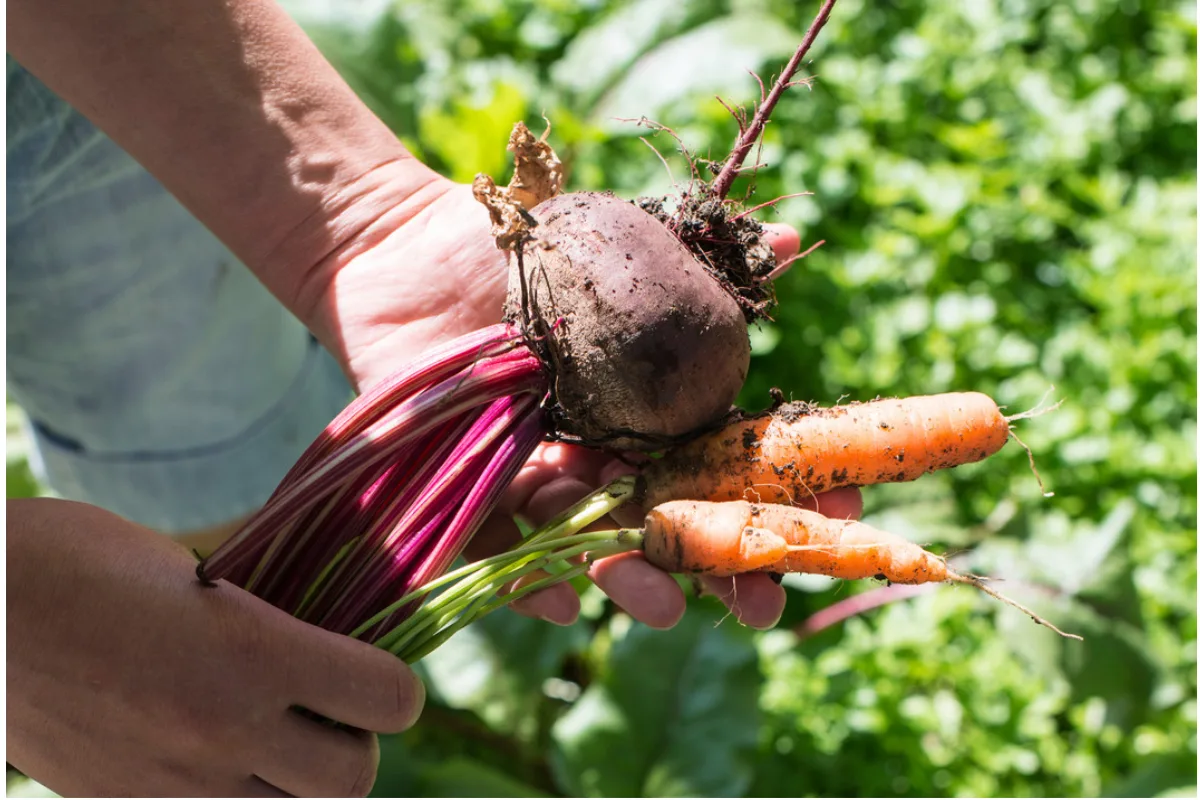
Start checking roots from around eight weeks, although quick varieties and baby beets can be ready sooner and slower cultivars may need several weeks more.
The top of the root usually pushes above the soil as it grows, so you can often judge its width without digging it up.
Small to medium beetroot is tender and useful raw, roasted, boiled or pickled. You can leave roots to grow larger, but very old beetroot can become coarser, particularly in hot or dry conditions.
To harvest, hold the leaves close to the crown and pull gently. If the soil is firm, loosen it first with a hand fork rather than pulling hard enough to damage the root.
Twist or cut the leaves off after harvest, leaving a short stem if you are storing the roots. Young leaves are edible too, so you can harvest from the plant before the root is ready.
Why Is My Beetroot All Leaves and No Root?
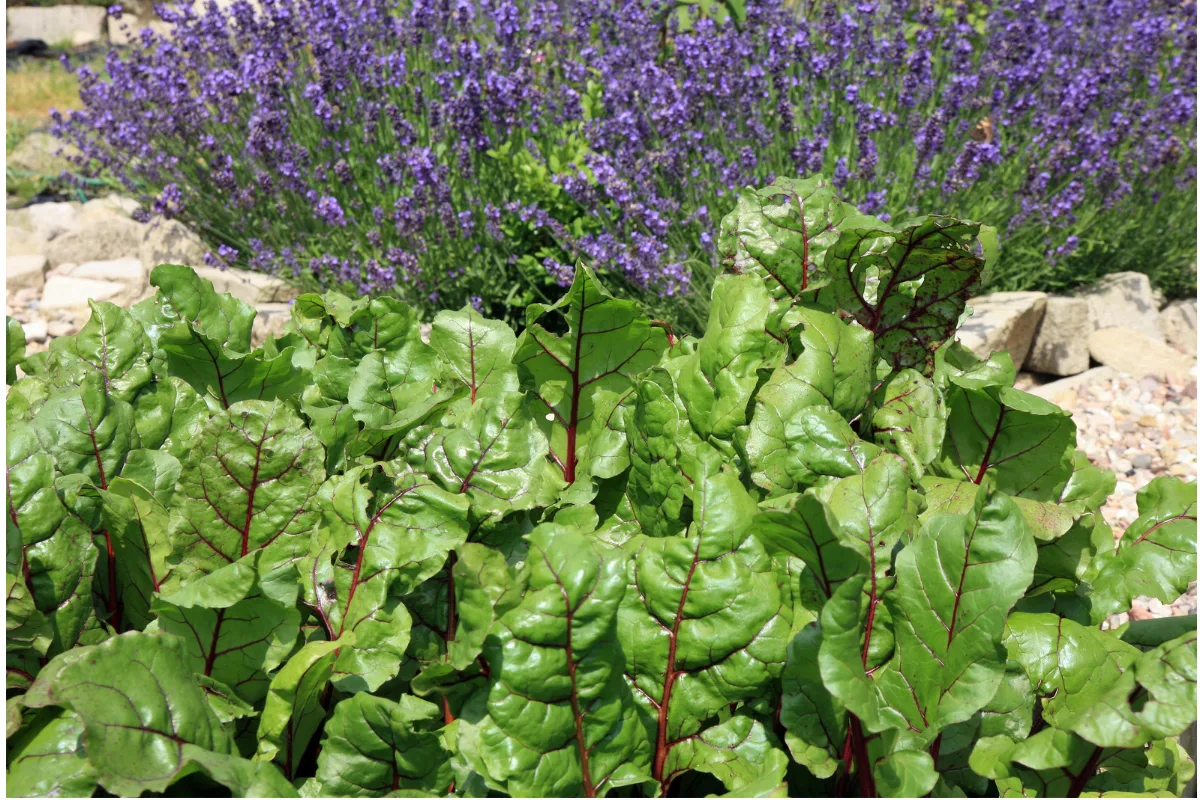
Check spacing first. Because one beetroot seed cluster can produce several seedlings, an unthinned row can look healthy above ground while the roots underneath are competing for the same small patch of soil.
Too much nitrogen can cause the same problem. Deep shade and compacted soil can also limit root growth.
Thin crowded plants, give the remaining beetroot good light and keep feeding balanced rather than adding more nitrogen.
If the roots are growing but are forked or misshapen, look for hard clods, stones or other physical obstructions in the root zone.
Why Does Beetroot Bolt?
Bolting is when beetroot switches from producing roots and leaves to sending up a flower stalk.
Beetroot is naturally biennial, so flowering is part of its normal life cycle. Cold exposure followed by warmer conditions can encourage plants to flower earlier than you want, and heat or other stress can also contribute.
Sow into the most suitable season for your climate and look for bolt-resistant cultivars if early sowings regularly flower before the roots have had time to size up.
Once a plant has committed to flowering, cutting off the stalk will not turn it back into a good root crop. Harvest what is useful and use the space for another sowing.
Beetroot Leaf Damage and Diseases
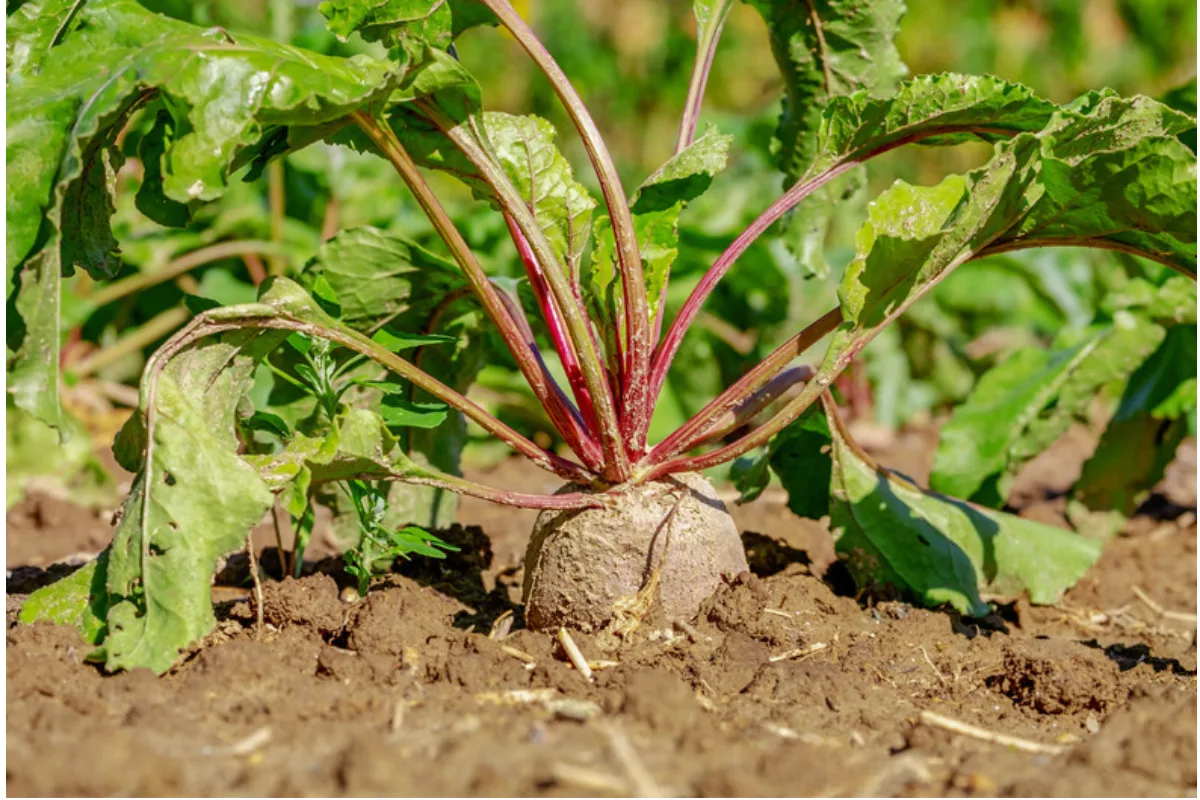
Caterpillars, snails and slugs can chew young beetroot leaves, while leaf miners may leave pale winding trails or blotchy patches inside the leaves.
If you see damage, look closely before treating anything. Check the undersides of leaves, the centres of plants and the surrounding soil to work out what has been feeding there.
Leaf spots can develop in humid or crowded conditions. Give plants enough room for air movement, water the soil rather than repeatedly wetting the foliage late in the day, and remove badly diseased leaves.
If young seedlings disappear at soil level overnight, check after dark for slugs, snails or cutworms before assuming the seed failed.
Saving Beetroot Seed
Beetroot is a biennial, so saving seed takes much longer than growing roots for the kitchen.
A plant normally needs to survive into its flowering phase, send up a tall seed stalk and mature its seed clusters before you can collect them.
Beetroot is wind-pollinated and can cross with other compatible Beta vulgaris plants, including silverbeet and chard. If you want seed from an open-pollinated variety to stay reasonably true, isolation from other flowering plants in the same species matters.
Hybrid varieties will not reliably reproduce the same traits from saved seed. For many home gardens, buying fresh seed is easier unless you specifically want to save your own.
Where Beetroot Fits in a Productive Garden
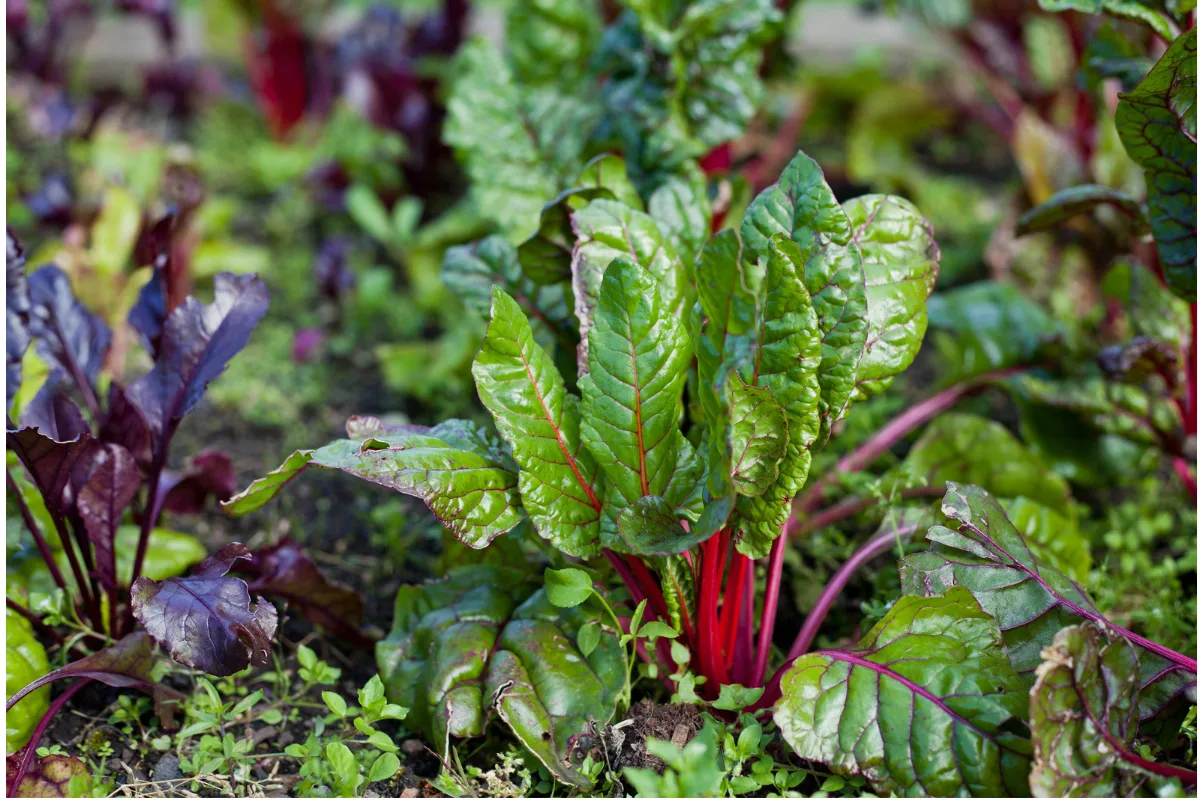
Beetroot is a short crop, so it fits easily into mixed vegetable beds and along the sunnier edges of a young food forest.
It takes up relatively little horizontal space, and the leaves give you another harvest while the roots develop. Small succession sowings work well because you can pull a few roots at a time and refill the gaps with the next crop.
Keep it out of dense shade under established trees. Beetroot is compact enough to use in spare spaces, but it still needs enough light for the roots to develop properly.
Is Beetroot Native to Australia or a Weed?
No. Beta vulgaris is not native to Australia. Kew records the species as native from western Europe and the Mediterranean east into parts of western and southern Asia, with the species introduced in several Australian states.
Garden beetroot is a cultivated food crop rather than an Australian native vegetable. If you allow plants to flower for seed, remove old seed stalks once you have collected what you need if you do not want seed scattering through the bed.
Sources I Checked
- Kew Plants of the World Online — Beta vulgaris and B. vulgaris subsp. vulgaris
- Gardening Australia — Beetroot; Roots and Shoots; Spring Has Sprung; Cool Season Crops
- Royal Horticultural Society — Beetroot growing guide
- The Diggers Club — Beetroot collection and cultivar information
I used these for taxonomy and distribution, seed structure, Australian sowing and cultivation advice, harvest timing, bolting, propagation and named cultivar differences.
Questions People Ask
- How long does beetroot take to grow?
Many varieties can be harvested from about 8–10 weeks, with baby beetroot ready sooner and some cultivars taking longer. Use the seed packet as a guide, then judge the actual size of the root rather than relying on one fixed harvest date.
- Can you eat beetroot leaves?
Yes. Young beetroot leaves are edible raw or cooked, and larger tender leaves can be cooked much like silverbeet. If you still want the plant to produce a large root, avoid removing too many leaves at once.
- Do I need to soak beetroot seeds before planting?
No. Soaking the seed clusters for a few hours or overnight can speed germination, but it is optional. Dry seed germinates well as long as the seed bed stays evenly moist.
- Why do several beetroot seedlings come from one seed?
A beetroot 'seed' is usually a corky cluster containing more than one seed, so several seedlings can emerge from the same spot. Thin them once they are large enough to handle so each remaining root has enough room to develop.
- Can beetroot grow in shade?
Beetroot can grow with some shade, particularly in hot climates where light afternoon shade can be useful. Deep shade will usually give you slower growth and smaller roots, although you may still be able to harvest the leaves.
- Can you grow beetroot in pots?
Yes. Choose a pot around 20–25 cm deep for ordinary round varieties, use quality potting mix and sow directly. Thin the seedlings so each root has enough space to swell.
- Why is my beetroot not forming roots?
Check spacing first, then look at excess nitrogen, low light and compacted soil. Crowding is especially common with beetroot because one seed cluster can produce several seedlings.
- Is beetroot a winter vegetable in Australia?
It is better thought of as a mild-weather crop. Winter suits many subtropical and warm parts of Australia, while cooler districts can often grow it from spring through autumn.

Getting a Steady Beetroot Harvest
The easiest way to keep beetroot coming is to sow a short row every few weeks while the weather suits it. Thin each row early, keep the water steady and start harvesting the smaller roots first; the plants left behind gain more room to finish.