



Plant profile
Beetroot
Beta vulgaris
Also known as Beet.
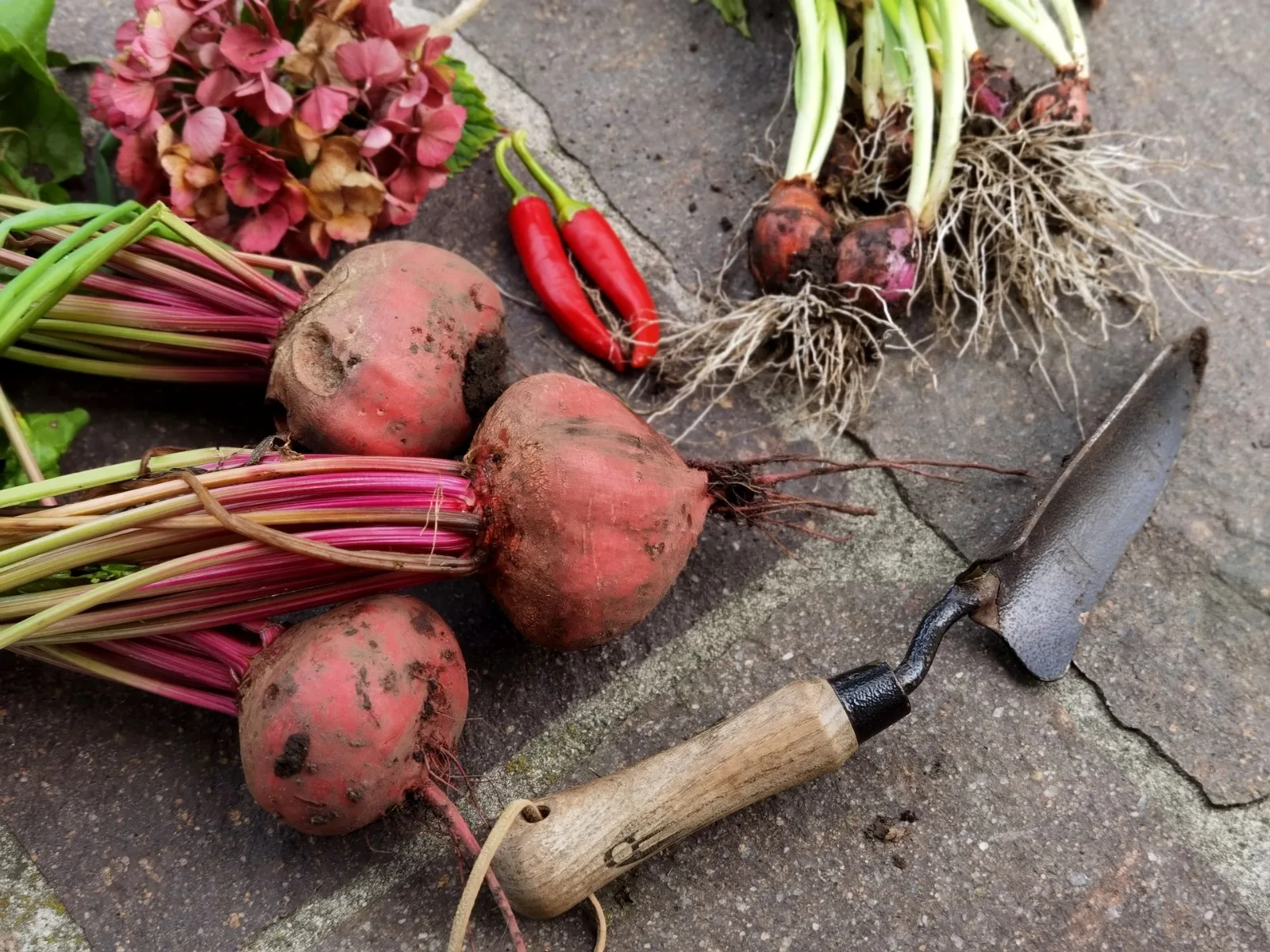
Beetroot is a quick root crop that also gives edible leaves. It grows best in loose soil and mild conditions.
- Grows well in
- Tropical, Subtropical, Temperate, Cool / mountains, Arid / inland, Mediterranean
- Lifecycle
- Cool to mild-season annual root crop
- Light
- Full sun, Part shade
- Mature size
- The leafy tops usually reach about 20–40 cm high, with root size depending heavily on variety and harvest age.
- Spacing
- Thin or plant to about 7–10 cm apart for ordinary roots; give large varieties a little more room.
- Growth habit
- Low-growing leafy rosette that develops a swollen storage root beneath the crown.
- Native range
- Azores and western Europe through the Mediterranean to western Asia and India
- Natural habitat
- Temperate coastal and inland habitats; wild forms are common on coasts, salt-influenced ground and open disturbed sites.
When to plant
Tropical
April–August
Subtropical
March–September
Temperate
February–June, August–November
Cool / mountain
March–June, September–November
Arid inland
March–September
Mediterranean
March–June, August–November
Tropical and subtropical: sow mainly through autumn and winter. Temperate and Mediterranean: autumn through spring. Cool climates: spring through early autumn, avoiding severe heat and hard frost around young seedlings.
Full growing guide
How to Grow Beetroot Plants in Australia
Beetroot is an easy, productive crop for Australian gardens, with edible roots and leaves. Learn when to sow it for the best harvest.
Read the full growing guidePlanting
Direct sow the seed clusters into loose, fertile soil and thin seedlings early because crowded roots stay small and misshapen. Sow small batches every few weeks during the suitable season if you want a steady harvest rather than one large crop.
Position and light
Full sun is best through mild weather. Part shade is useful in hot districts where strong afternoon heat can check growth or make roots coarse.
Soil
Loose, fertile, well-drained soil. Stones and heavy clumps can distort root shape, so dig the bed over well before sowing.
Watering
Keep soil moisture fairly even during root growth. Irregular watering, especially a dry period followed by heavy rain, can cause roots to split.
Feeding
Use a light balanced feed if soil fertility is low, but avoid excess nitrogen, which encourages leafy top growth at the expense of root size.
Pruning
No pruning is needed; young leaves can be harvested lightly.
Harvest
Pull roots when they reach the size you want, often around 8–10 weeks for quick varieties. Do not leave mature roots sitting indefinitely because they become woody. Young leaves can also be harvested lightly without removing the central growing point.
Propagation
Grow from seed sown directly where the roots will mature. Each corky seed cluster can contain more than one true seed, so thinning is usually needed after emergence.
Common problems
Leaf miners, caterpillars, compacted soil and bolting can occur. Bolting is more likely from an early cold snap after sowing or from prolonged dry stress.
Worth knowing
Beetroot is the same species as silverbeet and sugar beet, Beta vulgaris, selected for a swollen storage root. Golden, white and striped cultivars are available as well as the familiar deep red types. Young leaves and stems are edible and can be cooked much like silverbeet.

Grow Beetroot with Brancho
Add it to My Garden and Brancho works out what it needs next, timed for your climate.
How it grows around Australia
Growing this too? Share what you've noticed in your garden.

Grow a Little Wild
New plants to try, useful growing tips and a few garden jobs based on what you grow.