

Chaya is a productive perennial leafy vegetable for warm Australian gardens. Keep the shrub within picking height and you can harvest fresh leaves repeatedly through warm weather instead of resowing a short-lived leafy crop every few weeks.
It suits tropical and subtropical gardens especially well, including hot, humid areas. Cook the leaves before eating them; that part is essential.
- Botanical name: Cnidoscolus aconitifolius
- Also known as: Tree spinach, Mexican tree spinach
- Family: Euphorbiaceae
- Plant type: Perennial leafy shrub
- Best climates: Tropical and subtropical
- Position: Full sun to part shade
- Typical size: About 2–4 m high if left unpruned; easily kept lower by regular cutting
- Harvest: Young to medium leaves and tender shoots from established plants
- Propagation: Stem cuttings
- Food safety: Never eat chaya leaves raw. Boil thoroughly before eating.
What Is Chaya?
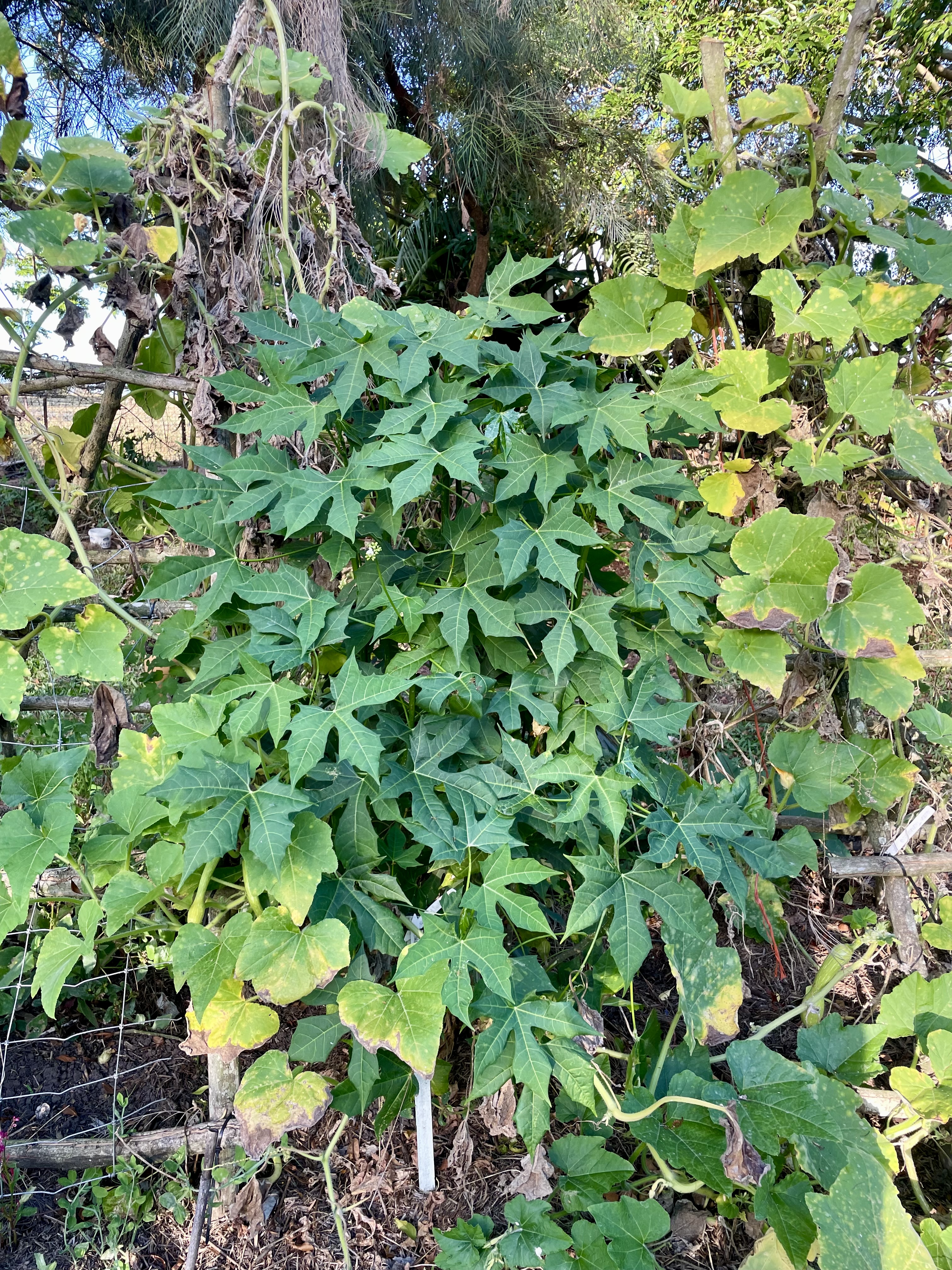
Chaya is a large perennial shrub in the spurge family, Euphorbiaceae, grown for its edible leaves and tender shoots. Kew accepts the botanical name Cnidoscolus aconitifolius and records its native range from Mexico through Central America, where it grows naturally in seasonally dry tropical vegetation.
You may also see the names tree spinach and Mexican tree spinach. It is not closely related to true spinach. The comparison comes from the way the cooked leaves are used as a green vegetable.
In a warm garden, chaya can grow into a substantial branching shrub. Regular harvesting and pruning keep it much smaller and put fresh shoots where you can reach them.
Where Does Chaya Grow Best in Australia?
Chaya suits tropical and subtropical Australia best. It grows through hot weather and can handle both seasonally dry tropical conditions and humid lowland climates once established.
In frost-free tropical gardens, growth can continue for much of the year as long as moisture is available. Subtropical plants usually slow as temperatures fall, and cold weather can damage leaves and stems. ECHO reports that plants exposed to occasional frost can die back and then reshoot from the base, but repeated or severe cold makes chaya a much less reliable crop.
Warm temperate gardeners can experiment with a sheltered position if winter cold is mild, but this is not a natural fit for cold or mountain climates. If your winters regularly bring hard frost, another perennial green is likely to be more productive.
Are There Different Types of Chaya?
Chaya occurs in cultivated and wilder forms, and this matters when you handle the plant. ECHO describes domesticated forms as Chaya mansa and wilder forms as Chaya brava. Wild forms characteristically have stinging hairs that can irritate skin, while cultivated material is often selected for fewer or no stinging hairs.
Older references may use botanical names such as Cnidoscolus chayamansa or Cnidoscolus chaya. Kew now treats both of those names as synonyms within Cnidoscolus aconitifolius subsp. aconitifolius.
If you are buying a plant or cutting, ask whether the parent plant has stinging hairs. A smooth cultivated form is much nicer to harvest, but the lack of hairs does not change the food-safety rule. The leaves still need cooking before eating.
How to Plant Chaya
Plant chaya once the weather and soil are warm. Choose a permanent position with enough room for a branching shrub, even if you plan to keep it low by pruning. Around 1.5 to 2.5 metres between plants gives each shrub useful growing space and access for harvesting.
Chaya grown from a rooted cutting can go into the ground at the same depth it was growing in its pot. Water it in, then keep the soil lightly and consistently moist while new roots establish. Avoid treating a fresh cutting like an established drought-tolerant shrub because it has very little root system at first.
Think about access before planting. A chaya tucked behind other large shrubs becomes awkward to prune and pick once it reaches two metres or more.
Sun and Soil for Chaya
Chaya grows in full sun or part shade. Full sun usually gives strong, compact growth when water is available, while light shade can produce larger, softer leaves and can be useful in very hot exposed gardens.
It adapts to a broad range of soils, but drainage is important. ECHO notes that chaya does not tolerate waterlogged soil, so low spots that remain saturated after heavy rain are poor planting sites. In high-rainfall tropical gardens, a slightly raised position can be useful.
Add compost to poor soil and mulch the surrounding root zone once the plant is established. Keep mulch back from the stem, particularly while a new cutting is rooting.
How Much Water Does Chaya Need?
New plants need regular moisture while roots form and spread into the surrounding soil. Keep the soil damp enough for active growth without leaving the base saturated.
Established chaya handles periods without rain much better, but reliable moisture produces faster regrowth and more tender leaves. If you are growing it primarily as a leafy vegetable, there is little benefit in repeatedly pushing the shrub to the point where growth stops.
Reduce watering in cool weather when the plant is growing slowly. This is particularly important in subtropical gardens, where cold soil and excess moisture can be a poor combination for the roots.
Feeding Chaya for Leaf Growth
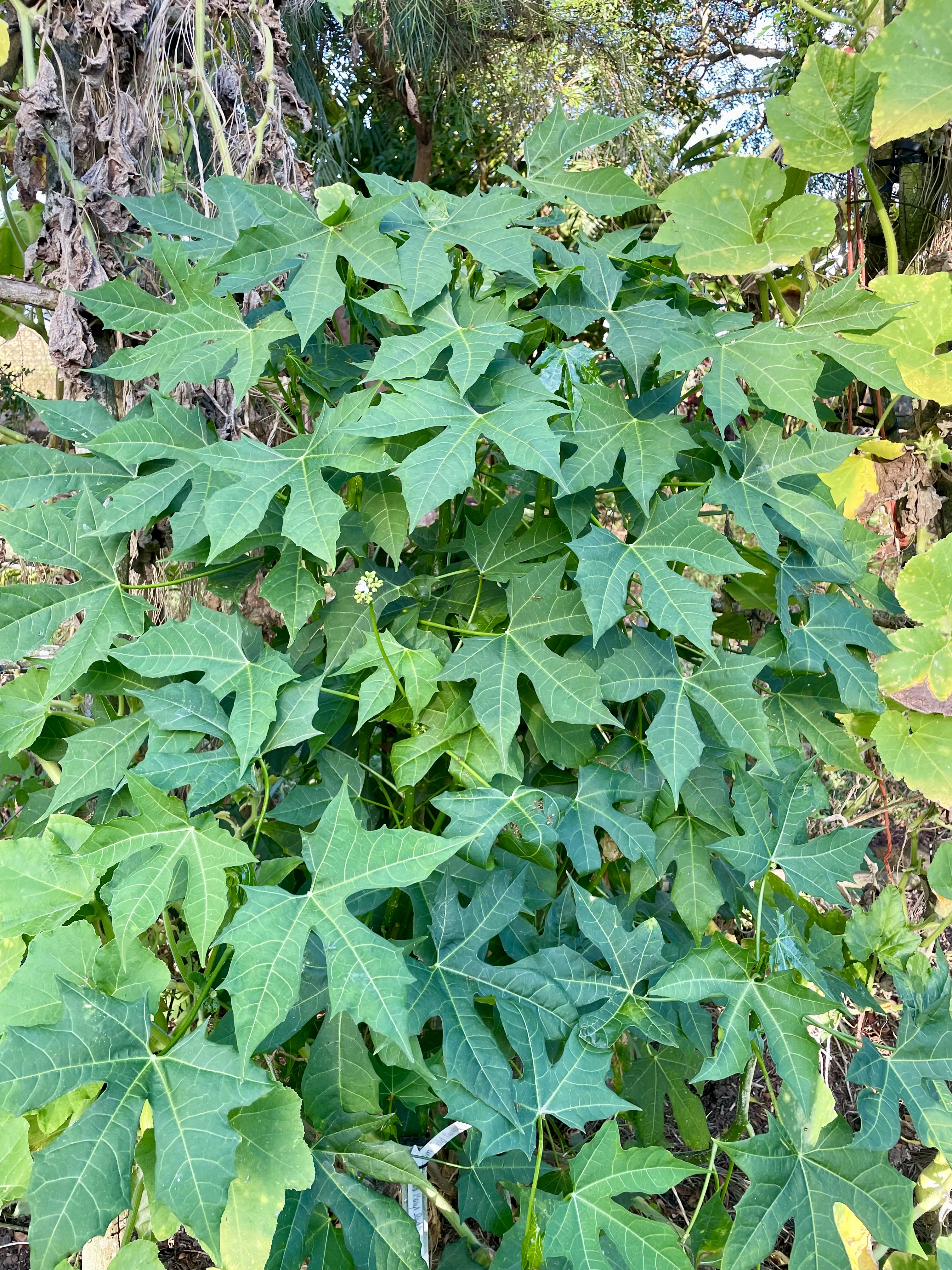
Chaya can grow in modest soil, but a plant that is harvested regularly is continually exporting nutrients in its leaves and stems. Compost, organic mulch and a light balanced feed during active growth can replace some of what you remove.
Watch the plant rather than feeding on a rigid calendar. A shrub making plenty of healthy new growth in fertile soil may need very little extra fertiliser, while a heavily harvested plant on sandy ground can use more support.
Return non-edible prunings to the compost or use suitable healthy material as mulch around other plants. Do not leave thick fresh stems pressed against the chaya trunk where they can trap moisture.
How to Prune Chaya and Keep It Within Reach
Without pruning, chaya can become a shrub several metres high. Regular cutting keeps the canopy lower, encourages branching and gives you more young shoots at a practical picking height.
Start shaping once the plant is established and growing strongly. Shorten tall stems above a useful branch point and let several new shoots develop below the cut. ECHO describes pollarding, cutting the upper framework back while retaining a trunk and lower structure, as a useful way to maintain tender shoot production.
Wear gloves when pruning until you know your plant well. Some forms have irritating hairs, and the white sap can also irritate skin.
When and How to Harvest Chaya Leaves
Let a young chaya establish before you begin taking leaves heavily. Once it is growing strongly, pick young to medium leaves and tender stem tips. The newest leaves are usually the softest for cooking.
Harvest a portion of the new growth rather than stripping every leaf from a branch. Established shrubs tolerate repeated picking and quickly replace harvested shoots during warm growing weather.
Use gloves if your plant has stinging hairs or if the sap irritates your skin. Wash harvested leaves before cooking, then prepare them using the boiling method in the next section.
How to Cook Chaya Safely
Do not eat chaya leaves raw. They contain cyanogenic glycosides, compounds that can release hydrogen cyanide when plant tissue is damaged. Cooking is therefore a food-safety step, not simply a matter of texture or flavour.
For a clear home-kitchen rule, boil chaya leaves in water for at least 15 minutes, then discard the cooking water. ECHO gives this 15-minute boiling method for chaya. A 2026 study in Foods also found that boiling reduced hydrogen cyanide in the tested chaya leaves by 99.94%, confirming boiling as an effective detoxification method.
Do not use raw chaya in salads, green smoothies or juices. Once properly boiled, the leaves can be drained and used much like other cooked leafy greens in soups, curries, egg dishes, rice dishes or as a simple cooked vegetable.
Grow a Little Wild
New plants to try, useful growing tips and a few garden jobs based on what you grow.
What Are Chaya Leaves Like to Eat?
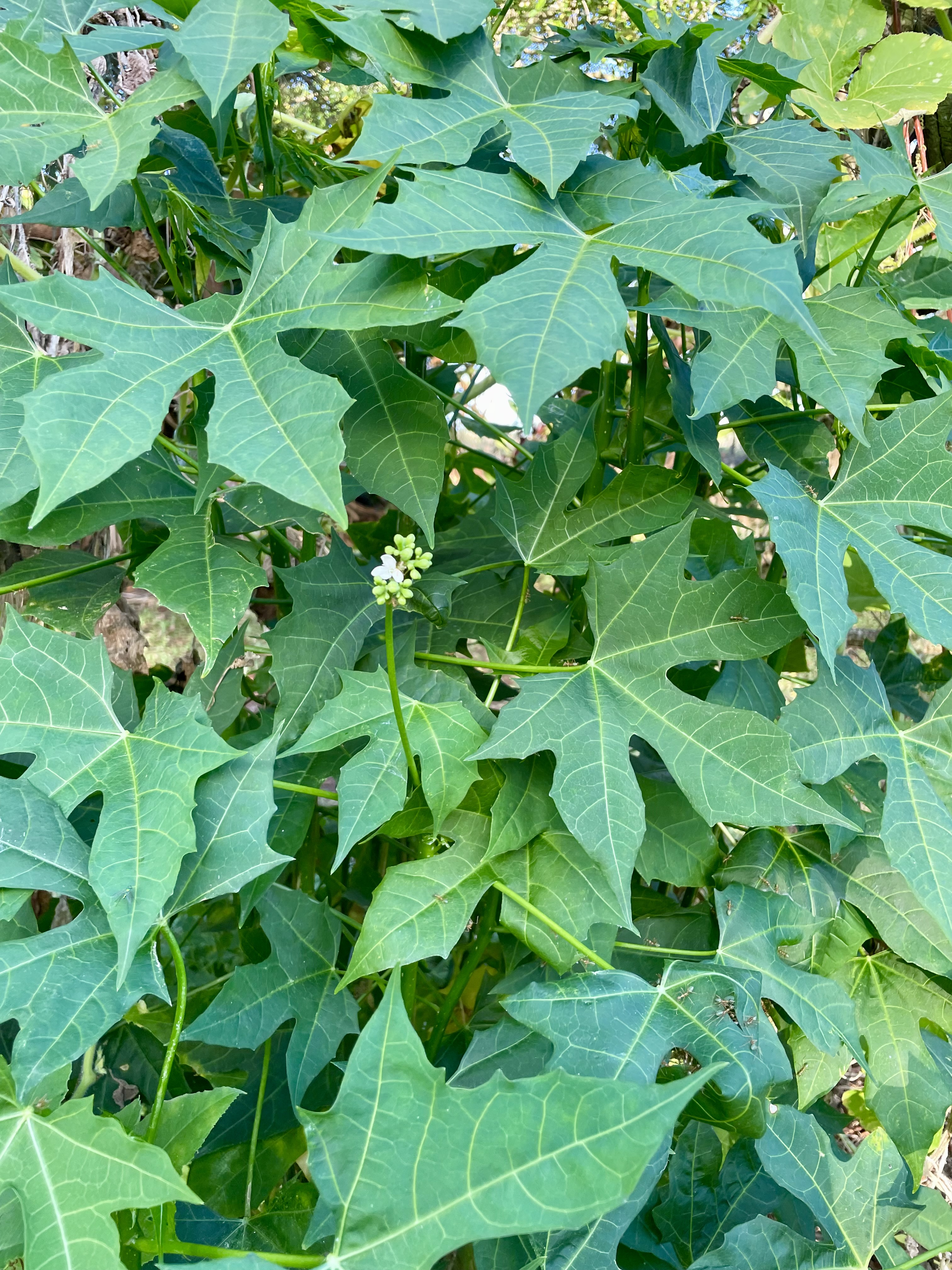
Cooked chaya is a substantial green vegetable rather than a delicate salad leaf. The leaves soften with cooking and can be used in many of the same meals where you would use cooked spinach or other leafy greens.
Research on edible Cnidoscolus leaves has found useful levels of protein, fibre, calcium, potassium, iron, beta-carotene and vitamin C. Cooking changes the nutrient profile, and the 2026 boiling study found large differences in how well individual nutrients were retained. Food safety still takes priority, so the answer is not to shorten cooking simply to preserve more vitamins.
If you are new to chaya, start by using a modest amount of the cooked leaves in a familiar dish. That gives you a good idea of the flavour and texture before you plan larger harvests.
How to Grow Chaya From Cuttings
Stem cuttings are the normal way to propagate chaya because cultivated plants rarely produce useful seed. Choose healthy planting material from a plant you would be happy to duplicate, especially if it is a smooth form without stinging hairs.
ECHO recommends somewhat woody cuttings around 15 to 60 cm long. Keep track of which end was originally the top, because the cutting needs to be planted right way up. Allowing the cut surface to dry before planting can reduce rotting, particularly in humid conditions.
Set the cutting upright or on a slight angle in free-draining soil or propagation mix. Water sparingly until roots develop. New leaves can appear before a cutting has a strong root system, so do not begin harvesting as soon as the first shoots open.
Why Is My Chaya Cutting Rotting or Not Growing?
Rot is the main risk while a thick chaya cutting has little or no root system. Soil that stays saturated, a cutting planted upside down, damaged planting material or cool conditions can all reduce establishment.
If the base becomes soft and dark, remove the cutting and inspect it rather than continuing to water. Healthy remaining stem can sometimes be recut above the damaged section, allowed to dry, and replanted into a cleaner, freer-draining mix.
Patience matters with apparently dormant cuttings. Warmth encourages rooting and shoot growth, and a cutting can take time to establish even if the stem still looks sound.
What Happens to Chaya in Winter?
In tropical gardens, winter may only slow chaya slightly. In subtropical areas, shorter days and cooler temperatures can noticeably reduce leaf production, and exposed plants may lose leaves or suffer stem damage during cold snaps.
Wait for warm weather before deciding how much cold-damaged wood to remove. If the base and lower stems remain alive, new shoots can emerge as temperatures rise.
Do your heavier shaping in warm weather when regrowth is active. A large pruning just before the coldest part of the year leaves the plant with less canopy and little opportunity to replace it.
Chaya Insects and Diseases
Chaya is generally a robust perennial vegetable, but it is not immune to problems. ECHO records root-knot nematodes as a possible issue on young plants and notes that leaf-eating caterpillars can defoliate foliage. In an Australian garden, the exact caterpillar species will depend on your region.
Root problems are more likely where drainage is poor. If an established plant suddenly wilts despite moist soil, check the root zone and stem base before adding more water.
Chaya has also been reported with cassava common mosaic virus overseas. Because the crop is propagated vegetatively, start new plants from healthy, vigorous parent material rather than taking cuttings from shrubs showing unexplained mottling, distortion or weak growth.
Does Chaya Flower and Produce Seed?
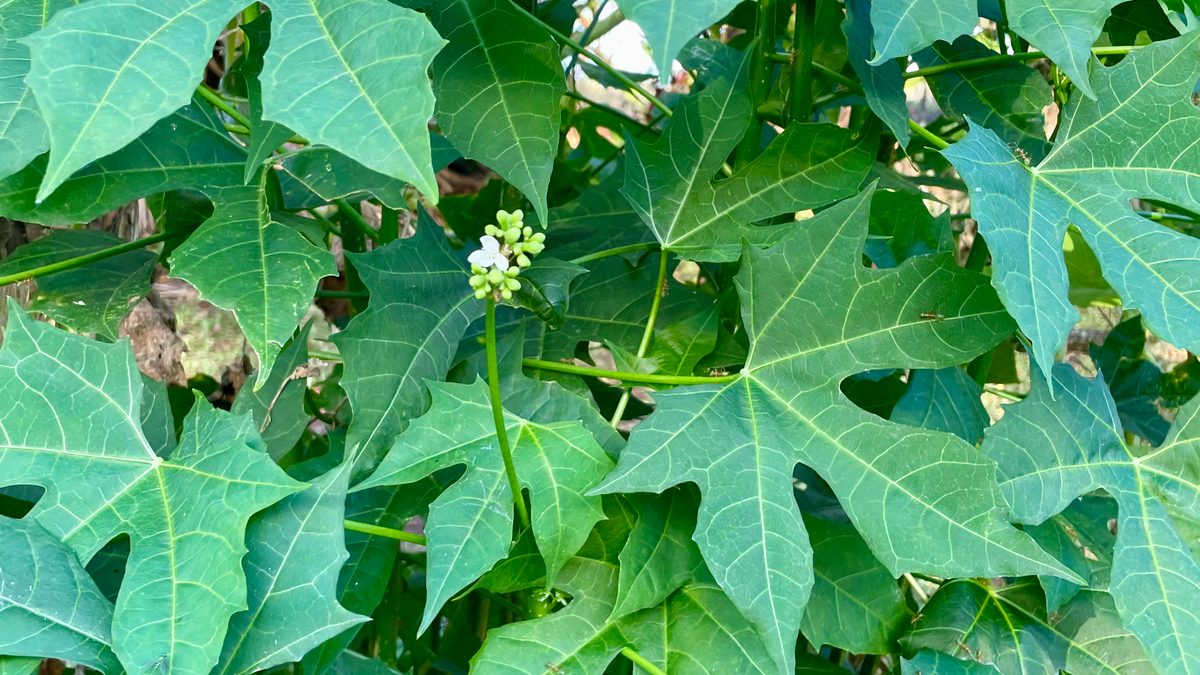
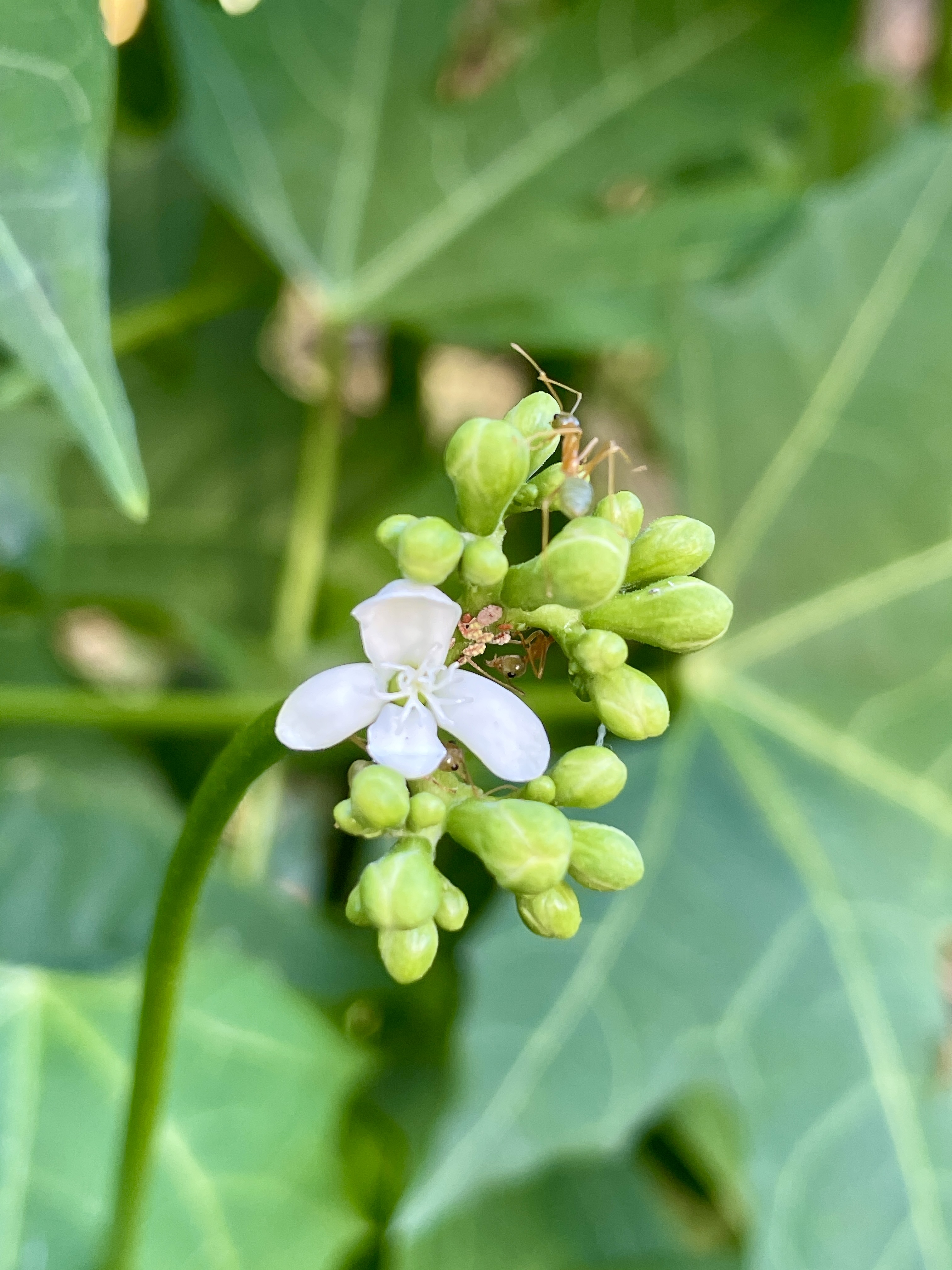
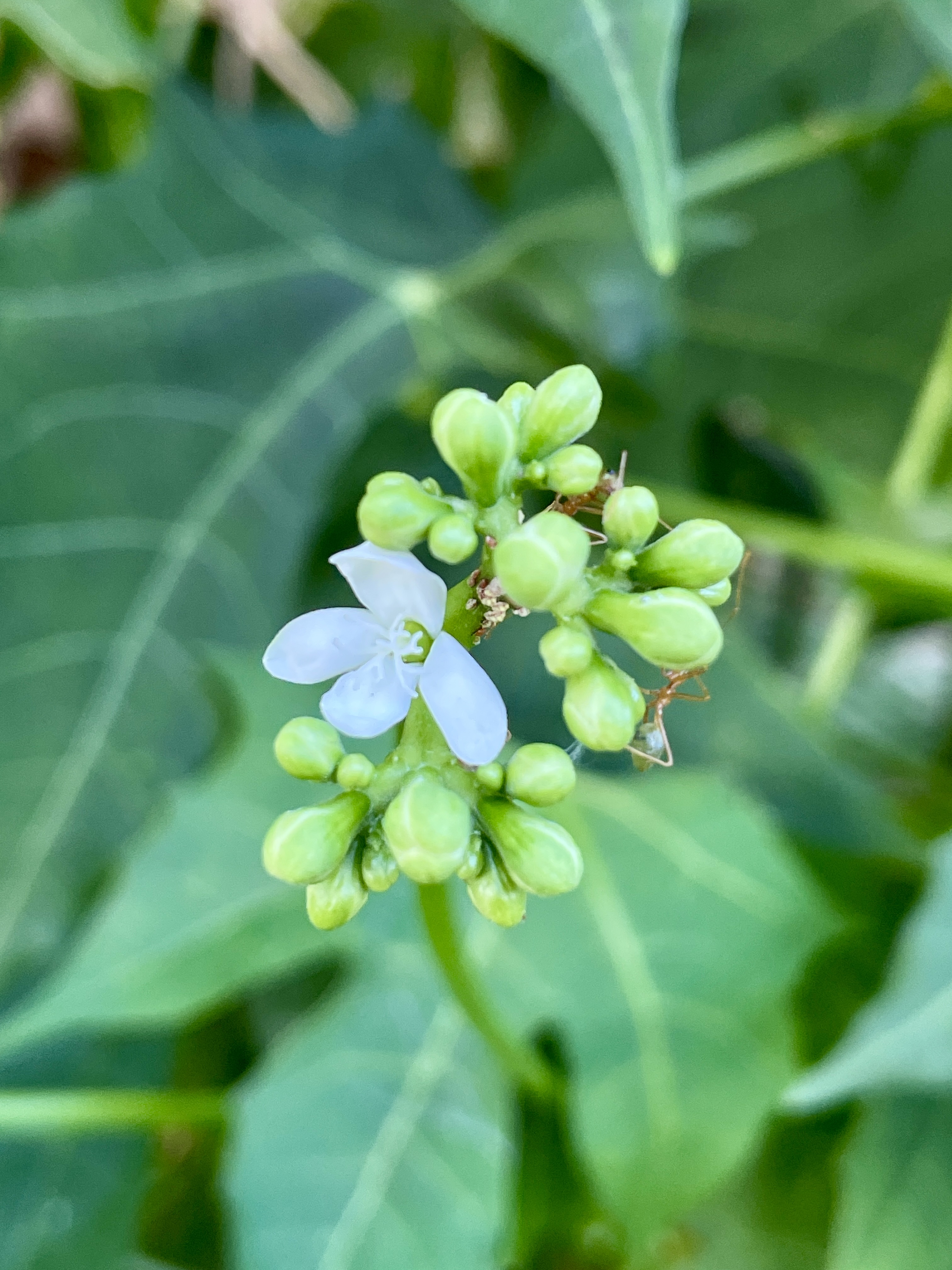
Chaya can produce clusters of small white flowers, but cultivated forms often set little or no viable seed. That is why gardeners normally pass the plant around as stem cuttings.
Flowering does not mean you need to stop harvesting the plant. If your aim is leaf production, keep the shrub at a manageable size and continue pruning for new vegetative shoots.
Seed-grown chaya is uncommon and does not offer the predictability of a cutting. A cutting gives you the same plant as the parent, including useful traits such as a lack of stinging hairs.
Where Chaya Fits in a Food Forest
Chaya works well as a shrub layer in tropical and subtropical food forests because repeated pruning can keep it below fruit trees while providing regular edible leaves. Put it somewhere you can reach from a path, since a productive plant is much more useful when harvesting does not involve pushing through other vegetation.
It can also be used as a loose edible screen or at the back of a vegetable area. Give neighbouring plants enough space and light, because an unpruned chaya develops a broad canopy.
Pruning creates plenty of leafy material for composting and soil cover. Keep the edible harvest separate from garden prunings, especially if you are cutting older stems or handling a form with irritating hairs.
Is Chaya Native or Weedy in Australia?
Chaya is not native to Australia. Kew records Cnidoscolus aconitifolius as native from Mexico through Central America and does not list Australia in its recorded introduced distribution.
The Brancho plant profile weed review did not find a specific Australian weed listing in the sources checked in September 2026. That is not the same as saying a plant could never spread outside cultivation, so manage unwanted shoots and garden waste sensibly and follow any local biosecurity advice that applies in your area.
Chaya Safety Beyond Cooking
The main food-safety rule is simple: do not eat raw chaya leaves, and boil harvested leaves thoroughly before eating them. Raw-leaf smoothies and juices are not a safe substitute for cooking.
Some chaya forms have stinging hairs, and the milky sap can irritate skin. Gloves are useful for harvesting and pruning, particularly when you do not know which form you have. Avoid getting sap in your eyes and wash exposed skin if irritation occurs.
Keep the distinction between an edible cooked leaf and the rest of the plant clear when children or visitors use the garden. Chaya is a useful food plant, but it is not a pick-and-eat green.
Sources I Checked
- Kew Plants of the World Online: Cnidoscolus aconitifolius and accepted synonyms
- Praditukrit et al. (2026), Foods: Impact of Boiling on Cyanogenic Detoxification and Nutrient Retention in Cnidoscolus aconitifolius Leaves
- ECHOcommunity: Cnidoscolus aconitifolius cultivation, propagation, harvesting and food-safety guidance
- ECHO Asia Seed Fact Sheet: chaya propagation and management
- Kuti & Torres (1999): nutrient composition of edible Cnidoscolus leaves
- Australian nursery information used only to cross-check warm-climate growing experience in southeast Queensland
These sources were used for taxonomy, native range, climate, propagation, harvest, plant forms, food safety, nutrition and insect interactions.
Questions People Ask
- Can you eat chaya leaves raw?
No. Chaya leaves contain cyanogenic glycosides and should not be eaten raw. Boil the leaves for at least 15 minutes and discard the cooking water before using them as a vegetable.
- Can I put raw chaya in a smoothie?
No. Blending does not replace the cooking step. Raw chaya should not be used in smoothies or juices because damaging the leaf tissue can release hydrogen cyanide from its cyanogenic compounds.
- How long should you boil chaya?
A practical home rule is to boil chaya leaves for at least 15 minutes, then discard the cooking water. ECHO recommends this method, and research confirms boiling is highly effective at reducing hydrogen cyanide in chaya leaves.
- Does chaya grow well in Queensland?
It is well suited to warm parts of Queensland, particularly tropical and subtropical districts. It grows strongly through warm weather but slows in cool conditions and can be damaged by frost.
- How big does a chaya plant get?
An unpruned chaya can grow into a shrub around 2 to 4 metres high and several metres wide. Regular pruning and harvesting can keep it much lower and easier to pick.
- Can you grow chaya from a cutting?
Yes. Stem cuttings are the usual propagation method. Use a healthy woody stem, keep it the right way up, let the cut surface dry briefly and root it in warm, free-draining conditions.
- Why is my chaya losing its leaves?
Cool weather can slow growth and cause leaf loss in subtropical gardens. Also check for saturated soil, root problems and extensive damage from leaf-feeding insects. If stems remain alive after cold weather, the plant may reshoot as conditions warm.
- Is chaya the same as tree spinach?
Chaya is commonly called tree spinach or Mexican tree spinach, but it is not true spinach. It is a perennial shrub in the Euphorbiaceae family and its leaves must be cooked before eating.
A Perennial Green for Warm Gardens
Chaya is most useful when you grow it as a regularly harvested shrub, not when you let it disappear into the back of the garden. Keep it within reach, take cuttings from your best plant and give it enough moisture to keep making tender growth. Once the cooking rule becomes part of the routine, one established shrub can provide a steady supply of leafy greens through much of the warm season.