

Plant profile
Chaya
Cnidoscolus aconitifolius
Also known as Tree spinach, Mexican tree spinach.
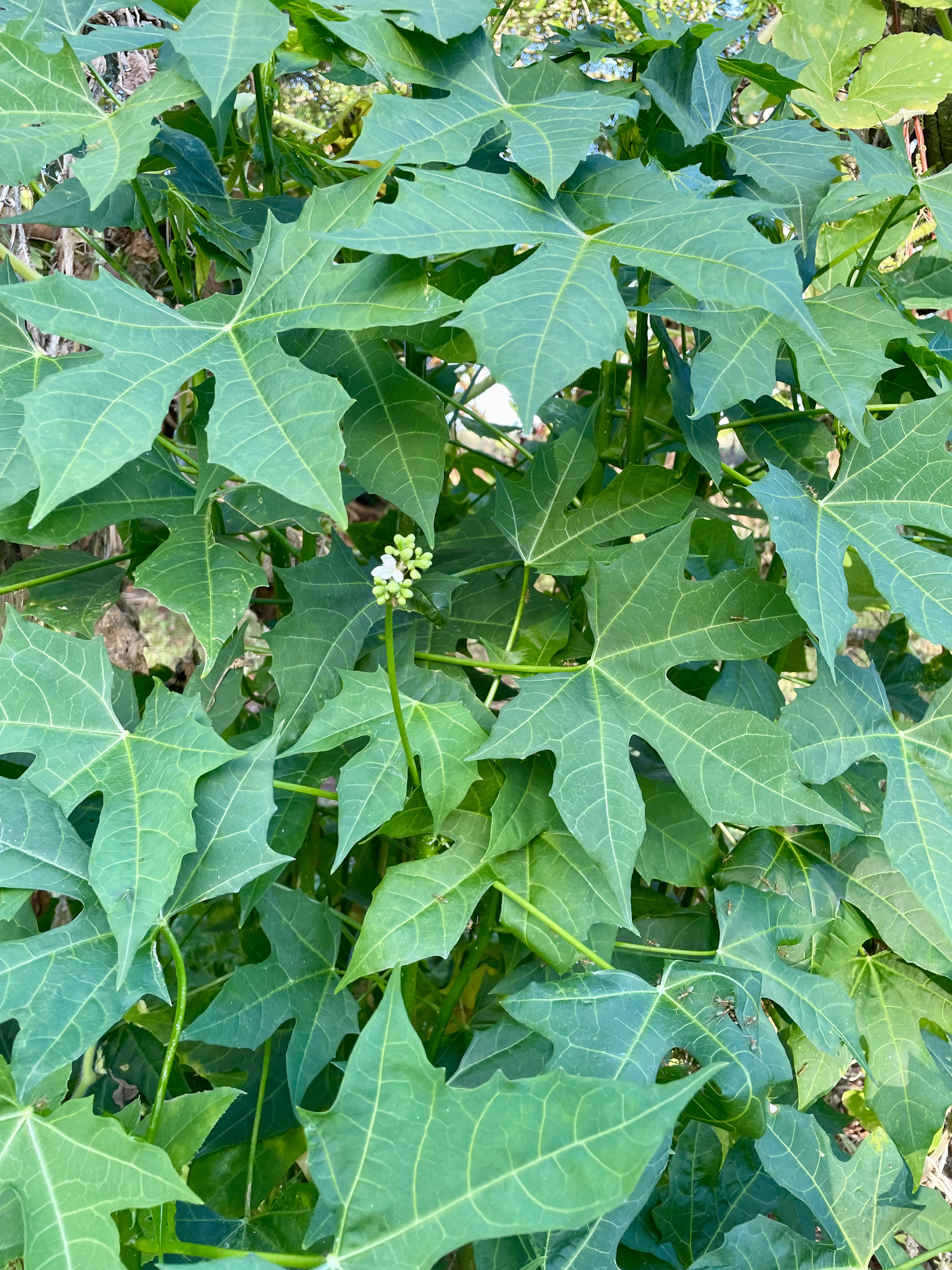
Chaya is a fast-growing leafy shrub for frost-free gardens. Once it is established, you can pick fresh leaves as it grows and keep the plant at a comfortable harvesting height. The leaves are used as a cooked green, but they must be boiled thoroughly before eating.
- Grows well in
- Tropical, Subtropical
- Lifecycle
- Evergreen perennial shrub in warm climates
- Light
- Full sun, Part shade
- Mature size
- Usually 2–4 m high and 2–3 m wide if left unpruned
- Spacing
- About 1.5–2.5 m apart
- Growth habit
- Large branching leafy shrub kept smaller by regular harvest and pruning
- Native range
- Mexico to Central America
- Natural habitat
- Seasonally dry tropical forest, woodland and scrub.
When to plant
Tropical
February–May, September–November
Subtropical
March–May, September–November
Temperate
September–November
Mediterranean
September–November
Tropical and subtropical: plant during warm, settled weather; avoid establishing it just before cold or prolonged waterlogging.
Full growing guide
How to Grow Chaya Plants in Australia
Grow chaya plants in warm Australian gardens for regular harvests of nutritious cooked leaves from a productive perennial shrub.
Read the full growing guidePlanting
Plant into warm soil after cold weather has passed. Give it room to become a large shrub and choose a spot where repeated leaf harvest is easy.
Position and light
Full sun to part shade. Part shade is useful in very hot, exposed sites.
Soil
Fertile, free-draining soil with plenty of organic matter. It handles short dry periods once established but grows more leaves with regular moisture.
Watering
Water regularly while establishing. Established plants handle some dry weather, but steady moisture produces softer, faster leaf growth.
Feeding
Mulch and add compost around the root zone. A light feed during active growth is enough if the soil is already fertile.
Pruning
Cut back regularly to keep leaves within reach and encourage fresh shoots. Hard pruning is best done in warm weather when regrowth is strong.
Harvest
Pick young to medium leaves once the shrub is growing strongly. Cook before eating; do not eat raw chaya leaves.
Propagation
Stem cuttings are the usual method. Let cut ends dry briefly, then root them in a free-draining mix or directly in warm soil.
Common problems
Cold and frost can damage stems. Root rot is more likely in saturated soil. Some forms have irritating hairs or sap.
Safety notes
Raw chaya leaves contain cyanogenic compounds and must be cooked thoroughly before eating. The sap and hairs can irritate skin, so gloves are sensible when pruning some forms.
Worth knowing
Chaya is best treated as a perennial leafy vegetable rather than a hedge. Regular cutting keeps harvests within reach and provides plenty of leafy prunings for the compost.
Grow Chaya with Brancho
Add it to My Garden and Brancho works out what it needs next, timed for your climate.
How it grows around Australia
Growing this too? Share what you've noticed in your garden.
Grow a Little Wild
New plants to try, useful growing tips and a few garden jobs based on what you grow.