
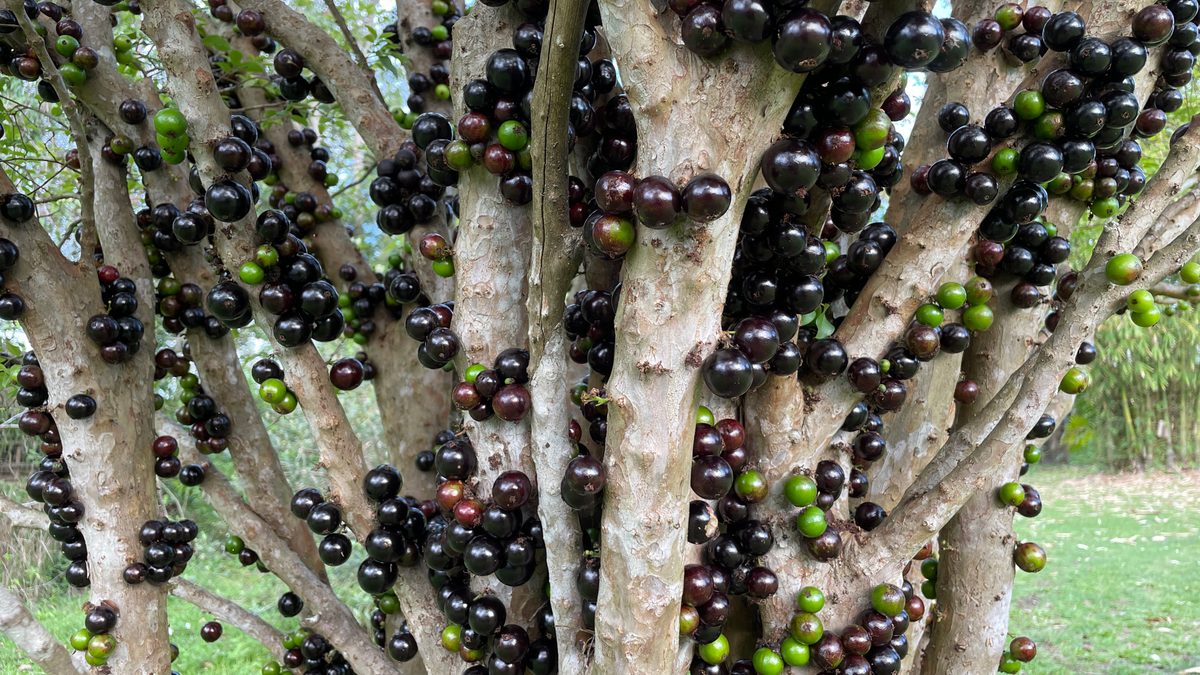

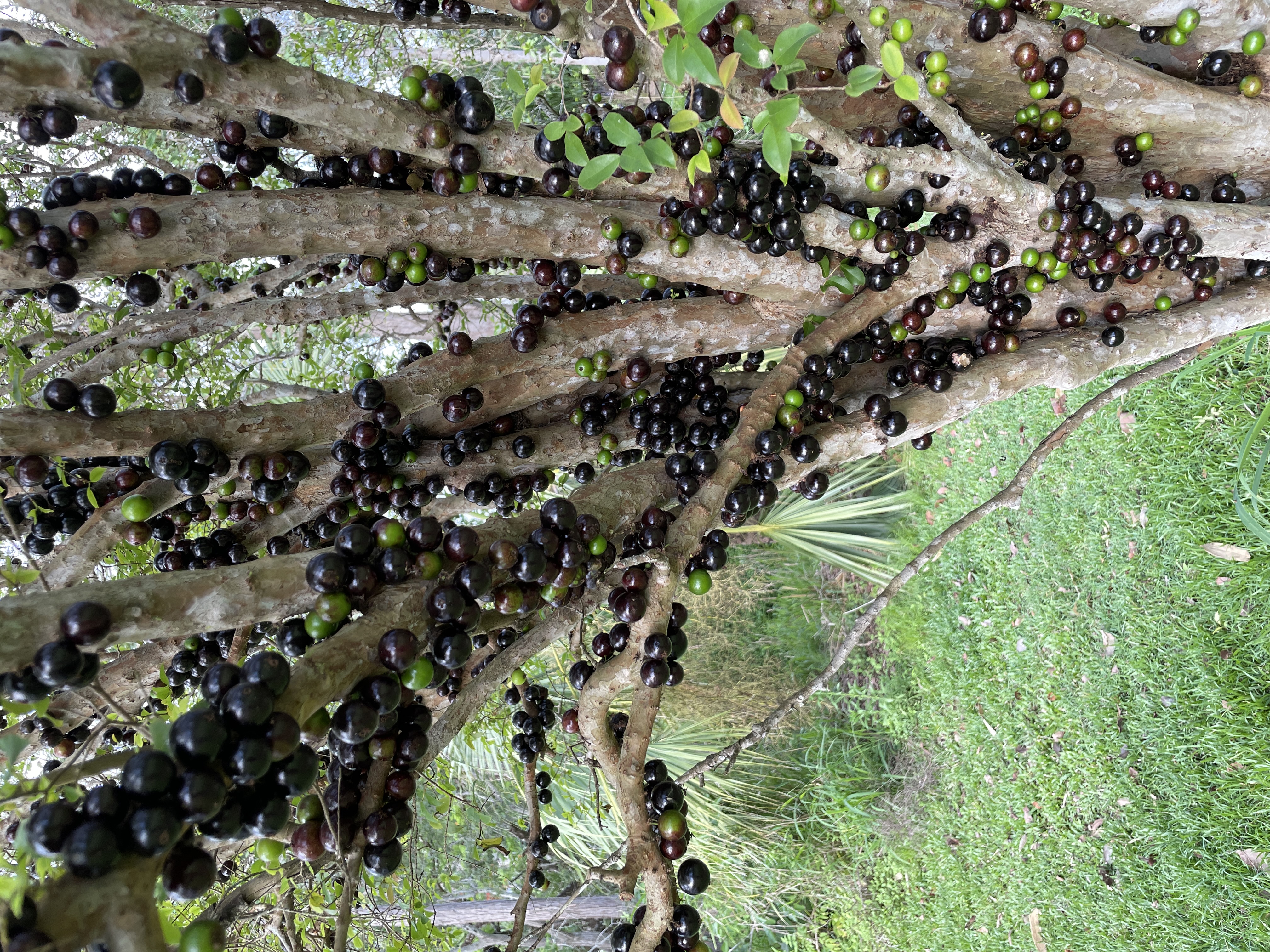
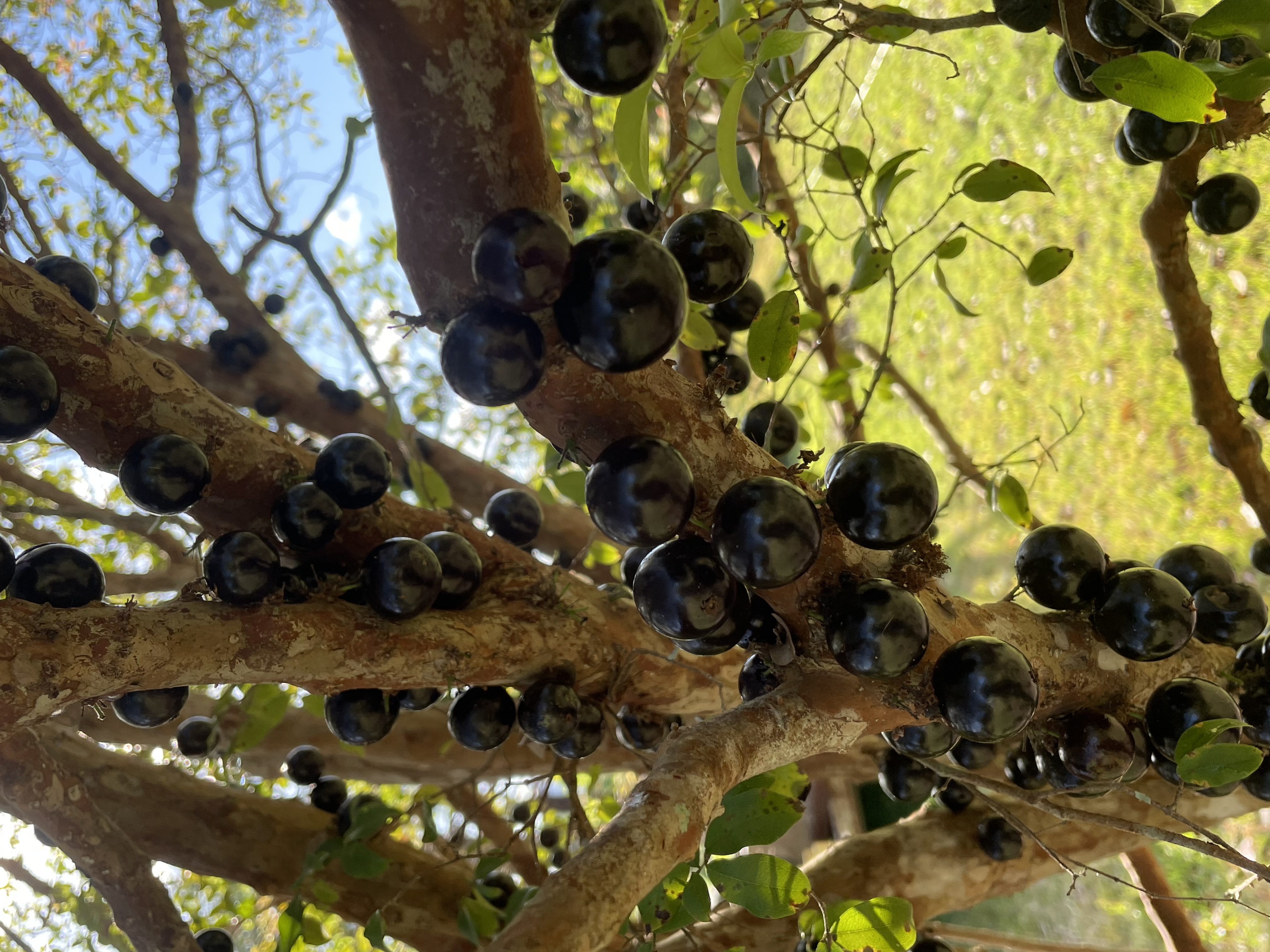
Jaboticaba is one of those fruit trees you can recognise immediately once it starts cropping. White flowers and dark purple fruit form directly on the trunk and older branches, sometimes covering the bark after a good flowering flush. The tree grows slowly, likes steady moisture and rich soil, and can eventually crop several times in a warm season. Australian nurseries sell several jaboticaba species and selections, so knowing which plant you have is useful when you compare size, fruit and time to first harvest.
- Botanical name: Plinia cauliflora
- Family: Myrtaceae
- Also known as: Brazilian grape tree; older references use Myrciaria cauliflora
- Plant type: Evergreen fruit tree
- Best climates: Subtropical, tropical and warm temperate
- Typical size: Usually about 3–6 m in gardens, depending on type and pruning
- Position: Full sun to part shade; protect young trees from extreme heat
- Fruit: Dark-skinned, grape-like fruit produced directly on trunk and old branches
- Pollination: A single tree can fruit
- Propagation: Seed, grafting and other vegetative methods depending on type
What Is Jaboticaba?
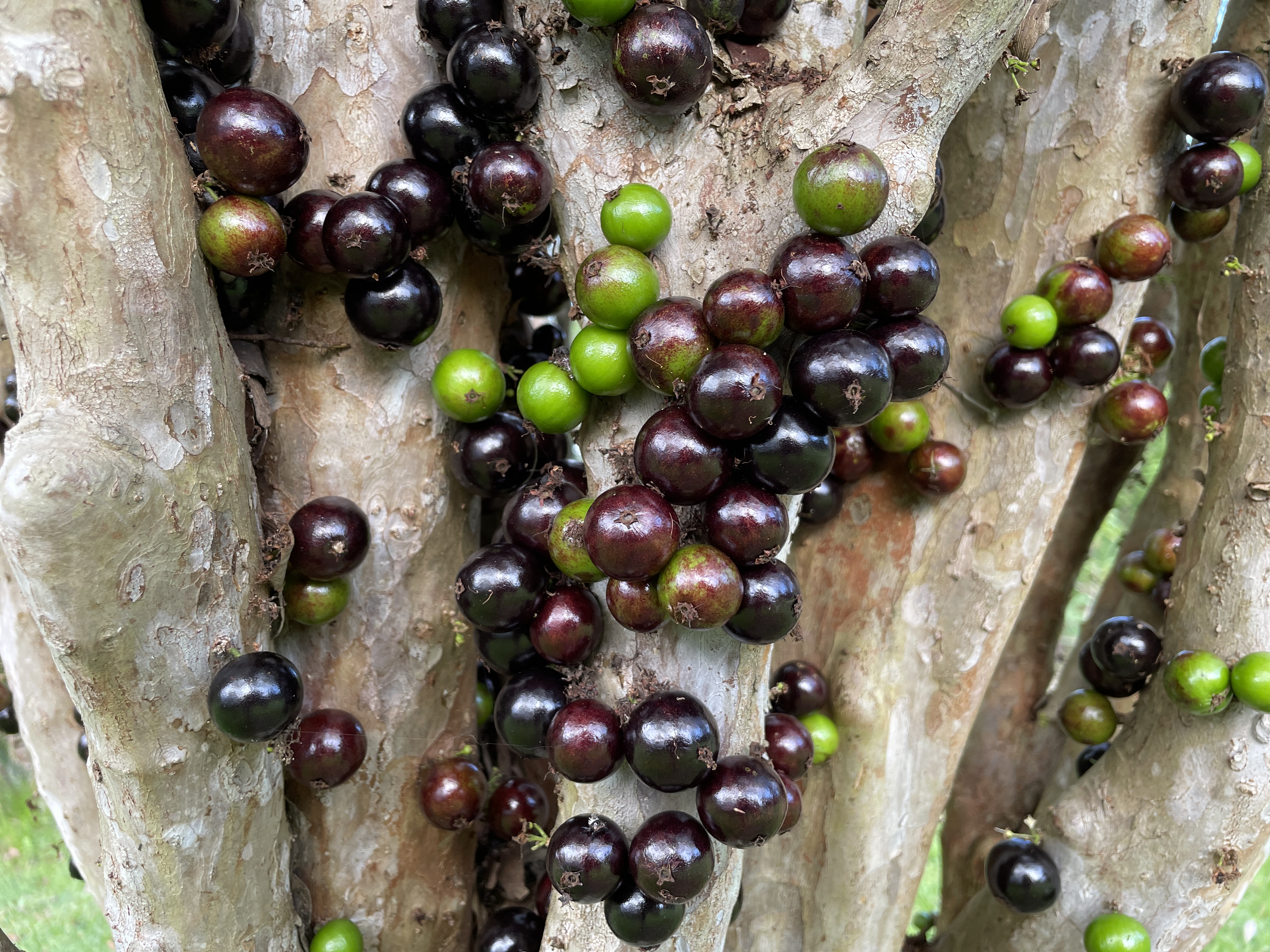
Jaboticaba is a South American fruit tree in the myrtle family, Myrtaceae. Brancho's profile uses Plinia cauliflora, the name accepted by Kew, which records its native range in eastern Bolivia and Brazil.
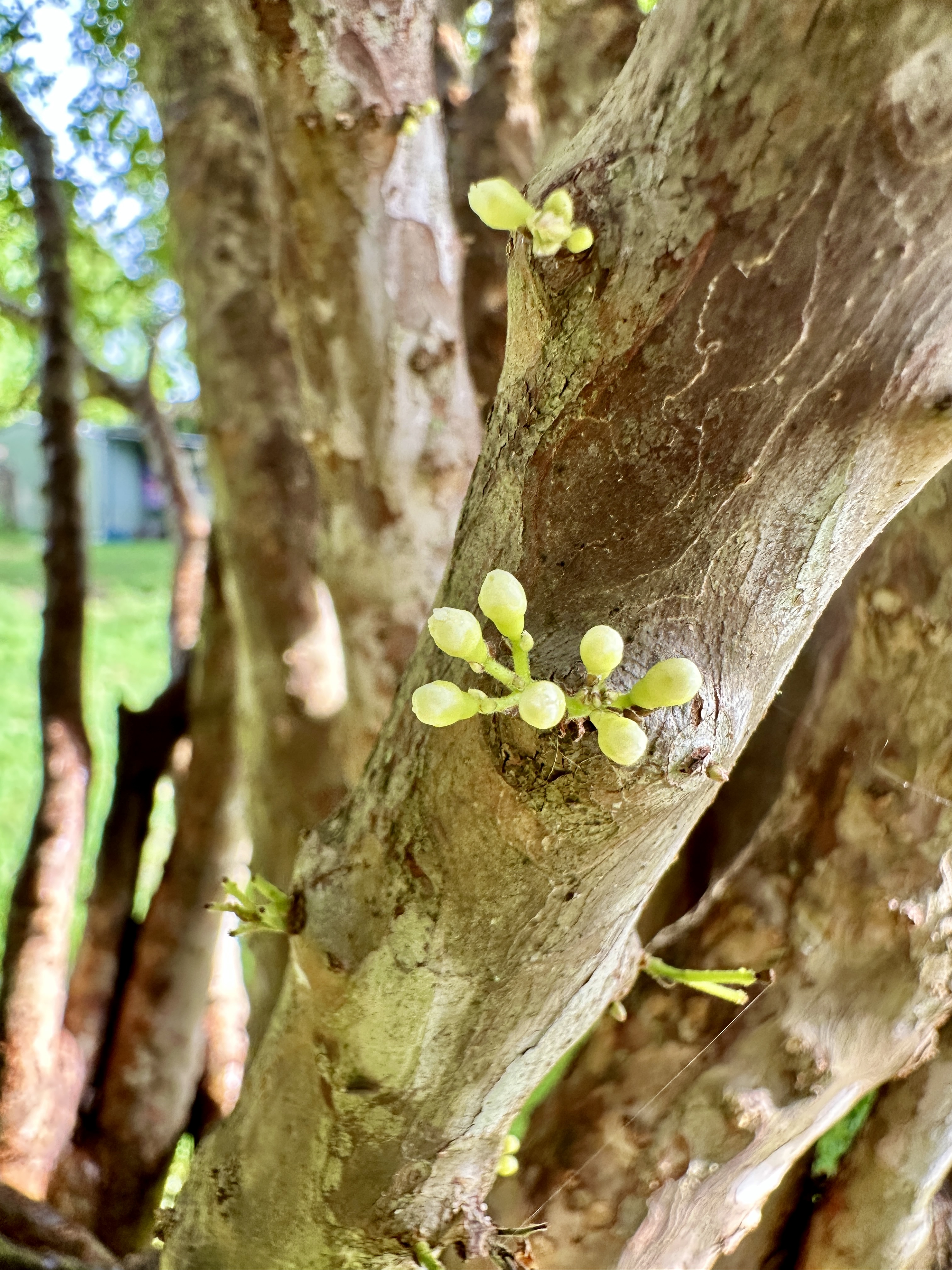
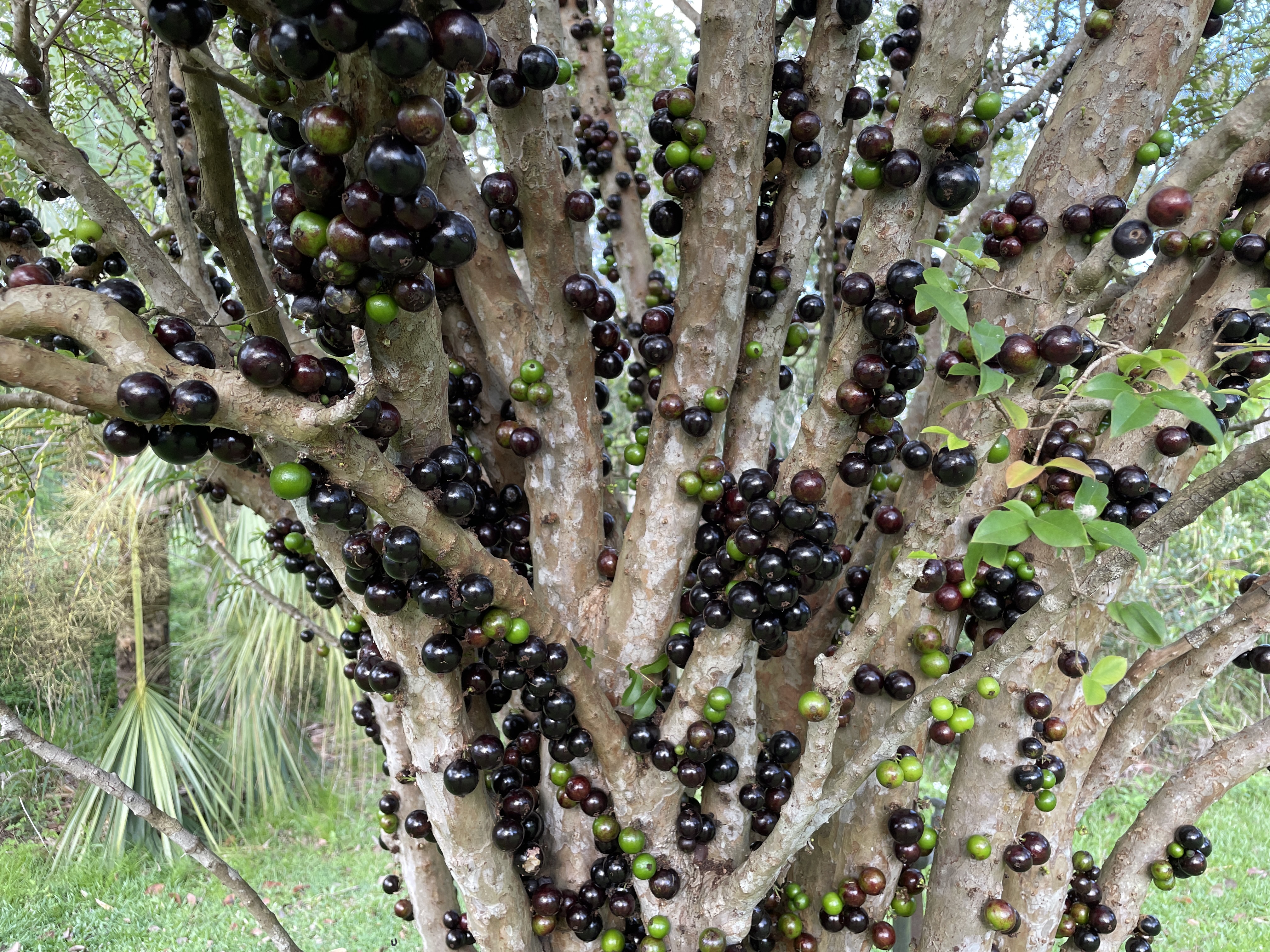
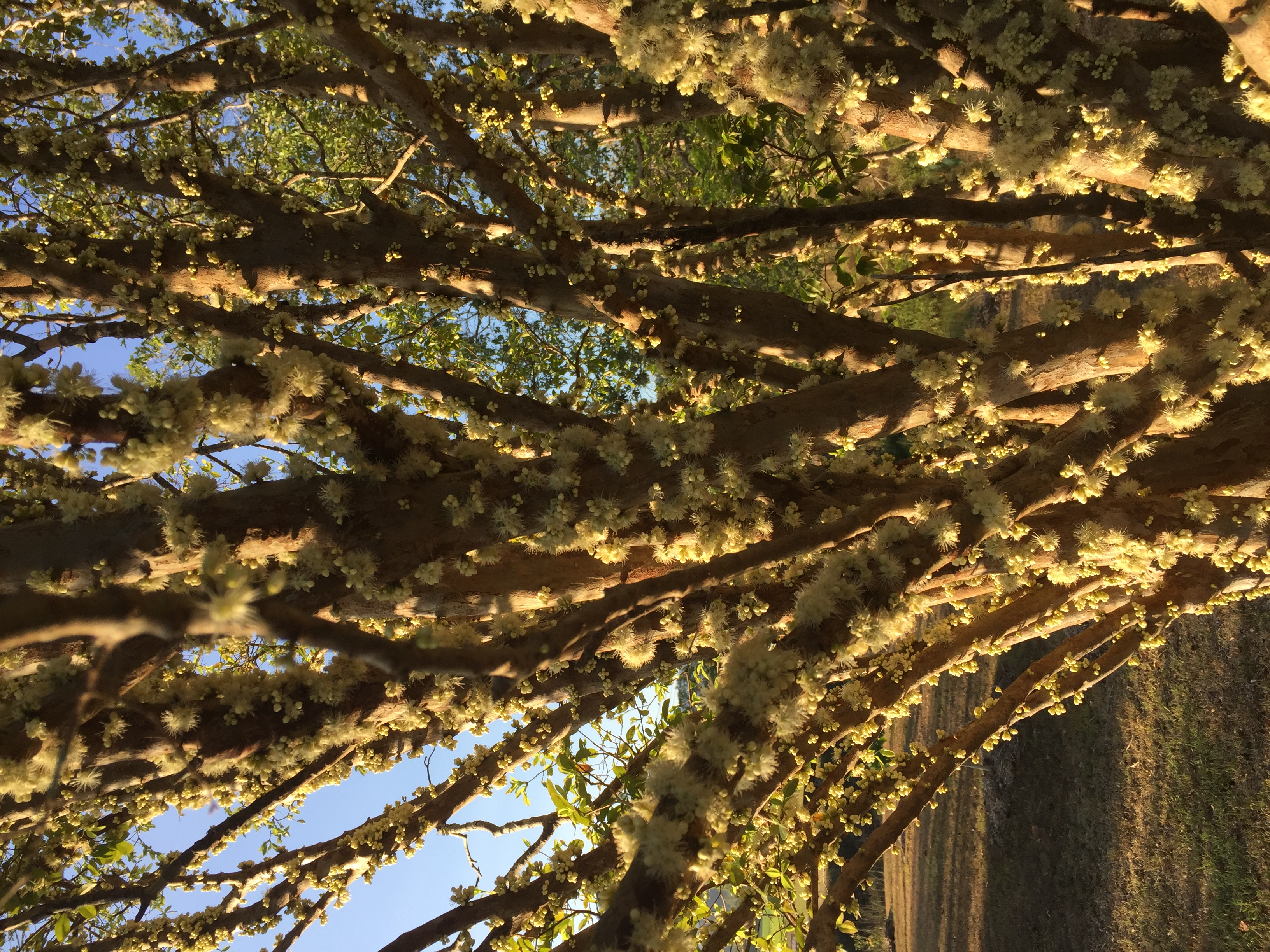
The tree is cauliflorous, meaning flowers and fruit form directly on the trunk and older woody branches instead of only at the ends of leafy shoots. Small white flowers are followed by rounded fruit that ripen from green through red-purple to deep purple or almost black on common dark-fruited forms.
The translucent pulp is sweet and juicy with a grape-like texture, usually surrounding one or more seeds. Fruit can be eaten fresh and is also used for jam, jelly, drinks and wine.
Why Does Jaboticaba Have So Many Botanical Names?
Jaboticaba naming is genuinely confusing because the common name is used for several related South American species and horticultural types. Older Australian references commonly call the standard jaboticaba Myrciaria cauliflora, while Kew now treats that name as a synonym of Plinia cauliflora. Kew also treats Plinia jaboticaba as a synonym of P. cauliflora.
That does not mean every tree sold with jaboticaba in its common name is the same species. Australian nurseries also sell named plants belonging to other Plinia species, including Plinia trunciflora, as well as dwarf and hybrid types.
Keep the nursery label if you have one. It is more useful than trying to identify a young jaboticaba from the common name alone, especially when you want to compare mature size or expected fruiting age.
Where Does Jaboticaba Grow Best in Australia?
Jaboticaba is well suited to subtropical Australia and also grows in tropical and warm temperate districts. Warm, humid conditions support active growth, but established trees can handle cooler weather better than many strictly tropical fruit trees.
In hot tropical gardens, young trees benefit from protection from harsh afternoon sun while their root systems establish. In cooler districts, a sunny sheltered position gives the tree a longer warm growing period and protects tender new growth.
Australian grower records include productive trees in Queensland and northern New South Wales, with container and garden plants also grown farther south. Frost tolerance varies with species, age and selection, so protect young trees even where mature jaboticabas are known to survive light frost.
Jaboticaba Types You May Find in Australia
The standard dark-fruited jaboticaba sold simply as Jaboticaba is commonly associated with Plinia cauliflora in Australian horticulture. You may also see Large Leaf and Small Leaf forms, which reflect older horticultural naming and do not always come with a clear modern species identification.
Red Hybrid and Scarlet jaboticabas are popular smaller-growing selections because they can begin fruiting younger than traditional seedling trees. Grimal is a dark-fruited jaboticaba valued for large fruit, while Cafe Rajada is sold in Australia as Plinia trunciflora and produces mottled fruit rather than the typical glossy black skin.
Yellow jaboticaba is another nursery common name, but it refers to a different species rather than a yellow-fruited form of P. cauliflora. Check the botanical name when buying so you know which growing information applies to your tree.
How to Plant a Jaboticaba Tree
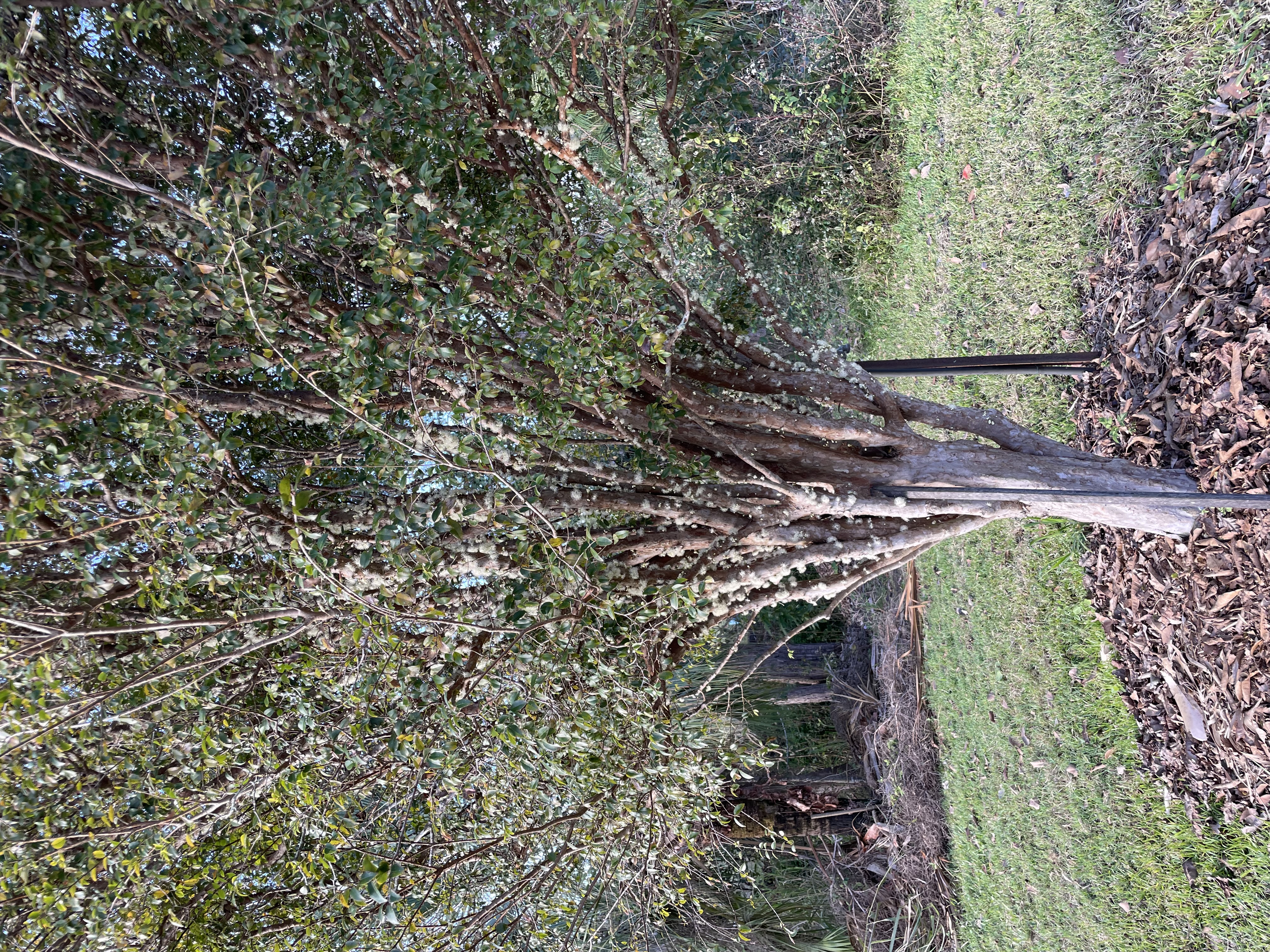
Choose a site where the soil can stay evenly moist without remaining saturated. Jaboticaba grows slowly enough that it is easy to underestimate the final space, but an established tree can still reach several metres high and wide.
Plant at the same soil level as the root ball, water thoroughly and mulch broadly around the root zone. Keep mulch clear of the trunk, especially because the trunk and older branches eventually become the flowering and fruiting surface.
Allow roughly 3 to 5 metres between standard garden trees unless you know you have a compact selection. Dwarf or container types can be managed in less space.
Does Jaboticaba Need Full Sun?
Established jaboticabas can grow and fruit in full sun, but part shade also suits them, particularly in hot climates. Young plants often establish more comfortably with protection from severe afternoon heat.
More light generally supports heavier flowering once the tree is established, so avoid permanent deep shade if fruit is the goal. A position with morning sun and filtered or late-afternoon protection is a useful compromise in hot subtropical and tropical gardens.
Move container plants into brighter conditions gradually. Tender new leaves can scorch if a plant grown under nursery shade is shifted straight into intense sun.
What Soil Does Jaboticaba Prefer?
Jaboticaba grows best in rich soil with plenty of organic matter and reliable moisture. Slightly acidic conditions suit the tree well, although healthy established plants can grow across a useful pH range if nutrients remain available.
Improve sandy soil with compost and regular mulch so it holds moisture between watering. In heavy soil, focus on drainage and root-zone aeration rather than digging a deep basin that fills with water.
Leaf-tip browning or pale growth can have several causes, including water quality, root stress and nutrient availability. Check the soil and watering pattern before repeatedly adding fertiliser.
How Much Water Does Jaboticaba Need?
Jaboticaba prefers a consistently moist root zone and responds strongly to reliable water during active growth, flowering and fruit development. Long periods of dry soil can check growth and reduce a flowering flush.
Water deeply, then use mulch to slow evaporation. Young trees and plants in pots need checking more often because their smaller root zone dries faster.
Established jaboticabas are not aquatic plants. Soil should drain after irrigation or heavy rain rather than staying airless around the roots. Aim for steady moisture, not permanent saturation.
How to Feed Jaboticaba
Use compost and organic mulch as the base of the feeding program, then add a modest balanced fruit-tree fertiliser during active growth if needed. Jaboticaba is slow growing, so heavy fertiliser does not turn it into a fast tree and can create nutrient imbalances or overly soft growth.
Split modest feeding across the warm growing period rather than applying one very large dose. Container trees need smaller, more regular inputs because nutrients wash from potting mix over time.
If leaves remain pale despite feeding, check soil pH and root health. Nutrients can be present in the soil but unavailable to the plant when conditions are unsuitable.
Why Does Jaboticaba Flower on Its Trunk?
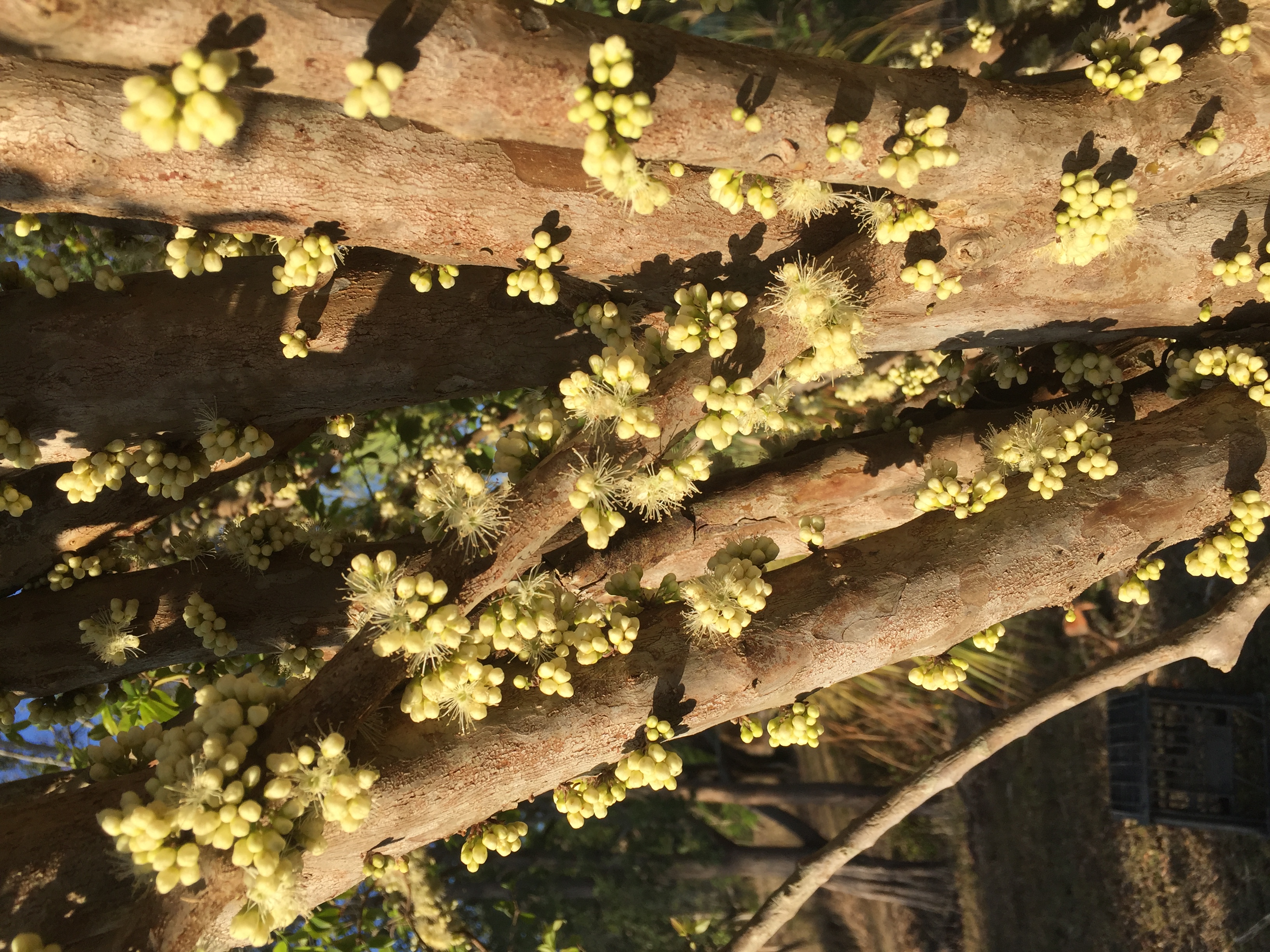
Jaboticaba is cauliflorous. Its flower buds form on the trunk and older branches, which is why mature trees can appear covered in small white flowers directly on the bark.
This habit is also the reason pruning needs a light hand. Old woody branches are productive fruiting surfaces, so removing them simply because they are leafless close to the trunk can remove future crop sites.
Flowering can occur in flushes following favourable moisture and warm conditions. In suitable Australian climates, established trees may flower and fruit more than once in a year.
Grow a Little Wild
New plants to try, useful growing tips and a few garden jobs based on what you grow.
Does Jaboticaba Need Another Tree for Pollination?
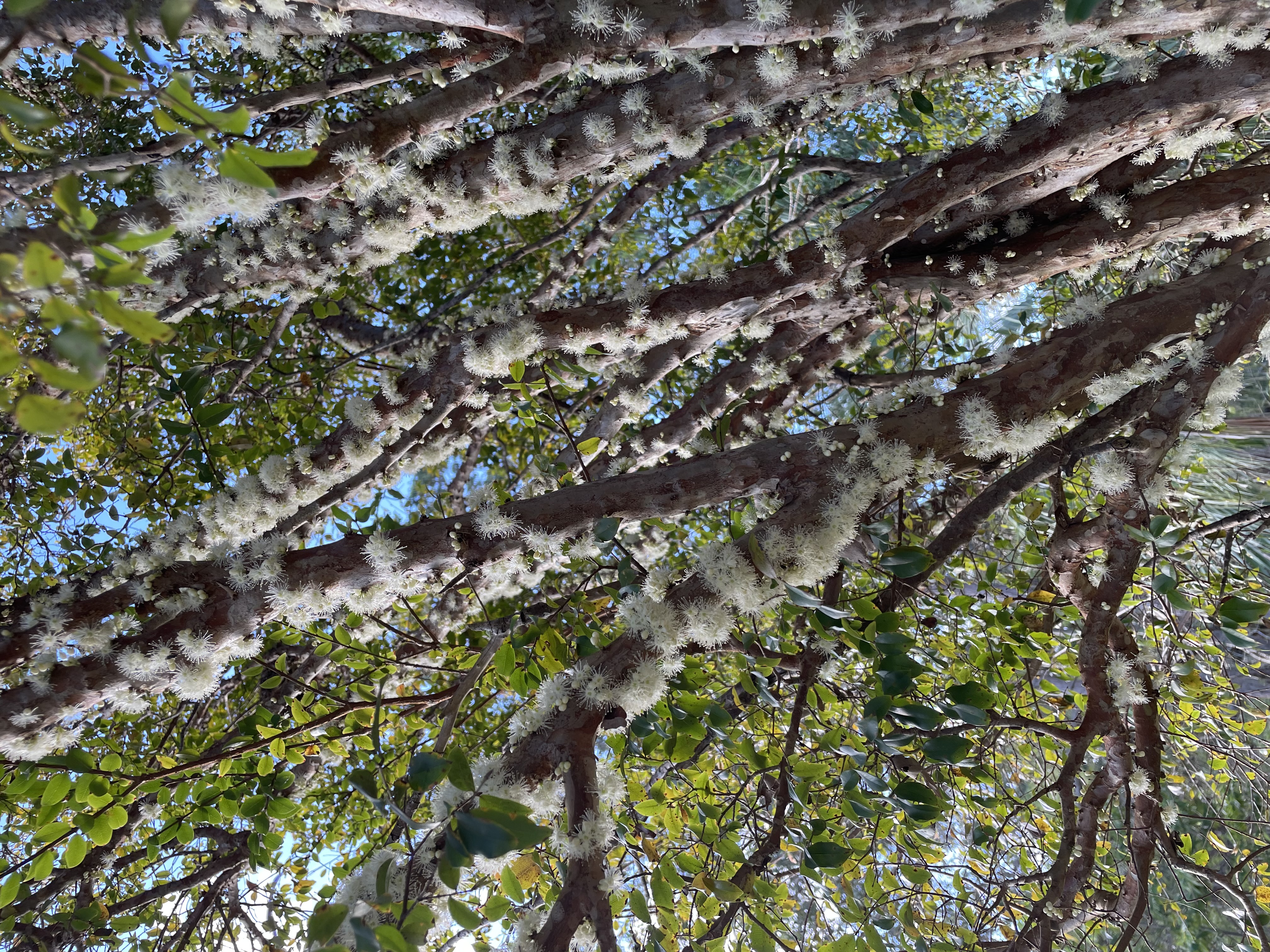
A single jaboticaba can set fruit, so you do not need two trees simply to obtain a crop. Flowers are visited by insects, and good pollinator activity can help fruit set during a heavy bloom.
Planting more than one genetically different seedling may increase cross-pollination opportunities, but space is better used on a second tree because you want another variety than because the first tree cannot fruit alone.
Avoid spraying broad insecticides over open flowers. The flowering period can be brief, and protecting visiting insects is more useful than treating minor foliage damage at that moment.
How Long Does Jaboticaba Take to Fruit?
Traditional seed-grown jaboticabas can test your patience. Australian grower records commonly report several years before the first crop, and some seedlings take considerably longer depending on species, climate and growing conditions.
Grafted trees and precocious dwarf or hybrid types can fruit much younger. Australian nursery and grower records include selected types cropping within a few years, while old-style seedling trees may spend much longer building trunk and branch structure first.
If early fruit matters, buy a named selection with a known propagation method rather than assuming every jaboticaba will follow the same timeline. A healthy slow-growing juvenile tree is not necessarily doing anything wrong.
How to Prune Jaboticaba
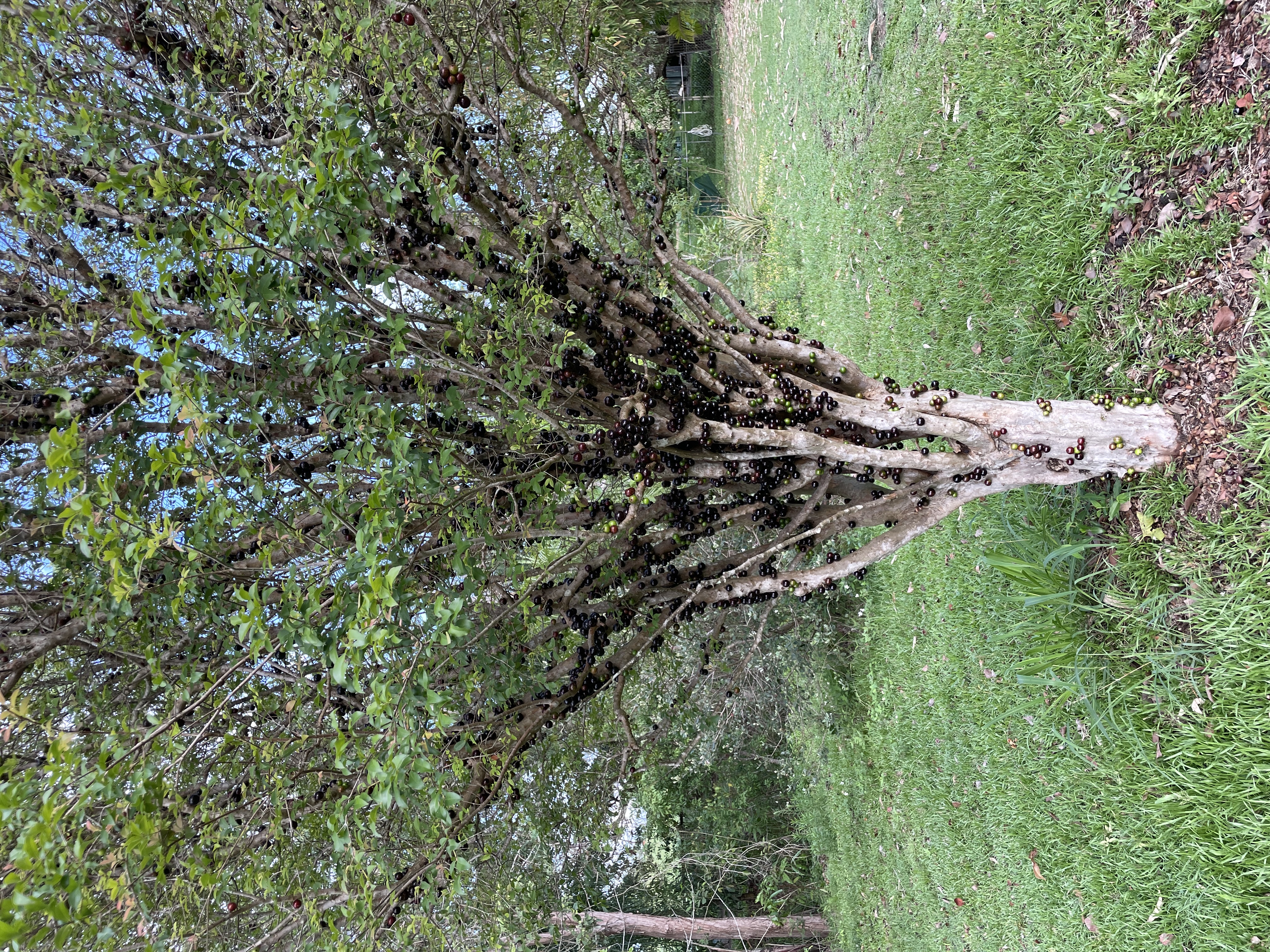
Jaboticaba usually needs only light pruning. Remove dead, damaged and badly crossing growth, and thin crowded small branches where you need better access to the trunk and main limbs.
Remember that flowers and fruit form on old wood. Do not strip the trunk and framework branches simply to make the tree look tidy, because those surfaces are where future crops develop.
You can reduce height or width gradually if space is limited. Make planned cuts after harvest and avoid removing a large proportion of an old tree in one session.
Can You Grow Jaboticaba in a Pot?
Yes. Its slow growth, tolerance of pruning and attractive trunk make jaboticaba a good candidate for a large container, particularly with compact or precocious selections.
Use a quality potting mix with good drainage and enough organic material to retain moisture. Large pots are easier to keep evenly moist than small ones, which matters for a tree that dislikes repeated drying.
Container trees need ongoing feeding and occasional root-zone renewal as the mix ages. Repot or root-prune carefully when the root ball becomes congested, and keep the trunk visible rather than burying it under fresh mix.
When and How to Harvest Jaboticaba
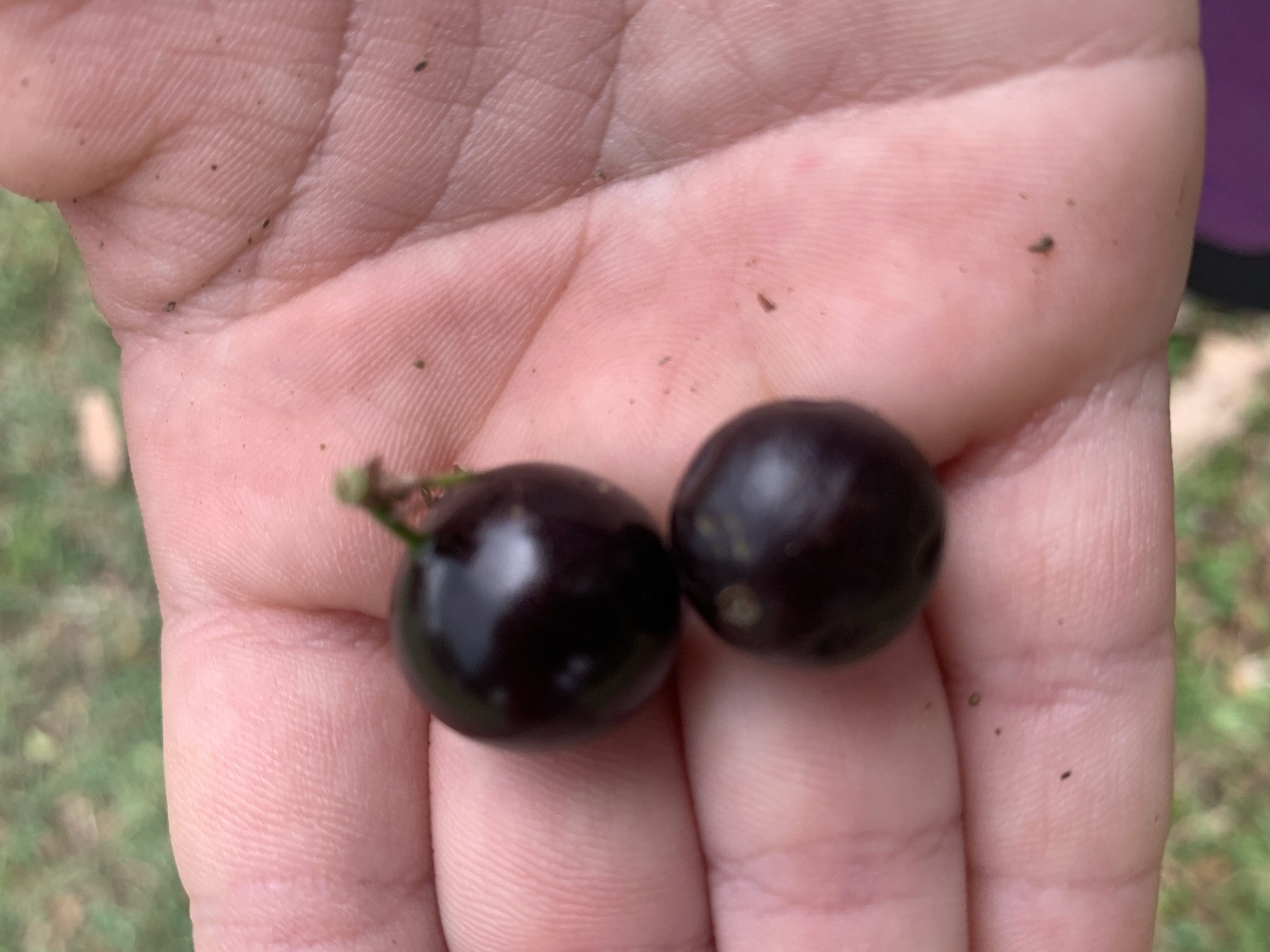
Dark-fruited jaboticaba is ready when the skin has developed its mature deep purple to almost black colour and the fruit feels plump. Fruit matures quickly after flowering, and some Australian nursery information reports around a month from flower to ripe fruit under warm conditions.
Pick ripe fruit directly from the trunk and branches. The skin can be thicker and more tannic than the sweet translucent pulp, so some people squeeze the pulp into the mouth and discard the skin and seed, while others eat more of the whole fruit.
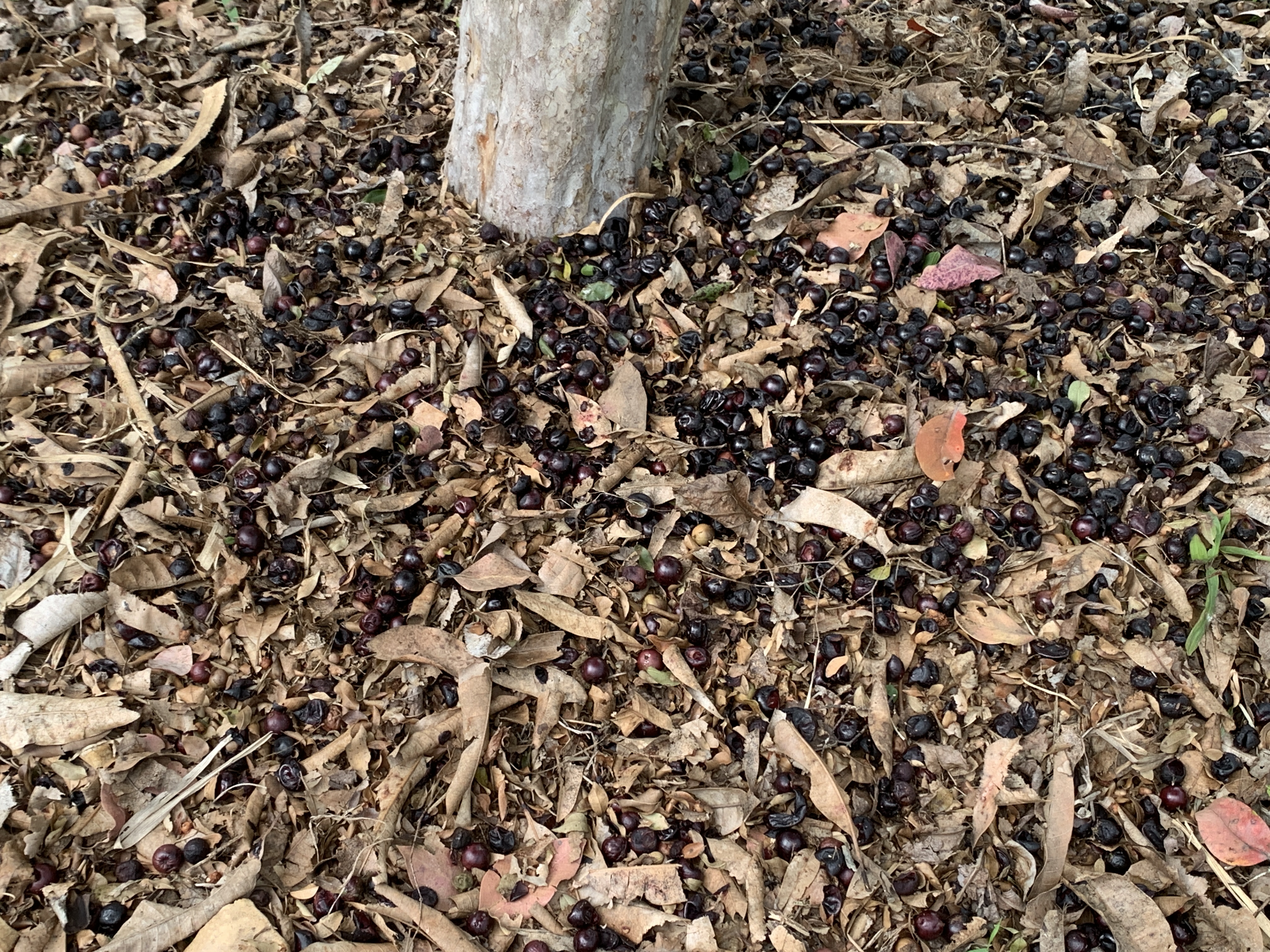
Jaboticaba has a short fresh shelf life. Eat it soon after picking or turn larger crops into jam, jelly, juice, wine or other preserves.
How to Grow Jaboticaba From Seed
Fresh jaboticaba seed germinates best when you clean off the pulp and sow it before it dries. Seedlings are useful if you are happy to wait and do not need an exact copy of the parent tree.
Seedlings are genetically variable, so fruit size, flavour and time to first crop can differ. Keep young plants evenly moist and give them bright filtered light while they establish.
Grafting and other vegetative methods are used for selected jaboticabas when growers want to reproduce known characteristics or shorten the wait to fruit. If a nursery offers both seedling and grafted plants, ask which species or selection each one is.
Common Jaboticaba Problems
Scale insects can settle on stems and leaves, especially on crowded or stressed plants. Check the tree before treating, because small infestations can often be managed by pruning badly affected twigs or using an appropriate horticultural oil according to its label.
Root stress from saturated or badly drained soil can cause weak growth, while repeated drying can brown leaf tips and interrupt new growth. Jaboticaba prefers consistency, so large swings in root-zone moisture are worth correcting first.
Birds and other animals can take ripe fruit once they discover it. Netting needs to be wildlife-safe and secured properly so animals cannot become trapped.
Does Myrtle Rust Affect Jaboticaba?
Jaboticaba belongs to the Myrtaceae family, which includes many plants susceptible to myrtle rust. Australian records and grower experience mean it is sensible to watch new leaves and shoots for suspicious yellow-orange pustules, distortion or dieback.
Do not move suspect infected plant material around the garden or between properties. Myrtle rust management advice changes with jurisdiction and situation, so use current state biosecurity guidance if you think your plant is infected.
Good airflow helps general canopy health, but it does not make a susceptible plant immune. Confirm the problem before applying fungicides because several nutrient and leaf disorders can look similar at first glance.
Where Jaboticaba Fits in a Food Forest
Jaboticaba sits comfortably in the small-tree layer of a subtropical food forest. Its slow growth means it does not race over neighbouring plants, and its tolerance of some shade gives you more options than a fruit tree that needs open sun from every direction.
Keep the trunk and main branches accessible because that is where you harvest. Dense shrubs planted hard against the base can make a heavy crop awkward to pick and reduce airflow around the fruiting wood.
A broad mulch layer and compatible low groundcovers can help maintain the moist root zone jaboticaba prefers. Leave a clear area immediately around the trunk.
Is Jaboticaba Native to Australia?
No. Plinia cauliflora is native to South America. Kew records its native range from eastern Bolivia through parts of Brazil and does not list Australia in its introduced distribution.
Brancho's September 2026 weed review found no specific Australian weed warning for P. cauliflora in the sources checked. It is grown here as an introduced fruit tree.
That assessment applies to the species in this profile. Other plants sold under the broad common name jaboticaba can belong to different Plinia species, so their distribution and status should be checked separately.
Sources I Checked
- Kew Plants of the World Online: Plinia cauliflora, Plinia jaboticaba synonymy and related Plinia species
- Australian nursery and grower records: climate performance, fruiting age, named jaboticaba types and container growing
- Australian biosecurity guidance: Myrtaceae and myrtle rust context
These sources were used for taxonomy, native range, naming, climate, types sold in Australia, flowering habit, propagation, fruiting, harvest and disease context.
Questions People Ask
- How long does a jaboticaba tree take to fruit?
Traditional seed-grown trees often take several years and can take much longer depending on the species and conditions. Grafted, dwarf and precocious selected types can begin cropping considerably younger.
- Can jaboticaba grow in Queensland?
Yes. Jaboticaba grows well through much of subtropical and tropical Queensland when it has reliable moisture and suitable soil. Young trees benefit from protection from severe afternoon heat.
- Does jaboticaba need two trees to fruit?
No. A single jaboticaba can set fruit. Plant a second tree if you want another type or additional fruit rather than because one tree cannot crop alone.
- Why does jaboticaba fruit on the trunk?
Jaboticaba is cauliflorous, which means its flowers and fruit form directly on older wood, including the trunk and main branches. This is a normal feature of the tree.
- Can jaboticaba grow in a pot?
Yes. Use a large container, moisture-retentive but well-drained potting mix and regular feeding. Compact and precocious jaboticaba selections are particularly useful for container growing.
- How often does jaboticaba fruit?
An established tree in a warm climate can flower and fruit more than once a year when moisture and temperatures are favourable. The number and timing of crops vary with type, climate and seasonal conditions.
- Is Myrciaria cauliflora the same as Plinia cauliflora?
Yes. Kew treats Myrciaria cauliflora as a synonym of the accepted name Plinia cauliflora. Older Australian books and plant labels often use the Myrciaria name.
- Are all jaboticabas Plinia cauliflora?
No. Jaboticaba is a common name used for several related Plinia species and horticultural selections. Check the botanical name on the nursery label if you want species-specific size, climate and fruit information.
Give Jaboticaba Time and Steady Moisture
Keep jaboticaba evenly moist, add organic matter around the root zone and leave the trunk and older branches open to light so the flowers stay visible. A well-established tree can reward you with several crops through a warm season, with fruit packed directly along the bark.