

Plant profile
Jaboticaba
Plinia cauliflora
Also known as Brazilian grape tree, Jaboticaba tree, Myrciaria cauliflora, Plinia jaboticaba.
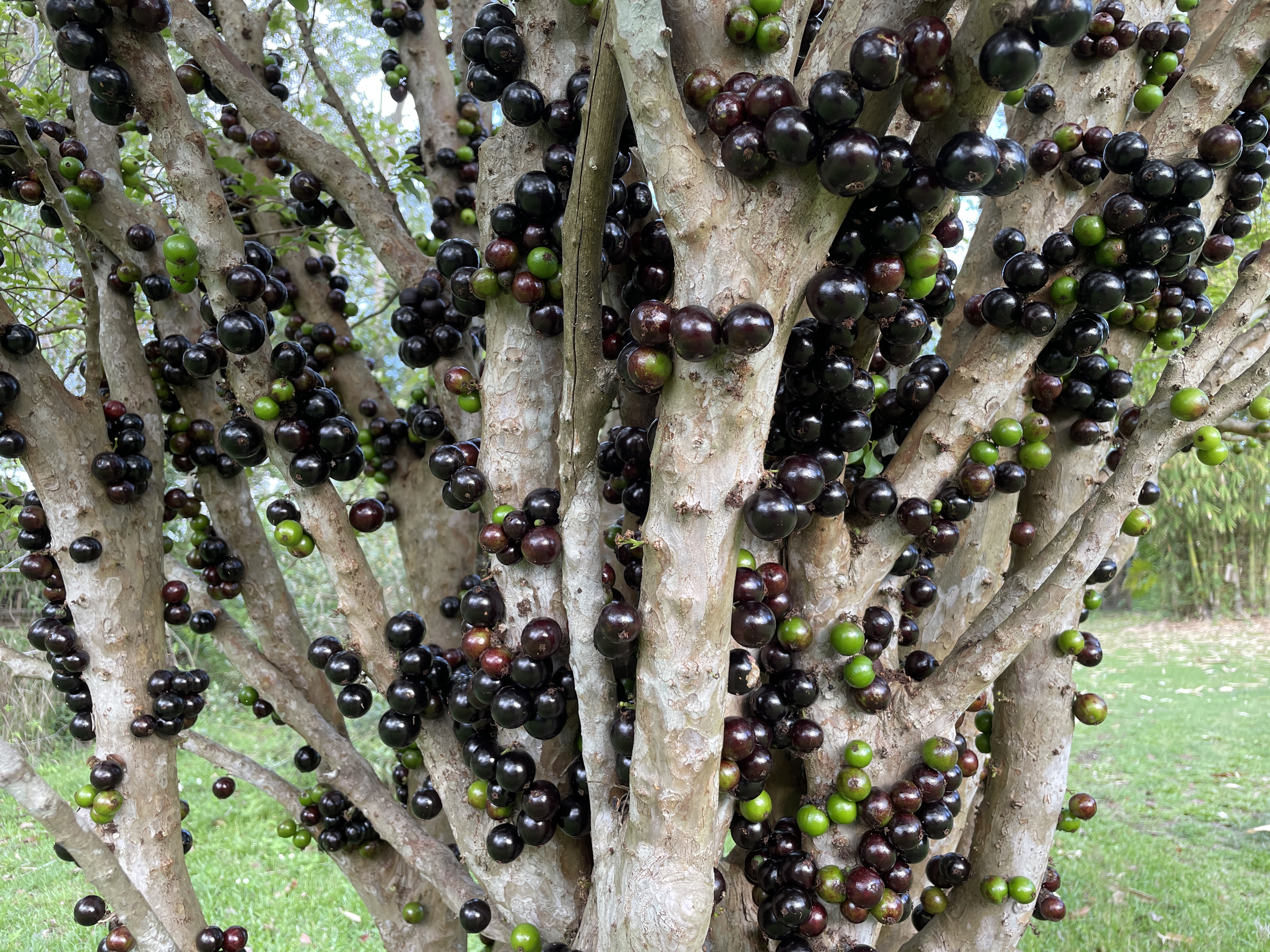
Jaboticaba is a slow-growing fruit tree that carries dark purple fruit directly on its trunk and older branches. The sweet juicy fruit can be eaten fresh or used for jam, wine and preserves.
- Grows well in
- Tropical, Subtropical, Temperate
- Lifecycle
- Evergreen subtropical fruit tree
- Light
- Full sun, Part shade
- Mature size
- Usually 3–6 m high in gardens, potentially larger with age
- Spacing
- About 3–5 m apart
- Growth habit
- Slow-growing evergreen small tree with cauliflorous fruiting on trunk and branches
- Native range
- Eastern Bolivia and Brazil, from Pernambuco south to Paraná
- Natural habitat
- Seasonally dry tropical forest and woodland.
When to plant
Tropical
February–May, September–November
Subtropical
March–May, September–November
Temperate
September–November
Mediterranean
September–November
Tropical and subtropical: plant during mild, moist weather. Temperate: spring after severe frost risk.
Full growing guide
How to Grow Jaboticaba Plants in Australia
Grow Jaboticaba plants in Australia for sweet grape-like fruit borne along the trunk, with practical care for healthy trees and regular crops.
Read the full growing guidePlanting
Plant into rich, free-draining soil and keep moisture steady while the tree establishes. It can also grow well in a large pot because growth is naturally slow.
Position and light
Part shade to full sun. In hot climates, some afternoon shade can help young trees.
Soil
Rich, slightly acidic to neutral soil with excellent drainage and plenty of organic matter.
Watering
Water regularly and avoid letting the root zone dry hard during flowering and fruiting.
Feeding
Use compost and light regular feeding during active growth rather than heavy applications.
Pruning
Prune lightly to remove crowded growth and improve access to the trunk and main branches where the fruit forms.
Harvest
Pick fruit when the skin is fully dark and the pulp is soft and sweet. The fruit has a short shelf life once ripe.
Propagation
Seed is common but seedlings take years to fruit. Grafted or selected plants can crop earlier, often within a few seasons rather than a decade, and reproduce a known fruit flavour and cropping habit.
Common problems
Myrtle rust, scale and root problems in saturated soil can occur.
Safety notes
Ripe fruit is edible.
Worth knowing
Kew currently accepts Plinia cauliflora; the older names Myrciaria cauliflora and Plinia jaboticaba are still widely used in horticulture, so both may appear on plant labels. The trunk-borne flowers and fruit are an adaptation called cauliflory, shared with cacao and some fig species, and it is the feature most gardeners notice first. Established trees can flower and fruit more than once a year in warm districts. Fruit does not store or transport well, which is why jaboticaba is rarely sold fresh and is mostly grown for home use or turned into jam and wine soon after picking.
Featured In

Grow Jaboticaba with Brancho
Add it to My Garden and Brancho works out what it needs next, timed for your climate.
How it grows around Australia
Growing this too? Share what you've noticed in your garden.
Grow a Little Wild
New plants to try, useful growing tips and a few garden jobs based on what you grow.