



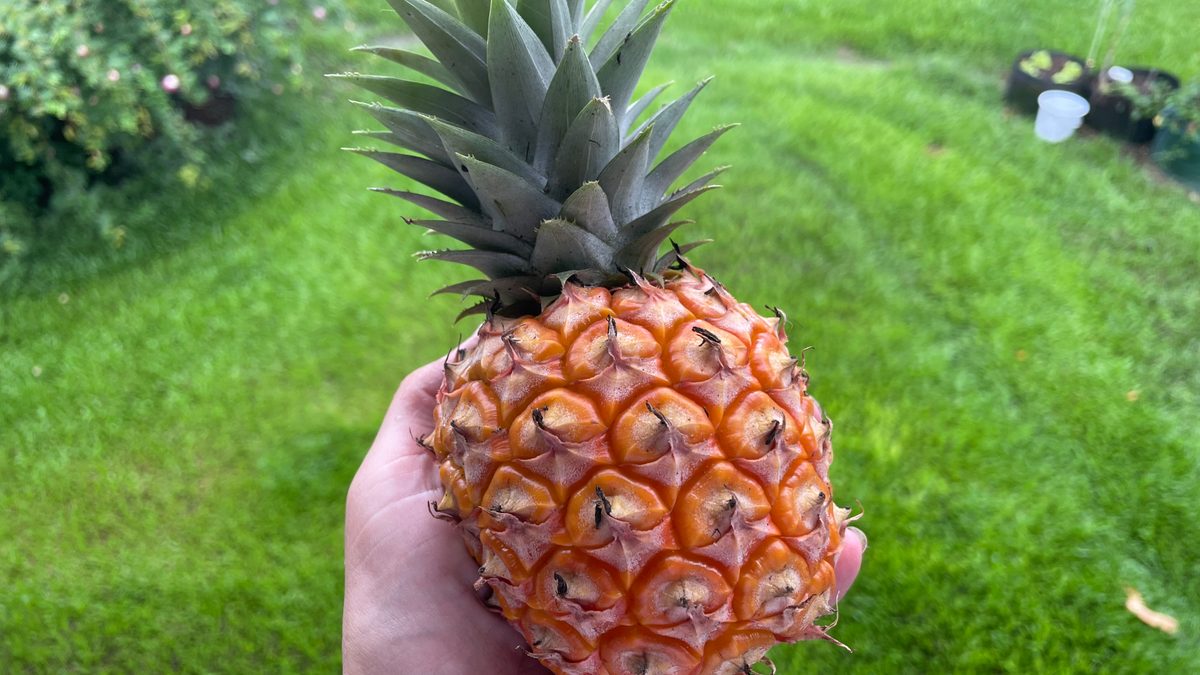

Pineapples are bromeliads rather than trees. Each main rosette produces one fruit, and a supermarket top can become your next plant.
Warmth, strong light and a root zone that drains quickly after rain are the essentials. You can grow pineapples in the ground or in pots, and mature plants usually produce suckers and slips that keep the patch going after harvest.
This guide covers growing from tops, suckers and slips, how long fruit takes, pots, feeding, harvest and what to do after the first pineapple comes off.
- Botanical name: Ananas comosus
- Category: Fruit & berry
- Lifecycle: Perennial bromeliad; each main rosette fruits once
- Best climates: Tropical and subtropical; warm, frost-free sites in temperate and Mediterranean areas
- Position: Full sun in a warm, sheltered position; light protection can help fruit in extreme heat
- Time to fruit: Often around 18 months in a warm frost-free climate, but 18–24 months or longer is common
Pineapples Are Bromeliads, Not Trees
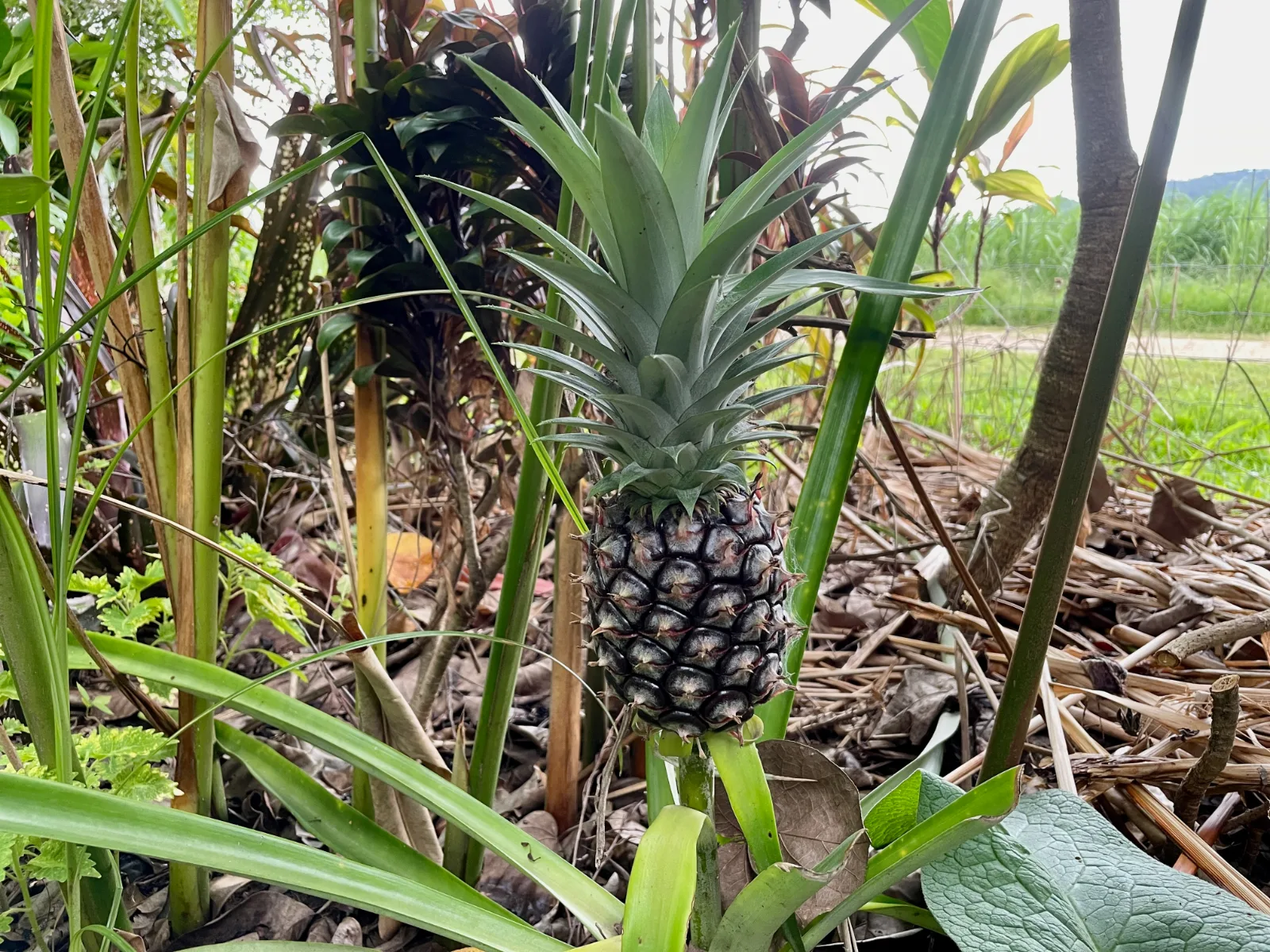
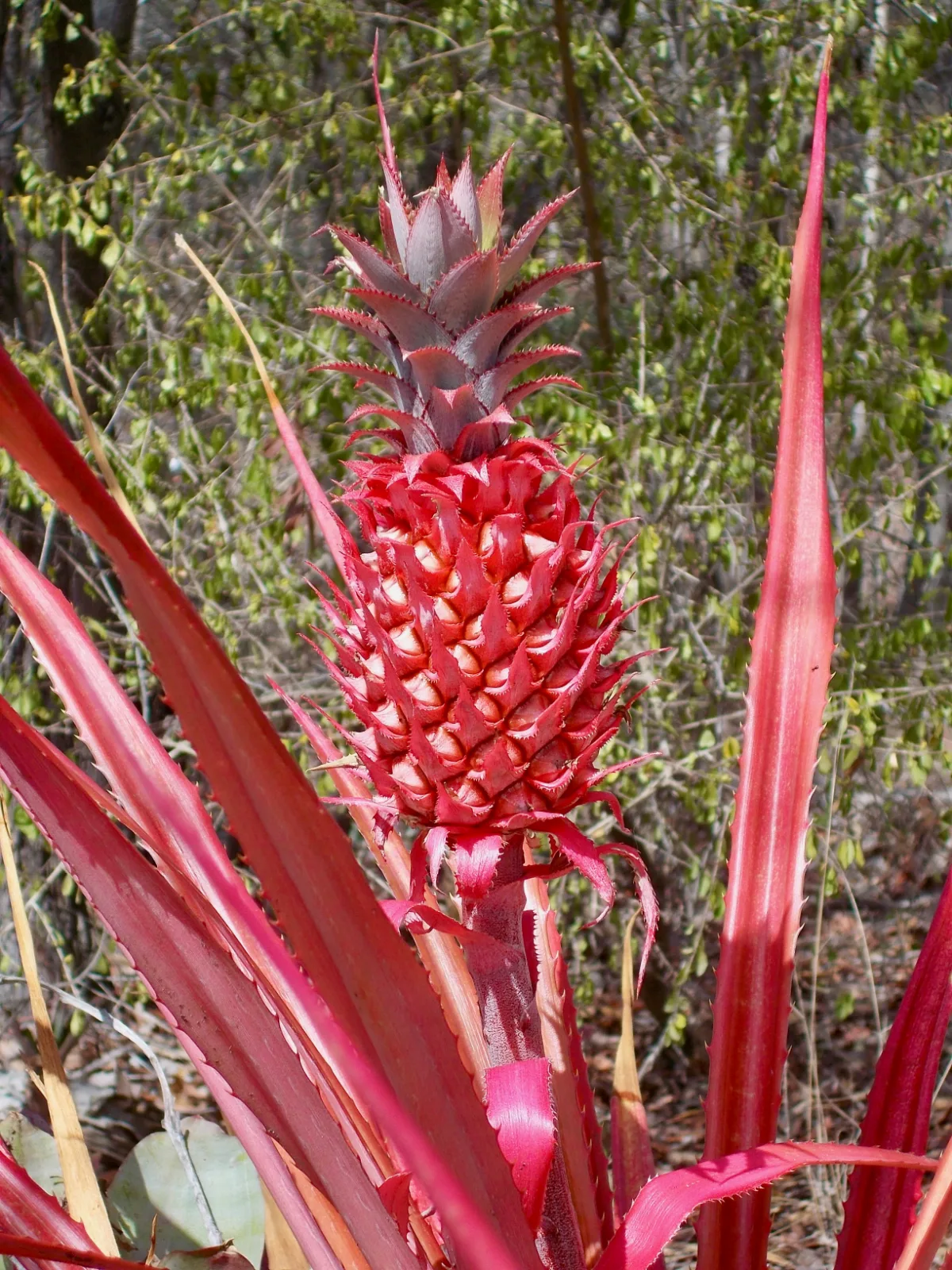
A pineapple grows from a low rosette of stiff leaves, not from a tree. The flower spike forms in the centre of a mature rosette and the many small flowers fuse together as the pineapple develops. The plant can set fruit without pollination.
Each main rosette fruits once, but that does not mean the whole plant is finished. It usually produces suckers around the base and sometimes slips around the fruiting stalk, giving you the next generation of plants.
Where Pineapple Plants Grow in Australia
Pineapples are most at home in tropical and subtropical Australia, especially warm, frost-free coastal areas. They are still more adaptable than their tropical reputation suggests. In warm temperate and Mediterranean districts, use the sunniest, most sheltered frost-free position you have.
Cold slows them dramatically. In cooler areas, a large pot is useful because you can move the plant into a warmer position in winter. Frost can badly damage or kill the plant.
When to Plant Pineapple Plants
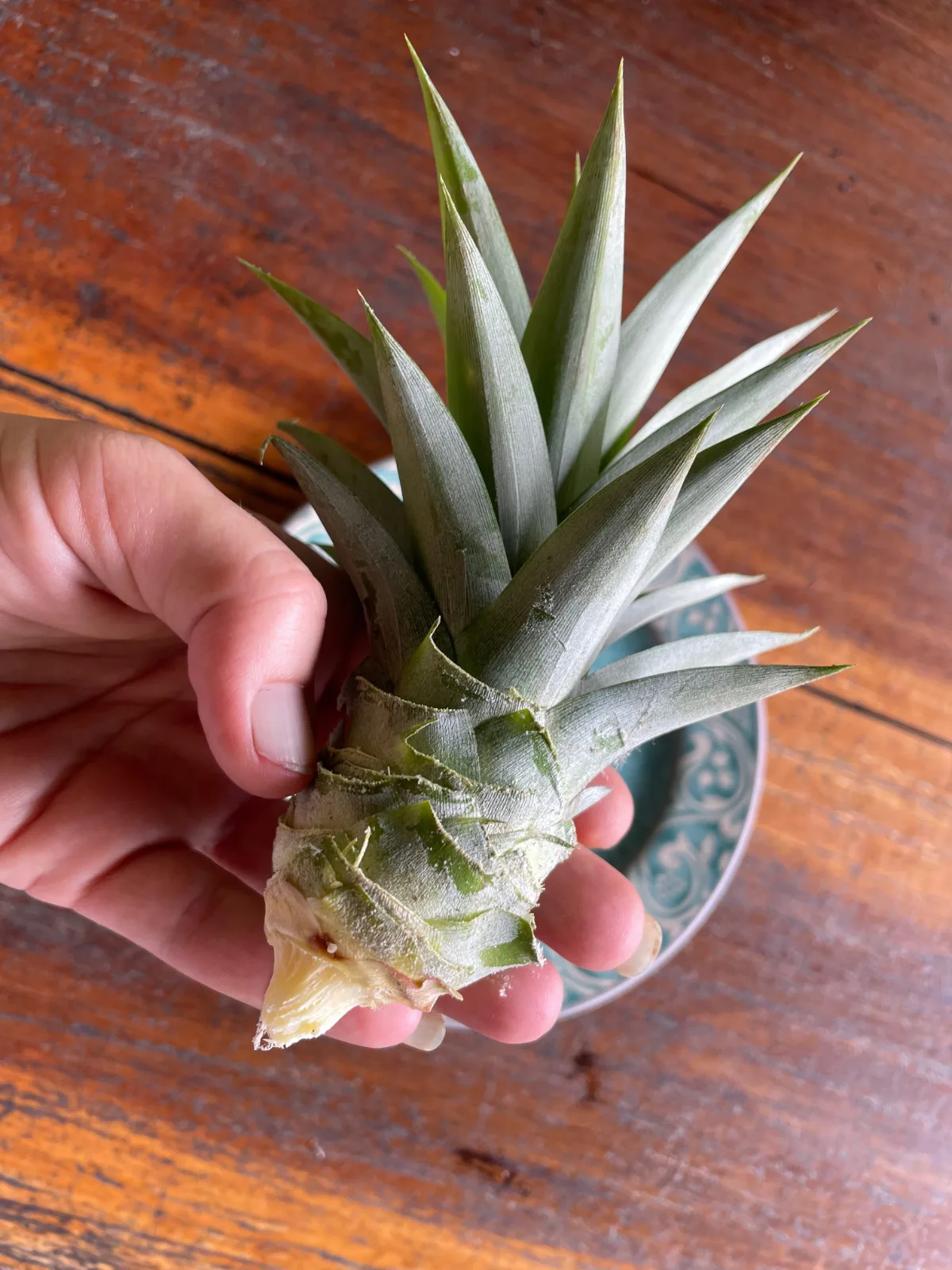
Warm soil gives a new top, sucker or slip the quickest start. In tropical and subtropical gardens you can plant through much of the warm season, provided you can keep a new plant from drying out while it establishes. In cooler districts, spring to early summer is safer so the plant has months of warmth ahead of it.
Avoid planting into cold, saturated soil. Pineapple roots are small and relatively shallow, and poor drainage is one of the quickest ways to lose a young plant.
How Long Does a Pineapple Take to Grow?
Pineapples are not a quick crop. Gardening Australia has shown pineapple tops producing fruit in about 18 months in a warm, frost-free climate. In ordinary home gardens, around 18–24 months from planting material to fruit is a useful expectation, and cooler conditions can stretch that considerably.
Suckers usually fruit sooner than tops because they start as larger, more mature pieces of plant. After the first crop, a sucker left attached to the old plant can produce a ratoon crop in roughly another year under good warm conditions.
Pineapple Varieties in Australia

The pineapples sold and grown in Australia are not all the same. Queensland commercial production includes Smooth Cayenne, 73-50, MD-2, newer Australian selections and Queen types, while home gardeners may also come across older heritage cultivars.
For a backyard grower, flavour, thorniness, plant size and what planting material you can obtain matter more than chasing a particular commercial name. If you grow from the top of a supermarket pineapple, you are cloning that plant rather than growing a random seedling.
How to Grow a Pineapple From the Top
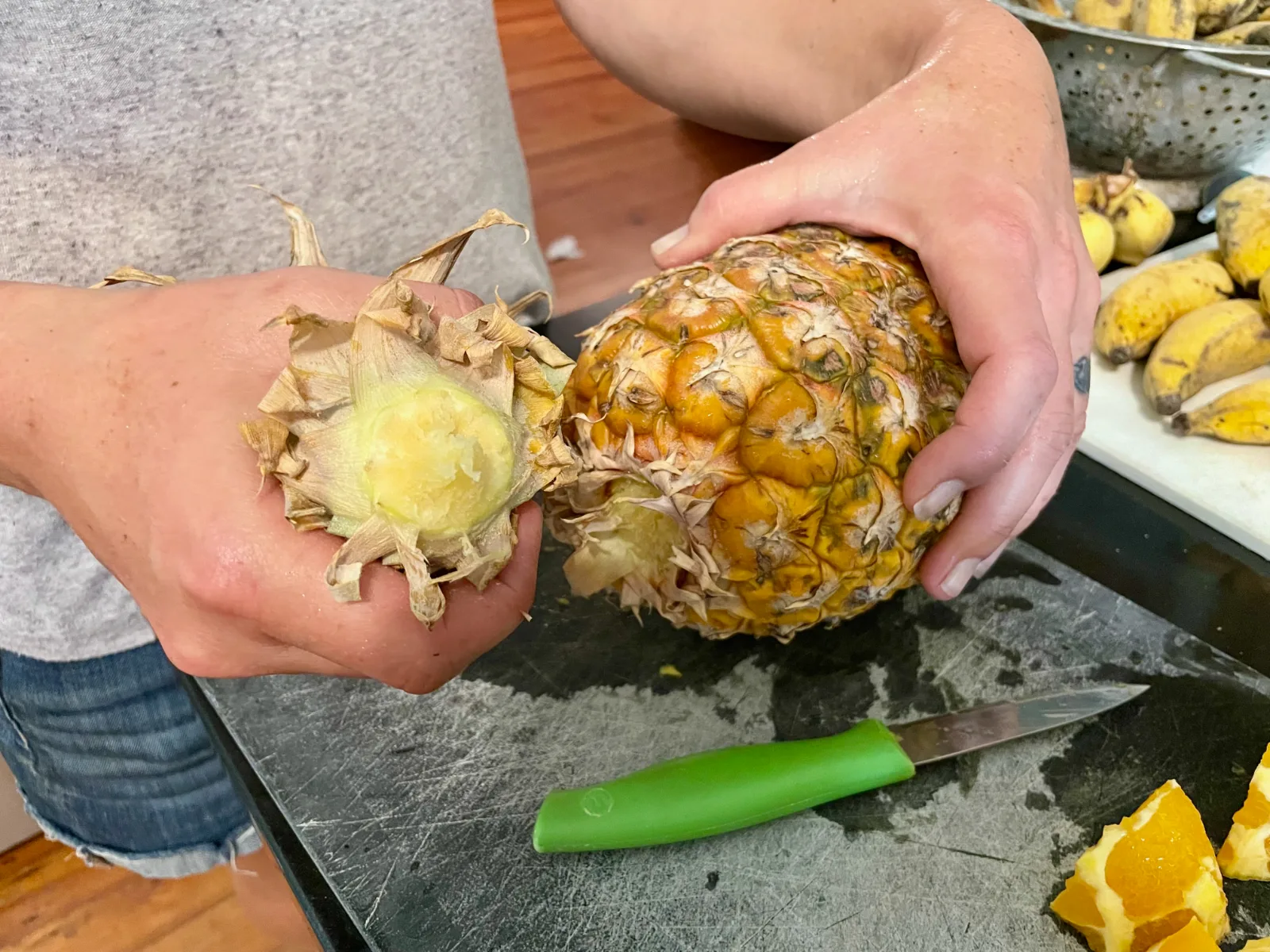
A pineapple top is one of the easiest pieces of fruit-shop produce to turn into a new plant.
Cut or twist the leafy crown from a ripe pineapple. Remove any soft fruit flesh from the base, then peel off several of the lowest leaves so you expose a short section of stem. Let the base dry and seal for several days; about a week is commonly used in warm weather. This reduces the chance of the freshly cut base rotting.
Set the prepared top shallowly into a free-draining propagation or potting mix. Bury only enough stem to hold it upright; do not bury the leafy crown. Keep it warm and bright and water sparingly until roots begin to form. Gardening Australia has demonstrated rooted tops within a month or two under warm conditions.
Can You Grow a Pineapple From a Supermarket Top?
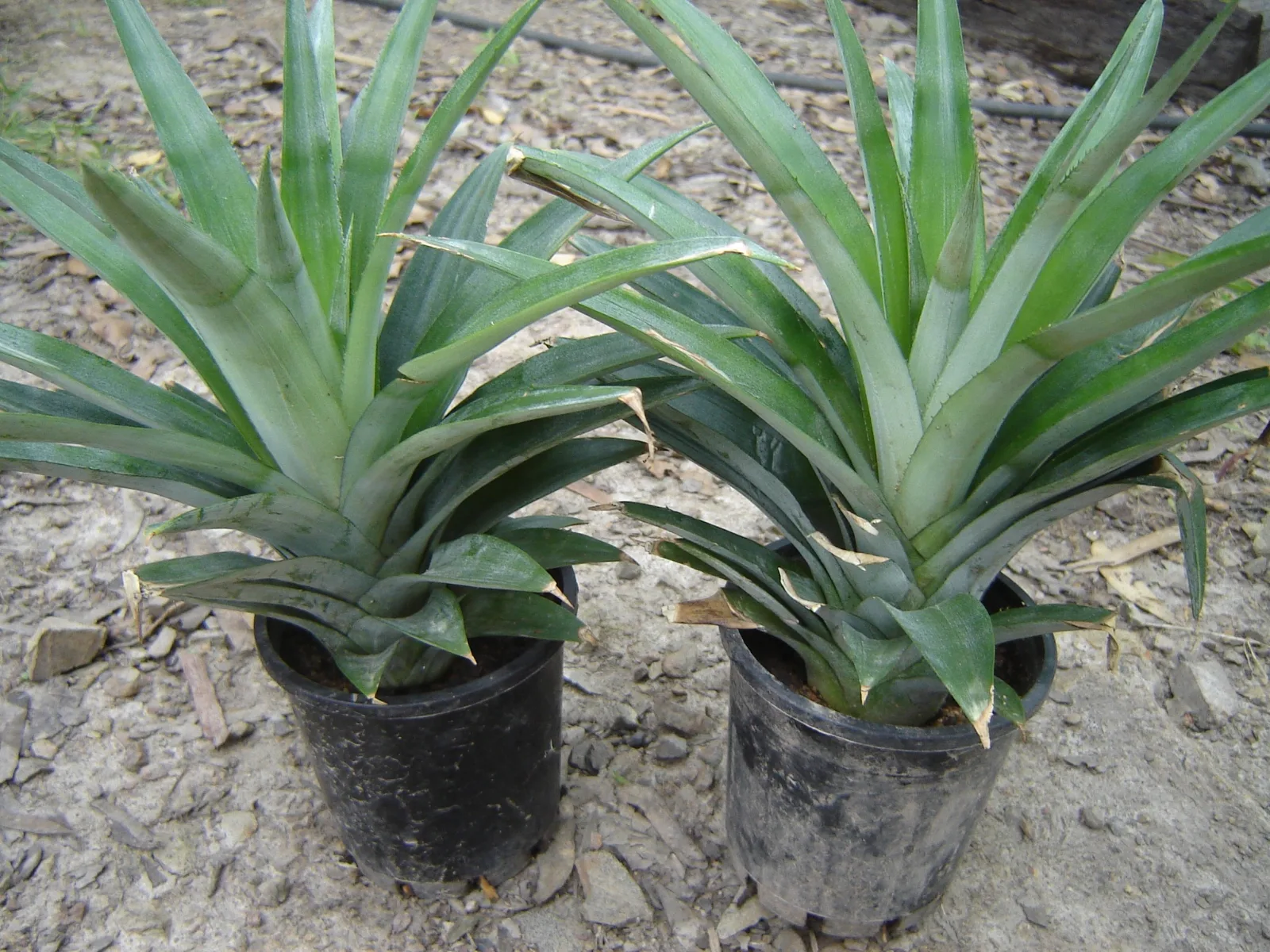
Yes. A healthy crown from a ripe supermarket pineapple can grow into a full plant and fruit later. Choose a top with a firm centre and healthy leaves rather than one that is rotting, badly dried or damaged.
It will take patience. The top has to make a new root system, build a full-sized rosette and reach flowering size before it can produce fruit. If you already have pineapple plants, a strong sucker is usually the faster propagation material.
Should You Root a Pineapple Top in Water or Soil?
You can see pineapple tops rooted in water, and Bunnings notes that a crown can be stood in a shallow saucer of water until roots develop. I would still use a free-draining propagation mix as the straightforward garden method because the rooted plant does not then have to move from water into potting mix.
Whichever method you use, the main risk is rot. Keep the crown itself above the water or mix, give it warmth and light, and do not keep an unrooted top saturated.
Growing Pineapples From Suckers and Slips
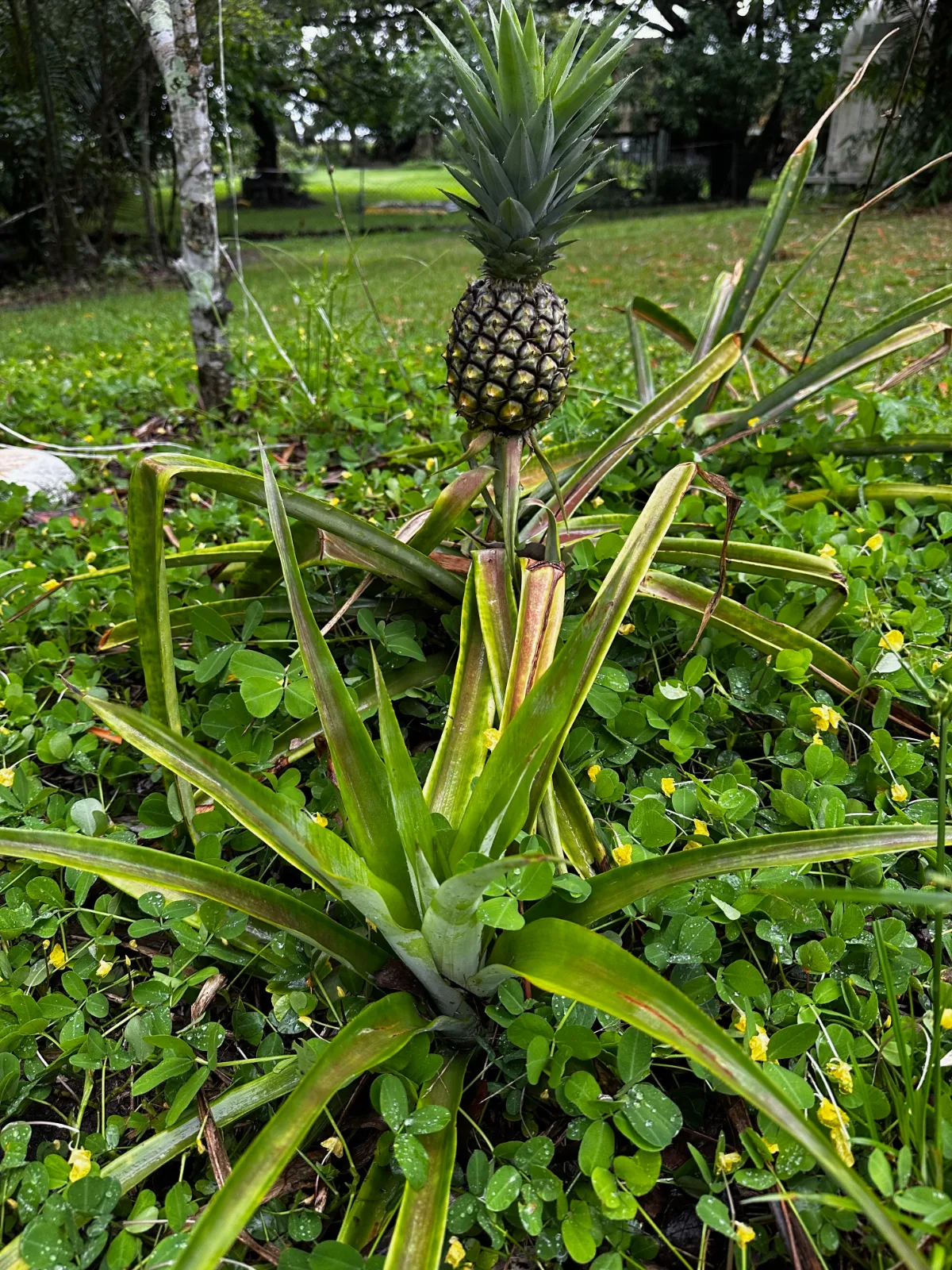
A mature pineapple can give you several kinds of planting material. Suckers grow from the base or leaf axils of the plant. Slips form on the fruiting stalk below the fruit. Both can be removed and replanted once they are large enough to handle.
Let a freshly removed sucker or slip dry briefly so the wound can seal, then plant it into free-draining mix or prepared soil. Suckers usually reach fruit sooner than small slips or tops because they begin with more stored growth.
How to Plant a Pineapple
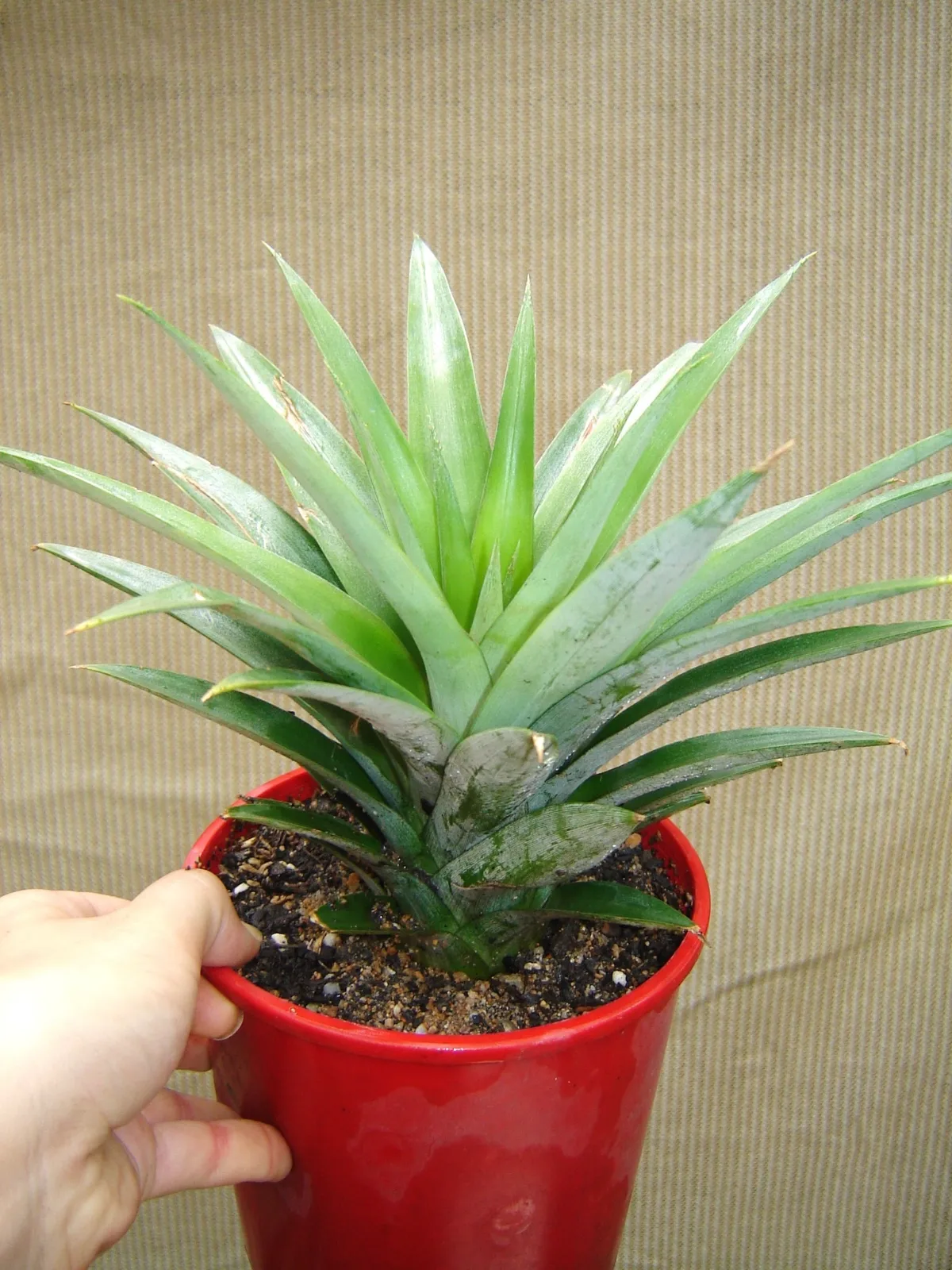
Plant a rooted top, sucker or slip only deep enough to keep it stable. Keep the centre of the rosette above soil level. In the ground, allow roughly 50–75 cm between plants for an ordinary backyard planting, with extra room if you grow a large, thorny cultivar and want comfortable access for weeding and harvest.
In wet climates or heavy soil, build the planting area up into a ridge or raised bed before the pineapple goes in. Trying to fix chronic waterlogging after planting is much harder.
How Much Sun Does a Pineapple Plant Need?
Give pineapple plants plenty of sun. Full sun produces strong growth and is the normal choice through most of their range. In extremely hot districts, intense sun and temperatures above about 35°C can sunburn developing fruit, so some protection during severe heat can be useful.
In cooler climates, prioritise warmth and sun. A north-facing wall, courtyard or other protected microclimate can make a substantial difference.
What Soil Do Pineapple Plants Need?
Pineapples need excellent drainage. Queensland production guidance favours well-aerated, free-draining loams and sandy loams and gives an optimum commercial soil pH of about 4.5–5.6. Home gardeners do not need to chase a laboratory-perfect number, but this tells you the plant is comfortable on the acidic side and does not want heavy, stagnant soil.
Add compost for organic matter, but do not turn a clay hole into a water-holding compost bucket. If your soil stays wet after rain, use a mound, ridge, raised bed or pot instead.

Grow a Little Wild
New plants to try, useful growing tips and a few garden jobs based on what you grow.
How to Grow Pineapple Plants in Pots
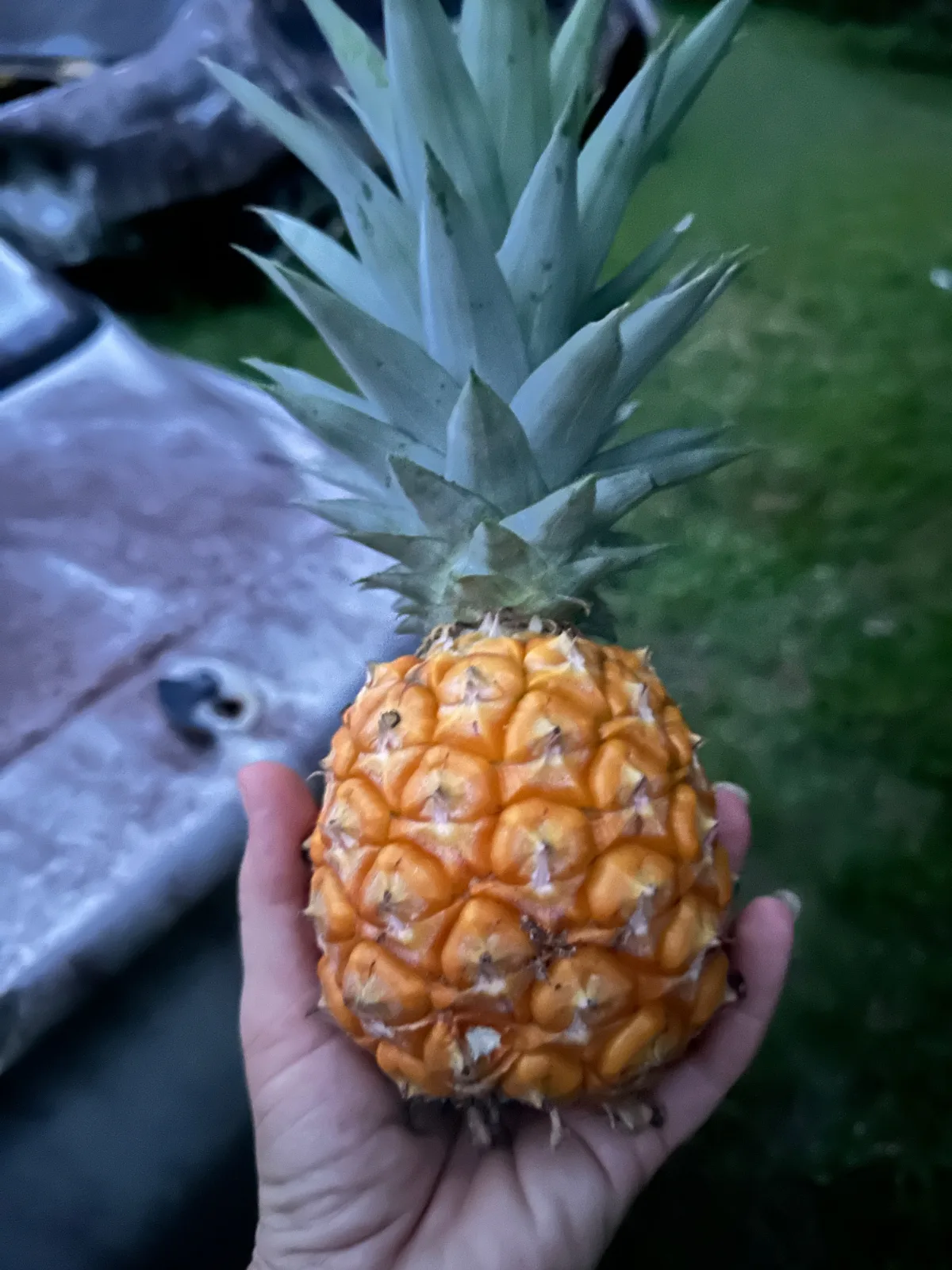
Pineapples suit pots well because their root systems are relatively compact. Start a new top in a modest pot rather than an enormous pot of wet mix, then pot it on as the roots fill the space. The final pot needs enough weight and width to keep a mature, fruiting plant stable.
Use a premium free-draining potting mix and a pot with generous drainage holes. In cool climates, terracotta can help the mix dry before you water again; in hot subtropical conditions, plastic holds moisture longer. Put the pot where the prickly leaves have room to spread.
How Often Should You Water Pineapple Plants?
Pineapples tolerate some dryness, but good fruit still depends on steady growth. Water a new planting while roots establish, then water deeply when conditions are dry rather than keeping the soil continually wet.
Good drainage matters more than frequent watering. Cold, saturated roots are particularly risky. Potted plants need checking more often because a small volume of mix can swing from wet to dry quickly.
How to Feed Pineapple Plants
Feed for steady growth rather than trying to push the plant with large doses of fertiliser. A complete fertiliser applied in small amounts through warm active growth is suitable for home gardens. Pineapple plants can use nutrients through their shallow roots, so keep fertiliser close enough to the root zone to be useful without piling concentrated fertiliser into the crown.
Avoid excessive nitrogen. Commercial Queensland guidance notes that nutrient balance matters, and overly vigorous growth can contribute to fruit-quality problems.
How Pineapple Flowers Become Fruit
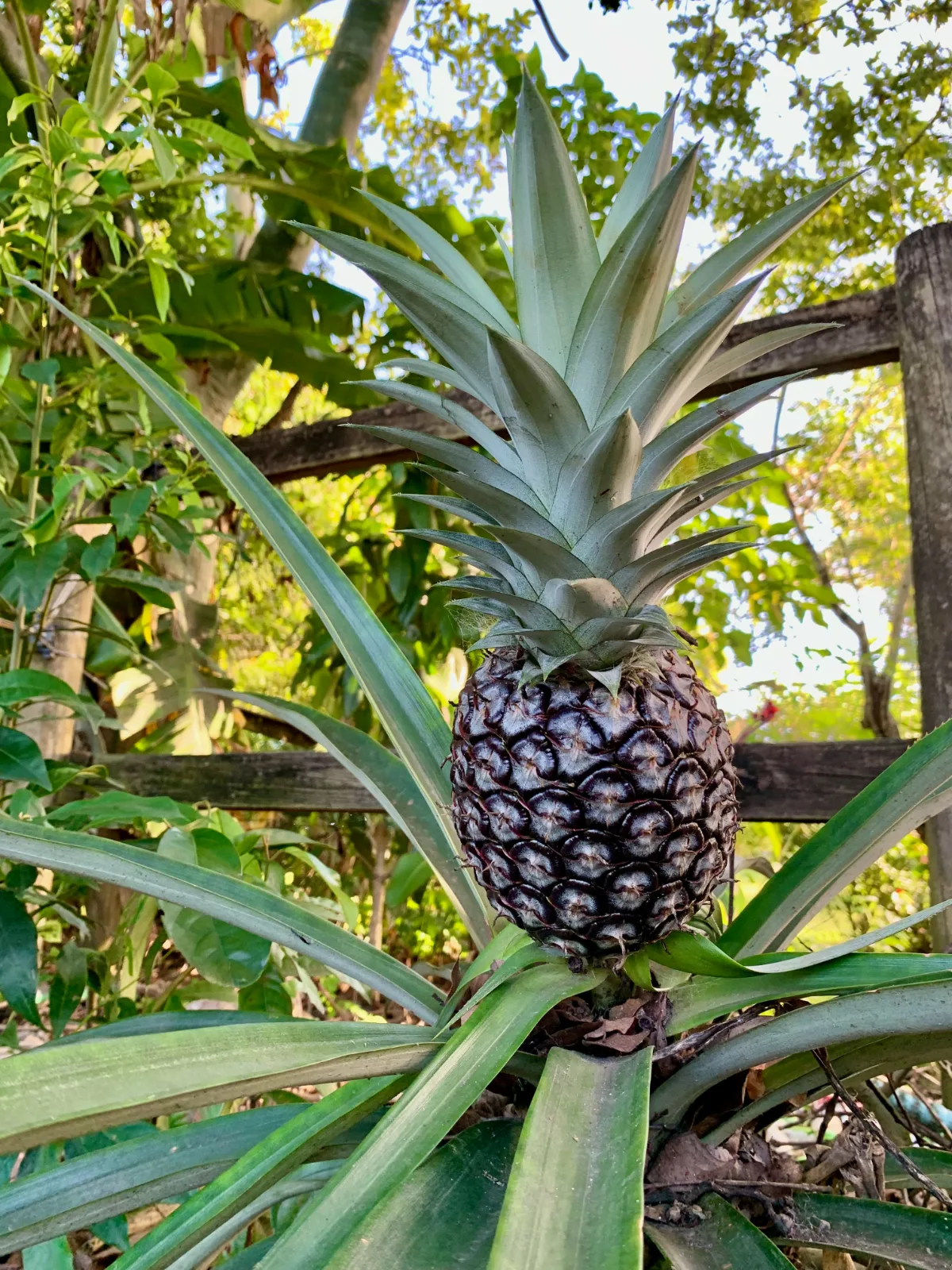
When a mature pineapple is ready to reproduce, a flower spike rises from the centre of the rosette. What looks like one pineapple fruit develops from many individual flowers packed together on that spike; their ovaries and surrounding tissues fuse as the fruit grows.
Pineapples can develop fruit without pollination, so you do not need another pineapple nearby as a pollinator. From flowering to a ripe fruit still takes months, and cool weather slows development.
Does a Pineapple Plant Only Fruit Once?
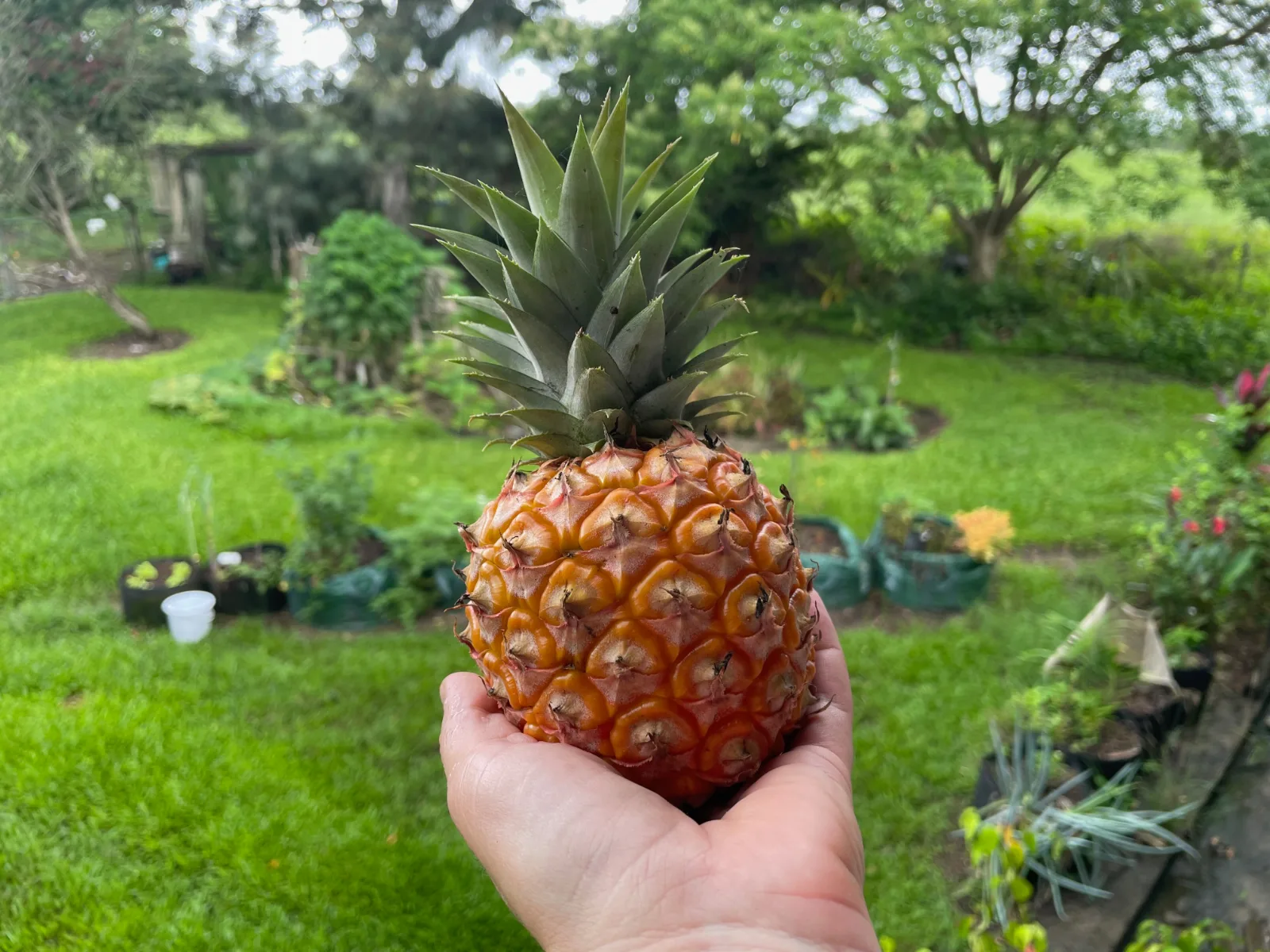
The main rosette fruits once. After harvest, that rosette gradually declines, but the plant usually produces new suckers around it. You can leave one strong sucker attached to carry the clump into a ratoon crop, or remove suckers and replant them elsewhere.
This is why an established pineapple patch can keep producing even though each individual rosette has only one main fruiting cycle.
What Should You Do With the Plant After Harvesting a Pineapple?
Keep one or more healthy suckers if you want another crop. For a tidy bed, many gardeners remove the old fruiting rosette once the replacement sucker is established, or lift and replant the sucker with fresh spacing. If you leave a strong sucker attached, it can use the established root system and reach the next crop faster.
Extra suckers and slips are useful propagation material rather than waste.
How Do You Know When a Pineapple Is Ripe?
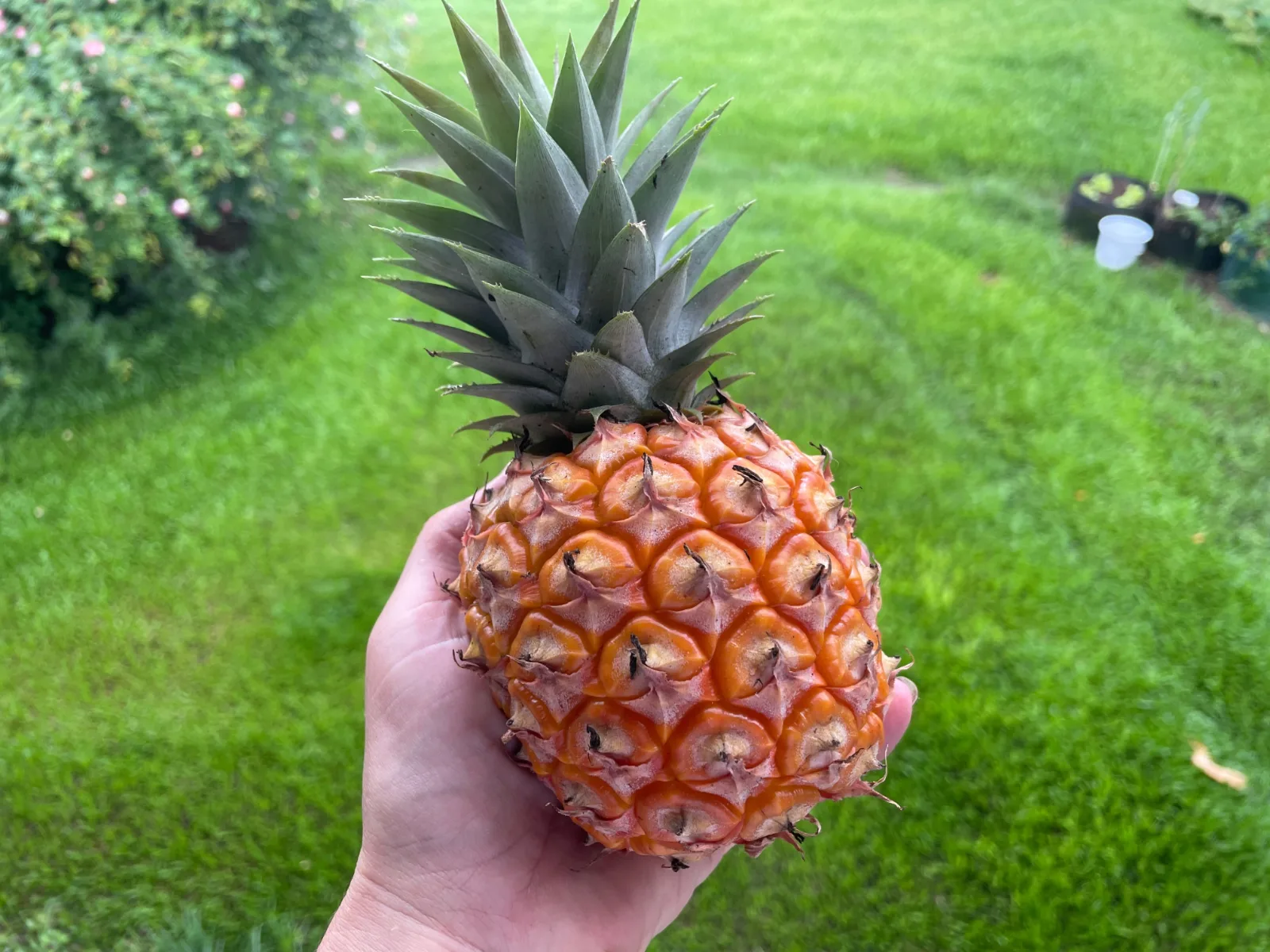
Do not pick a pineapple early and expect it to sweeten on the kitchen bench. Pineapple is a non-climacteric fruit: once it is cut from the plant, it cannot make more sugar from the stem.
Home-grown fruit should be allowed to reach proper maturity on the plant. Shell colour varies with cultivar and season, but increasing yellow or golden colour, a strong pineapple aroma and fully developed fruit are useful home-garden clues. Commercial Queensland growers use shell-colour stages because the correct harvest point changes with season.
Once yours is clearly ripening, keep an eye on it. Rats, birds and insects may discover a sweet pineapple before you do.
Can You Eat a Green Pineapple?
Colour alone is not a perfect maturity test because cultivars differ, but very immature pineapple is not worth harvesting. It will be acidic, poorly developed and will not become sweeter after it is cut from the plant.
For a home garden, the useful rule is simple: let the fruit mature on the plant rather than deliberately harvesting it hard and immature. The old blanket statement that every green pineapple is 'toxic' is too crude to use as a harvest rule.
Common Pineapple Problems
Root and heart rots are the big reason to take drainage seriously. Queensland production guidance lists Phytophthora root rot and heart rot among important diseases. Mealybugs, mites and ants can also turn up, and animals may attack ripe fruit.
If a plant stops growing during cold weather, that may be temperature rather than disease. Fruit exposed to extreme heat and strong sun can suffer sunburn, while constantly wet soil can leave the whole plant weak and pale.
Why Are My Pineapple Leaves Turning Yellow?
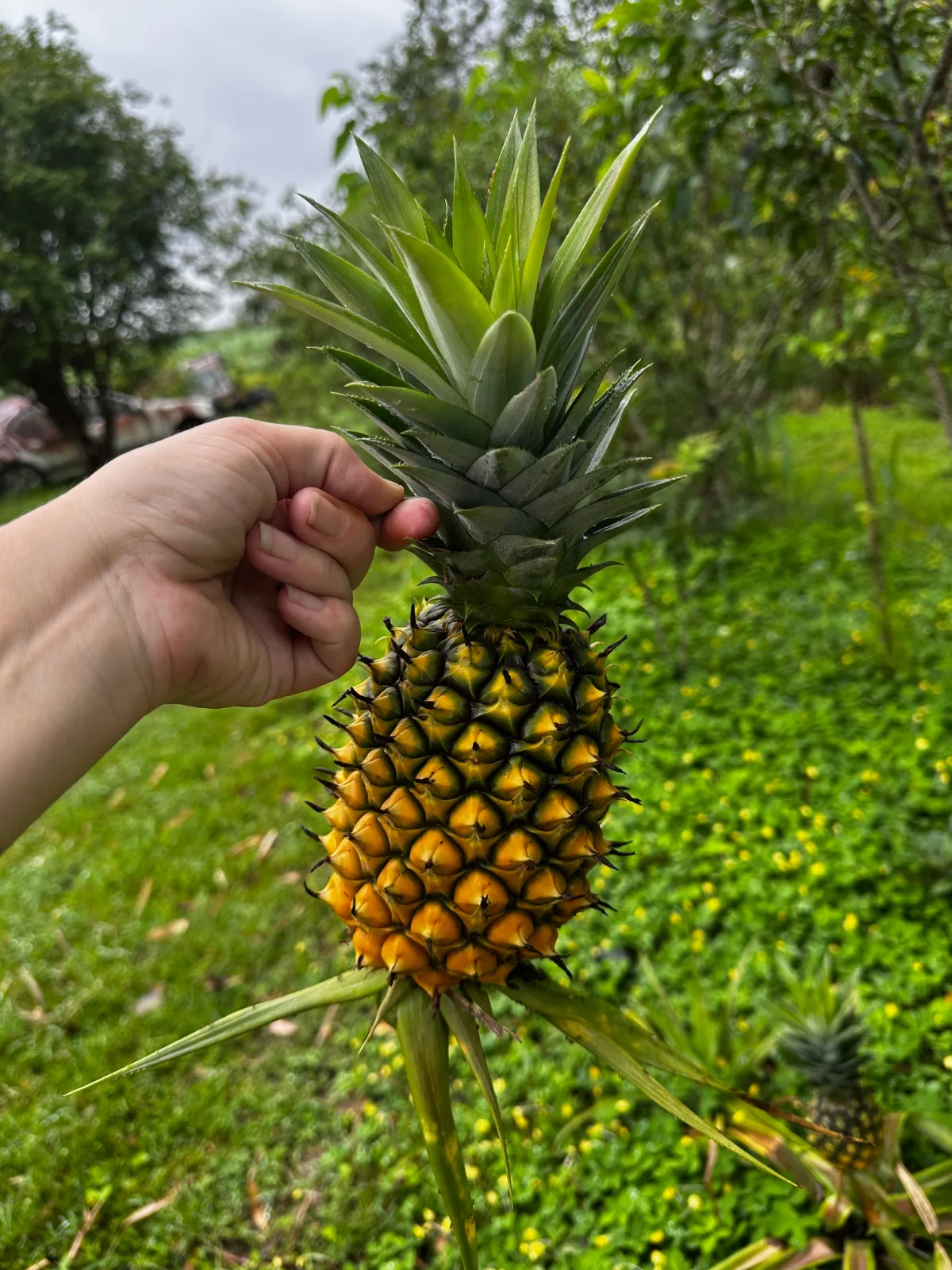
An old lower leaf turning yellow is normal. Widespread yellowing needs a closer look. Check first for waterlogged soil, cold conditions, root damage and serious nutrient imbalance rather than automatically adding more fertiliser.
If the centre of the plant becomes soft or pulls away easily, investigate heart rot. Healthy new growth should remain firm in the middle of the rosette.
Why Is My Pineapple Fruit Splitting or Burning?
Very hot, exposed conditions can damage developing fruit. Queensland guidance notes that fruit becomes susceptible to sunburn during intense sunlight and temperatures above about 35°C. Bunnings also notes that direct sun combined with high temperatures can contribute to fruit splitting.
If a fruit is taking the full force of extreme summer sun, temporary shade can protect it without putting the whole plant into deep shade.
Sources I Checked
For this guide I checked current Queensland pineapple production guidance from Business Queensland, including climate, drainage, soil, varieties, harvest maturity and insect and disease concerns. I also used Gardening Australia’s pineapple features, including Jerry Coleby-Williams’ 2024 ‘Tropical Treat’ and earlier propagation demonstrations, plus Bunnings Australia’s home-growing guidance.
Commercial advice is not copied straight into the backyard. I’ve used it where it clarifies pineapple biology or Australian growing conditions, then kept the practical recommendations suitable for home gardens.
Questions People Ask
- Do pineapples grow on trees?
No. Pineapples grow on a low bromeliad made of a rosette of stiff leaves. The fruit develops on a short stalk from the centre of the mature plant.
- How long does a pineapple take to grow?
In a warm frost-free climate, a pineapple can fruit in around 18 months, but 18–24 months or longer is common in home gardens. Tops are usually slower than strong suckers, and cool weather can extend the wait.
- Can I plant the top of a supermarket pineapple?
Yes. Remove the leafy crown, clean off any fruit flesh, strip several lower leaves, let the base dry and seal for a few days, then plant it shallowly into a warm, free-draining mix.
- Do I need to root a pineapple top in water first?
No. You can root a crown in a shallow amount of water, but it can also go straight into free-draining propagation mix after the cut base has dried. Keep the crown itself out of saturated conditions.
- Does a pineapple plant fruit more than once?
Each main rosette fruits once. The plant usually makes suckers, though, and one of those can carry the clump into another crop. You can also remove and replant suckers and slips.
- Will a pineapple ripen after I pick it?
No. Pineapple is non-climacteric, so it does not become sweeter after harvest. Leave home-grown fruit on the plant until it has reached proper maturity.
- Can pineapple plants grow in pots?
Yes. They have relatively compact root systems and grow well in containers. Use a free-draining mix, increase pot size as the roots fill it and make sure a mature fruiting plant is stable.
- Can you grow pineapples outside the tropics?
Yes, provided you can give them a warm, sunny, frost-free position. Growth slows sharply in cool weather, so warm temperate gardeners often get better results in a sheltered microclimate or movable pot.

Grow Pineapple
Add it to My Garden for practical jobs matched to your climate and the season.