
Plant profile
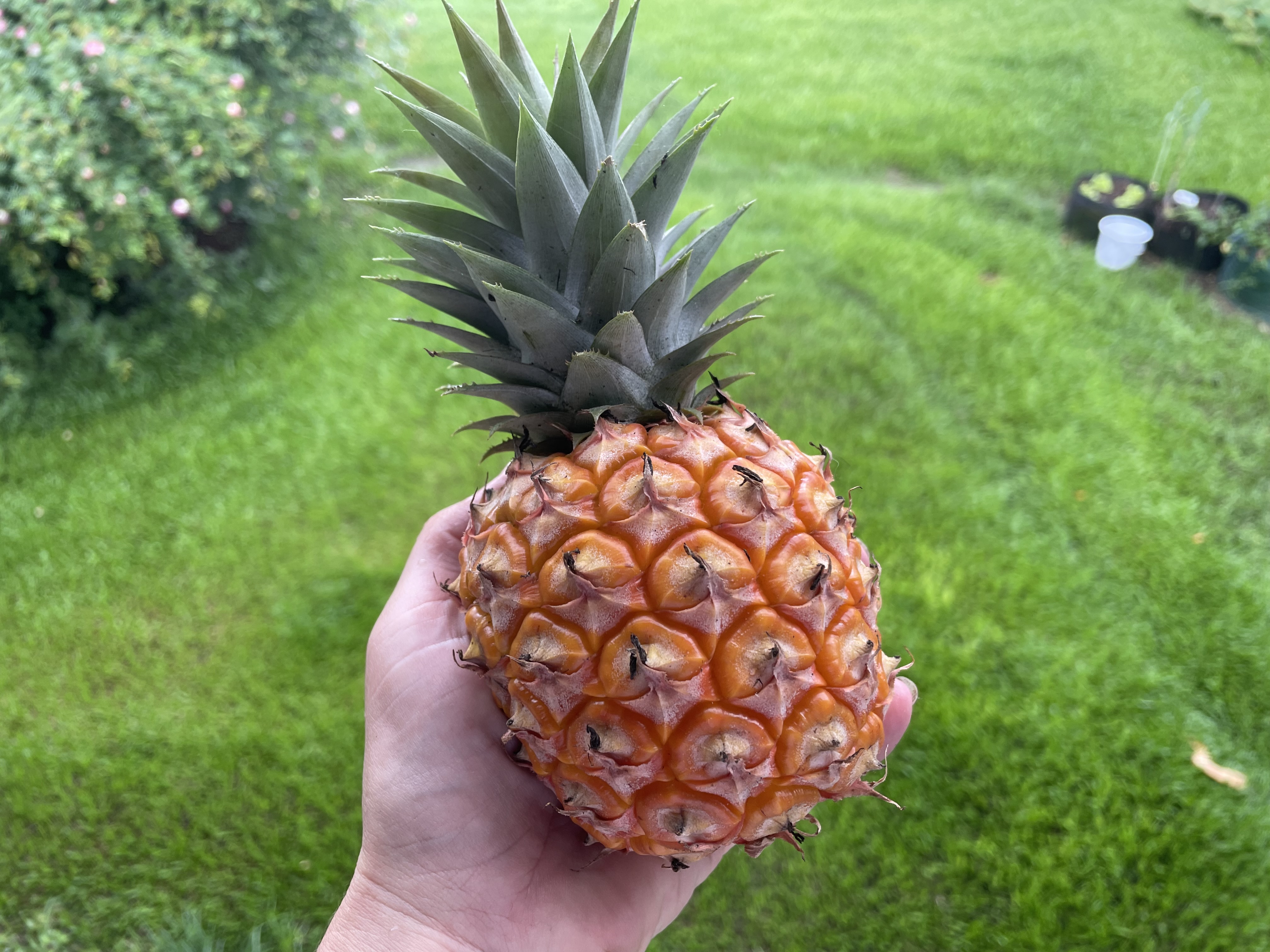
Pineapple
Ananas comosus
Also known as Pineapple plant.
Pineapples are warm-climate bromeliads that need sun, free drainage and patience. A top or sucker can take well over a year to reach fruit.
- Grows well in
- Tropical, Subtropical, Temperate, Arid / inland, Mediterranean
- Lifecycle
- Perennial bromeliad; each rosette fruits once
- Light
- Full sun
- Mature size
- Usually about 1 m tall and wide, with vigorous cultivars reaching around 1.5 m.
- Spacing
- About 50–75 cm apart in the ground; leave enough room to reach between the prickly leaves for weeding and harvest.
- Growth habit
- Ground-level bromeliad forming a stiff rosette of strap-like leaves, with fruit produced from the centre of the mature rosette.
- Native range
- Costa Rica to southern tropical South America
- Natural habitat
- Seasonally dry tropical forest, savanna and open rocky or sandy ground.
When to plant
Tropical
March–October
Subtropical
September–April
Temperate
October–March
Arid inland
September–April
Mediterranean
October–March
Full growing guide
How to Grow Pineapple Plants in Australia
Pineapples are slow-growing bromeliads that do best with sun, warmth and excellent drainage. Learn how to start new plants from tops or suckers and keep them growing through to a properly ripe fruit.
Read the full growing guidePlanting
Plant a healed top, slip or sucker into very free-draining soil or potting mix. Raised beds or ridges are useful in wet climates.
Position and light
Warm full sun in a sheltered position. Protect from frost.
Soil
Well-composted but very free-draining soil. Pineapple roots are damaged by cold, constantly wet conditions.
Watering
Water while new plants root and during long dry periods, but let excess water drain away freely.
Feeding
Use small regular feeds during active growth rather than heavy applications. Container plants need nutrients replaced as the mix ages.
Pruning
No regular pruning is needed. Remove dead leaves carefully if they are in the way.
Harvest
Fruit is ready when it has coloured for the variety and smells ripe. Do not eat immature green fruit.
Propagation
Grow from tops, slips and suckers. Suckers usually reach fruit sooner than tops.
Common problems
Root rot in poorly drained soil, mealybug, ants and animal damage to ripening fruit can occur.
Safety notes
Leaves are sharp and can scratch skin. Unripe green fruit should not be eaten.
Worth knowing
The main rosette fruits once, but the plant usually produces suckers and slips that can be left for a ratoon crop or removed and replanted. Excellent drainage matters more than rich soil. If the mother plant produces several suckers after harvest, keep one or two strong ones for the next crop and remove extras if the clump becomes crowded. A ratoon crop from a well-placed sucker is usually quicker than starting again from a fruit top.
Grow Pineapple with Brancho
Add it to My Garden and Brancho works out what it needs next, timed for your climate.
How it grows around Australia
Growing this too? Share what you've noticed in your garden.
Grow a Little Wild
New plants to try, useful growing tips and a few garden jobs based on what you grow.