

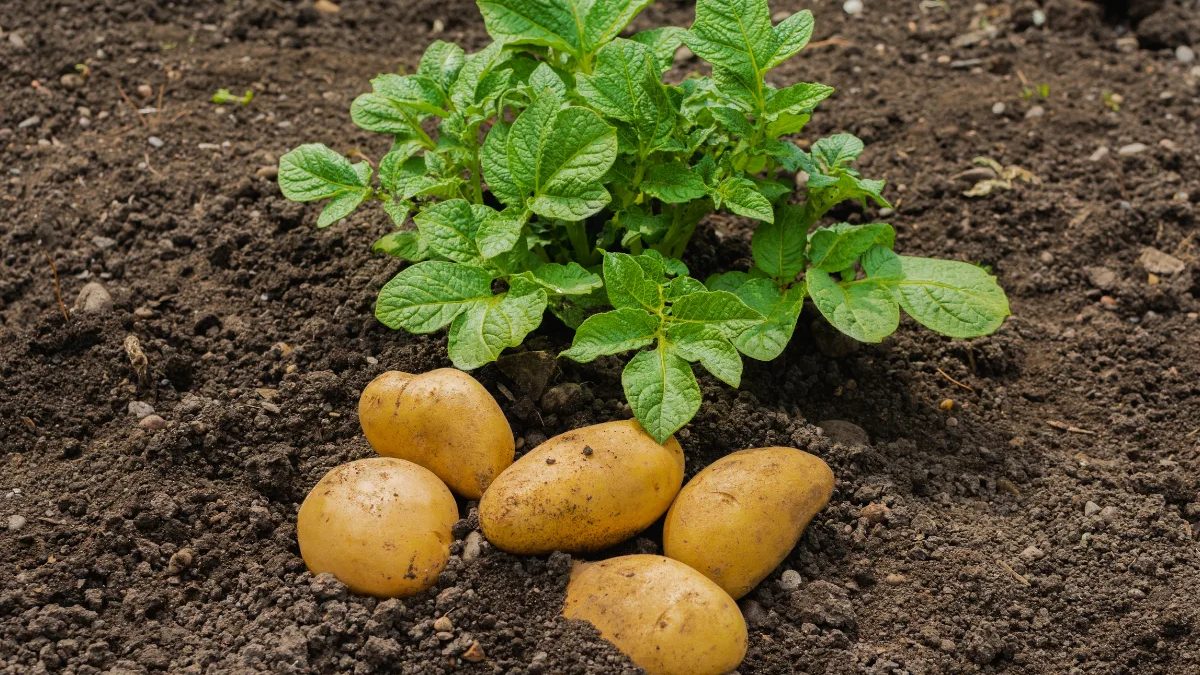

Potatoes are one of the most satisfying crops to dig because you never quite know what is under the soil until you start lifting them.
They grow best in mild weather with loose soil, steady moisture and enough soil or mulch over the developing tubers to keep them out of the light. The best planting month changes a lot across Australia, so climate matters more than a single national planting date.
I start with proper seed potatoes rather than an old supermarket potato. Potatoes can carry soil-dwelling insects and plant diseases that persist in soil, and certified seed potatoes give you a cleaner starting point.
- Botanical name: Solanum tuberosum
- Also known as: Potatoes
- Category: Veggie
- Lifecycle: Cool to mild-season annual tuber crop
- Climates: tropical, subtropical, temperate, cool / mountain, arid inland, Mediterranean
- Position: Full sun.
Potato Quick Facts
- Botanical name: Solanum tuberosum
- Plant type: Annual tuber crop
- Position: Full sun
- Soil: Loose, fertile and well drained
- Spacing: About 30–40 cm between plants, with room to mound soil around them
- Water: Keep moisture fairly even during active growth and tuber formation
- Harvest: Small new potatoes can be taken earlier; main crops are ready once the tops die back and the skins have set
- Propagation: Certified seed potatoes
- Containers: Excellent in large pots and potato grow bags
- Main problems: Heat, frost, poor drainage, greening, potato moth, aphids, leaf disease and tuber rot
When to Plant Potatoes in Australia
Potatoes grow best through cool to mild weather, but frost can damage the tops and high temperatures reduce tuber formation.
That is why planting time can look almost backwards between northern and southern Australia.
Tropical Australia
Lowland tropical conditions can be difficult for ordinary potatoes. Warm nights and hot soil work against good tuber set, and prolonged wet weather can cause rot.
If you want to grow them in the tropics, use the coolest and drier part of the year, choose a well-drained position and avoid planting into the hottest months.
Higher tropical areas such as the Atherton Tablelands have a much more suitable potato climate than hot coastal lowlands. Queensland production guides show planting through the cooler months in the tablelands, while high temperatures are a major limit in warmer districts.
I would treat potatoes as a seasonal crop in the tropics rather than something to keep pushing all year.
Subtropical Australia
Autumn into winter is the easiest window in many subtropical areas.
Gardening Australia gives March to August as a broad planting period for warmer areas such as Queensland. In southern Queensland commercial districts, planting dates vary by local frost risk and summer heat.
Good drainage matters here. A potato crop sitting through warm, wet soil can rot quickly.
Temperate Australia
Late winter through spring is the classic planting period in many temperate gardens, although mild districts can stretch the season further.
The aim is to give plants enough time to grow and set tubers before severe summer heat.
Cool and mountain climates
Spring planting works well once the worst frost risk has passed.
Cool climates are naturally well suited to potatoes, but newly emerged shoots can still be damaged by frost. If late frosts are common, wait until conditions are safer or be ready to protect young growth.
Mediterranean Australia
Plant from late winter into spring in most areas, using irrigation as rainfall drops away.
The crop wants mild temperatures during early growth and tuber set, so avoid letting a late crop run straight into intense summer heat if you can.
Arid and inland Australia
Use the cooler part of the year and provide reliable irrigation.
Loose soil is usually easy to achieve in sandy ground, but moisture can disappear very quickly. Mulch and regular deep watering help keep the root zone more even.
Use Seed Potatoes, Not Random Supermarket Potatoes
A seed potato is not a packet of true seed. It is a potato tuber grown and sold specifically for planting.
I would buy certified disease-free seed potatoes from a nursery or seed supplier.
Potatoes can carry viruses, soil-borne disease and other problems that are difficult to remove once they enter a garden bed. Gardening Australia consistently recommends certified seed potatoes for this reason.
Can you grow potatoes from old potatoes?
Technically, yes. An old potato with healthy eyes can sprout and grow.
I still would not make supermarket potatoes my normal planting stock. They may carry disease, may have been stored or treated in ways that affect sprouting, and you often do not know how well that variety suits your climate.
If you want to save your own potatoes for replanting, start with healthy certified stock and only keep sound tubers from a healthy crop.
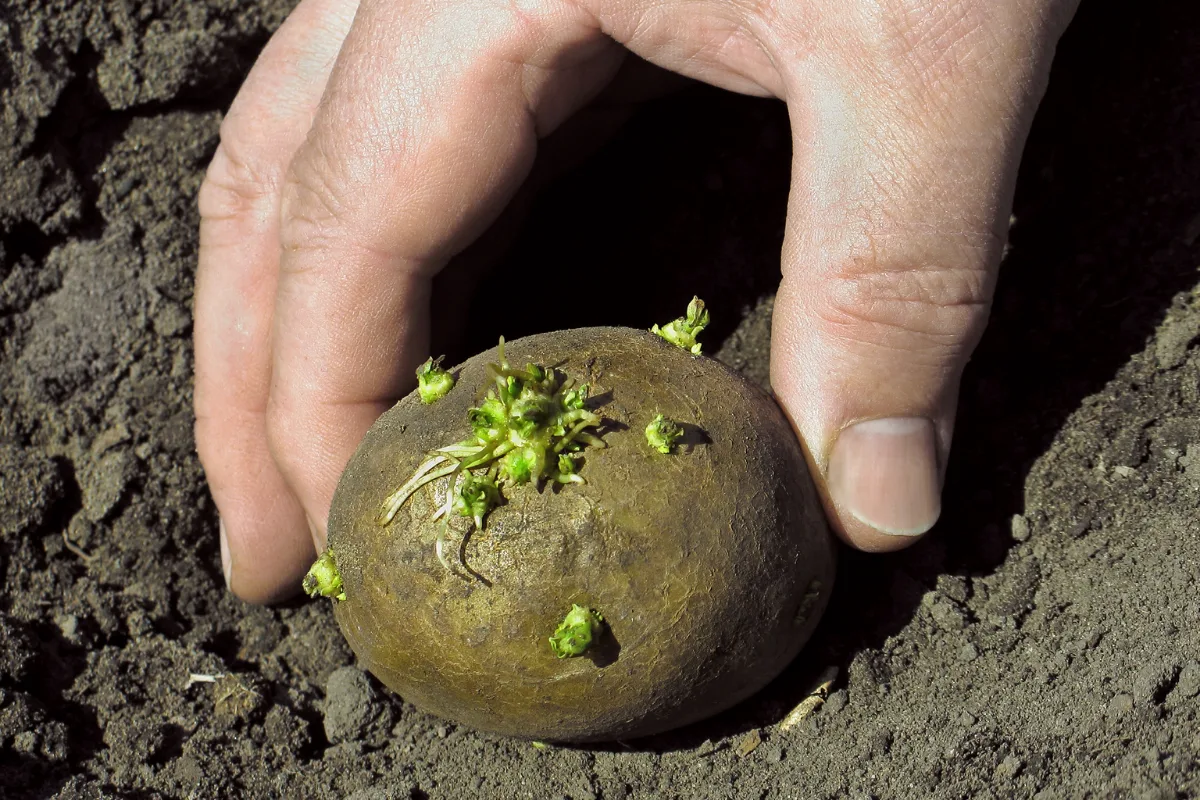
What Are Potato Eyes?
The little dimples on a potato are growing points known as eyes.
Each eye can send up a shoot.
Small seed potatoes can be planted whole. Larger seed potatoes can be cut into pieces, provided each piece has at least one or two healthy eyes and enough tuber around them to support early growth.
If you cut seed potatoes, let the cut surface dry and seal before planting rather than putting a freshly cut wet surface straight into the soil.
Do You Need to Chit Potatoes?
Chitting simply means letting seed potatoes start sprouting before planting.
You can stand them in an egg carton or shallow tray somewhere bright, dry and airy until short sturdy shoots appear.
You do not have to chit potatoes for them to grow. It can give them a head start, particularly where the growing season is short.
Avoid the long pale shoots that develop on potatoes forgotten in a dark cupboard. Strong, short shoots are easier to plant without breaking.
Choosing Potato Varieties
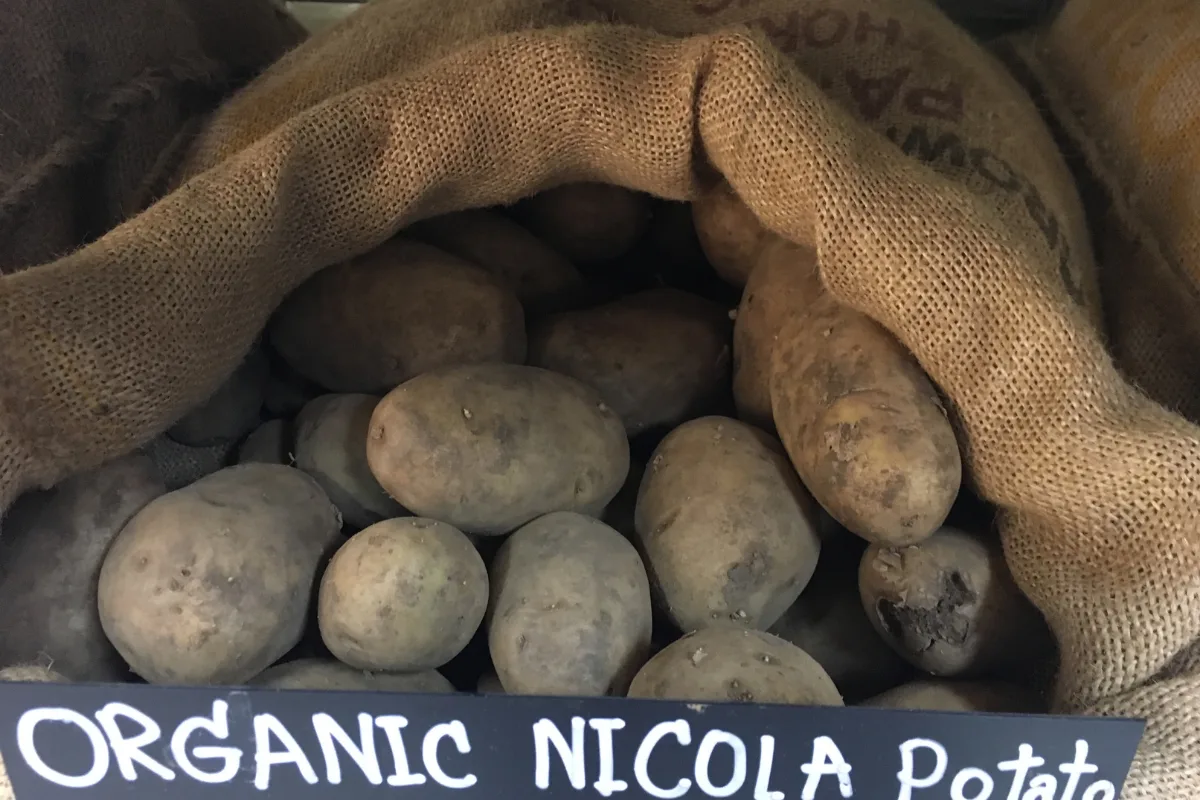
Potato varieties differ in growth time, climate performance, skin colour, flesh colour and what they are like in the kitchen.
Choose a variety by how you use potatoes in the kitchen.
Waxy potatoes
Waxy potatoes hold their shape well after cooking. They are useful for salads, boiling, steaming and dishes where you want intact pieces.
Common examples include Kipfler, Nicola and Pink Eye.
Floury potatoes
Floury or starchy potatoes cook up softer and fluffier. They are useful for mash, roast potatoes and chips.
Examples include Kennebec, King Edward and Coliban.
All-rounders
All-round varieties sit between the two and work for a broad range of dishes.
Sebago is the familiar Australian example.
If you live somewhere hot or humid, I would also ask which varieties perform well locally. Start with varieties that perform well in your climate, then choose the cooking texture you prefer.
How to Plant Potatoes
Start with loose soil and enough room to mound around the plants later.
A simple garden-bed method is:
- Prepare the bed with compost and make sure excess water can drain.
- Dig a trench roughly 10–20 cm deep, adjusting for your soil.
- Place seed potatoes about 30–40 cm apart with the strongest shoots facing up.
- Cover them with soil.
- Water the bed.
- As the stems grow, mound more soil, compost or loose mulch around them while leaving the growing tips exposed.
Do not overcrowd them. A potato plant needs both root space and enough soil around its stems for the developing tubers.
Why Do You Mound Soil Around Potatoes?
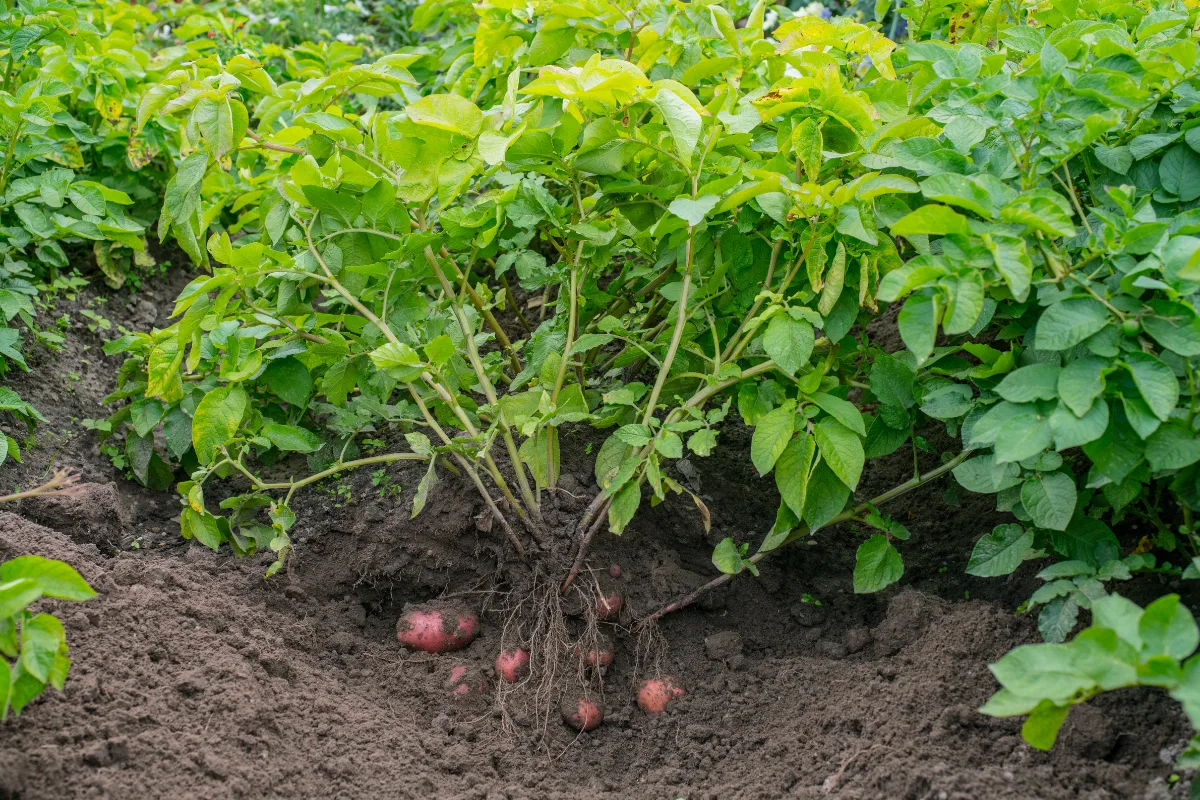
New potatoes develop on underground stems called stolons.
As the plant grows, some developing tubers can end up close to the surface. If light reaches them, the skin turns green and glycoalkaloid levels can rise.
Mounding, hilling or earthing up keeps the developing crop covered.
You can use loose garden soil, compost mixed with soil, or a combination of soil and clean straw depending on how you grow them.
I would start mounding once the shoots are well established, then add more as the stems get taller. Do not bury the entire plant; keep healthy leafy growth above the mound.
Best Soil for Potatoes
Potatoes make the best-shaped tubers in loose, friable soil.
Heavy compacted soil makes expansion harder and can leave you with small or misshapen potatoes. Poor drainage is an even bigger problem because seed potatoes and young tubers can rot.
Before planting, I would add mature compost and loosen the bed deeply enough for easy root growth.
If you have heavy clay, a raised bed or grow bag may be much easier than trying to force a potato crop into a wet patch.
Avoid huge amounts of fresh, nitrogen-heavy manure. Potatoes need fertility, but very high nitrogen can give you a lot of top growth without a matching crop underneath.
How Much Sun Do Potatoes Need?
Give potatoes full sun.
Strong leaf growth powers the crop below ground. Deep shade usually means weaker growth and a smaller harvest.
In extremely hot inland or northern conditions, the bigger problem is not sunlight itself but excessive heat. That is a sign to change the planting season rather than trying to grow the crop through midsummer in shade.
Watering Potatoes
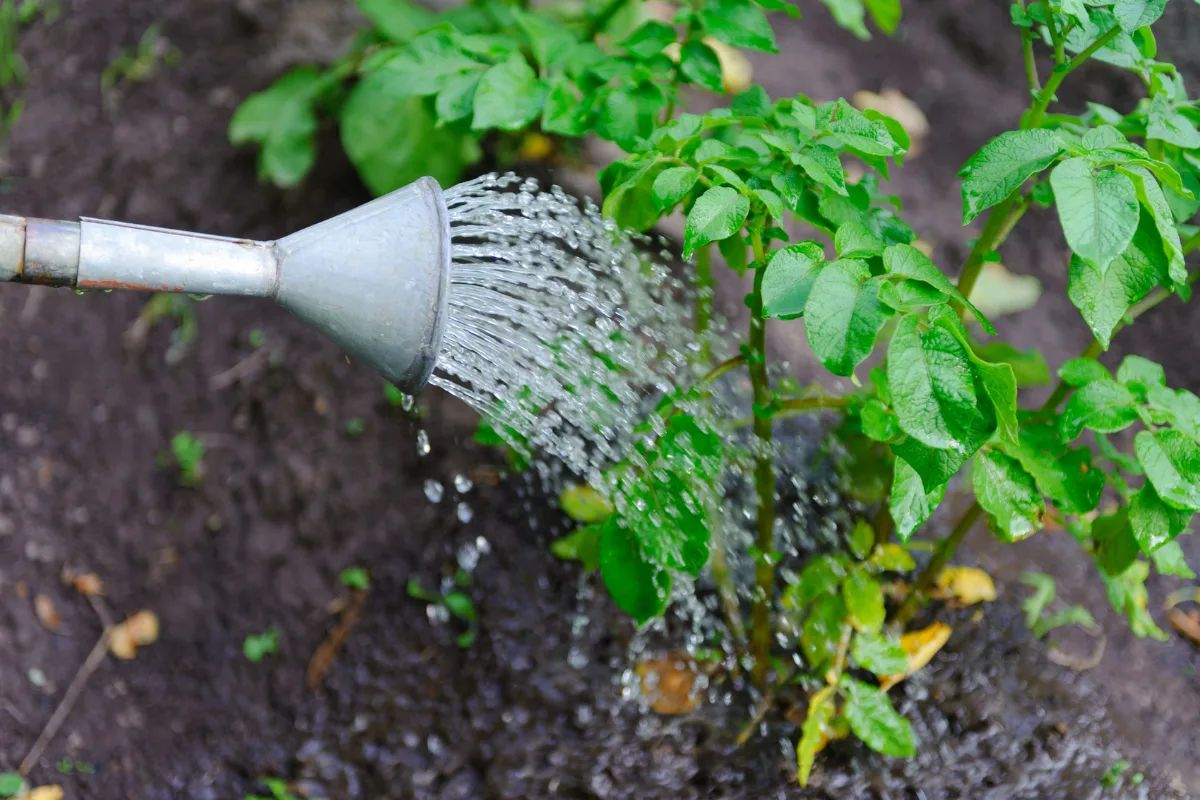
Keep moisture reasonably even once the plants are growing strongly.
The most important period is while plants are forming and filling tubers. If the soil repeatedly dries hard and then becomes saturated, tuber quality and yield can suffer.
At the same time, potatoes are very prone to trouble in waterlogged ground.
Water deeply enough to moisten the root zone, then let the soil drain. Containers and grow bags need checking more often because they dry much faster than garden beds.
As the plants mature and the tops begin dying back, reduce watering. A drier finish helps the skins set and makes harvest easier.
Grow a Little Wild
New plants to try, useful growing tips and a few garden jobs based on what you grow.
Feeding Potatoes
Potatoes are productive plants, but I would feed the soil rather than chase them with heavy fertiliser all season.
Before planting, add compost and a suitable balanced vegetable fertiliser if your soil needs it.
Potassium is useful for tuber development, while too much nitrogen can push excessive leafy growth.
If the plants are dark green and growing strongly, they do not need constant extra feeding.
In containers, nutrients wash through the mix more quickly, so light repeat feeding during active growth can be useful.
Growing Potatoes in Pots and Grow Bags
Potatoes are one of the best crops for large containers and grow bags.
You do not need a purpose-made potato bag. A large pot, tub or sturdy grow bag with plenty of drainage works.
Gardening Australia has successfully grown three seed potatoes in an 85 L container. I would use that as a useful sense of scale: give them room rather than packing ten potatoes into a small bag.
How to grow potatoes in a container
- Put about 10–15 cm of quality potting mix and compost in the bottom.
- Place the seed potatoes on top, spaced apart.
- Cover with another 10 cm or so of mix.
- Water well.
- Once shoots are growing strongly, add more mix around the stems.
- Keep repeating until the container is mostly full.
- Keep the top growth exposed to light.
- Water and feed more regularly than you would in open ground.
The big advantage is harvest. Instead of digging through a whole bed, you can tip out the container and sort through the mix.
The disadvantage is moisture. A black grow bag in Australian sun can heat up and dry extremely quickly, so position and watering matter.
How Long Do Potatoes Take to Grow?
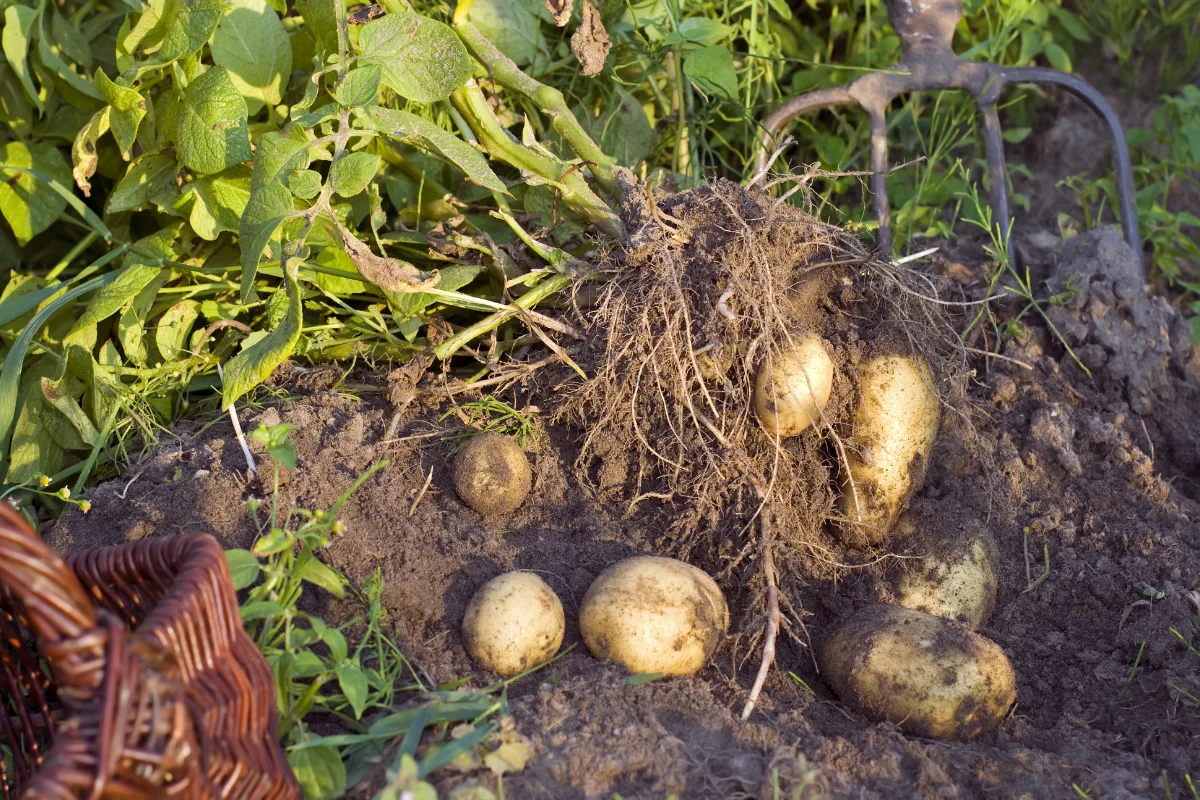
A useful home-garden estimate is around 12–16 weeks, but the variety and growing conditions can stretch that.
Gardening Australia gives roughly three to five months for many container-grown potatoes.
Early varieties are ready sooner. Main-crop potatoes take longer.
Rather than counting an exact number of days, watch the plant:
- healthy green tops mean the crop is still growing
- flowers may appear, but flowering is not a reliable harvest signal on its own
- yellowing and dying tops tell you the main crop is approaching maturity
If you want small new potatoes, you can gently investigate earlier and take a few while the plant is still green.
When Are Potatoes Ready to Harvest?
For small new potatoes, harvest earlier while the skins are still thin.
For mature potatoes that you want to store, wait until the foliage has yellowed and died back.
Once the tops have died, leaving the tubers in reasonably dry soil for a short period helps the skins firm up.
Dig carefully with a fork, starting away from the stems so you do not spear half the crop.
I like to lift one plant first. If the tubers have reached a useful size and the skins are firm, continue. If they are tiny and the plant still has plenty of healthy growth, give the rest more time.
Can You Harvest Potatoes Without Killing the Plant?
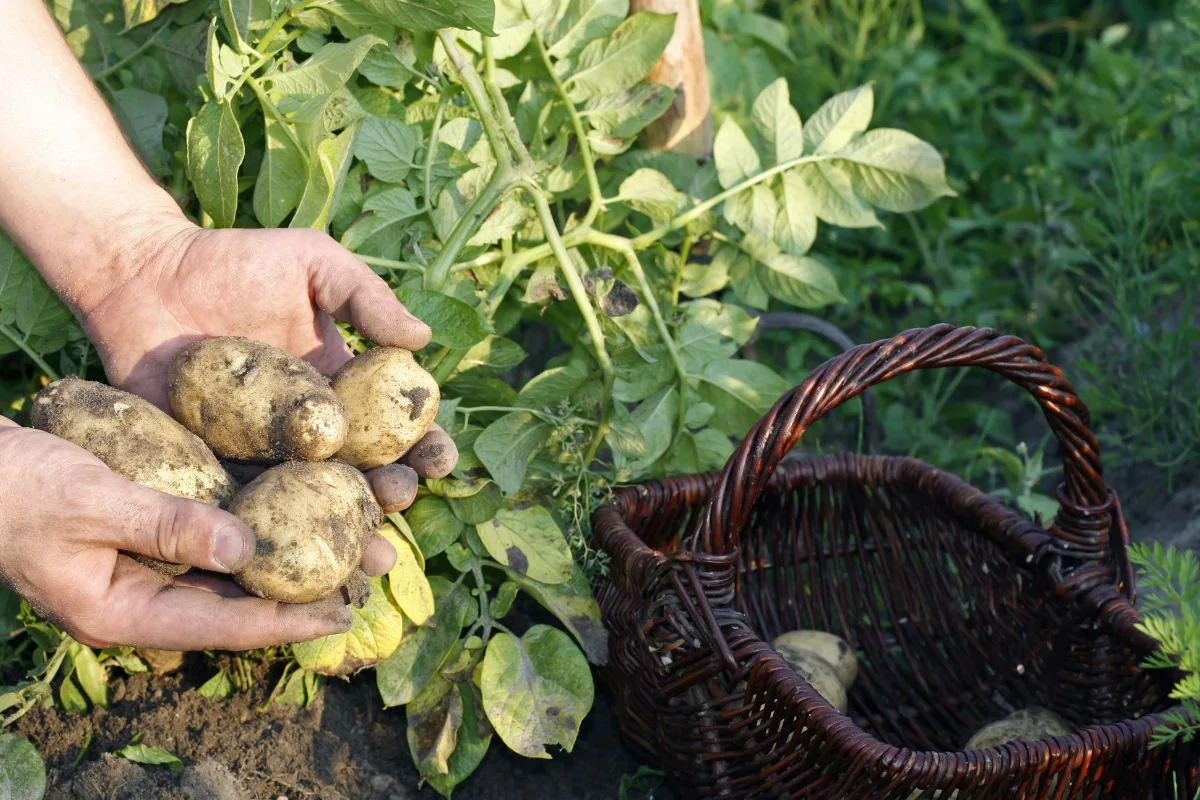
You can take a few new potatoes from the edge of a plant without lifting everything.
Gently feel into the soil or mulch and remove a few useful-sized tubers, then cover the roots again.
This works best for an occasional early harvest. If you keep digging around the plant repeatedly, you will eventually damage roots and stolons, so I would not turn it into a weekly excavation.
How to Store Home-Grown Potatoes
Do not wash storage potatoes straight after harvest.
Brush off loose dry soil and let the skins dry somewhere dark, cool and well ventilated. Light causes greening, so do not leave harvested potatoes sitting in the sun.
Remove damaged potatoes and use them first rather than storing them with the sound crop.
Once dry, keep potatoes somewhere dark and cool with airflow. Do not seal damp potatoes in an airtight container.
Green Potatoes: Do Not Ignore Them
Light-exposed potatoes can turn green. The green colour itself is chlorophyll, but it is a useful warning that glycoalkaloid levels may also have increased.
Potato sprouts and bitter-tasting or heavily green tissue can contain higher concentrations of these natural toxins.
Do not eat potato leaves, stems, sprouts or obviously green/bitter tubers. Cooking does not reliably remove the toxins.
The best prevention in the garden is simple: keep developing potatoes completely covered with soil or mulch.
Potato Insects and Growing Problems
Potato moth
Potato moth can damage both foliage and exposed tubers. Good mounding helps because tubers sitting near cracks or the soil surface are easier for soil-dwelling insects to reach.
Aphids
Aphids feed on young growth and can also spread viruses. Heavy infestations deserve attention, particularly if the plants are already stressed.
Leaf disease
Brown or collapsing foliage can come from several diseases, not just old age. Remove badly diseased material and avoid saving planting potatoes from an obviously unhealthy crop.
Tuber rot
Rot usually becomes much worse where drainage is poor or mature potatoes sit in wet soil.
Lots of leaves, very few potatoes
Common causes include excessive nitrogen, overcrowding, too much heat during tuber set, not enough light, or a variety growing outside its best season.
Green potatoes
This means light has reached the tubers. Mound more soil immediately and discard badly green potatoes at harvest.
Crop Rotation
Potatoes belong to the same family as tomatoes, eggplants and capsicums.
Where you have room, avoid repeatedly growing potatoes and other solanaceous crops in exactly the same soil season after season.
Rotation is particularly useful after a disease problem because several soil-dwelling insects and disease-causing organisms can persist in soil or crop debris.
In a small garden, containers make rotation easier. Empty the old mix into a non-solanaceous bed or compost system if it is healthy, clean the container and start the next potato crop with fresh mix.
A Simple Potato Routine
If you want the short version, this is what I would concentrate on:
- Plant certified seed potatoes.
- Choose the cool-to-mild part of the year for your climate.
- Use full sun and loose, well-drained soil.
- Give each plant enough room.
- Mound soil or mix around the stems as they grow.
- Keep water steady while tubers form.
- Let the tops die back for a mature storage crop.
- Keep every harvested potato out of the light.
Potatoes do not need a complicated setup. They need the right season, a clean start and enough loose covered soil to make their crop.
Sources I Checked
- Gardening Australia — Potatoes
- Gardening Australia — One Potato, Two Potato
- Gardening Australia — Hot Potato Tips
- ABC / Gardening Australia — The easiest way to grow your own potatoes in a garden, bag, or pot
- Gardening Australia — Top Tip: Planting in Grow Bags
- Queensland Department of Agriculture and Fisheries — Potato information kit: Growing the crop
- Queensland Department of Agriculture and Fisheries — Potato information kit: Key issues
- Food Safety Information Council — Potatoes
Questions People Ask
- How long do potatoes take to grow?
Most home-grown potatoes take roughly 12–16 weeks, with some varieties closer to three months and others taking five months or more. Climate and planting time also change the result.
- Can you grow potatoes in a grow bag?
Yes. Use a large bag with good drainage, start with 10–15 cm of mix, plant the seed potatoes, then keep adding mix around the stems as they grow. Large bags are easier to keep evenly moist than small ones.
- Can you grow potatoes from old potatoes?
They can sprout and grow, but I recommend certified seed potatoes because supermarket or unknown potatoes can carry diseases and may not suit your climate.
- Do potatoes need full sun?
Yes. Full sun supports strong top growth and good tuber production. In very hot climates, change the planting season rather than moving the crop into deep shade.
- How deep should you plant potatoes?
A home-garden starting depth of around 10–20 cm works well, depending on soil and drainage. The more important part is mounding additional soil around the stems as they grow.
- Why do you mound potatoes?
Mounding keeps developing tubers covered and protected from light. It also provides loose material around the stems where tubers can develop.
- Can you eat green potatoes?
Avoid heavily green, sprouting or bitter potatoes. Green tissue can indicate increased glycoalkaloid levels, and cooking does not reliably destroy these toxins.
- Can you plant potatoes in summer?
In cool climates, yes, if the crop has enough time before severe heat. In warm subtropical and tropical districts, summer is generally the hardest season because high temperatures reduce tuber set and wet conditions can increase rot.
- What is the best potato for pots?
Compact or earlier varieties are convenient, but almost any potato can grow in a sufficiently large container. Choose by climate performance and how you like to cook them rather than assuming one variety is universally best.
- Do potatoes need fertiliser?
They grow best in fertile soil, but avoid heavy nitrogen feeding. Compost and a balanced vegetable fertiliser are a good base, with light repeat feeding in containers if needed.
Grow Potato
Add it to My Garden for practical jobs matched to your climate and the season.