
Plant profile
Potato
Solanum tuberosum
Also known as Potatoes.
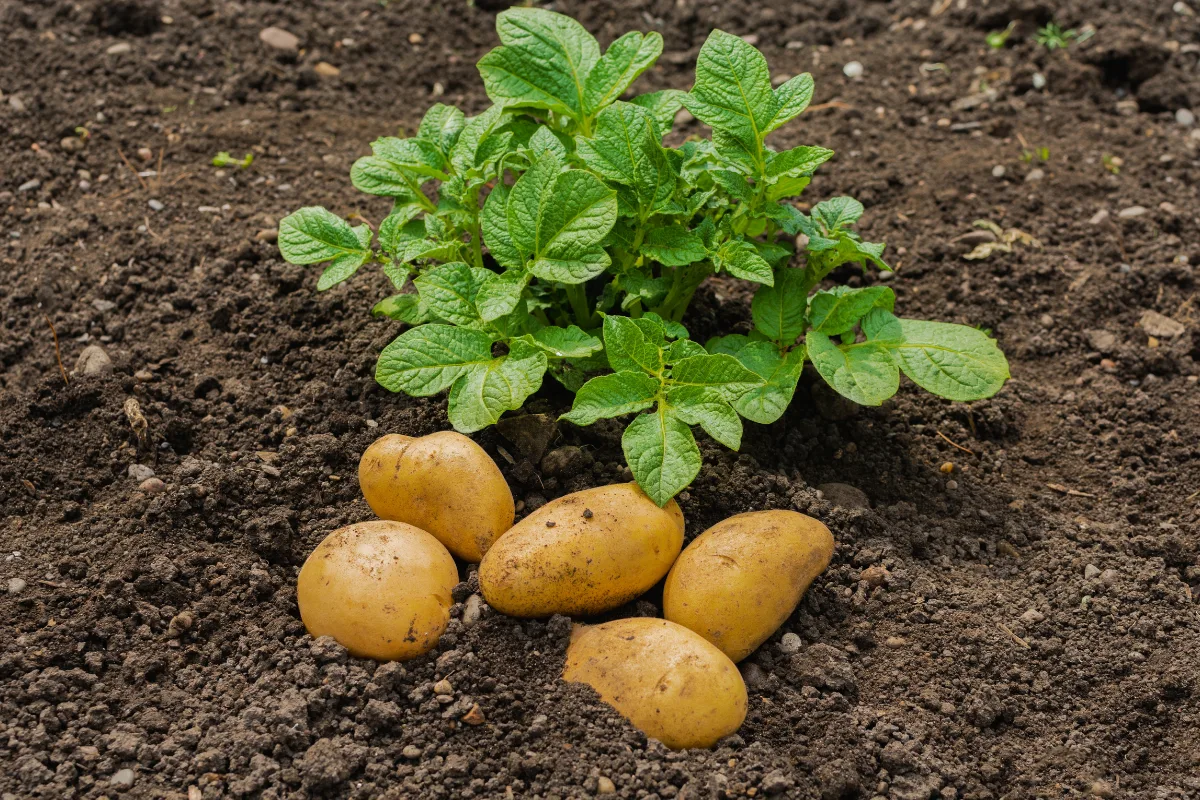
Potatoes grow from seed tubers in loose, well-drained soil. Mounding soil around the stems protects developing tubers from light.
- Grows well in
- Tropical, Subtropical, Temperate, Cool / mountains, Arid / inland, Mediterranean
- Lifecycle
- Cool to mild-season annual tuber crop
- Light
- Full sun
- Mature size
- Leafy plants are usually about 40–80 cm tall and wide, while the edible tubers develop below the soil surface.
- Spacing
- Plant seed potatoes about 30–40 cm apart, with roughly 50–75 cm between rows so there is room to mound soil around the stems.
- Growth habit
- Soft-stemmed annual crop growing from a seed tuber and producing new tubers on underground stems called stolons.
- Native range
- Western and southern South America to north-western Venezuela
- Natural habitat
- Cool highland grassland, rocky slopes and Andean valleys in subtropical parts of South America.
When to plant
Tropical
April–July
Subtropical
March–August
Temperate
August–November
Cool / mountain
September–November
Arid inland
March–May, August–October
Mediterranean
August–November
Full growing guide
How to Grow Potato Plants in Australia
Potatoes are easy to grow once you match planting time to your climate and keep developing tubers covered. Learn when to plant, when to mound and how to judge harvest.
Read the full growing guidePlanting
Use certified disease-free seed potatoes. Plant into loose, well-drained soil when conditions are mild and frost or extreme heat is unlikely during early growth.
Position and light
Full sun.
Soil
Loose, friable and well-drained soil is important so tubers can expand without becoming misshapen. Raised beds and grow bags work well.
Watering
Keep moisture fairly even once plants are growing, especially during tuber formation. Reduce watering as the tops die back.
Feeding
Use fertile soil and a balanced potato or vegetable fertiliser without pushing excessive leafy growth.
Pruning
Do not prune healthy tops. Remove badly diseased material if needed and let the plant die back naturally toward harvest.
Harvest
New potatoes can be taken earlier. For a full crop and better storage, wait until the tops have died back and skins have set.
Propagation
Grow from certified seed potatoes rather than supermarket potatoes. Rotate potatoes and other Solanaceae where practical.
Common problems
Potato moth, aphids, leaf disease, tuber rot, greening from light exposure and overcrowding can reduce crops. Green potato tissue should not be eaten.
Safety notes
Green potato skin, sprouts and above-ground plant parts contain higher levels of glycoalkaloids and should not be eaten. Do not eat green potato skins, green tubers or sprouts. Greening indicates increased glycoalkaloids, so affected parts are safer discarded rather than simply cooked.
Worth knowing
New tubers form above the original seed potato, which is why hilling or mounding soil around the stems increases protected growing space and stops developing potatoes turning green in sunlight.
Grow Potato with Brancho
Add it to My Garden and Brancho works out what it needs next, timed for your climate.
How it grows around Australia
Growing this too? Share what you've noticed in your garden.
Grow a Little Wild
New plants to try, useful growing tips and a few garden jobs based on what you grow.