


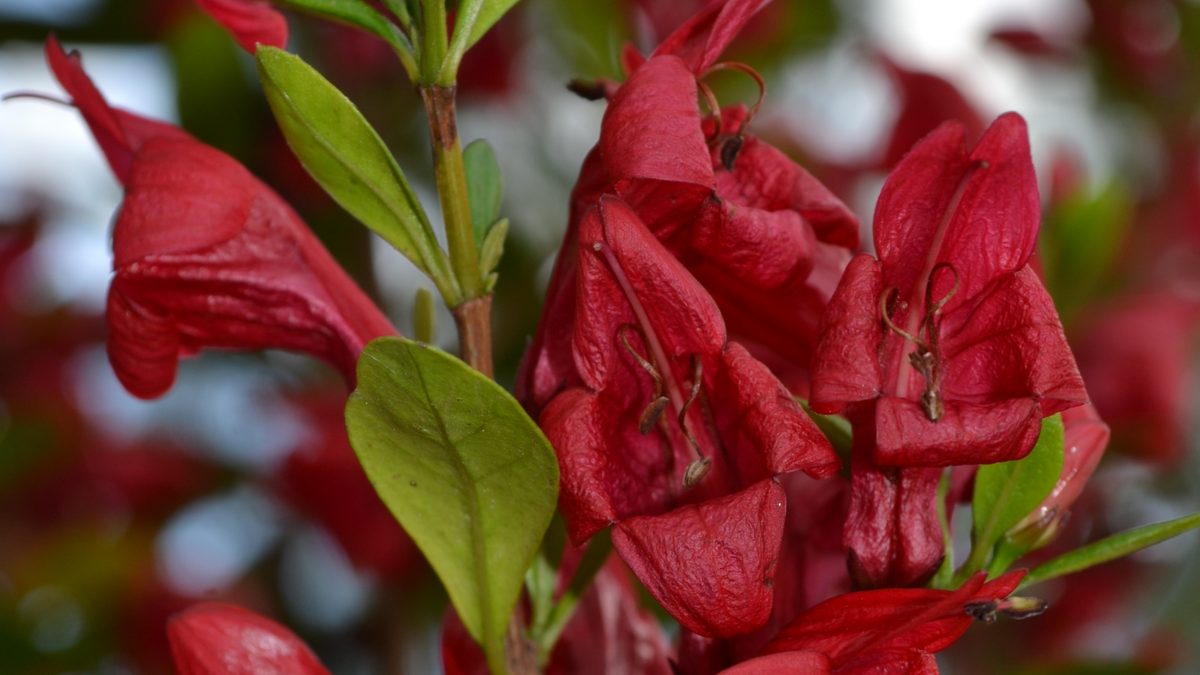

Scarlet fuchsia (Graptophyllum excelsum) is a Queensland native shrub with glossy green leaves and deep red tubular flowers that bring nectar-feeding birds into the garden. It naturally grows in scattered populations from northern to central and southern Queensland, including vine thickets and rocky limestone country, yet it adapts well to cultivation. You can grow it as a freestanding shrub, screen or clipped hedge, and regular pruning keeps the flowers and foliage at a useful height.
- Botanical name: Graptophyllum excelsum
- Also known as: Scarlet fuchsia, native fuchsia, letter-leaf
- Family: Acanthaceae
- Plant type: Evergreen native shrub or small tree
- Native range: Queensland endemic
- Conservation: Near Threatened under Queensland legislation
- Typical size: Usually about 1.5–4 m in gardens, although older wild plants can be taller
- Position: Full sun to light shade
- Flowers: Deep red to crimson tubular flowers, with the main display commonly in spring and early summer
- Propagation: Cuttings, fresh seed or rooted suckers
What Is Scarlet Fuchsia?
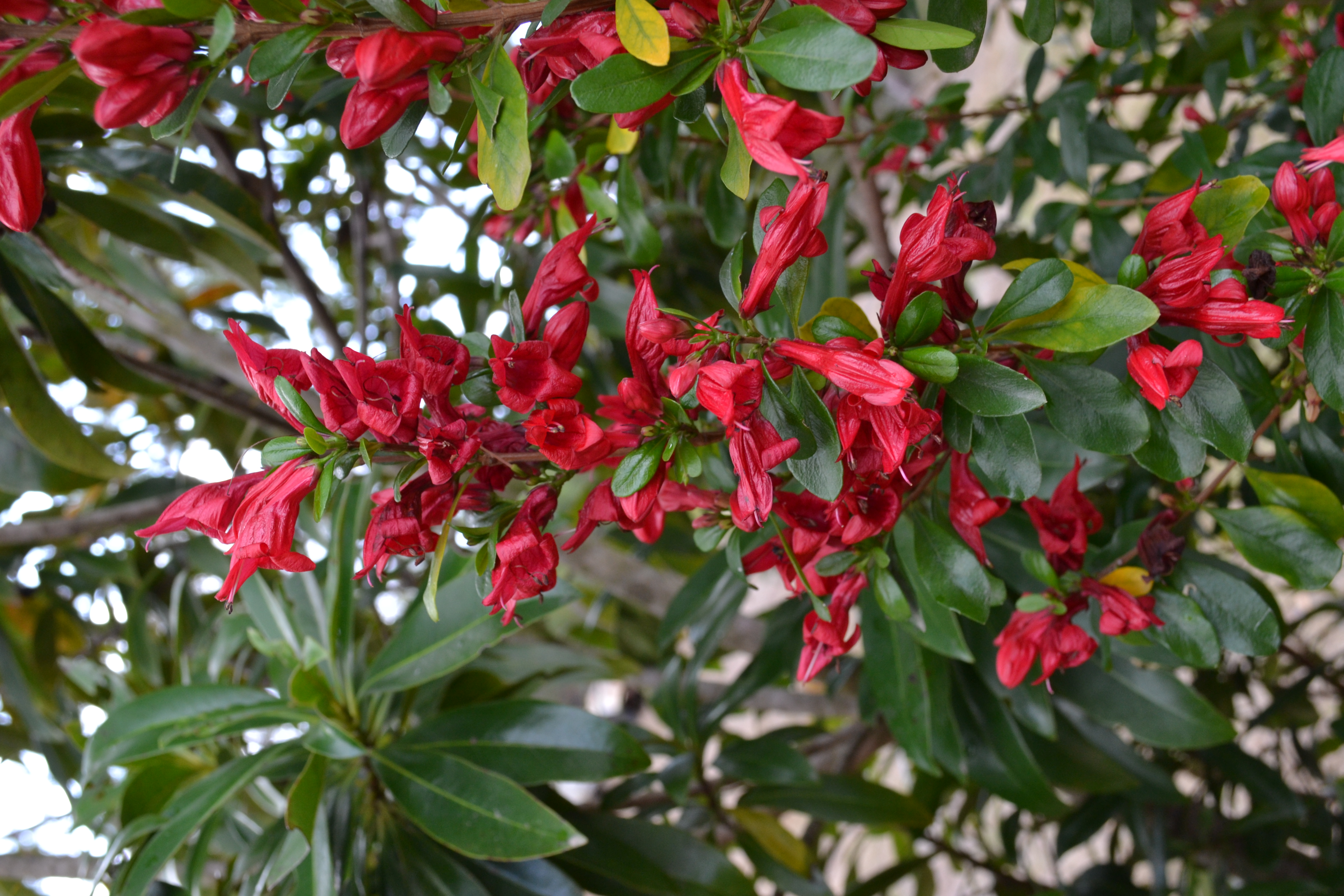
Scarlet fuchsia is an evergreen shrub or small tree in the Acanthaceae family. Despite the common name, it is not a true fuchsia. The botanical name is Graptophyllum excelsum, and Kew records the species as native only to Queensland.
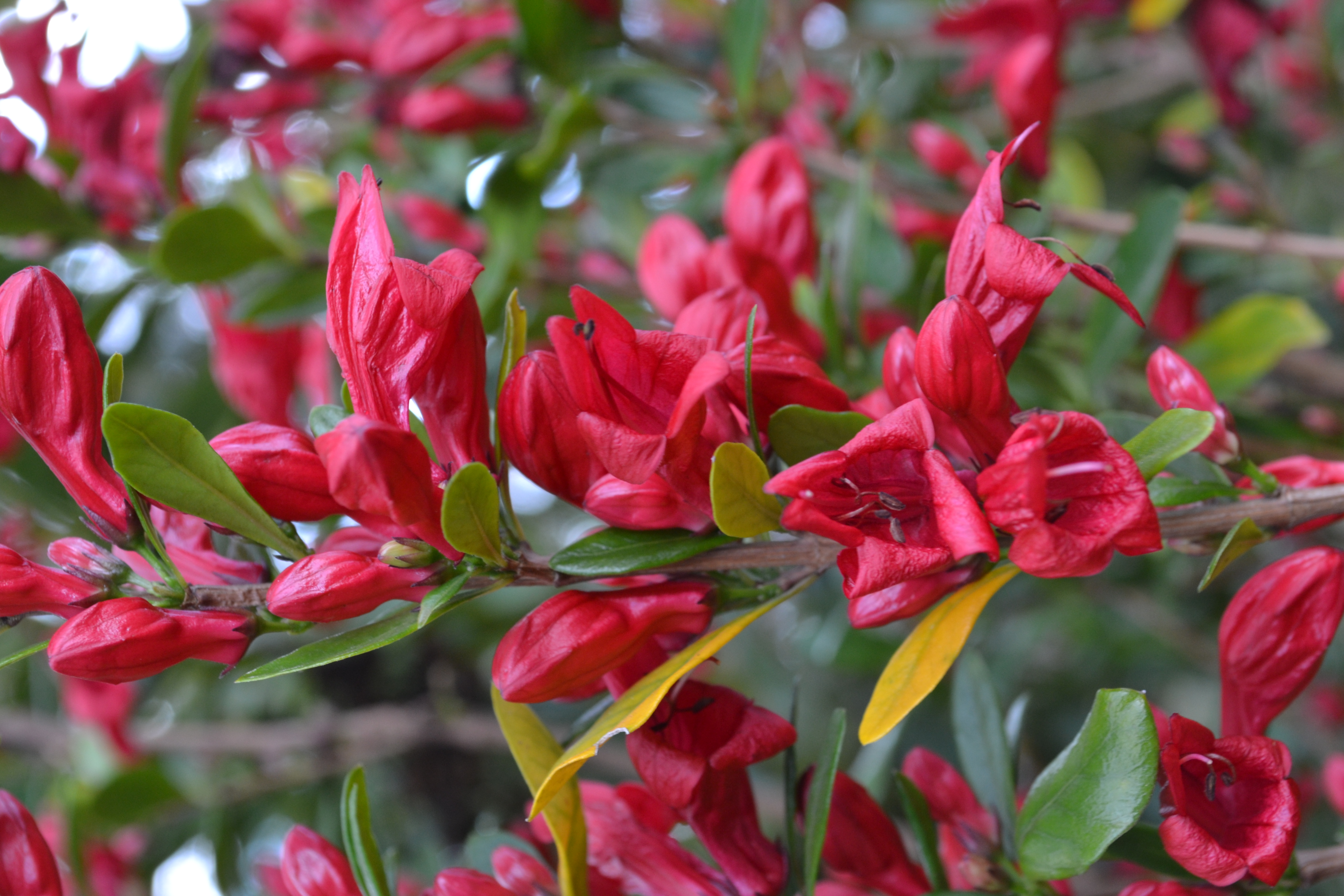
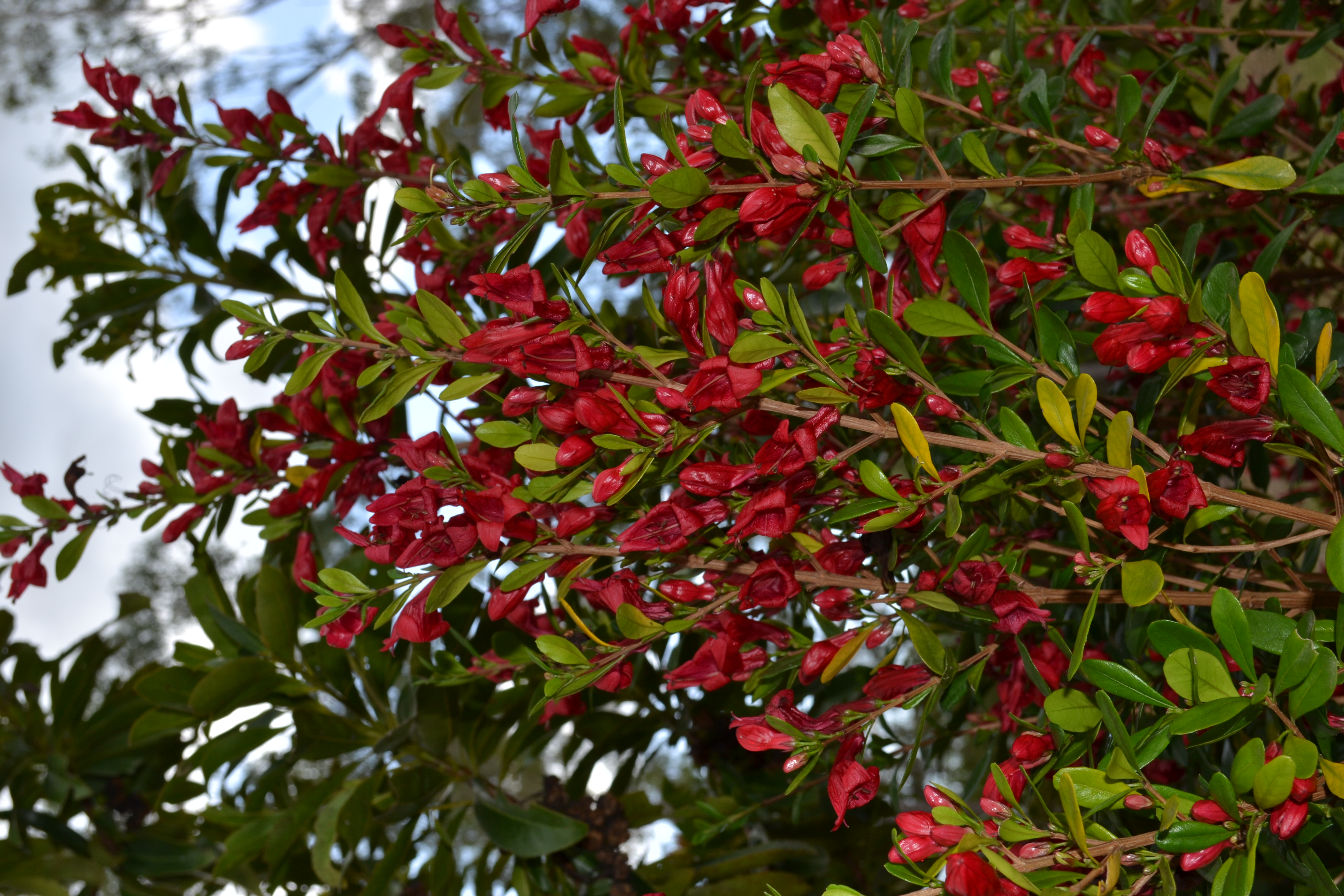
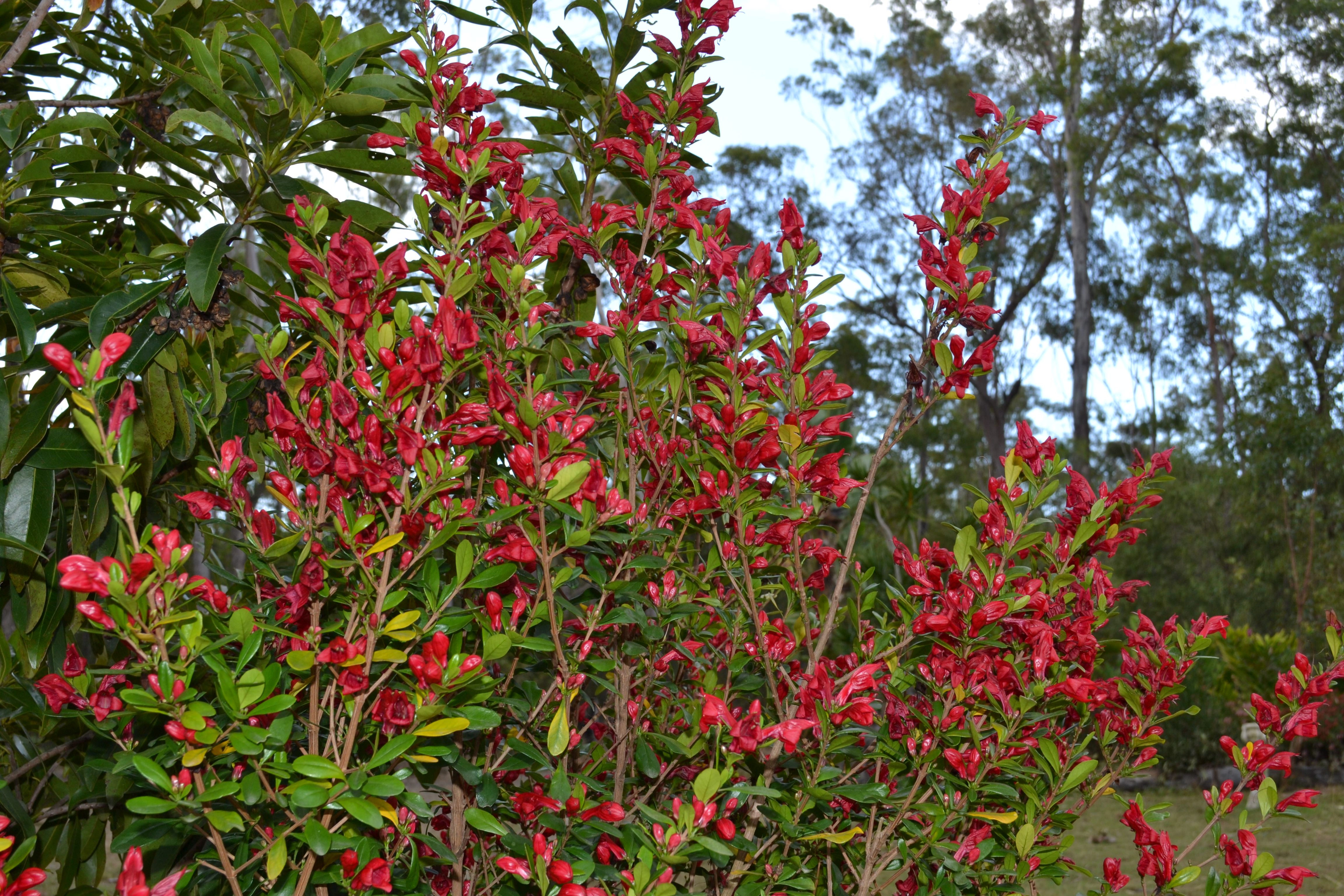
Plants are usually multi-stemmed and develop a dense canopy of small, leathery, glossy leaves. The flowers form in the leaf axils and are narrow, tubular and deep red to crimson. Nectar-feeding birds visit the flowers often.
A garden plant commonly reaches around 1.5 to 4 metres, depending on climate and pruning. Wild plants can grow taller, and established shrubs can also sucker from the base and gradually form a wider clump.
Where Does Scarlet Fuchsia Grow Naturally?
Scarlet fuchsia has a naturally patchy distribution in Queensland rather than occurring continuously along the coast. Records extend through northern, central and parts of southern Queensland, with populations associated with Cape York, the Townsville region, the Central Queensland coast and ranges.
Its natural habitats include vine thickets, dry rainforest and woodland, often around rocky or limestone-derived soils. Queensland regional ecosystem mapping records it in several vine-thicket and rainforest communities, including habitat in the Central Queensland Coast bioregion.
That background is useful in the garden. The species can handle brighter, drier conditions than many rainforest shrubs, but it still responds well to improved soil and reliable moisture while establishing.
Is Scarlet Fuchsia a Threatened Plant?
Yes. Graptophyllum excelsum is currently listed as Near Threatened in Queensland under the Nature Conservation Act. Queensland government wildlife records continue to show that status.
Near Threatened does not mean you should avoid growing nursery-propagated plants. Cultivation can put a Queensland endemic into more gardens and help people recognise the species. Buy propagated plants or obtain cuttings with permission rather than collecting plants, seed or cuttings from wild populations.
The species is not currently listed as threatened under the federal EPBC Act. State and federal conservation lists use different criteria and legal frameworks, so the Queensland listing is the relevant threatened-species status here.
Which Australian Climates Suit Scarlet Fuchsia?
Tropical and subtropical climates are closest to the species' natural range and suit it particularly well. It is a useful native shrub through much of coastal and inland Queensland where the site has reasonable drainage.
Cultivation records also show that Scarlet fuchsia can grow well beyond its natural Queensland range. Australian Native Plants Society sources report successful plants from tropical areas through to cool temperate gardens, including established specimens in northern Sydney. Light frost is tolerated by established plants in some gardens, but severe or repeated frost is outside the conditions it experiences across most of its natural range.
In very hot inland or exposed sites, some afternoon protection and reliable establishment water can help. In cooler climates, give it a warm position and good light so new growth can mature before winter.
Does Scarlet Fuchsia Grow in Sun or Shade?
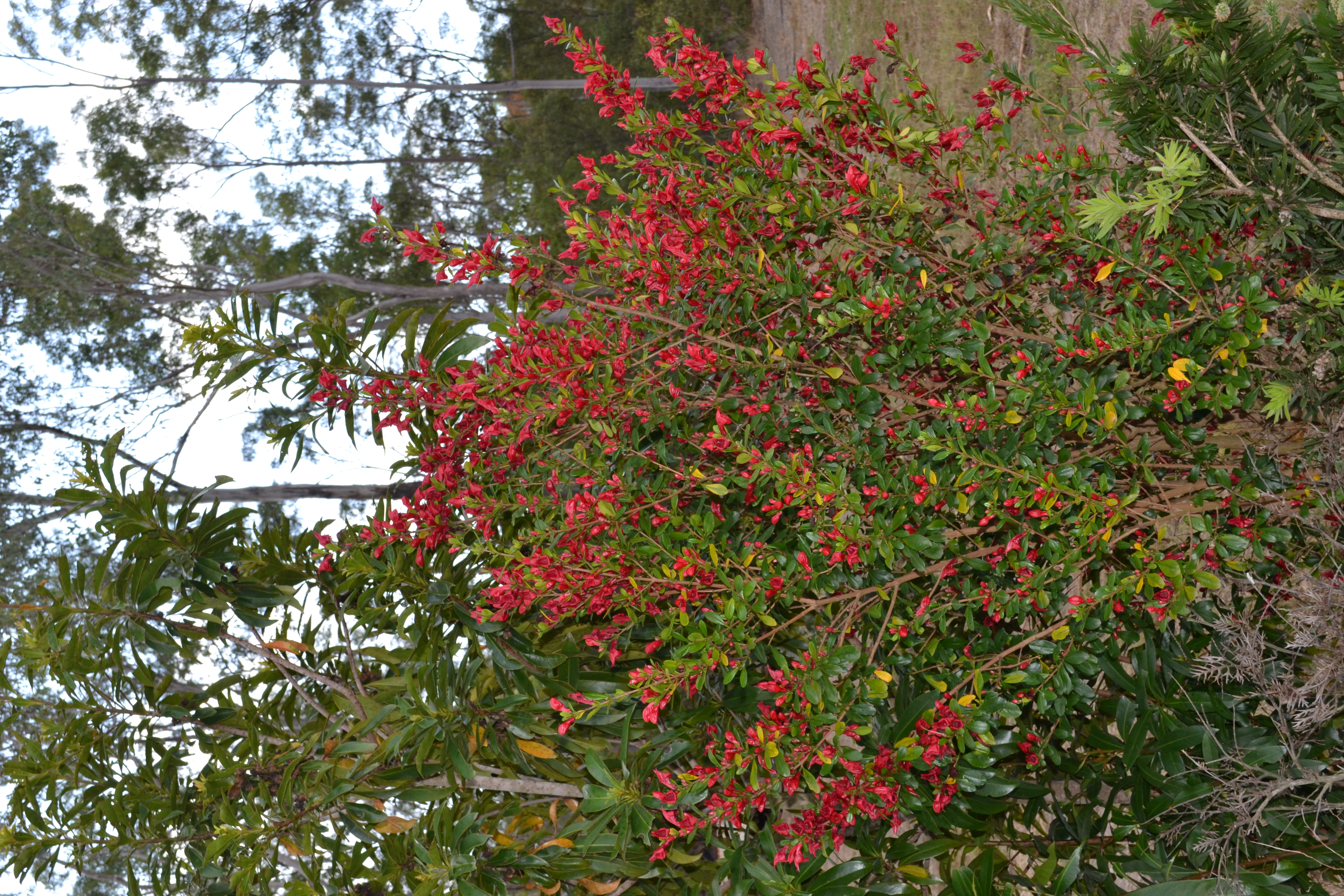
Scarlet fuchsia grows in full sun through to light shade, but the amount of light changes its shape and flowering. Full sun or lightly filtered shade generally gives the heaviest flower display. Plants in deeper shade can remain attractive foliage shrubs but usually flower less heavily.
In hot tropical and subtropical gardens, morning sun with some afternoon shade can work very well. Northern Sydney cultivation records also describe healthy flowering plants with morning sun and afternoon shade.
If you are planting primarily for flowers and birds, avoid a deeply shaded position beneath a dense canopy. Give the shrub enough light for flowering while matching exposure to your local heat.
What Soil Does Scarlet Fuchsia Need?
Good drainage is the main requirement. Scarlet fuchsia occurs naturally in vine thickets and woodland, including sites on enriched and limestone-derived soils, so it is not restricted to the acidic soil conditions associated with some Australian natives.
In the garden, a reasonably fertile loam with organic matter is a good starting point. Sandy soil benefits from compost to improve moisture retention, while heavy soil may need a raised planting position if water sits around the roots after rain.
There is no need to recreate limestone country in an ordinary garden. If the plant is healthy in your existing soil, focus on drainage, mulch and steady establishment rather than trying to force a particular pH.
How to Plant Scarlet Fuchsia
Plant into a hole no deeper than the root ball and broad enough to loosen the surrounding soil. Keep the top of the root ball level with the surrounding ground, water thoroughly, then mulch around the planting area without piling mulch against the stems.
Allow enough space for the job you want the shrub to do. Around 1 to 2 metres between plants can develop into a hedge or screen with pruning, while 2 to 3 metres gives a freestanding specimen more room to show its natural shape.
Spring is a useful planting time in cooler districts. In tropical and subtropical gardens, plant when you can provide reliable water during establishment and avoid putting a nursery-grown plant straight into an extreme hot, exposed period.
How Often Should You Water Scarlet Fuchsia?
Water regularly while a new plant establishes its root system. Deep watering that moistens the root zone is more useful than frequent light sprinkling over the surface.
Established shrubs handle periods of lower rainfall, especially in soils that retain some moisture, but flowering and new growth are generally stronger when the plant is not repeatedly water-stressed. Northern Sydney cultivation notes report good results where plants were not allowed to remain dry for long periods.
Adjust watering to the site. A shrub in sandy coastal soil or full tropical sun will use water differently from one growing in enriched soil with afternoon shade.
Does Scarlet Fuchsia Need Fertiliser?
Established Scarlet fuchsia is not a heavy feeder. Compost and organic mulch can supply much of what a garden plant needs, particularly in reasonably fertile soil.
Where growth is weak or the soil is poor, use a light application of a fertiliser suitable for Australian native gardens according to the label. Rockhampton Regional Council's Scarlet fuchsia information recommends a small annual native fertiliser application for garden plants.
Avoid applying large amounts of fertiliser simply to push faster growth. Light, steady feeding is easier to manage when you want a dense flowering shrub rather than long soft shoots.
When Does Scarlet Fuchsia Flower?
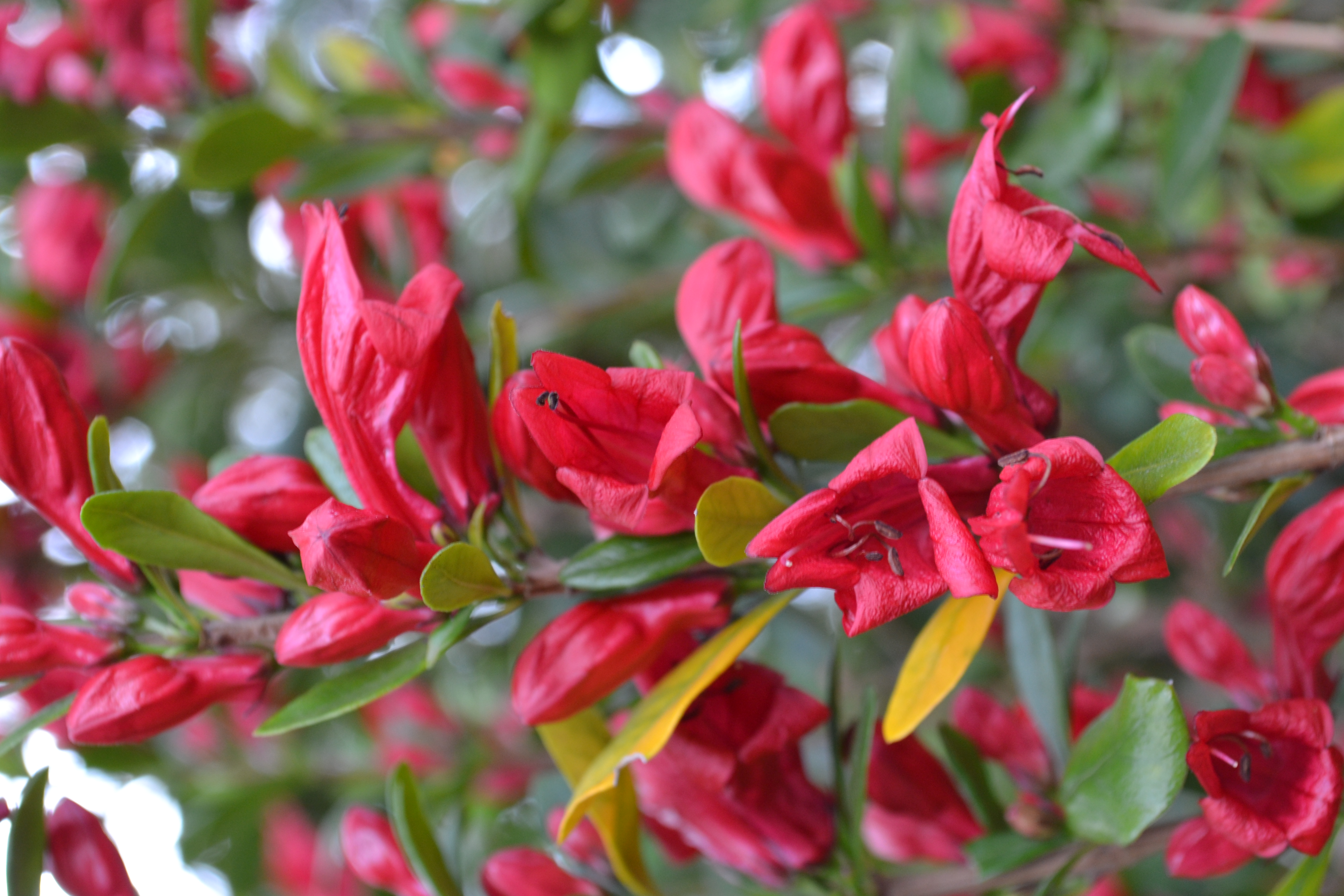
The main flowering display is usually from late winter or spring into early summer, although timing shifts with location and seasonal conditions. Rockhampton Regional Council describes flowering in late winter to early spring, while Australian Native Plants Society records commonly place the main display in spring and early summer.
Townsville growers have also observed scattered flowers at other times of year, with a much heavier seasonal flush. In a good flowering period, red tubular flowers can form at many leaf axils along the stems.
The flowers produce nectar and are visited by nectar-feeding birds. Native Plants Queensland has recorded butterflies and sunbirds using flowering plants around Townsville, making the shrub useful where wildlife value is part of the planting plan.
Grow a Little Wild
New plants to try, useful growing tips and a few garden jobs based on what you grow.
How to Prune Scarlet Fuchsia
Scarlet fuchsia tolerates pruning well. For an informal specimen, remove awkward or crossing stems and shorten tall growth after the main flowering flush. For a denser shrub, cutting selected stems lower encourages fresh branching closer to the ground.
Older plants can become leafy at the top with bare lower stems. An Australian Plants Society grower in northern Sydney reports cutting about one third of the stems back hard after flowering to encourage new low growth, rather than reducing the whole shrub at once.
Regular light clipping also works if you are growing a hedge. Time the main trim after flowering if you want to enjoy the seasonal flower display before reshaping the plant.
Can You Grow Scarlet Fuchsia as a Hedge or Screen?
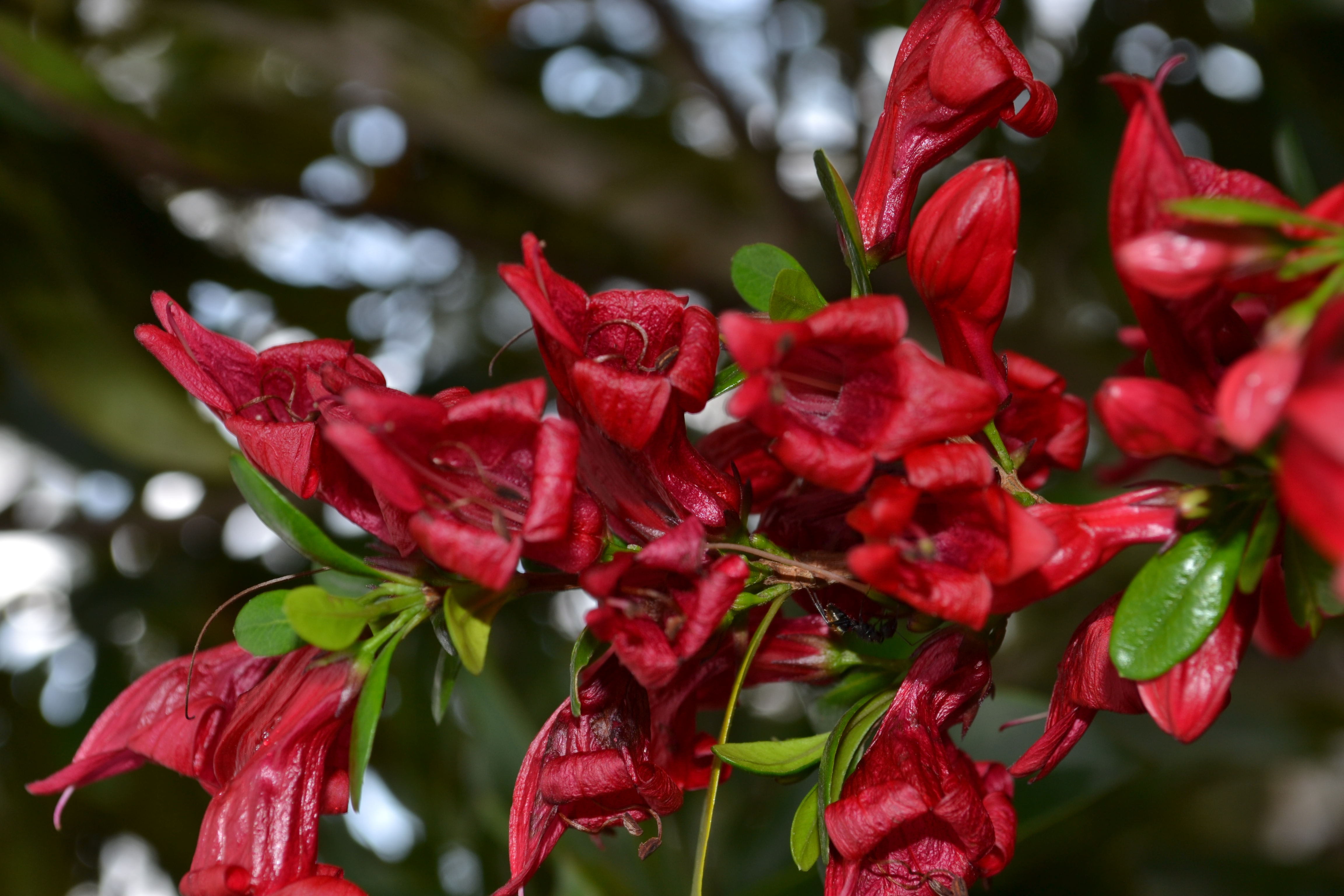
Yes. Its naturally multi-stemmed growth, small glossy leaves and tolerance of clipping make Scarlet fuchsia useful for informal hedges and screens. Australian Native Plants Society growers have successfully maintained it as clipped hedging.
Space plants according to how quickly you want the hedge to close and how much pruning you are prepared to do. Around 1 to 2 metres apart is a practical range for a garden screen. Wider spacing gives individual shrubs more room and produces a looser effect.
The plant can sucker beside an established shrub, which may help a screen thicken over time. Remove unwanted suckers while they are small if you want to keep a single defined specimen.
Can Scarlet Fuchsia Grow in a Pot?
Scarlet fuchsia can be grown in a large container, particularly while young or where you are prepared to prune it regularly. Choose a pot with generous drainage holes and use a quality potting mix suitable for native shrubs.
Container plants need closer attention to water because the root zone dries much faster than garden soil. A large, stable pot is useful as the shrub develops height and multiple stems.
Prune after flowering to control size and renew older stems when needed. Eventually a long-term container plant may need root pruning and fresh potting mix, or moving into a larger container.
How to Grow Scarlet Fuchsia From Cuttings
Cuttings are one of the easiest ways to propagate Scarlet fuchsia and are the preferred method in several Australian cultivation references. Take healthy non-flowering shoots from a garden plant you have permission to propagate.
Prepare short cuttings with several nodes, remove the lower leaves and place them into a clean, free-draining propagation mix. Keep the mix moist but aerated and protect the cuttings from harsh sun while they form roots.
A cutting gives you a genetic copy of the parent plant, so it is useful when you particularly like that plant's habit or flowering. Once roots are established, gradually move the young plant into brighter conditions before planting it out.
Can You Grow Scarlet Fuchsia From Seed or Suckers?
Yes. Fresh seed germinates well according to Australian Native Plants Society cultivation records. The woody capsules contain only a small number of seeds and can open to release them, so collect mature capsules before all the seed is lost.
Established plants can also produce suckers around the parent shrub. A sucker that has developed its own roots can be separated and transplanted, giving you another clone of the original plant.
Do not collect seed, suckers or cuttings from wild populations. Scarlet fuchsia is Near Threatened in Queensland, so propagate from cultivated plants or buy nursery-grown stock.
Common Problems With Scarlet Fuchsia
Serious insect damage or disease problems are not prominent in Australian cultivation reports. Young leaves can occasionally be chewed by insects, but established plants are generally robust when the site suits them.
Poor drainage is a more useful thing to check when a plant declines. Yellowing, weak growth or dieback in persistently saturated soil points to root stress, especially if the shrub had previously been growing well.
Sparse flowering is often related to light. If the plant looks healthy but produces few flowers, check whether surrounding trees or structures have gradually put it into deeper shade.
Why Is My Scarlet Fuchsia Not Flowering?
Start with sunlight and pruning timing. Plants in full sun or light filtered shade generally flower more heavily than shrubs in deep shade, and pruning just before the main flowering period removes stems that would otherwise carry flowers.
A young plant may also need time to establish before producing a heavy display. Keep growth steady with appropriate water and modest nutrition rather than trying to force flowering with heavy fertiliser.
Flowering season varies across Australia. A plant that flowers in late winter around Rockhampton may peak later in a cooler district, so compare it with local plants rather than relying on one fixed month.
What Wildlife Does Scarlet Fuchsia Attract?
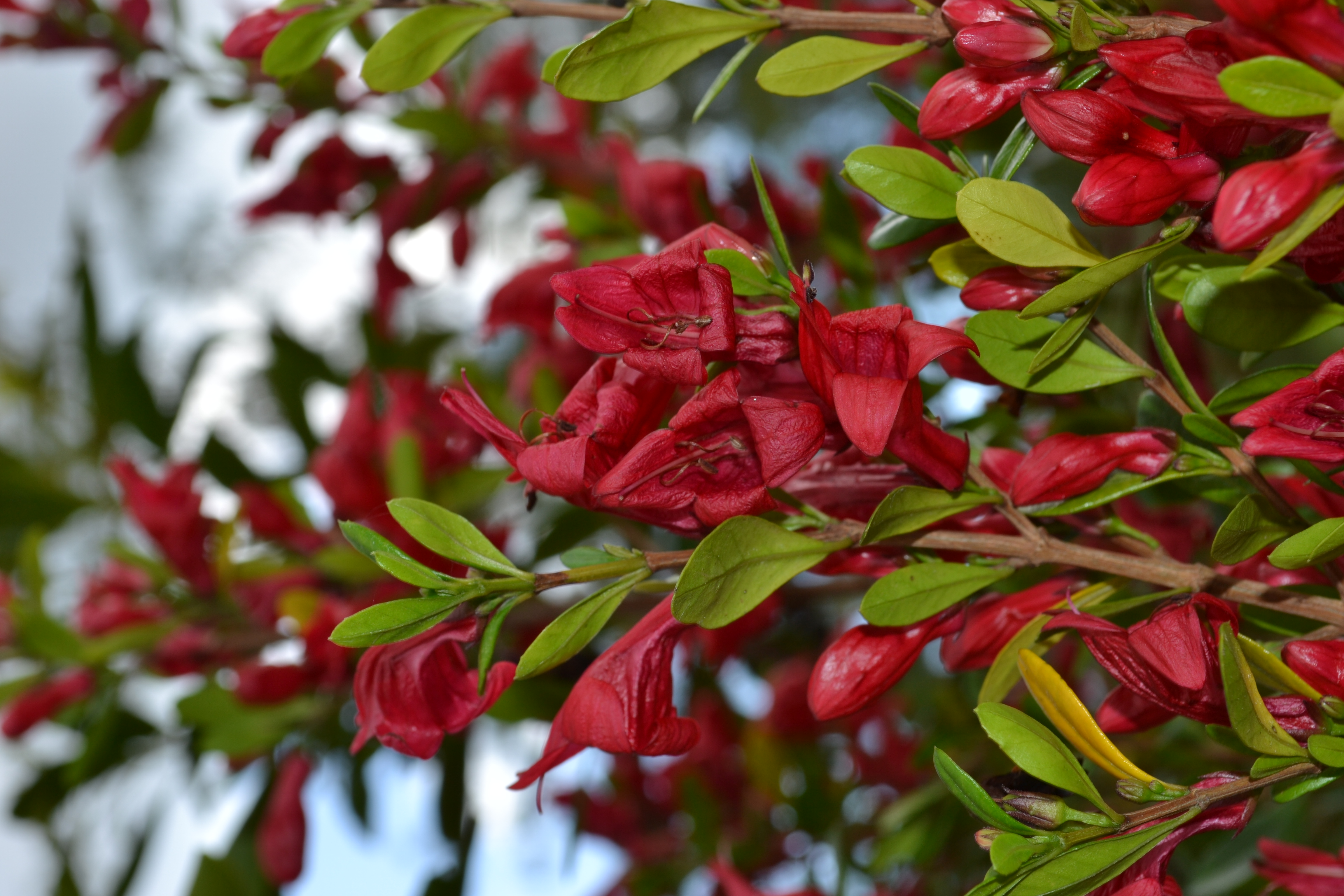
The tubular red flowers are well suited to nectar-feeding birds, and bird attraction is repeatedly noted in Australian cultivation records. In north Queensland, flowering wild and garden plants are also visited by butterflies and sunbirds.
A dense shrub provides more than flowers. The branching canopy adds shelter and cover, particularly when several native shrubs are planted together rather than leaving one isolated plant in open lawn.
Avoid broad insecticide spraying over flowers. It can remove insects using the plant and may also affect other animals feeding around the flowering canopy.
Where to Use Scarlet Fuchsia in the Garden
Scarlet fuchsia works as a feature shrub, informal hedge, screen or part of a layered native planting. The glossy foliage gives it structure outside the main flowering period, while the red flowers add a vivid seasonal display without needing a separate ornamental cultivar.
In a Queensland habitat-style garden, it can sit beneath or beside taller dry-rainforest and vine-thicket species. In a mixed suburban garden, use it wherever you would otherwise plant a medium evergreen screening shrub, provided the position has enough light for flowering.
It also handles regular pruning, so you can keep it narrower beside paths or boundaries. Leave more room if you want a broad, multi-stemmed specimen with suckers developing around the base.
Is Scarlet Fuchsia Native or Weedy in Australia?
Scarlet fuchsia is an Australian native and, more specifically, a Queensland endemic. Kew lists Queensland as the entire native range of Graptophyllum excelsum.
It is not treated as an Australian weed in the sources checked for the Brancho profile. There are reports of plants outside the recognised natural range that may represent garden escapes or naturalised occurrences, but this does not change its status as a Queensland native species.
Because wild populations are Near Threatened in Queensland, the more important garden issue is responsible sourcing. Choose propagated nursery plants or material from cultivated specimens rather than taking anything from the bush.
Sources I Checked
- Kew Plants of the World Online: Graptophyllum excelsum
- Queensland Government WetlandInfo: rare or threatened plants of Queensland and regional ecosystem records
- Queensland Government regional ecosystem descriptions for Central Queensland Coast and other habitat records
- Australian Native Plants Society Australia: Graptophyllum excelsum plant profile
- Australian Plants Society NSW: Graptophyllum excelsum cultivation profile
- Native Plants Queensland, Townsville Branch: Scarlet fuchsia observations and propagation
- Rockhampton Regional Council: Scarlet fuchsia native plant fact sheet
- Mackay Regional Botanic Gardens: Plants Under Pressure, Scarlet fuchsia
These sources were used for taxonomy, conservation status, natural distribution, habitat, garden size, flowering, pruning, propagation and wildlife value.
Questions People Ask
- Is Scarlet fuchsia native to Australia?
Yes. Graptophyllum excelsum is endemic to Queensland, which means its natural range is entirely within Queensland.
- Is Graptophyllum excelsum threatened?
It is listed as Near Threatened under Queensland's Nature Conservation Act. It is not currently listed as threatened under the federal EPBC Act.
- How big does Scarlet fuchsia grow?
Garden plants are commonly around 1.5 to 4 metres high, depending on conditions and pruning. Wild specimens can become taller, while regular pruning can maintain a much smaller shrub or hedge.
- Does Scarlet fuchsia grow in shade?
It grows in light shade and can remain an attractive foliage shrub there, but flowering is generally heavier in full sun or lightly filtered shade. In very hot districts, afternoon shade can be useful.
- When does Graptophyllum excelsum flower?
The main flowering period is generally from late winter or spring into early summer, depending on climate. Plants in north Queensland may also produce scattered flowers at other times of year.
- Can you grow Scarlet fuchsia from cuttings?
Yes. Cuttings are a reliable and commonly recommended propagation method. Fresh seed and rooted suckers can also be used.
- Is Scarlet fuchsia good for birds?
Yes. Its red tubular flowers provide nectar and are regularly visited by nectar-feeding birds. North Queensland observations also record butterflies visiting the flowers.
- Can Graptophyllum excelsum be used as a hedge?
Yes. It tolerates clipping, branches well after pruning and can sucker around established plants. Spacing of roughly 1 to 2 metres works for many garden hedges and screens, depending on the density you want.

A Queensland Native for Gardens and Wildlife
Scarlet fuchsia works well as a freestanding shrub, clipped hedge or informal screen. Give it good drainage and enough light for flowering, then prune after the main display if you want denser growth. The glossy foliage and scarlet flowers also bring regular bird activity into the garden.