
Plant profile
Edible mushrooms
Pleurotus spp. and other cultivated fungi
Also known as Mushrooms, Oyster mushrooms.
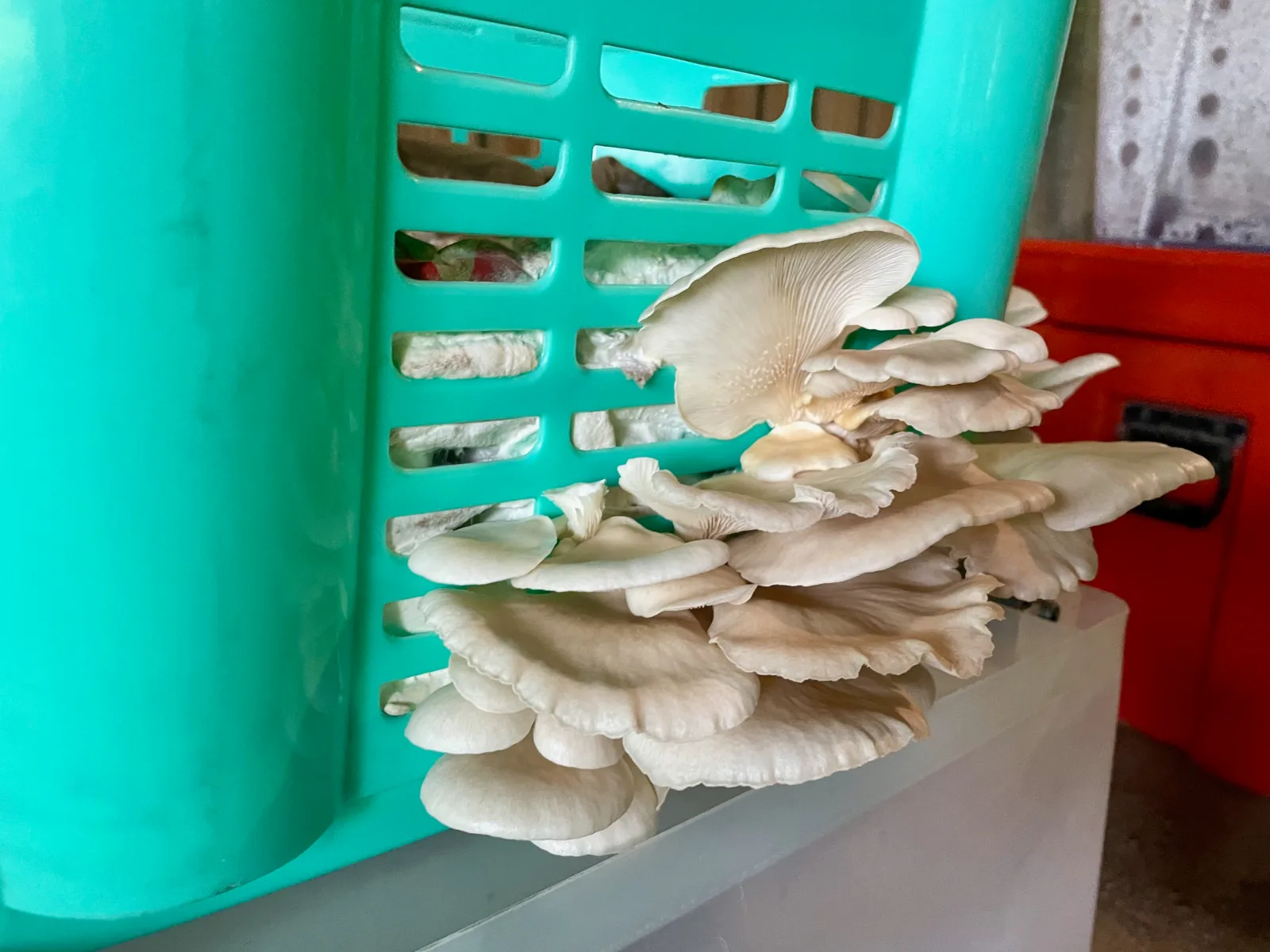
Edible mushrooms need clean spawn, the right growing medium, humidity and temperatures suited to the species. Oyster mushrooms are one of the easier types for beginners.
- Grows well in
- Tropical, Subtropical, Temperate, Cool / mountains, Arid / inland, Mediterranean
- Lifecycle
- Cultivated fungus with colonisation and fruiting cycles
- Light
- Shade
- Mature size
- Highly variable by species. Individual fruiting bodies may be only a few centimetres across or much larger, while most of the fungus remains hidden as mycelium in the substrate.
- Spacing
- There is no fixed plant spacing. Space bags, logs, beds or other growing units far enough apart for good airflow and easy harvesting.
- Growth habit
- Fungus that grows as a network of mycelium through a suitable substrate and periodically produces edible fruiting bodies.
- Native range
- Varies by species; cultivated edible mushrooms come from many regions worldwide
- Natural habitat
- Habitats vary widely. Many cultivated oyster mushrooms naturally fruit on dead or dying wood.
When to plant
All climates
January–December
Planting
Start with spawn or a reputable grow kit for a known edible species. Different mushrooms need different substrates, so follow the method for the species rather than treating all mushrooms the same.
Position and light
Most cultivated mushrooms fruit in bright shade or indirect daylight rather than direct sun. Fresh air is also important.
Soil
Mushrooms are grown in a substrate rather than ordinary garden soil. Oyster mushrooms can be grown on suitable pasteurised straw or other clean cellulose-rich material; other species need different media.
Watering
Maintain the humidity required by the species without leaving the growing medium waterlogged. Fruiting mushrooms dry quickly if humidity drops.
Feeding
Do not add ordinary plant fertiliser. The fungus gets nutrients from the prepared substrate.
Pruning
No pruning is needed. Remove old mushroom material and contaminated substrate as directed by the growing method.
Harvest
Harvest known cultivated mushrooms at the stage recommended for the species, before they become old or badly spored.
Propagation
Use commercial spawn or a known culture. Home cloning and sterile culture work are possible but need much cleaner technique.
Common problems
Contamination by unwanted moulds or bacteria, poor airflow, low humidity and unsuitable temperature are common reasons crops fail.
Safety notes
Never eat an unidentified wild mushroom. Some poisonous species closely resemble edible mushrooms. Grow and eat only mushrooms from known edible cultures or reputable kits.
Worth knowing
The mushroom you harvest is only the fruiting body. Most of the organism is the mycelium growing invisibly through the straw, wood, compost or other substrate underneath.
Grow Edible mushrooms with Brancho
Add it to My Garden and Brancho works out what it needs next, timed for your climate.
How it grows around Australia
Growing this too? Share what you've noticed in your garden.
Grow a Little Wild
New plants to try, useful growing tips and a few garden jobs based on what you grow.