
Plant profile
Pitcher plant
Nepenthes spp.
Also known as tropical pitcher plant, Nepenthes, Nepenthes plant, carnivorous pitcher plant.
Nepenthes make their own insect traps, but the roots still need air. Keep the mix consistently moist rather than swampy, give them humidity and choose a hybrid or species that matches your temperatures.
- Grows well in
- Tropical, Subtropical, Temperate
- Lifecycle
- Long-lived carnivorous climbing or scrambling perennial
- Light
- Part shade
- Mature size
- Highly variable. Compact hybrids fit baskets while vigorous species and hybrids can vine several metres.
- Spacing
- Usually one plant per hanging pot or support; give vigorous vines room to climb.
- Growth habit
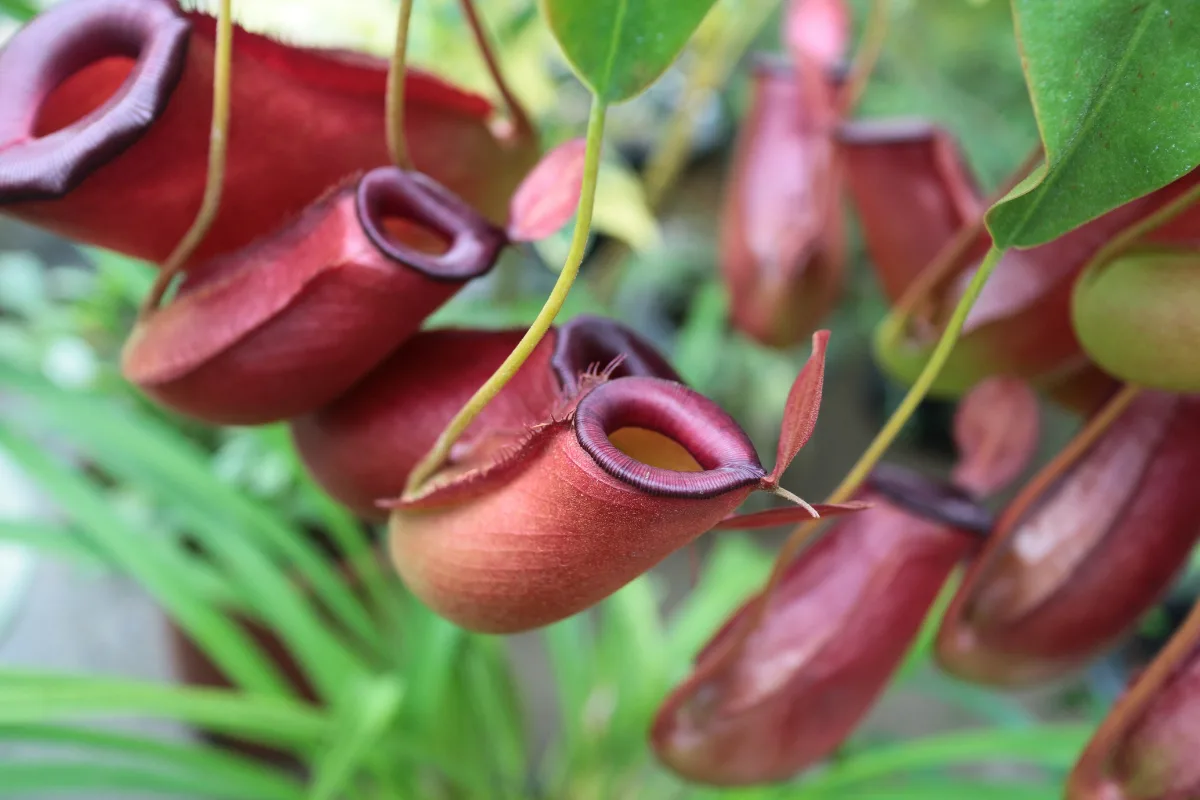
- Carnivorous climbing or scrambling vine with leaf tips modified into insect-trapping pitchers.
- Native range
- Seychelles and Madagascar, then from south-eastern China through tropical Asia to the western Pacific; some species are native to northern Queensland
- Natural habitat
- Wet tropical rainforest, peat swamps, heath forest and cool mountain forest, often on nutrient-poor soils.
When to plant
Tropical
February–November
Subtropical
September–April
Temperate
October–March
Arid inland
September–April
Mediterranean
September–April
Repot during active growth when roots or mix genuinely need attention. Avoid unnecessary disturbance to a healthy plant.
Planting
Use an airy low-nutrient carnivorous-plant mix and a well-drained pot. Species differ: lowland types need warmth while highland Nepenthes need cooler nights.
Position and light
Give bright filtered light. Too little light reduces pitcher production; harsh direct sun can scorch leaves and pitchers unless the plant is acclimatised.
Soil
Use a low-nutrient, open mix that stays moist but holds plenty of air. Do not use rich compost or ordinary fertilised garden soil.
Watering
Keep the mix consistently moist, never waterlogged. Low-mineral rainwater is a safe choice where tap water is hard or salty.
Feeding
Do not feed the potting mix with normal garden fertiliser. Outdoor plants usually catch enough insects; specialised foliar or pitcher feeding is optional and species-dependent.
Pruning
Remove completely brown pitchers and dead leaves. Mature vines can be shortened above a healthy node if they outgrow the support.
Propagation
Stem cuttings are used for many hybrids. Seed is possible but slow and species identification matters.
Common problems
Dry air can stop pitchers forming or cause them to brown early. Root problems follow waterlogged dense mixes. Scale, mealybugs and mites can occur.
Safety notes
Do not add insecticide or fertiliser to the pitchers. These plants feed partly on the insects that naturally enter their traps, and ordinary garden sprays or fertilisers can damage them. Use only care products specifically suitable for carnivorous plants.
Worth knowing
There is no single pitcher plant temperature. Nepenthes come from different elevations, so matching a plant to your night temperatures matters more than generic tropical care. Australia does have native Nepenthes, including N. mirabilis in northern Queensland, but many cultivated pitcher plants are non-native species or hybrids.
Grow Pitcher plant with Brancho
Add it to My Garden and Brancho works out what it needs next, timed for your climate.
How it grows around Australia
Growing this too? Share what you've noticed in your garden.
Grow a Little Wild
New plants to try, useful growing tips and a few garden jobs based on what you grow.