
Plant profile
Cashew
Anacardium occidentale
Also known as Cashew tree.
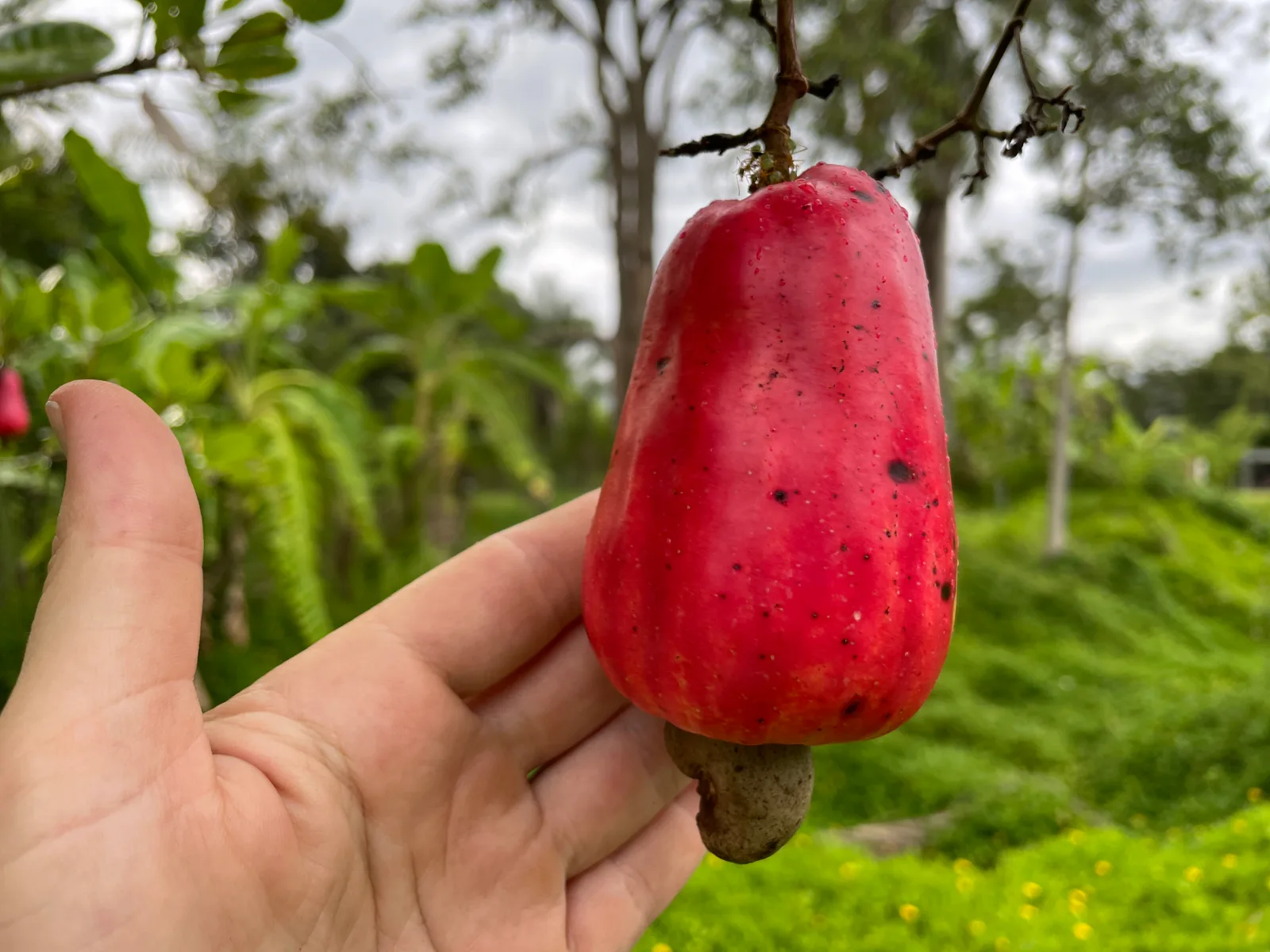
Cashew is a tropical tree that produces a cashew apple with one nut attached below it. It needs warmth, sun and a long frost-free season.
- Grows well in
- Tropical, Subtropical
- Lifecycle
- Evergreen tropical fruit and nut tree
- Light
- Full sun
- Mature size
- Usually about 5–12 m tall with a broad, spreading canopy, although trees can be kept smaller with pruning.
- Spacing
- Allow roughly 6–8 m between full-sized trees where space permits.
- Growth habit
- Evergreen tropical tree with a low-branching, wide-spreading crown.
- Native range
- Trinidad to tropical South America
- Natural habitat
- Seasonally dry tropical forest, woodland and savanna.
When to plant
Tropical
October–March
Subtropical
October–February
Tropical: plant during warm weather when reliable moisture is available. Subtropical: spring to early summer after cold weather has passed. Cashew is frost-tender and is not a reliable crop for cold districts.
Planting
Plant a grafted or healthy young tree in a warm, frost-free position with excellent drainage. Give it full tree-scale space rather than crowding it against buildings, because established cashews develop a broad canopy.
Position and light
Full sun is essential for sturdy growth, flowering and nut production. Avoid heavily shaded positions and cold exposed hollows.
Soil
Use free-draining soil; cashew copes with relatively lean ground once established but performs poorly where roots remain saturated after rain. Improve drainage before planting if the site holds water.
Watering
Water young trees deeply while they establish. Mature trees handle dry periods better, but reliable moisture during flowering and fruit development supports better fruit fill. Reduce irrigation where the soil is already wet.
Feeding
Use moderate feeding during active growth based on tree size and soil fertility. Young trees benefit from light, frequent applications rather than one heavy feed.
Pruning
Train young trees to a manageable framework and remove dead or badly placed branches. Light formative pruning in the first few years builds a strong, well-spaced branch structure that is easier to manage and harvest as the tree matures.
Harvest
Cashew apples and nuts mature together. Raw in-shell cashews need specialist handling because the shell contains caustic compounds.
Propagation
Reliable garden and commercial trees are usually grafted from selected parents. Seedlings are variable in vigour, nut size and yield and take longer to prove their quality.
Common problems
In warm, humid weather, fungal diseases such as anthracnose can mark leaves and young fruit. Insects may also feed on developing nuts and apples. Young trees are sensitive to cold, and roots need good drainage. Check fruit as it matures so you can pick it in good condition.
Safety notes
Raw cashew nut shells contain caustic oils and need specialist processing. Do not crack, roast or process raw in-shell cashews without correct protective equipment and a proven safe method. Cashew is related to mango and pistachio, so people with food allergies should follow individual medical advice.
Worth knowing
The swollen cashew apple is edible and is used fresh, for juice and for preserves in countries where the crop is common, but it bruises and spoils quickly. The true nut hangs below the apple inside its own shell. Named grafted trees are the better choice when predictable nut size and yield matter.
Grow Cashew with Brancho
Add it to My Garden and Brancho works out what it needs next, timed for your climate.
How it grows around Australia
Growing this too? Share what you've noticed in your garden.
Grow a Little Wild
New plants to try, useful growing tips and a few garden jobs based on what you grow.