


Plant profile
Chinese money plant
Pilea peperomioides
Also known as Pilea, Pancake plant, UFO plant, Friendship plant, Missionary plant.
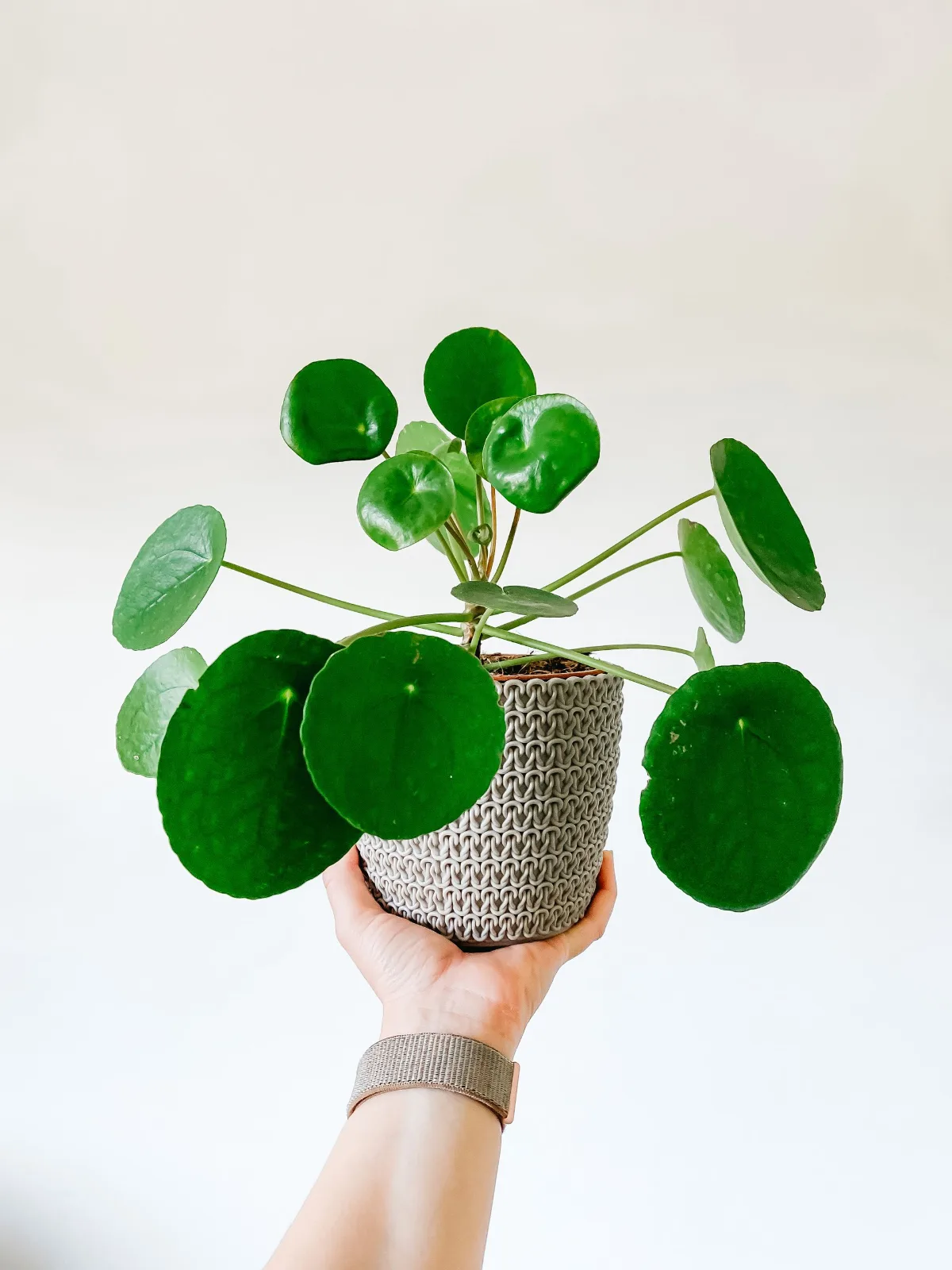
Chinese money plant is a compact perennial with round coin-like leaves on long stems. It grows best in bright filtered light and is famous for producing pups around the base that are easy to separate and share.
- Grows well in
- Subtropical, Temperate, Cool / mountains, Mediterranean
- Lifecycle
- Evergreen clumping perennial
- Light
- Part shade
- Mature size
- Usually 30–50 cm tall and about 30–45 cm wide, with pups gradually forming a small colony around the parent.
- Spacing
- About 30–40 cm apart in a sheltered garden, or one plant per pot with space around the base for pups.
- Growth habit
- Compact upright perennial with a short central stem, long leaf stalks and numerous basal pups produced from underground shoots.
- Native range
- South-western Sichuan and western Yunnan, China
- Natural habitat
- Moist rocky forest, shaded cliffs and mountain forest understorey.
When to plant
Tropical
February–October
Subtropical
March–October
Temperate
September–November
Cool / mountain
September–November
Mediterranean
March–May, September–November
Spring and early summer are easiest for repotting and dividing pups because roots establish quickly. In a warm indoor position, small pups can be potted whenever they are ready.
Planting
Plant into a small pot with drainage and a loose premium potting mix. Do not jump straight into an oversized container. In frost-free gardens it can grow outdoors in a sheltered, shaded position.
Position and light
Bright filtered or indirect light is ideal. Protect it from hot direct sun, which can scorch the leaves. Rotate potted plants regularly if you want a more even, symmetrical shape.
Soil
Use a quality potting mix improved with perlite or another aerating material. The mix should hold some moisture but drain quickly after watering.
Watering
Water when the top layer of mix has dried, then drain thoroughly. Keep it more consistently moist while new pups are establishing, but never soggy. Reduce watering during cool, slow-growth periods.
Feeding
Feed lightly during spring and summer with a balanced indoor-plant fertiliser at the label rate. Too much fertiliser can lead to salt build-up and weak growth.
Pruning
Remove old yellow leaves by cutting the leaf stalk near the main stem. No regular pruning is required, although pups can be removed if the pot becomes crowded.
Propagation
Separate rooted pups from around the parent plant and pot them into fresh mix. Stem or leaf-based propagation is also possible, but pups are the easiest and quickest method.
Common problems
Leaf scorch comes from too much direct sun; drooping can signal either dry mix or root trouble. Fungus gnats and root rot become more likely when the mix stays constantly wet.
Worth knowing
The easiest way to keep a good-looking plant is to rotate the pot regularly. Without rotation, the long leaf stalks lean strongly toward the brightest light source.

Grow Chinese money plant with Brancho
Add it to My Garden and Brancho works out what it needs next, timed for your climate.
How it grows around Australia
Growing this too? Share what you've noticed in your garden.
Grow a Little Wild
New plants to try, useful growing tips and a few garden jobs based on what you grow.