
Plant profile
Climbing frangipani
Chonemorpha fragrans
Also known as Malay jasmine.
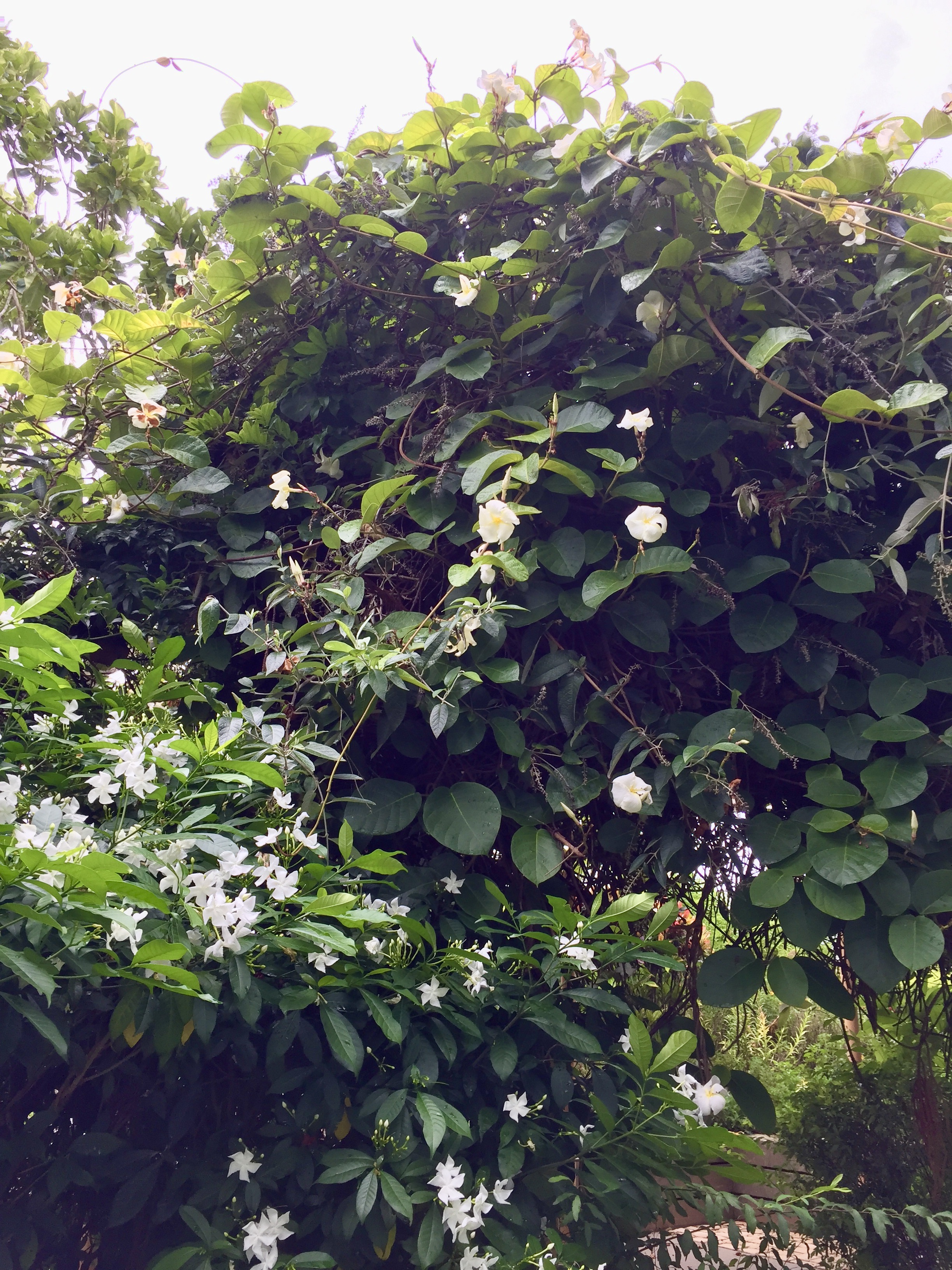
Climbing frangipani is a vigorous tropical vine with large glossy leaves and strongly scented white flowers. It needs a sturdy support and plenty of room.
- Grows well in
- Tropical, Subtropical
- Lifecycle
- Evergreen tropical woody climber
- Light
- Full sun, Part shade
- Mature size
- Vines can reach 10 m or more with support
- Spacing
- About 2–3 m apart
- Growth habit
- Large woody twining climber
- Native range
- Himalayas through South-East Asia to the western and central Malay Archipelago
- Natural habitat
- Wet tropical forest, where it grows as a large woody climbing vine.
When to plant
Tropical
February–May, September–November
Subtropical
March–May, September–November
Temperate
September–November
Mediterranean
September–November
Tropical and subtropical: plant during warm, moist weather.
Planting
Plant beside a strong pergola, fence or tree-sized support. Give the base rich, free-draining soil and regular moisture while it establishes. Position the planting hole away from paths and downpipes so the vine has a clear run of framework to climb, and keep it at least a metre from other climbers so young roots are not competing straight away.
Position and light
Full sun to part shade. Flowering is usually strongest with good light.
Soil
Rich, free-draining soil with organic matter.
Watering
Water regularly while establishing and during extended dry weather.
Feeding
Mulch and feed lightly during active growth if needed. A controlled-release fertiliser formulated for flowering climbers, applied in spring and again in midsummer, supports steady leaf and flower production without pushing the soft growth that scale insects tend to target.
Pruning
Prune after flowering or as needed to keep the vine on its support. Cut back long wandering stems before they become hard to manage.
Propagation
Stem cuttings and seed.
Common problems
Scale and other sap-sucking insects may occur. Vigorous growth can overwhelm light supports.
Safety notes
Milky sap may irritate skin; not grown as an edible plant.
Worth knowing
Climbing frangipani (Chonemorpha fragrans) belongs to the same plant family as frangipani and oleander, which explains the similar perfume, although it is a true twining vine rather than a small tree. It comes from South and Southeast Asia and suits the warm, humid conditions of tropical and subtropical Australia; in cooler regions it struggles outdoors and is better grown in a large greenhouse or conservatory. Flowering is heaviest through the warmer months on established growth, and young plants can take several seasons to cover their support before flowering well.
Grow Climbing frangipani with Brancho
Add it to My Garden and Brancho works out what it needs next, timed for your climate.
How it grows around Australia
Growing this too? Share what you've noticed in your garden.
Grow a Little Wild
New plants to try, useful growing tips and a few garden jobs based on what you grow.