

Plant profile
Curry leaf tree
Bergera koenigii
Also known as Curry leaf, Karivepillai, Kadi patta.
Curry leaf is a small tree you pick from all year in warm gardens. Nothing in a jar comes close to a fresh sprig dropped into hot oil, and one plant supplies a household.
- Grows well in
- Tropical, Subtropical, Temperate
- Lifecycle
- Evergreen small tree, semi-deciduous in cool weather
- Light
- Full sun, Part shade
- Mature size
- 2 to 4 m in the ground; 1 to 1.5 m in a large pot
- Spacing
- 2 to 3 m from other trees
- Growth habit
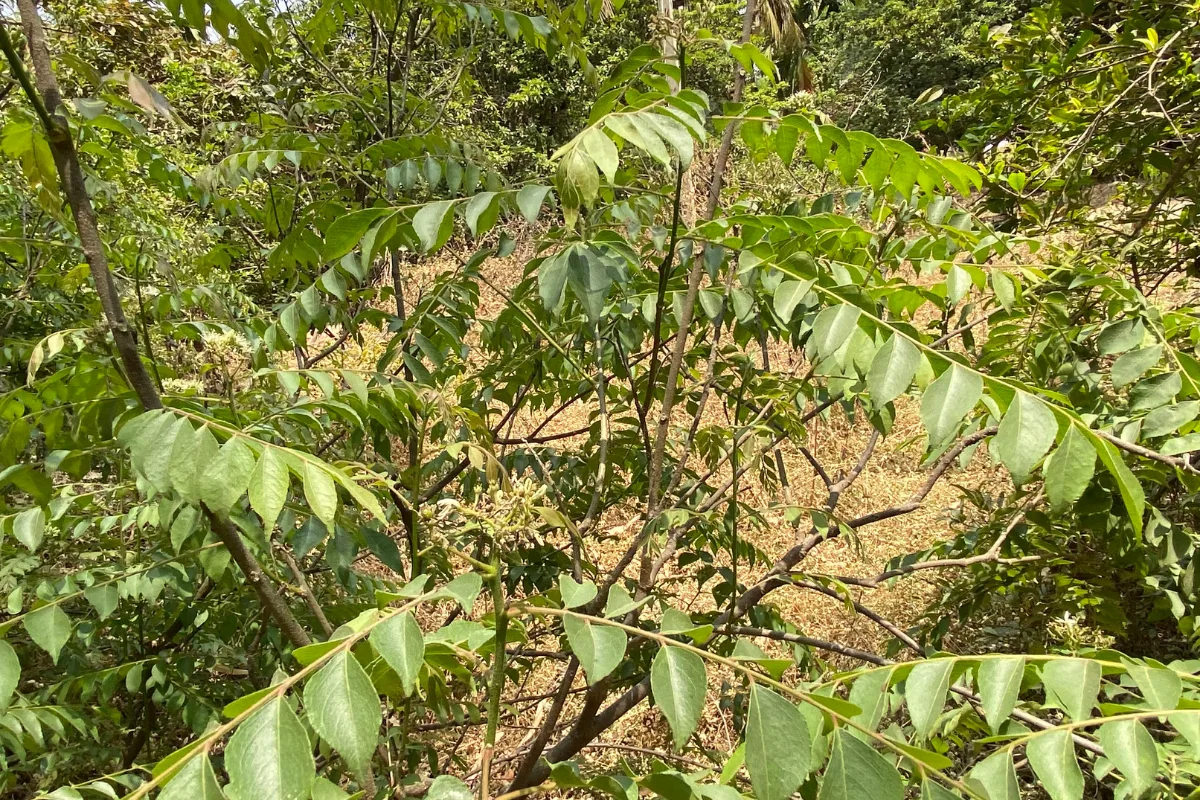
- Upright, suckering small tree with fine divided leaves
- Native range
- Indian subcontinent to southern China, southern Hainan and Peninsular Malaysia
- Natural habitat
- Wet tropical forest and forest margins.
When to plant
Tropical and subtropical: spring to early summer, or any warm month. Temperate: mid-spring, in a pot or a warm sheltered bed. Frost will damage young trees.
Planting
Plant in spring or early summer so the tree has warm months to establish. It grows well in a large pot, which suits temperate gardens where it can be moved into a sheltered spot for winter. In the ground pick a warm position out of cold wind, near a north-facing wall if you are further south.
Position and light
Full sun in the subtropics and temperate areas. In hot tropical gardens some afternoon shade keeps the leaves greener.
Soil
Free-draining soil with compost. Curry leaf will not tolerate soil that stays soggy, so improve heavy clay or plant on a mound.
Watering
Water regularly through the warm growing season, and back off through winter when the tree is barely growing. Overwatering in cold weather causes yellow leaves and root rot.
Feeding
Feed monthly through the warm months with a balanced fertiliser or plenty of compost. Curry leaf responds strongly to feeding with darker, thicker leaves. Add extra iron if new leaves come through pale with green veins.
Pruning
Tip prune regularly to keep the tree bushy and within reach. Every harvest is a light prune. Cut the main stems back by a third in spring if the tree is tall and thin. Remove suckers from the base unless you want to grow them on.
Harvest
Pick whole sprigs rather than single leaves, cutting just above a leaf joint. That gives you cooking-sized bunches and forces branching. Pick lightly from young trees until they are established.
Propagation
Suckers from the base are the easiest way, and they carry the same plant. Fresh seed from ripe black berries also grows, but it must be sown fresh because it does not store. Cuttings are slow and unreliable.
Common problems
Yellow leaves usually mean cold, wet soil or a nutrient shortage, not disease. Citrus butterfly caterpillars strip young trees fast, so check the new growth. Scale and sooty mould turn up on stressed plants. Cold snaps cause leaf drop, and the tree usually shoots again in spring.
Safety notes
The leaves are the part used in cooking. Do not confuse this plant with the unrelated silver curry plant, Helichrysum italicum, which is not used the same way.
Worth knowing
Curry leaf drops leaves and stops growing in cold weather, and people often throw it out in July thinking it has died. Keep it dry-ish and warm and wait for spring before giving up on it.
Grow Curry leaf tree with Brancho
Add it to My Garden and Brancho works out what it needs next, timed for your climate.
How it grows around Australia
Growing this too? Share what you've noticed in your garden.
Grow a Little Wild
New plants to try, useful growing tips and a few garden jobs based on what you grow.