


Plant profile
Galangal
Alpinia galanga
Also known as Greater galangal, Thai ginger, Laos root.
Galangal is the sharp, piney root behind a proper tom yum, and it grows like an ornamental ginger in warm gardens. Plant a piece from the grocer, wait a year, and dig as you need it.
- Grows well in
- Tropical, Subtropical, Temperate
- Lifecycle
- Perennial rhizome, dormant or slow in cool weather
- Light
- Part shade, Full sun
- Mature size
- 1.5 to 2 m tall canes; clumps widen each year
- Spacing
- 60 cm to 1 m between pieces
- Growth habit
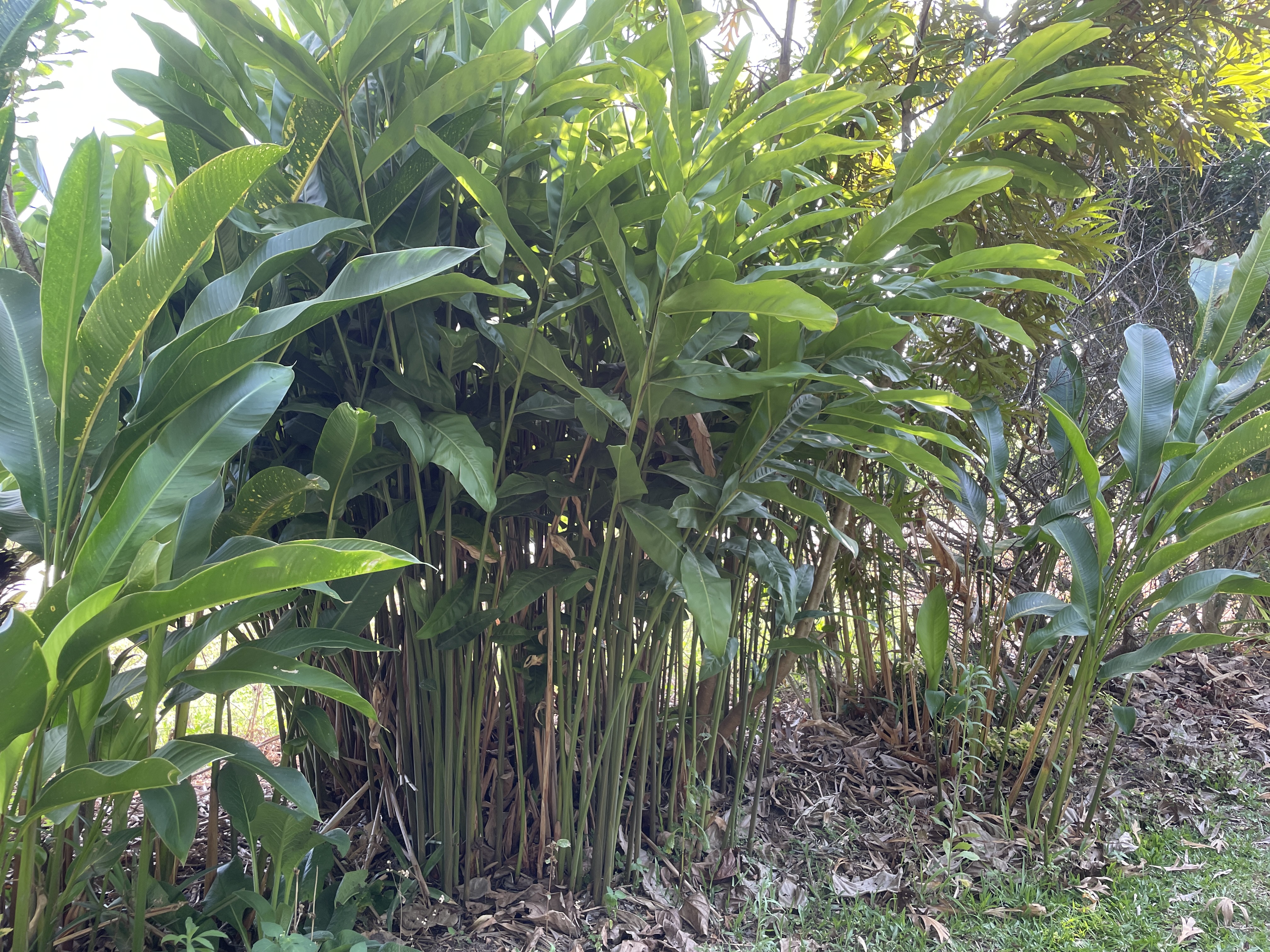
- Upright clumping ginger with long leaves on tall canes
- Native range
- Southern China through South-East Asia to the western and central Malay Archipelago
- Natural habitat
- Wet tropical forest and humid forest margins.
When to plant
Tropical
September–December
Subtropical
September–December
Temperate
October–December
Tropical and subtropical: spring, at the start of the wet or warm season. Temperate: mid-spring in a pot, kept warm.
Planting
Plant rhizome pieces with at least one bud, about 5 to 10 cm deep, in spring as the soil warms. Fresh firm pieces from a grocer often grow. Give each piece plenty of room because a clump spreads. In temperate gardens use a big pot or tub so you can keep it warm and dry over winter.
Position and light
Part shade to full sun. Filtered light under taller plants suits it, and full sun works if the soil stays moist.
Soil
Rich, free-draining soil with lots of compost. Galangal wants moisture without sitting in water.
Watering
Water regularly through the warm growing season and keep the soil damp. Reduce water once the leaves yellow in autumn, and keep it fairly dry while dormant.
Feeding
Feed at planting with compost and again every six to eight weeks through the growing season. A liquid feed keeps the leaves green and pushes rhizome growth.
Pruning
Cut off dead or damaged canes at ground level. Thin a congested clump by removing older canes after harvest.
Harvest
Wait until the plant has grown a full season, then dig around the edge of the clump and cut off what you need. Older rhizome is stronger and woodier; younger pale pieces are milder. Leave the centre in place and it keeps producing. Slice and freeze what you cannot use, because galangal does not keep long fresh.
Propagation
Divide the clump in spring. Any piece with a bud will grow.
Common problems
Slow or no shooting usually means cold soil or a rhizome planted too deep. Yellow leaves in autumn are normal dormancy, not a problem. Rot happens in heavy wet soil over winter. Snails chew emerging shoots.
Safety notes
Galangal is not the same as common ginger and is much more resinous. Use it as a flavouring rather than eating large amounts. Check any medicinal claims with a health professional.
Worth knowing
Greater galangal and lesser galangal are different plants with different flavours. Most Thai and Indonesian recipes want greater galangal, Alpinia galanga.

Grow Galangal with Brancho
Add it to My Garden and Brancho works out what it needs next, timed for your climate.
How it grows around Australia
Growing this too? Share what you've noticed in your garden.
Grow a Little Wild
New plants to try, useful growing tips and a few garden jobs based on what you grow.