



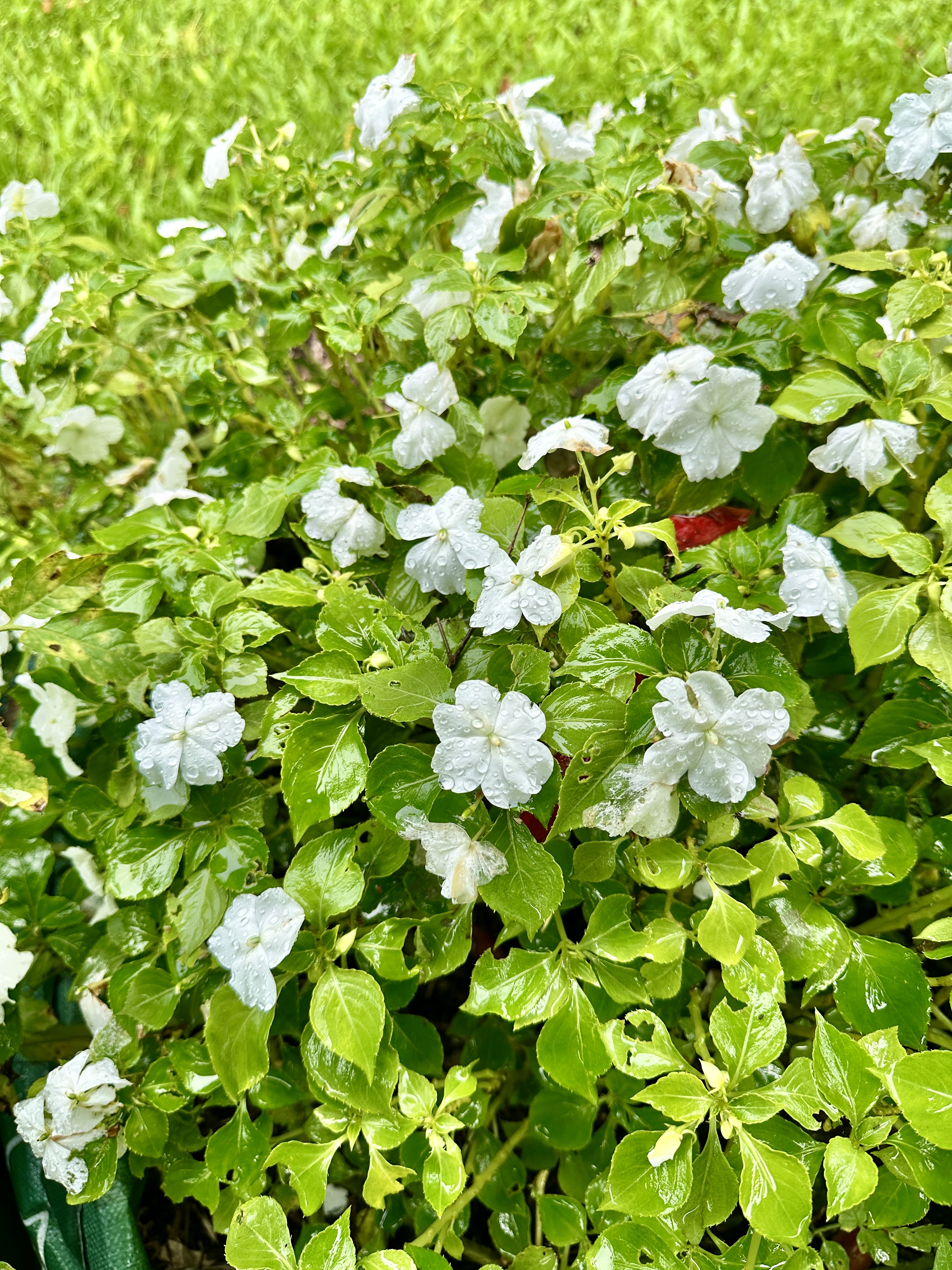
Plant profile
Impatiens
Impatiens walleriana
Also known as Busy Lizzie, Bedding impatiens, Garden impatiens.
Impatiens walleriana is the classic Busy Lizzie, grown for long flowering in bright shade and sheltered garden spots. In warm climates it can persist beyond one season.
- Grows well in
- Tropical, Subtropical, Temperate, Cool / mountains
- Lifecycle
- Tender perennial often grown as an annual
- Light
- Part shade
- Mature size
- Usually 20–40 cm high and 20–40 cm wide
- Spacing
- About 20–30 cm apart
- Growth habit
- Soft-stemmed mound-forming flowering perennial
- Native range
- South-eastern Kenya through Tanzania and Mozambique to Malawi and Zimbabwe
- Natural habitat
- Moist forest understorey, stream banks and shaded humid sites.
When to plant
Tropical
March–June
Subtropical
March–June, September–November
Temperate
March–May, August–October
Cool / mountain
September–November
Mediterranean
March–May, August–October
Tropical and subtropical: plant in mild, moist weather. Temperate and cool: plant after frost risk in spring.
Planting
Plant after frost risk into rich, free-draining soil. Space plants so leaves can dry after rain and air can move through the planting.
Position and light
Bright shade or morning sun with afternoon protection. Deep shade reduces flowering, while harsh hot sun can scorch leaves.
Soil
Rich loam or quality potting mix with good drainage and regular organic matter.
Watering
Keep soil evenly moist without leaving the roots saturated. Plants wilt quickly when dry, especially in containers and hanging baskets. Water at the root zone where possible so crowded leaves are not left wet overnight.
Feeding
Use a controlled-release flowering fertiliser or light regular liquid feeding during active growth. Small frequent feeds suit container plants better than heavy applications that make stems soft.
Pruning
Pinch growing tips while plants are young to encourage branching. Trim back leggy stems above healthy leaves to bring on compact new growth and remove spent or damaged stems as needed.
Propagation
Seed and soft stem cuttings both work, with cuttings the more reliable way to keep a particular flower colour true. Seed capsules can burst when ripe and scatter seed, which is how impatiens often self-sows in sheltered, moist garden beds.
Common problems
Downy mildew can be serious in bedding impatiens, particularly where foliage stays damp and air movement is poor. Aphids and mites may attack soft growth, while root rot follows saturated soil. Space plants so leaves can dry after rain.
Worth knowing
Impatiens walleriana is the classic Busy Lizzie. New Guinea impatiens are mainly derived from Impatiens hawkeri and generally have larger flowers, thicker stems and greater sun tolerance. In frost-free districts I. walleriana can persist beyond one season.

Grow Impatiens with Brancho
Add it to My Garden and Brancho works out what it needs next, timed for your climate.
How it grows around Australia
Growing this too? Share what you've noticed in your garden.
Grow a Little Wild
New plants to try, useful growing tips and a few garden jobs based on what you grow.