
Plant profile
Jade plant
Crassula ovata
Also known as Jade tree, Lucky plant.
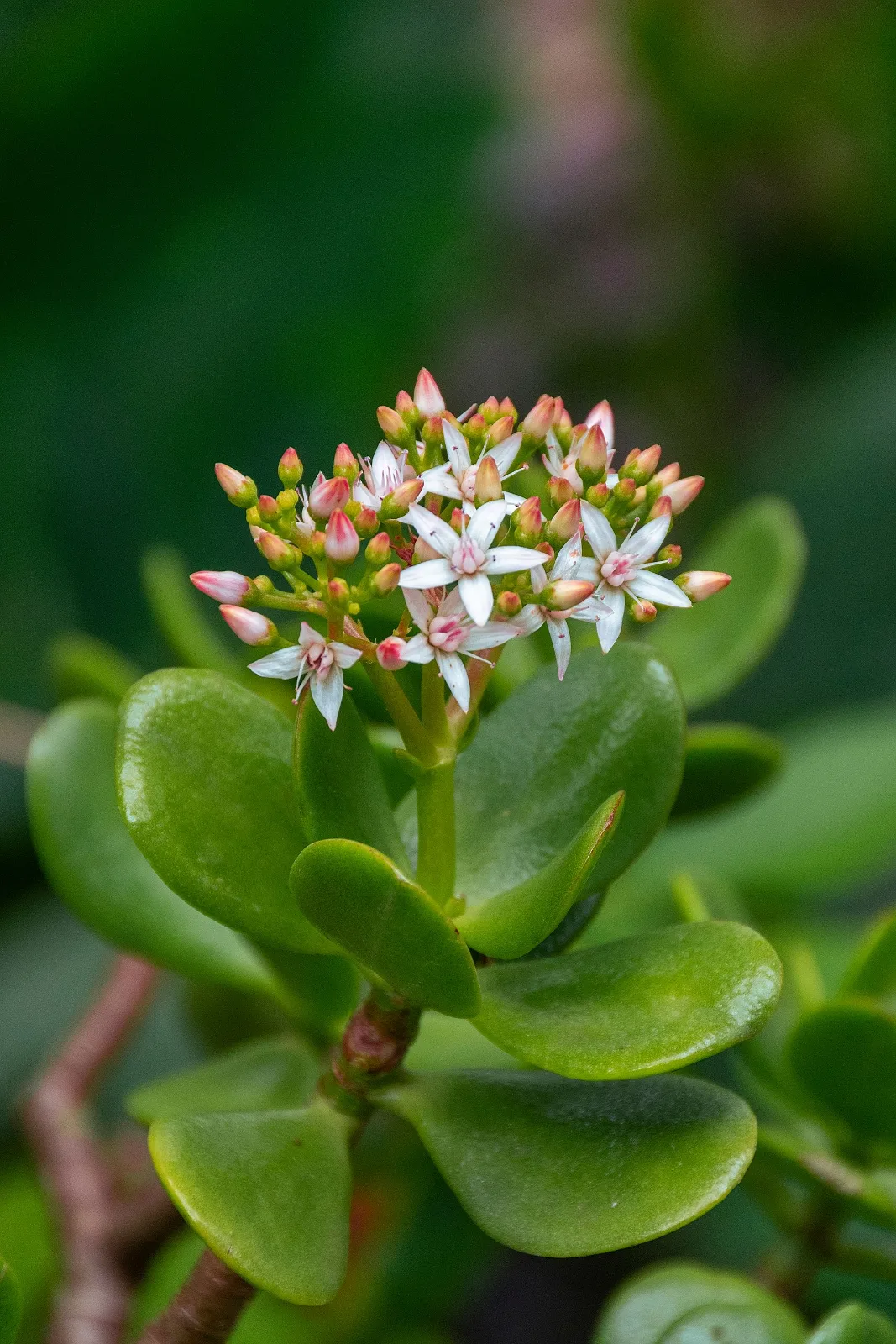
Jade plant is a long-lived succulent shrub with thick glossy leaves and a trunk-like stem as it ages. It thrives on bright light, excellent drainage and restraint with the watering can, indoors or outside in mild frost-free gardens.
- Grows well in
- Subtropical, Temperate, Arid / inland, Mediterranean
- Lifecycle
- Evergreen succulent shrub
- Light
- Full sun, Part shade
- Mature size
- Usually 1–2 m tall and wide outdoors with age; container plants are easily kept much smaller by pot size and pruning.
- Spacing
- Allow about 60 cm–1 m between garden plants, depending on how large you want the shrub to become.
- Growth habit
- Slow-growing, much-branched succulent shrub with fleshy leaves and stems that become woody and trunk-like with age.
- Native range
- South-eastern Mozambique through KwaZulu-Natal to the south-eastern Cape region of South Africa
- Natural habitat
- Dry subtropical shrubland, rocky slopes and open woodland.
When to plant
Subtropical
March–May, August–October
Temperate
September–November
Arid inland
March–May, August–October
Mediterranean
March–May, September–November
Spring and early autumn are good times to plant or repot in most mild climates. Avoid cold wet periods and extreme heat while roots are recovering.
Planting
Plant into gritty, sharply draining soil or succulent potting mix. Keep the root ball at the same depth and choose a sturdy pot for older top-heavy plants. Avoid planting just before prolonged cold wet weather.
Position and light
Give jade plant very bright light. Outdoors it handles full sun in mild climates once acclimatised; in hot areas, protection from harsh afternoon sun can prevent scorch. Indoors, use the brightest position available.
Soil
Use a gritty, free-draining succulent mix. In the ground, sandy or gravelly soil is far safer than heavy clay. Good drainage is essential during cool weather.
Watering
Water deeply, then let most of the mix dry before watering again. Reduce watering sharply in cool weather. Wrinkling leaves can signal prolonged dryness; soft translucent leaves usually mean too much water.
Feeding
Feed sparingly during spring and summer with a low-strength balanced or succulent fertiliser at the label rate. Established jade plants do not need rich soil or frequent feeding.
Pruning
Prune leggy or top-heavy stems in warm weather to keep the plant compact and encourage branching. Cut back to a healthy node and allow large wounds to dry.
Propagation
Stem cuttings root readily after the cut end has dried and callused. Individual leaves can also produce new plants when laid on or inserted into a free-draining mix.
Common problems
Wet soil causes root and stem rot. Mealybugs and scale may hide around leaf joints. Poor light produces stretched weak growth, and frost can blacken or collapse leaves.
Safety notes
Jade plant can cause poisoning in pets if eaten. Reported signs include vomiting, diarrhoea, reduced appetite, lethargy and weakness; keep it away from dogs and cats that chew plants.
Worth knowing
Jade plant can become a genuine little shrub outdoors rather than staying a desktop succulent. Give older plants a heavy, stable pot because the canopy can become quite weighty.
Grow Jade plant with Brancho
Add it to My Garden and Brancho works out what it needs next, timed for your climate.
How it grows around Australia
Growing this too? Share what you've noticed in your garden.
Grow a Little Wild
New plants to try, useful growing tips and a few garden jobs based on what you grow.