
Plant profile
Kiwifruit
Actinidia deliciosa
Also known as Kiwi fruit, Chinese gooseberry.
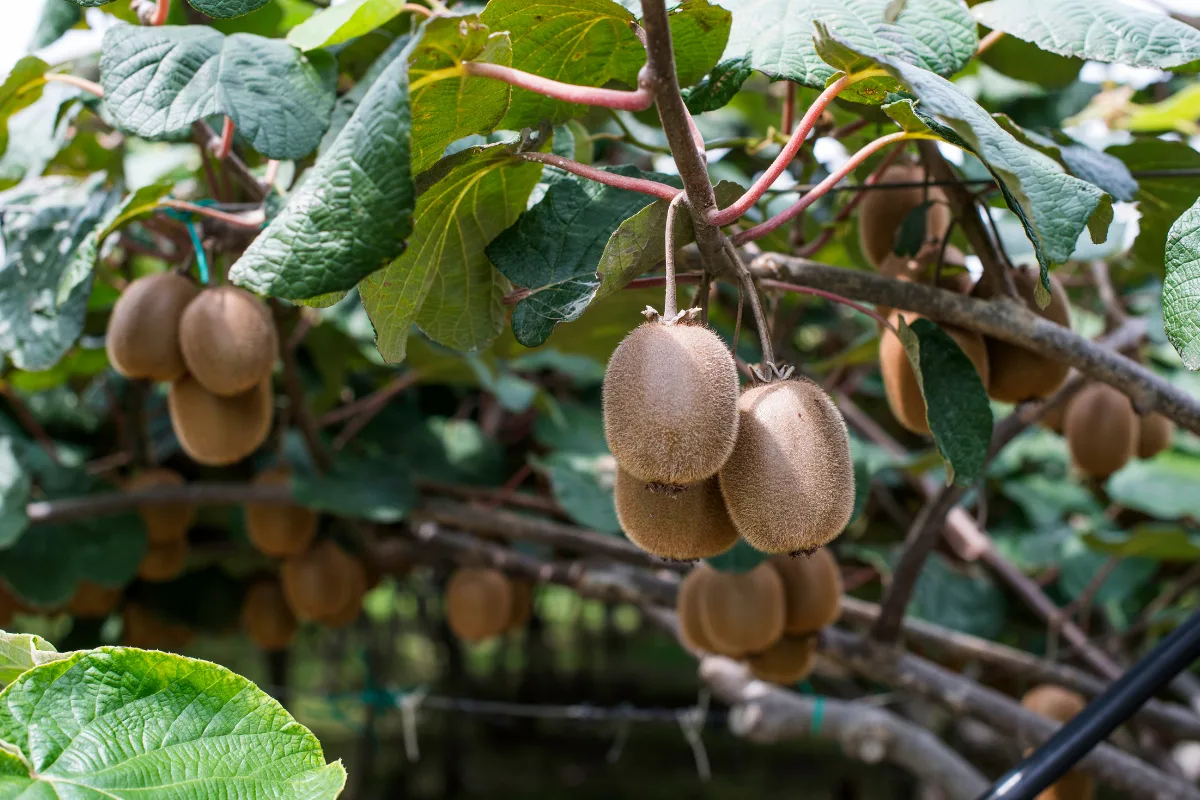
Kiwifruit is a vigorous deciduous vine that needs a strong support, steady moisture and usually both male and female plants for reliable fruit.
- Grows well in
- Temperate, Cool / mountains, Mediterranean
- Lifecycle
- Deciduous perennial fruiting vine
- Light
- Full sun
- Mature size
- A very vigorous vine that can spread 8–10 m or more across a strong trellis if allowed to grow freely.
- Spacing
- About 3 m between vines is a practical starting point on a strong backyard trellis, with enough structure to train each vine in its own direction.
- Growth habit
- Vigorous deciduous woody climber with long twining shoots that need regular training and pruning.
- Native range
- Central and southern China
- Natural habitat
- Temperate and subtropical forest margins, river valleys and wooded slopes where the vine climbs into trees.
When to plant
Temperate
June–September
Cool / mountain
June–September
Mediterranean
June–September
Planting
Plant beside a very strong trellis or pergola in moist, well-drained, slightly acidic soil. Most traditional kiwifruit need compatible male and female vines, so plan pollination before planting rather than discovering later that the support only has room for one plant.
Position and light
Full sun gives the best flowering and fruit ripening, with protection from harsh wind. Strong wind can shred the large leaves and damage tender new shoots.
Soil
Use moist, fertile, free-draining soil that is slightly acidic. Add organic matter before planting and mulch the wide root zone, but keep the crown and stem base clear of constantly wet mulch.
Watering
Keep moisture consistent, especially through flowering and fruit development. Kiwifruit has a large leaf area and shallow feeder roots, so prolonged dryness quickly reduces growth and fruit size.
Feeding
Feed as spring growth begins and again during active growth if the soil needs it. Use moderate balanced feeding rather than heavy nitrogen, which produces long soft shoots that are harder to manage.
Pruning
Winter pruning sets the permanent fruiting framework and removes old wood that is no longer useful. Summer trimming controls long whippy growth, keeps the canopy on the support and opens light around developing fruit.
Harvest
Fruit ripens in autumn. Harvest timing varies by cultivar; mature fruit is often picked firm and allowed to soften off the vine.
Propagation
Named plants are usually grafted or grown vegetatively. Seedlings are variable and may be male or female.
Common problems
Poor pollination, wind damage, drought stress and tangled growth can all reduce cropping. Watch for scale and leaf damage on stressed vines. A vine that flowers well but crops poorly may need a compatible pollinator rather than more fertiliser.
Worth knowing
Most traditional kiwifruit varieties have separate male and female plants. One compatible male can pollinate several females if flowering times overlap. Some self-fertile cultivars exist and can be useful where there is only room for one vine.

Grow Kiwifruit with Brancho
Add it to My Garden and Brancho works out what it needs next, timed for your climate.
How it grows around Australia
Growing this too? Share what you've noticed in your garden.
Grow a Little Wild
New plants to try, useful growing tips and a few garden jobs based on what you grow.