



Plant profile
Malabar spinach
Basella alba
Also known as Ceylon spinach, Climbing spinach, Basella.
Malabar spinach gives you leafy greens right through the summer heat, when English spinach has long gone to seed. It climbs, so it takes up almost no bed space.
- Grows well in
- Tropical, Subtropical, Temperate
- Lifecycle
- Perennial climber; summer annual where it gets cold
- Light
- Full sun, Part shade
- Mature size
- 2 to 4 m of vine in a season
- Spacing
- 30 to 40 cm apart along a support
- Growth habit
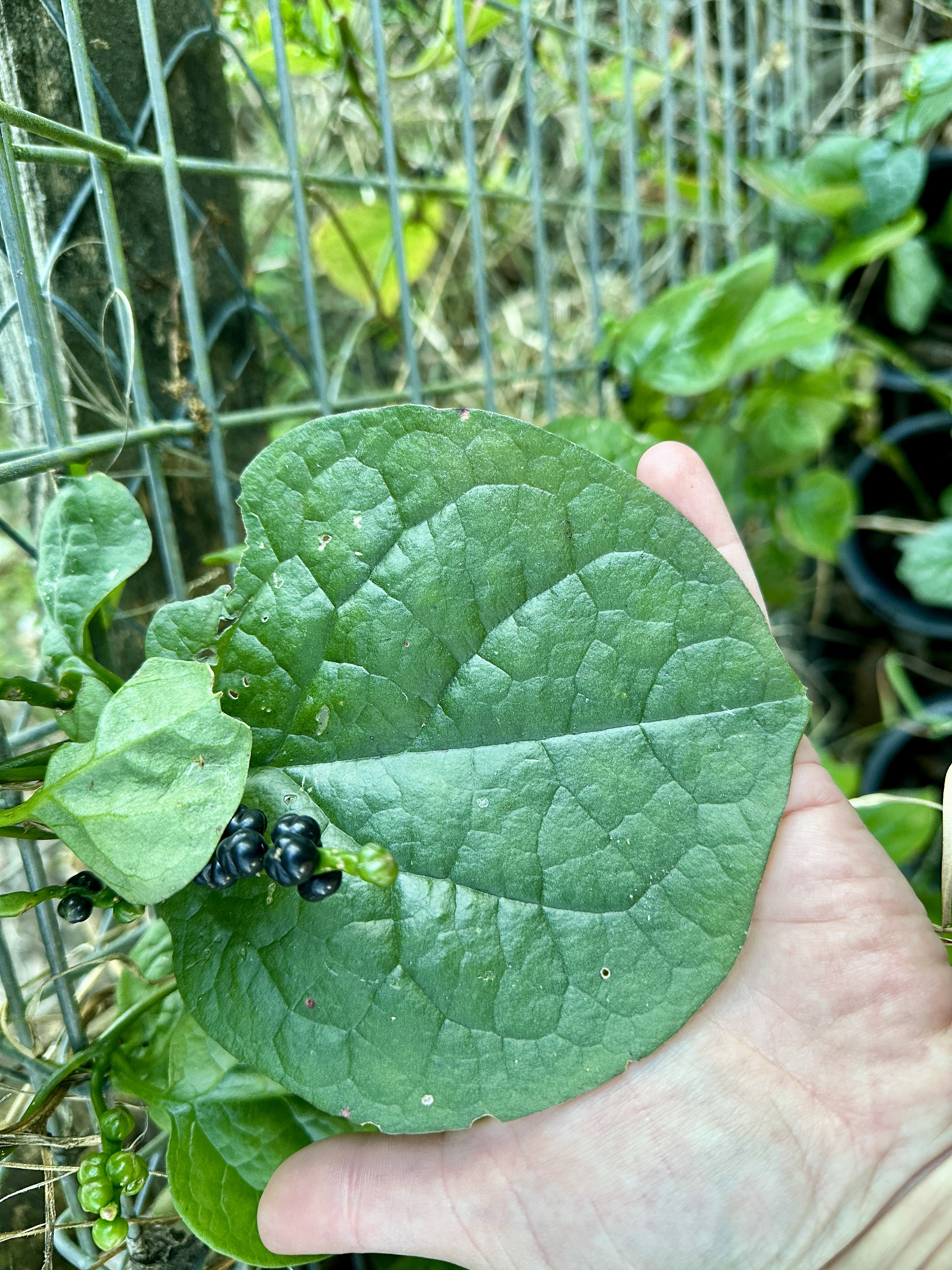
- Twining climber with thick, glossy leaves; green and red-stemmed forms
- Native range
- Tropical Asia
- Natural habitat
- Wet tropical forest margins, open humid ground and disturbed sites.
When to plant
Tropical
August–February
Subtropical
September–January
Temperate
October–December
Tropical and subtropical: most of the warm year. Temperate: late spring to summer, after frost. Cold gardens should treat it as a summer-only crop.
Planting
Sow seed about 1 cm deep once the soil is warm, or plant a rooted cutting. Seed can be slow, so soaking overnight helps. Put a trellis, fence or tripod in place at planting because the vine climbs several metres in a season.
Position and light
Full sun gives the fastest growth. Part shade gives softer, larger leaves and is a good choice in a hot inland garden.
Soil
Rich, moist, free-draining soil with plenty of compost.
Watering
Keep the soil consistently moist. Dry soil makes the leaves smaller and pushes the plant into flowering earlier.
Feeding
Feed every three to four weeks in the growing season with a nitrogen-leaning fertiliser or a liquid feed. It is a leaf crop, so leaf growth is what you are paying for.
Pruning
Pick and pinch constantly. Cutting the tips keeps the vine branching and delays flowering. Cut the whole vine back hard if it gets away from you.
Harvest
Pick young leaves and soft tips from about eight weeks after planting, and keep picking through the warm months. The leaves are thick and slightly mucilaginous, which suits soups, curries and stir fries better than raw salad.
Propagation
Very easy from stem cuttings, which root in water or damp mix in about a week. Also self-seeds from the purple berries.
Common problems
Slow germination is normal, not a failure. Leaf-eating caterpillars and grasshoppers in warm weather. Cold stops growth and frost kills the plant. The purple berries stain paths and self-seed, so pick them off if that matters. Flowering signals that leaf quality is dropping, so pinch tips more often.
Safety notes
Leaves and stems are eaten cooked. Like other leafy greens it contains oxalates, so people prone to kidney stones may want to limit large amounts. The berries stain badly and are used as dye rather than food.
Worth knowing
This is not related to English spinach and does not behave like it. Treat it as a cooked green for hot weather and it will fill the gap in the patch from December to March.

Grow Malabar spinach with Brancho
Add it to My Garden and Brancho works out what it needs next, timed for your climate.
How it grows around Australia
Growing this too? Share what you've noticed in your garden.

Grow a Little Wild
New plants to try, useful growing tips and a few garden jobs based on what you grow.