
Plant profile
Native ginger
Alpinia caerulea
Also known as Australian ginger, Blue-fruited ginger.
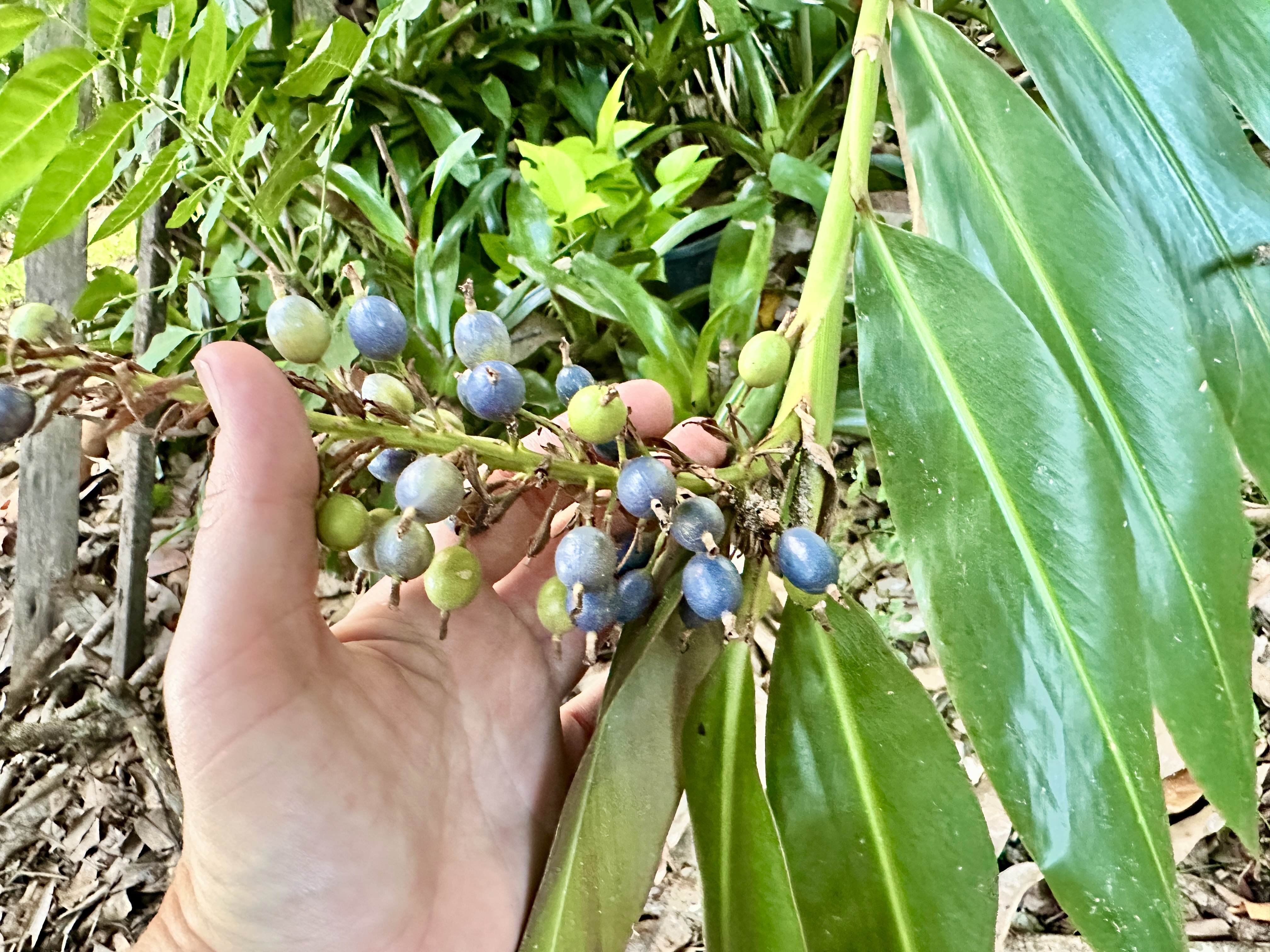
Native ginger is an eastern Australian rainforest plant with tall leafy stems, white flowers and blue fruit. The fruit pulp and rhizome have traditional food uses.
- Grows well in
- Tropical, Subtropical, Temperate
- Lifecycle
- Evergreen native rhizomatous perennial
- Light
- Part shade, Shade
- Mature size
- Usually 1.5–3 m high, forming widening rhizome clumps
- Spacing
- About 80 cm–1.2 m apart
- Growth habit
- Tall rhizomatous rainforest herb with leafy pseudostems
- Native range
- Papua New Guinea and eastern Queensland to north-eastern New South Wales
- Natural habitat
- Wet tropical and subtropical rainforest, often in shaded gullies and along streams.
When to plant
Tropical
February–May, September–November
Subtropical
March–May, September–November
Temperate
September–November
Mediterranean
September–November
Tropical and subtropical: plant in warm moist weather. Temperate: spring in a sheltered frost-free position.
Planting
Plant into rich, moist, free-draining soil in shade or filtered light. Water regularly while the rhizomes establish.
Position and light
Part shade to shade, similar to a rainforest understorey position.
Soil
Humus-rich, moist, free-draining soil with plenty of leaf litter or mulch.
Watering
Keep moisture steady during active growth, especially while young.
Feeding
Compost, leaf litter and a light native-friendly feed are enough.
Pruning
Cut old fruiting or damaged stems at ground level as fresh shoots replace them.
Harvest
The blue fruit has edible pulp around the seed, and the rhizome has traditional food and flavouring uses. The blue fruit contains a thin edible pulp around hard seeds rather than a lot of flesh. The rhizome can also be used as a mild native ginger, but harvest lightly if you want the clump to keep spreading.
Propagation
Divide rhizomes or grow from fresh seed.
Common problems
Snails, caterpillars and leaf spotting can occur. Hot dry exposure burns foliage, especially on plants grown outside deep shade, and wind exposure can shred the broad leaves, so a sheltered spot behind other plantings gives the best appearance.
Safety notes
Use correctly identified Alpinia caerulea for food; remove the hard seed from the fruit.
Worth knowing
Native ginger is different from shell ginger, Alpinia zerumbet. The blue fruit is one of the easiest features to recognise on mature plants. The rhizome has a mild ginger-like flavour, much milder than true ginger, Zingiber officinale, and Aboriginal people used both the fruit pulp and rhizome as bush food. Clumps spread steadily by rhizome and can be thinned every few years to keep the planting within bounds and to renew flowering vigour.
Grow Native ginger with Brancho
Add it to My Garden and Brancho works out what it needs next, timed for your climate.
How it grows around Australia
Growing this too? Share what you've noticed in your garden.
Grow a Little Wild
New plants to try, useful growing tips and a few garden jobs based on what you grow.