

Plant profile
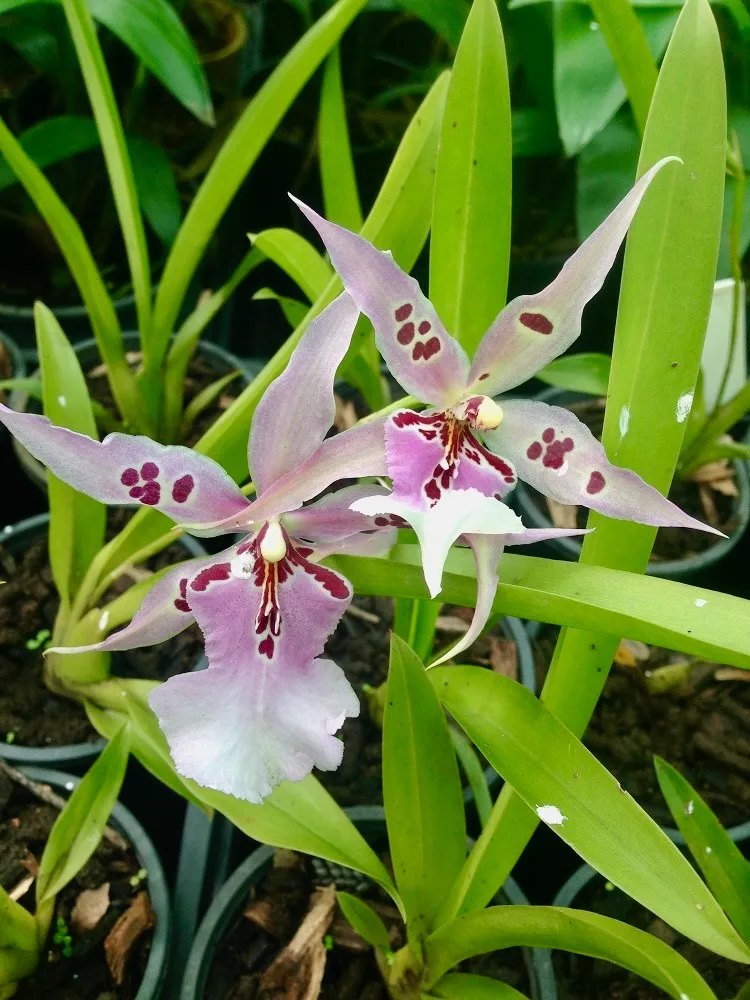
Orchids
Orchidaceae
Also known as Common garden orchids, Potted orchids.
Orchids are a huge plant family with very different growing needs. For common home-grown orchids, light, an airy root zone, careful watering and repotting at the right stage of growth are the main things to get right.
- Grows well in
- Tropical, Subtropical, Temperate, Cool / mountains, Arid / inland, Mediterranean
- Lifecycle
- Perennial flowering orchid
- Light
- Part shade, Shade
- Mature size
- Varies enormously by species and cultivar, from compact orchids only 15–20 cm across to large cane, terrestrial and climbing orchids well over 1 m.
- Spacing
- No single spacing suits all orchids. Leave room for mature growth and airflow; many epiphytic types are best grown singly in pots, baskets or mounted on supports.
- Growth habit
- Perennial flowering plants that may be epiphytic, terrestrial or occasionally climbing, with growth ranging from compact rosettes to canes, pseudobulbs and spreading rhizomes.
- Native range
- Worldwide except Antarctica; exact native range depends on the orchid species
- Natural habitat
- Habitats range from tropical rainforest and cloud forest to temperate woodland, grassland and alpine ground. Many tropical orchids naturally grow on trees rather than in soil.
When to plant
Repot or divide orchids when the particular type is entering active root growth, often just after flowering or as new shoots begin. Outdoor planting timing varies too much between orchid groups for one seasonal rule.
Planting
Use an orchid potting mix suited to the type you grow rather than ordinary garden soil.
Position and light
Bright filtered light suits many common orchids.
Soil
Most potted orchids need an open, free-draining orchid mix with plenty of air around roots.
Watering
Water thoroughly, then let excess water drain. Frequency depends on orchid type and potting medium.
Feeding
Use an orchid fertiliser at the label rate during active growth.
Pruning
Deal with spent flower spikes according to orchid type; do not cut healthy new growth.
Harvest
Cut flower spikes according to the orchid type. Some orchids can rebloom from an existing spike, while others flower from new growth.
Propagation
Propagation may include division, keikis or specialist seed culture.
Common problems
Root rot, scale, mealybug, poor flowering from low light and sunburn are common.
Worth knowing
Many familiar orchids are epiphytes, using trees for support without feeding from them. Their roots need both moisture and air, which is why ordinary dense garden soil is unsuitable for many commonly grown orchids. Australia has around 1,700 native orchid species, while nursery orchids may be native, exotic or hybrid.

Grow Orchids with Brancho
Add it to My Garden and Brancho works out what it needs next, timed for your climate.
How it grows around Australia
Growing this too? Share what you've noticed in your garden.
Grow a Little Wild
New plants to try, useful growing tips and a few garden jobs based on what you grow.