
Plant profile
Rangoon creeper
Combretum indicum
Also known as Quisqualis indica, Chinese honeysuckle, Drunken sailor, Combretum indicum.
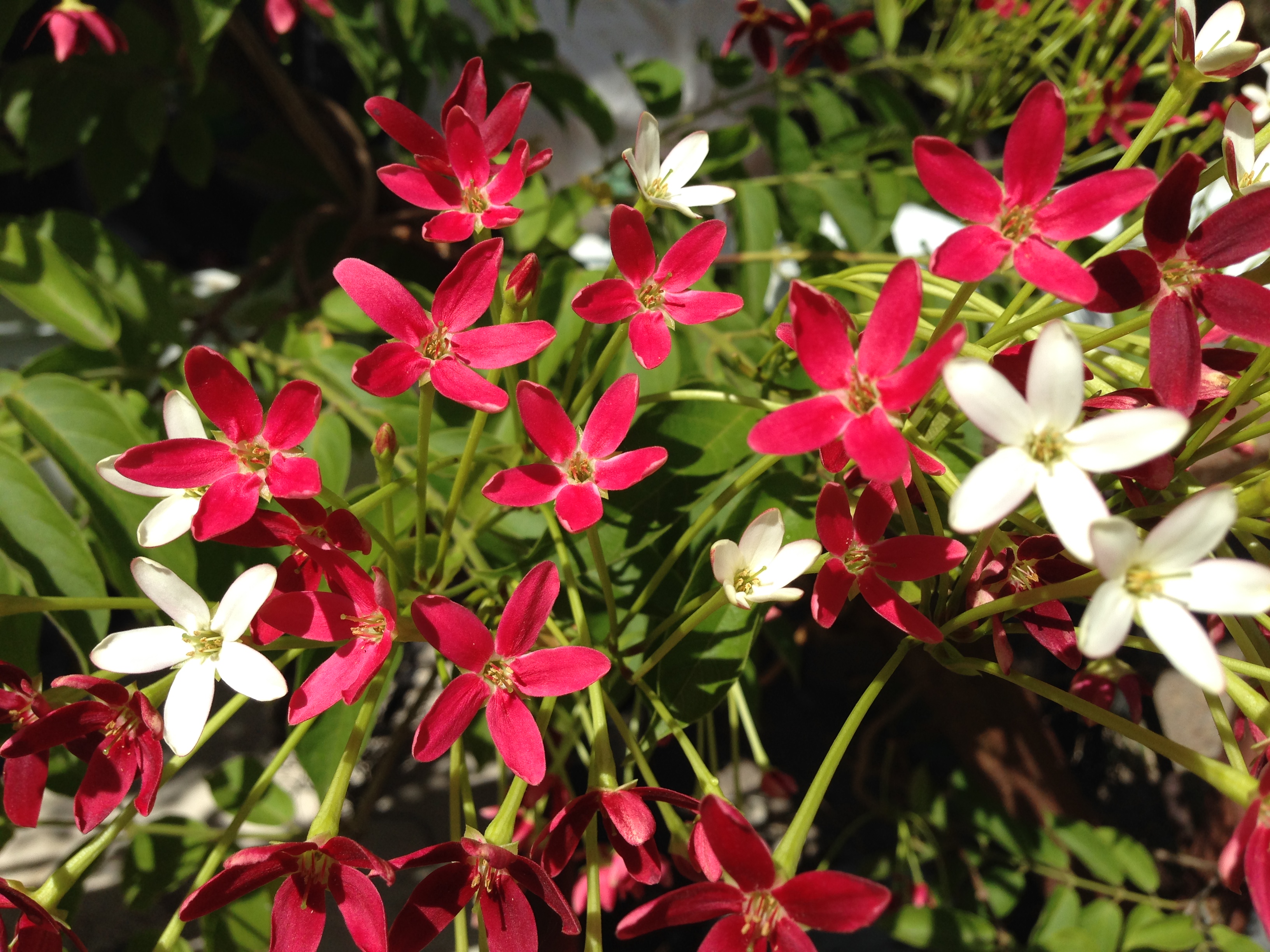
Rangoon creeper is a vigorous woody climber with strongly scented flowers that open pale and deepen through pink to red. Give an existing vine a strong support and enough room for long arching growth.
- Grows well in
- Tropical, Subtropical
- Lifecycle
- Evergreen to semi-evergreen woody climber
- Light
- Full sun, Part shade
- Mature size
- A vigorous woody climber commonly covering 5–8 m or more of support.
- Spacing
- Usually one plant per substantial support, allowing several metres of spread.
- Growth habit
- Woody scrambling or climbing shrub with long arching stems and fragrant flower clusters.
- Native range
- Tanzania and tropical and subtropical Asia to northern Australia
- Natural habitat
- Wet tropical forest, woodland and forest margins, where it grows as a woody climber.
When to plant
Establish during warm weather with reliable moisture. In cooler districts, wait until frost risk has passed.
Planting
Plant beside a substantial support in a warm position with good soil and reliable moisture. Give the permanent framework enough room because mature stems become woody and heavy.
Position and light
Full sun to part shade. Good light supports heavier flowering, while some afternoon shade can help in very hot exposed positions.
Soil
Fertile, free-draining soil with regular organic matter. Avoid ground that stays saturated for long periods.
Watering
Water regularly while establishing and during prolonged dry weather. Established vines are more resilient but flower better with steady moisture.
Feeding
Compost is usually enough in good soil. A light balanced feed can be used during active growth if the vine is weak.
Pruning
Prune after flowering to keep the vine on its support and remove tangled or badly placed stems.
Propagation
Stem cuttings and layering are straightforward; seed is also possible.
Common problems
A mature vine can become heavy and overwhelm weak supports. Seed or garden waste may contribute to spread beyond cultivation in warm wet districts.
Safety notes
Not treated as a food plant in Brancho. Seeds and other parts have traditional medicinal uses but can also be toxic; do not self-medicate with garden material.
Worth knowing
Quisqualis indica is the familiar older botanical name; Kew now accepts Combretum indicum. The flowers open pale and deepen through pink to red, so one vine can carry several flower colours at once.
Grow Rangoon creeper with Brancho
Add it to My Garden and Brancho works out what it needs next, timed for your climate.
How it grows around Australia
Growing this too? Share what you've noticed in your garden.
Grow a Little Wild
New plants to try, useful growing tips and a few garden jobs based on what you grow.