
Plant profile
Alexandra palm
Archontophoenix alexandrae
Also known as Alexander palm, King palm, Northern Bangalow palm.
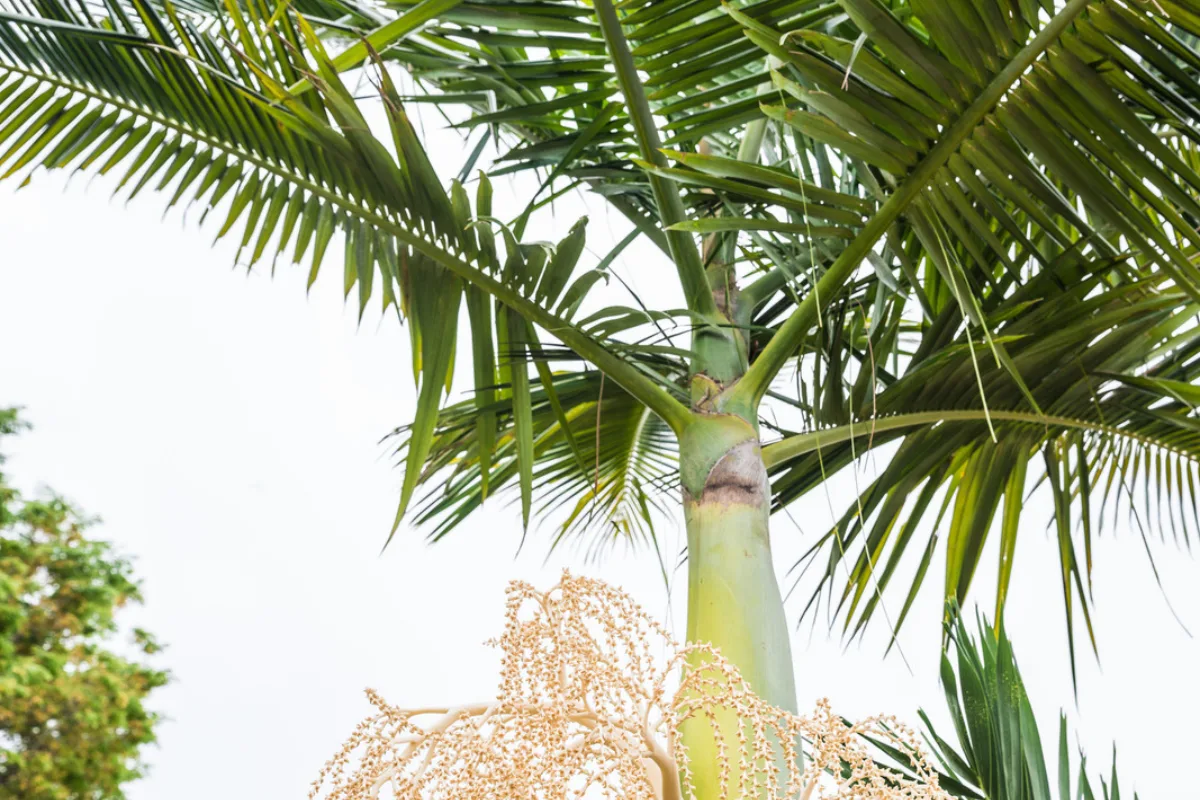
Alexandra palm is a tall Queensland native palm with a smooth trunk, green crownshaft and silvery leaf undersides. It grows quickly in warm, moist conditions and suits tropical and subtropical gardens where there is enough room for a very tall canopy.
- Grows well in
- Tropical, Subtropical
- Lifecycle
- Evergreen native palm
- Light
- Full sun, Part shade
- Mature size
- Usually 20–30 m high with a slender trunk
- Spacing
- About 3–5 m apart
- Growth habit
- Tall solitary feather palm with a smooth crownshaft
- Native range
- North-eastern and eastern Queensland
- Natural habitat
- Wet tropical rainforest and other humid tropical forest habitats.
When to plant
Tropical
February–May, September–November
Subtropical
March–May, September–November
Temperate
September–November
Mediterranean
September–November
Tropical and subtropical: plant during warm weather with reliable moisture.
Planting
Plant into deep soil with reliable moisture and plenty of overhead room. Keep the root ball at its existing depth, water regularly while the roots establish and avoid squeezing the palm between buildings or beneath powerlines where its eventual height will become a problem.
Position and light
Full sun to part shade. Young palms tolerate filtered light and rainforest-style shade, then handle stronger sun as they grow. In exposed sites, shelter from drying wind helps young foliage stay in better condition.
Soil
Moist, fertile, free-draining soil with regular organic matter. Alexandra palm naturally grows in humid rainforest and around moist forest margins, but garden soil still needs drainage and air around the roots rather than staying stagnant after rain.
Watering
Water regularly, especially while young and through long dry periods. Established palms in reliable rainfall areas need less attention, but prolonged dryness slows growth and can scorch fronds.
Feeding
Use compost and a palm fertiliser containing magnesium and potassium during active growth if needed, as these palms can show nutrient deficiencies as yellowing or browning fronds on poor soils.
Pruning
Remove only fully dead or naturally loosening fronds. Alexandra palms shed old fronds as they mature, so routine cutting of green leaves is unnecessary and removes useful leaf area.
Propagation
Grow from fresh seed. Clean ripe seed, sow it into a warm moist propagation mix and keep the mix evenly damp while germination takes place. Fresh seed is more reliable than seed that has been stored for a long time.
Common problems
Scale, mealybugs and palm-dart caterpillars may damage foliage. Cyclones and strong winds can strip fronds, and magnesium or potassium deficiency can show as yellow or necrotic banding on older fronds.
Safety notes
Falling fronds and fruit can be hazardous under mature palms; keep high-use areas clear beneath very tall specimens.
Worth knowing
Alexandra palm (Archontophoenix alexandrae) is a rainforest palm from north Queensland, closely related to the bangalow palm from further south. The two are often confused, but Alexandra palm has distinctly silvery-white leaflet undersides. It is widely planted in tropical and subtropical streets and parks because the trunk stays slender and old fronds shed naturally. It is not reliably frost hardy, so cooler temperate gardens usually suit bangalow palm or another cold-tolerant species better.
Grow Alexandra palm with Brancho
Add it to My Garden and Brancho works out what it needs next, timed for your climate.
How it grows around Australia
Growing this too? Share what you've noticed in your garden.
Grow a Little Wild
New plants to try, useful growing tips and a few garden jobs based on what you grow.