
Plant profile
Almond
Prunus amygdalus
Also known as Almond tree.
Almond is a deciduous nut tree that needs winter chill, full sun and good spring weather for pollination. Many varieties need a compatible pollinator.
- Grows well in
- Temperate, Cool / mountains, Arid / inland, Mediterranean
- Lifecycle
- Deciduous perennial nut tree
- Light
- Full sun
- Mature size
- Usually 4–8 m tall with a spreading canopy; trees can be kept smaller with pruning.
- Spacing
- About 4–6 m apart for full-sized backyard trees.
- Growth habit
- Deciduous small tree with an open, spreading canopy and early spring blossom.
- Native range
- South Caucasus region, around modern Armenia, Georgia and Azerbaijan
- Natural habitat
- Almond is an ancient cultivated tree rather than a clearly wild species, so it does not have one well-defined natural habitat.
When to plant
Temperate
June–August
Cool / mountain
June–August
Arid inland
June–August
Mediterranean
June–August
Planting
Plant a named variety suited to your winter chill and local frost risk. Check whether it is self-fertile or needs a compatible second variety.
Position and light
Full sun with protection from strong wind, which can damage blossom and reduce pollination during the cool early flowering period.
Soil
Deep, fertile, well-drained soil. Almonds are sensitive to waterlogging, so avoid heavy clay unless it is improved or the tree is planted on a mound.
Watering
Water young trees while they establish and maintain moisture while nuts are developing, reducing water as hulls begin to split ahead of harvest to help drying.
Feeding
Feed in spring as growth begins and again after harvest if the tree and soil need it, using a balanced fertiliser rather than heavy nitrogen, which can favour leafy growth over nut set.
Pruning
Prune during dormancy to build and maintain a strong open framework.
Harvest
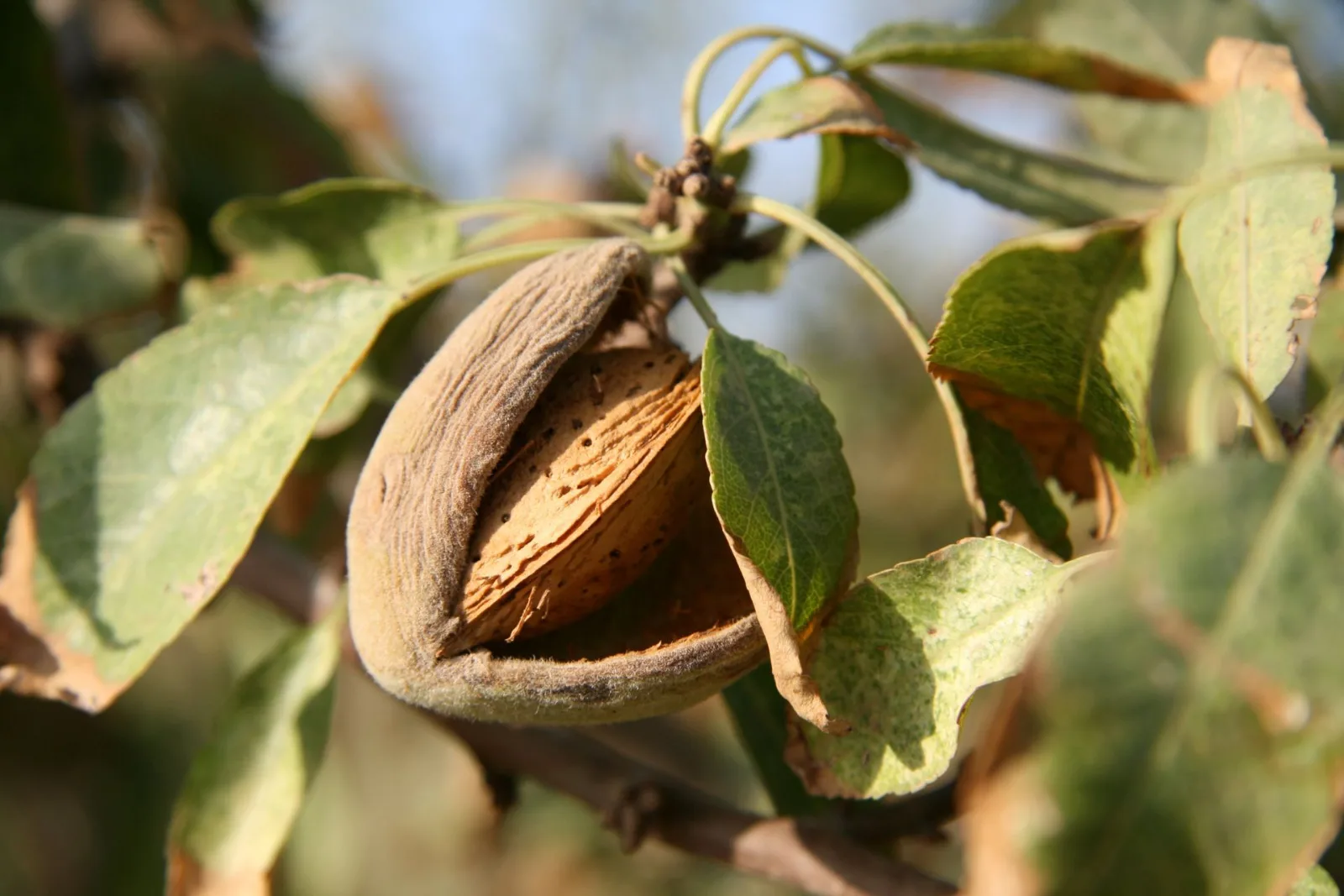
Harvest when hulls split and nuts are mature, then dry kernels thoroughly before storage.
Propagation
Named cultivars are usually grafted. Seedlings are variable and slow to bear.
Common problems
Poor pollination, late frost, fungal disease and bird damage can reduce crops. Rain around flowering also increases the risk of brown rot and reduces bee activity needed for pollination.
Worth knowing
Almond is closely related to peaches and other stone fruit and is sometimes grafted onto peach or plum rootstock to suit particular soils. In much of Australia it needs a defined winter chill period to flower and crop reliably, so variety selection matters in mild-winter regions. Almonds sold in shells for eating are the kernel of the fruit; the outer hull and shell are removed after harvest and are not eaten. Trees can bear for several decades once established, but yields decline with age and orchards are often replaced after this time.
Grow Almond with Brancho
Add it to My Garden and Brancho works out what it needs next, timed for your climate.
How it grows around Australia
Growing this too? Share what you've noticed in your garden.
Grow a Little Wild
New plants to try, useful growing tips and a few garden jobs based on what you grow.