

Plant profile
Asparagus
Asparagus officinalis
Asparagus is a long-lived perennial crop. New beds need time to establish before regular spring harvesting begins.
- Grows well in
- Subtropical, Temperate, Cool / mountains, Arid / inland, Mediterranean
- Lifecycle
- Long-lived perennial vegetable
- Light
- Full sun
- Mature size
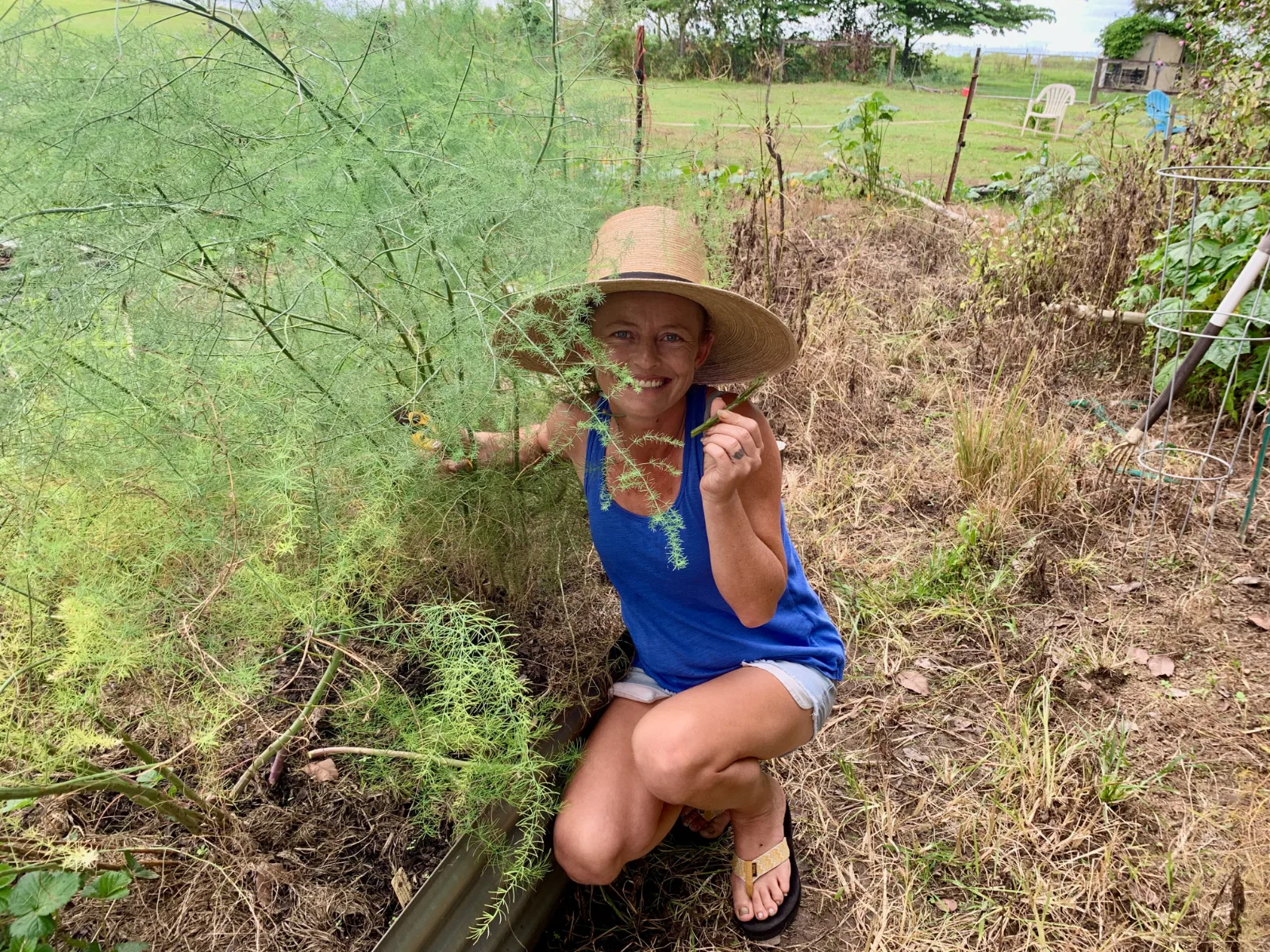
- Fern growth commonly reaches about 1–1.5 m tall and can spread 60–100 cm across once established.
- Spacing
- Plant crowns about 30–45 cm apart in the row.
- Growth habit
- Long-lived herbaceous perennial that grows from a permanent underground crown and produces tall fern-like growth after harvest.
- Native range
- Europe through western and central Asia to Mongolia
- Natural habitat
- Temperate grasslands, dunes and heaths. Some coastal prostrate populations historically grouped with asparagus are now treated separately as Asparagus prostratus.
When to plant
Subtropical
June–August
Temperate
June–August
Cool / mountain
July–September
Arid inland
June–August
Mediterranean
June–August
Planting
Plant crowns in winter or seedlings during mild weather into a permanent bed with very good drainage. Prepare the soil well because the bed can remain productive for decades.
Position and light
Full sun.
Soil
Deep, fertile, well-drained soil. Raised mounds or beds help in heavy ground.
Watering
Keep new plants watered while they establish. Mature beds need moisture during fern growth but should not remain waterlogged.
Feeding
Add compost and mulch after old fern is cut down and feed as new growth begins if the soil needs it.
Pruning
Let fern growth mature through the season so it can feed the crown. Cut the old yellow fern to ground level in autumn after it has died back.
Harvest
Do not harvest heavily from young beds. Once established, cut spring spears while they are tender, then stop after a limited harvest period and allow fern growth to develop.
Propagation
Start from crowns, seedlings or seed. Seed-grown beds take longer to reach full harvest.
Common problems
Poor drainage, crown rot, weeds and harvesting too hard from young beds can weaken the patch.
Safety notes
The red berries on female asparagus plants are not eaten.
Worth knowing
Asparagus spears that are cut for eating are simply the young shoots of the plant before they open into fern; if left uncut, each shoot grows into the tall feathery top growth the plant needs to recharge its crown for the following year. Male and female plants are separate; female plants produce red berries and generally put more energy into seed than spear production, so many modern varieties are bred to be all-male for heavier yields. A bed grown from seed takes longer to reach full production than one started from crowns.
Grow Asparagus with Brancho
Add it to My Garden and Brancho works out what it needs next, timed for your climate.
How it grows around Australia
Growing this too? Share what you've noticed in your garden.
Grow a Little Wild
New plants to try, useful growing tips and a few garden jobs based on what you grow.