


Plant profile
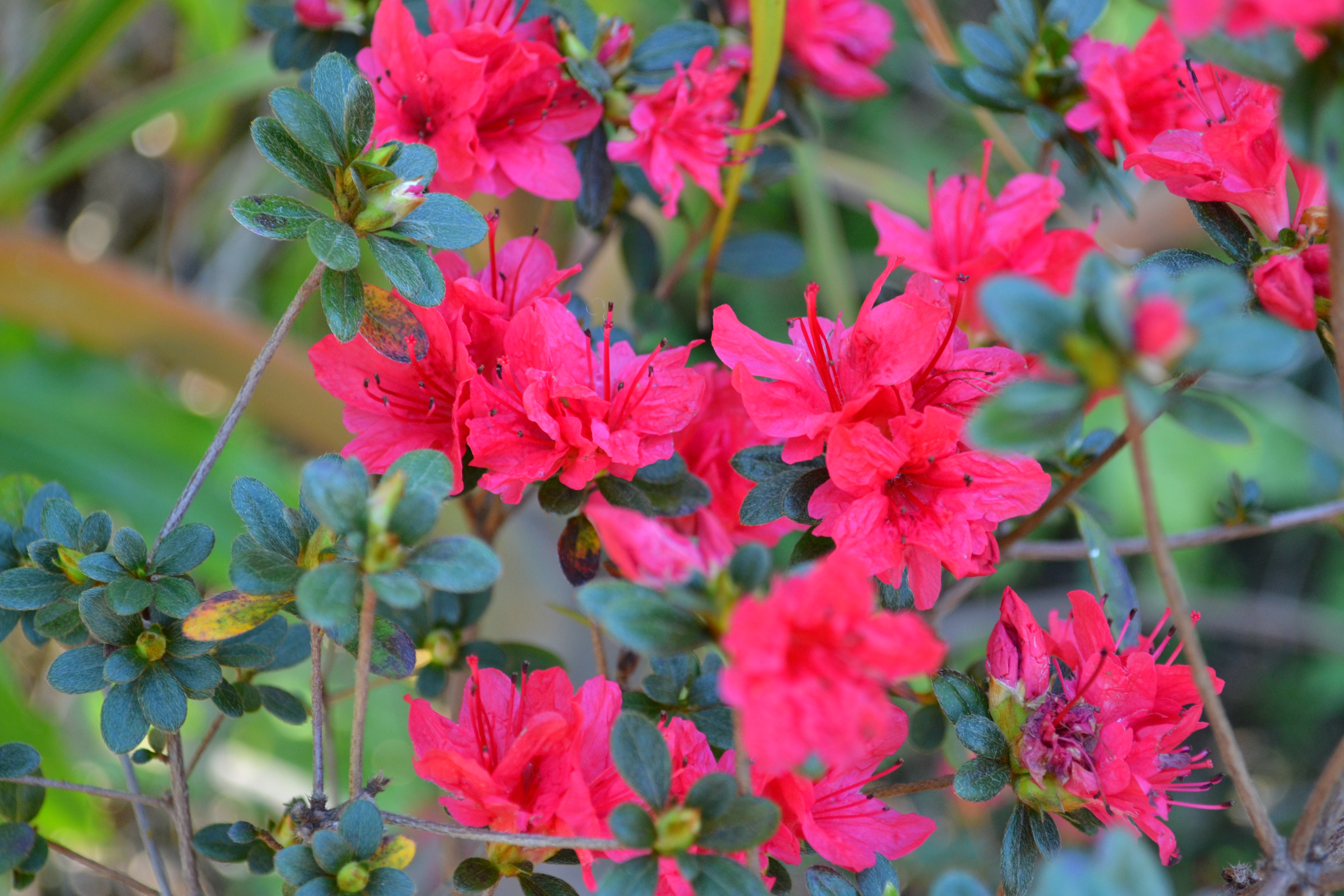
Azalea
Rhododendron spp. and hybrids (Azalea group)
Also known as Azalea hybrids, Evergreen azalea, Deciduous azalea.
Azaleas are compact rhododendrons grown for heavy late-winter and spring flowering. They do best in acidic, free-draining soil with steady moisture and bright filtered light rather than hot reflected sun.
- Grows well in
- Subtropical, Temperate, Cool / mountains, Mediterranean
- Lifecycle
- Evergreen or deciduous flowering shrub
- Light
- Part shade, Full sun
- Mature size
- Common garden azaleas range from about 50 cm to 2 m tall and wide depending on cultivar.
- Spacing
- About 60 cm–1.5 m apart depending on the mature size of the cultivar.
- Growth habit
- Compact branching shrub; evergreen and deciduous forms are both grown as azaleas.
- Native range
- Cultivated azalea group; parent species are mainly native to East Asia, with some North American species
- Natural habitat
- Woodland, forest margins, mountain slopes and heath, depending on the parent species.
When to plant
Subtropical
March–June
Temperate
March–May, September–October
Cool / mountain
September–October
Mediterranean
March–May
Plant in autumn or spring in mild climates. In warmer subtropical gardens, cooler weather gives new roots time to establish before summer heat.
Planting
Plant with the top of the root ball level with the surrounding soil. Keep the shallow root system covered with organic mulch without piling material against the stems.
Position and light
Bright part shade is a safe choice in most Australian gardens. Morning sun is useful; protect plants from harsh afternoon heat in warm districts.
Soil
Acidic, organic-rich, free-draining soil. Azaleas struggle in alkaline ground and heavy soil that stays saturated.
Watering
Keep the root zone evenly moist through establishment and flowering. Shallow roots dry quickly, but saturated soil can damage them.
Feeding
Use an azalea or camellia fertiliser at the label rate after flowering or as fresh growth starts. Avoid liming the soil.
Pruning
If shaping is needed, prune soon after flowering. Late pruning can remove the buds for the next flowering season.
Propagation
Named cultivars are usually propagated from cuttings or layers. Seedlings are variable.
Common problems
Poor flowering can follow deep shade, late pruning or unsuitable climate. Root problems occur in wet soil, while yellow leaves may point to alkaline conditions or nutrient lock-up.
Safety notes
Rhododendrons and azaleas are toxic if eaten. Keep leaves, flowers and clippings away from pets and livestock.
Worth knowing
Azalea is a horticultural group rather than one species. Cultivars differ in size, leaf habit, heat tolerance and winter chill, so the cultivar name is useful when you have it.
Grow Azalea with Brancho
Add it to My Garden and Brancho works out what it needs next, timed for your climate.
How it grows around Australia
Growing this too? Share what you've noticed in your garden.
Grow a Little Wild
New plants to try, useful growing tips and a few garden jobs based on what you grow.