

Plant profile
Bangalow palm
Archontophoenix cunninghamiana
Also known as Piccabeen palm, Bangalow.
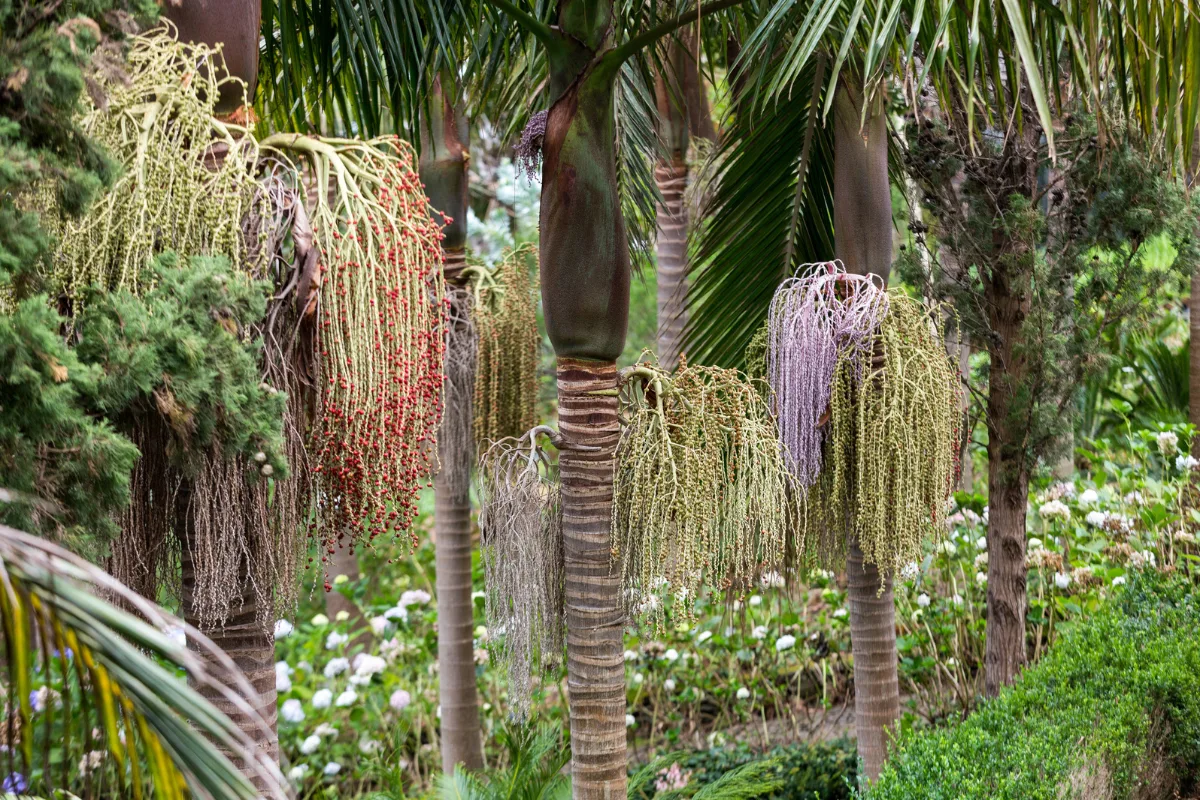
Bangalow palm is an eastern Australian native palm with arching fronds and a smooth crownshaft. It grows naturally in moist gullies, rainforest and streamside country.
- Grows well in
- Subtropical, Temperate
- Lifecycle
- Evergreen native palm
- Light
- Full sun, Part shade
- Mature size
- Up to about 20–30 m high with a trunk around 20–30 cm wide
- Spacing
- About 3–5 m apart
- Growth habit
- Tall solitary feather palm forming colonies from seed in suitable moist sites
- Native range
- Eastern Australia, from Queensland to New South Wales
- Natural habitat
- Subtropical rainforest, moist gullies and streamside forest.
When to plant
Tropical
March–June
Subtropical
March–June, September–November
Temperate
March–May, August–October
Cool / mountain
September–November
Mediterranean
March–May, August–October
Subtropical and warm temperate: plant in spring or during mild moist weather.
Planting
Plant into moist, deep soil and disturb the roots as little as possible. Water regularly while establishing and leave enough overhead room for a tall palm. A sheltered start is useful where young fronds will otherwise be exposed to strong drying wind.
Position and light
Part shade to full sun. Young palms handle filtered light well and can move into stronger sun as they grow. Bangalow palm tolerates cooler conditions better than Alexandra palm, but very exposed frost-prone sites are still unsuitable.
Soil
Moist, fertile soil with good drainage. It grows naturally on several soil types, including sandy soils where moisture is reliable.
Watering
Keep water up to young palms and during extended dry weather. Established plants still grow best with regular moisture, though they tolerate short dry periods better once their root system is developed.
Feeding
Use compost and a palm-specific fertiliser during active growth if needed, watching for yellowing on older fronds, which can indicate a magnesium or potassium shortfall on sandy soils.
Pruning
Remove dead fronds once they loosen. Leave healthy green fronds in place.
Propagation
Grow from fresh seed kept warm and moist. Remove ripe fruit flesh before sowing and use fresh seed rather than storing it for long periods. Self-sown seedlings can also appear beneath mature palms in warm, moist gardens.
Common problems
Palm-dart caterpillars, scale and mealybugs may occur. Root disturbance can slow establishment, and nutrient shortages on sandy soils may show as yellowing older fronds. Remove unwanted self-sown seedlings before they become difficult to pull.
Safety notes
Falling fronds and fruit can be hazardous under mature palms.
Worth knowing
Bangalow palm (Archontophoenix cunninghamiana) is an eastern Australian native that naturally grows along creeks, gullies and rainforest margins. The common name comes from the Bangalow district on the New South Wales north coast. It is closely related to Alexandra palm but generally handles cooler conditions better.
Grow Bangalow palm with Brancho
Add it to My Garden and Brancho works out what it needs next, timed for your climate.
How it grows around Australia
Growing this too? Share what you've noticed in your garden.
Grow a Little Wild
New plants to try, useful growing tips and a few garden jobs based on what you grow.