
Plant profile
Bird of paradise
Strelitzia reginae
Also known as Crane flower, Orange bird of paradise, Strelitzia reginae.
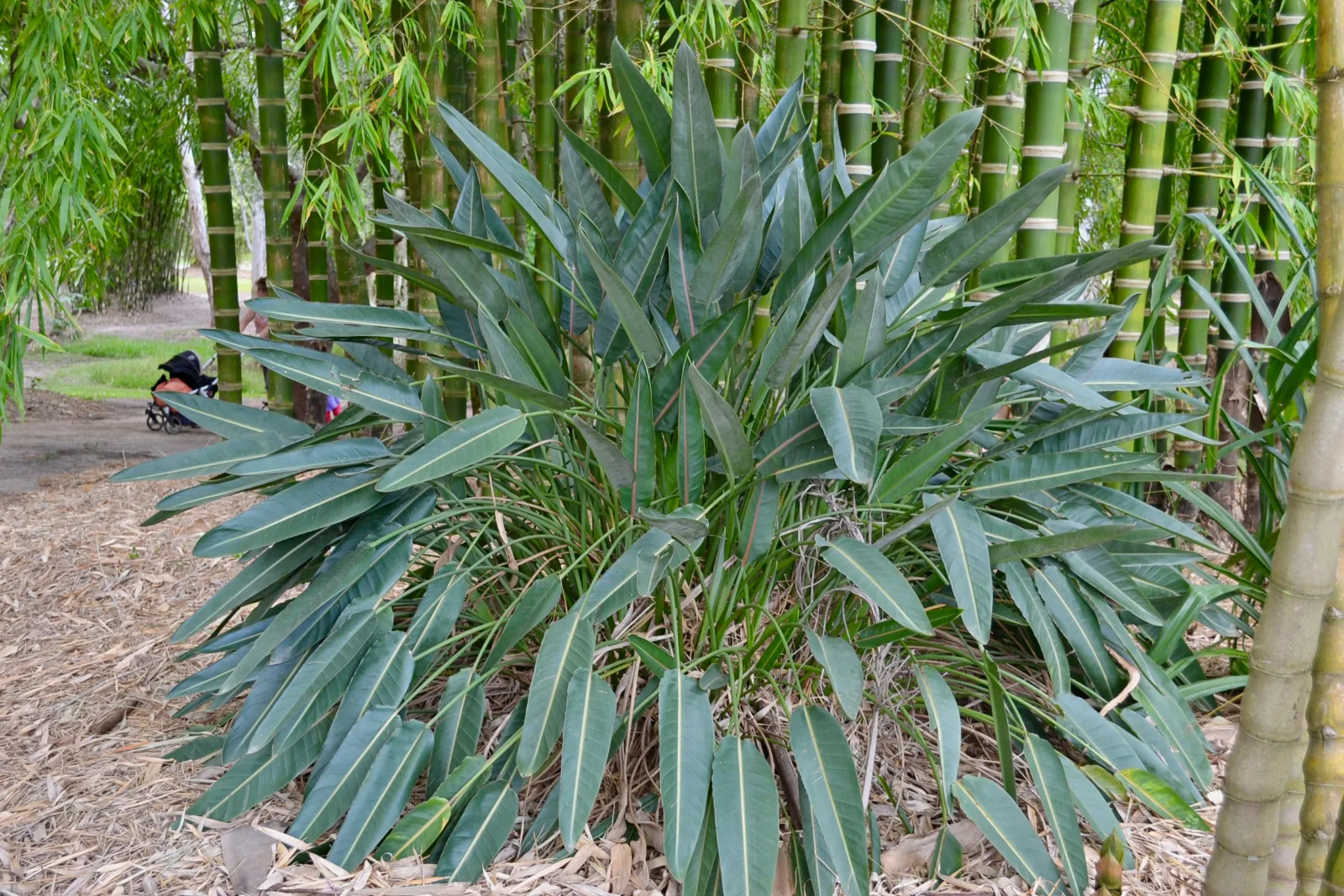
Bird of paradise makes a dense clump of paddle-shaped leaves and orange-and-blue flowers without becoming a giant tree. Sun, drainage and enough room around the clump make the biggest difference.
- Grows well in
- Tropical, Subtropical, Temperate, Arid / inland, Mediterranean
- Lifecycle
- Long-lived evergreen clumping perennial
- Light
- Full sun, Part shade
- Mature size
- Usually about 1–1.5 m tall and roughly the same width, with mature clumps slowly expanding.
- Spacing
- Around 1–1.5 m apart for individual mature clumps.
- Growth habit
- Rhizomatous clump of upright leaf fans with flower stems emerging from the base.
- Native range
- South Africa, from the Cape Provinces to KwaZulu-Natal
- Natural habitat
- Coastal bush and thicket, riverbanks and forest margins in eastern South Africa.
When to plant
Tropical
February–November
Subtropical
September–April
Temperate
October–March
Arid inland
September–April
Mediterranean
September–April
Plant during warm active growth. In frost-prone districts, wait until the main frost risk has passed.
Planting
Plant at the same depth as the nursery pot and keep the crown above soggy soil. Leave room for the rhizomatous clump to widen.
Position and light
Full sun gives the strongest flowering. Part shade works, especially in very hot districts, but heavy shade reduces flowers and stretches the leaves.
Soil
Fertile, well-drained soil with compost suits it. Improve drainage before planting into heavy clay.
Watering
Water regularly while establishing and through hot active growth. Established plants handle some dryness, but long dry periods reduce flowering and can split or scorch leaves.
Feeding
Use compost plus a balanced fertiliser during warm active growth. Avoid piling fertiliser or mulch against the crown.
Pruning
Cut old leaves and spent flower stems cleanly at the base. Do not shear the whole clump.
Harvest
Flower stems can be cut for arrangements once blooms begin opening.
Propagation
Divide established rhizomatous clumps, keeping a healthy fan of leaves and roots with each division. Seed is possible but slow.
Common problems
Scale, mealybugs, snail damage and root problems in wet soil can occur. Wind shreds the large leaves and can make the clump look rough.
Safety notes
Bird of paradise is regarded as minimally toxic to pets; ingestion can cause gastrointestinal upset. Fruit and seeds are a particular concern, so keep them away from animals that chew plants.
Worth knowing
Strelitzia reginae is the smaller clumping orange-and-blue bird of paradise. Giant bird of paradise (Strelitzia nicolai) is a much larger species with its own Brancho profile.
Grow Bird of paradise with Brancho
Add it to My Garden and Brancho works out what it needs next, timed for your climate.
How it grows around Australia
Growing this too? Share what you've noticed in your garden.
Grow a Little Wild
New plants to try, useful growing tips and a few garden jobs based on what you grow.