

Plant profile
Borage
Borago officinalis
Also known as Common borage, Starflower.
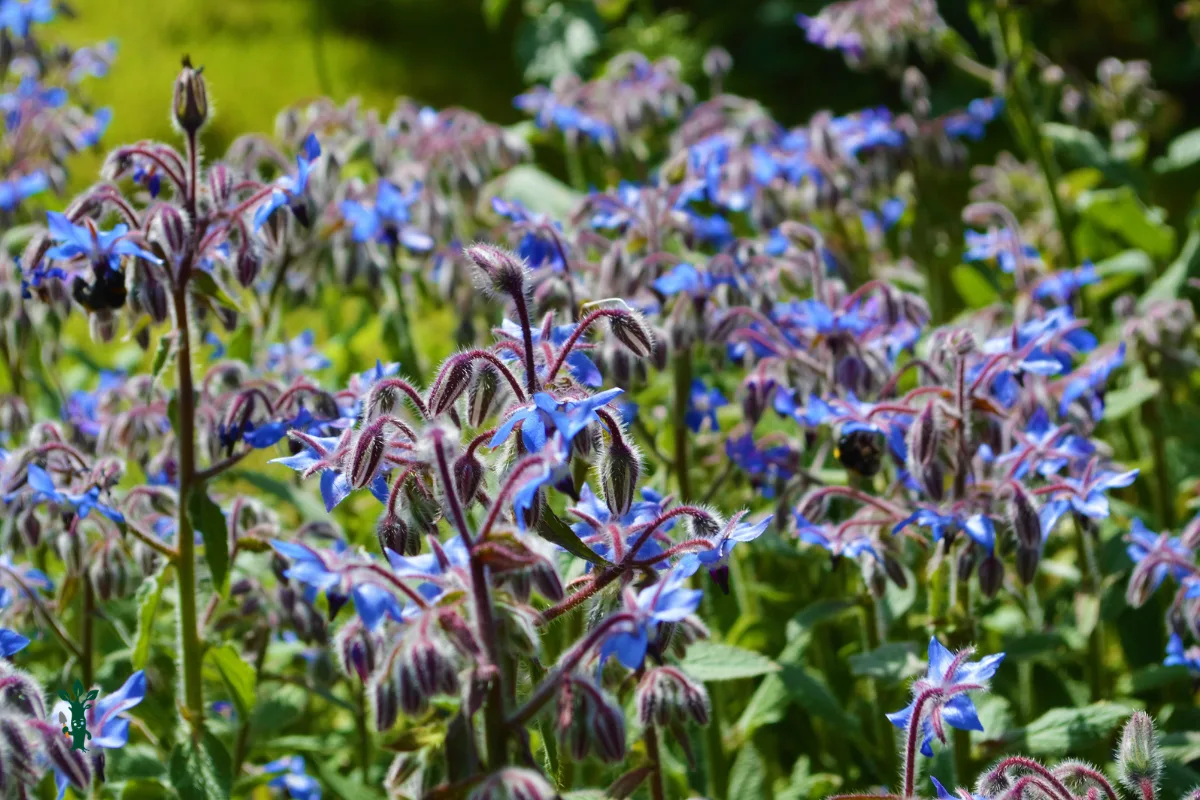
A fast-growing annual with vivid blue star-shaped flowers and coarse, hairy leaves. In Australia it is best treated as an ornamental and pollinator plant rather than an edible herb because Borago officinalis is listed in the Australia New Zealand Food Standards Code as a prohibited plant for food sale.
- Grows well in
- Subtropical, Temperate, Cool / mountains, Mediterranean
- Lifecycle
- Annual herb
- Light
- Full sun, Part shade
- Mature size
- Usually 30–80 cm high and roughly 30–60 cm wide, depending on soil and moisture.
- Spacing
- Allow about 40–60 cm between plants.
- Growth habit
- Upright to spreading, much-branched annual with a basal rosette early on and coarse hairy stems and leaves.
- Native range
- Western and central Mediterranean region
- Natural habitat
- Temperate Mediterranean grassland, scrub and disturbed open ground.
When to plant
Best sown through the mild part of the year. In cool and temperate districts, spring sowing is straightforward; in warmer subtropical areas, autumn to winter sowing usually avoids the harshest heat.
Planting
Sow where it is to grow or transplant young seedlings before they become root-bound. Seedlings develop quickly in mild weather. Allow enough room for the broad, branching plant rather than crowding it between small herbs.
Position and light
Full sun gives the strongest, most compact growth and best flowering. Part shade is workable in hotter districts, especially where afternoon sun is severe.
Soil
Use ordinary free-draining garden soil. Borage grows in moderately fertile soil but does not need rich ground; excessive nitrogen tends to produce soft leafy growth at the expense of a tidy flowering plant.
Watering
Water seedlings regularly while roots establish. Established plants handle moderate drying between waterings, but flowering and leaf growth are better with reasonably even moisture. Avoid keeping heavy soil constantly saturated.
Feeding
Usually little feeding is needed in garden soil. Compost incorporated before sowing is generally enough; use only a light balanced feed if growth is clearly poor in a low-fertility bed.
Pruning
No structural pruning is needed. Remove spent or sprawling stems if they block nearby plants. You can also cut flowering stems once they start looking tired.
Harvest
Grow mainly for its flowers and value to visiting insects. Despite a long history of culinary use overseas, Brancho does not recommend harvesting borage for food in Australia because Borago officinalis is listed by FSANZ as a prohibited plant.
Propagation
Usually grown from seed. Sow shallowly into moist soil and keep the seed bed from drying during germination. Plants may sow themselves again in mild climates.
Common problems
Slugs and snails can damage young seedlings. Powdery mildew may appear late in the season or where airflow is poor. Plants can flop after lush growth or heavy rain.
Safety notes
Borago officinalis is listed in Schedule 23 of the Australia New Zealand Food Standards Code as a prohibited plant and fungus for food sale. Do not rely on overseas edible-flower advice for Australian food use. The coarse hairs can also irritate sensitive skin; gloves are useful when clearing mature plants.
Worth knowing
The familiar blue flowers are useful for attracting bees, but Australian gardeners should separate that ornamental value from overseas culinary traditions: current Australian food standards specifically list this exact species as prohibited for food sale. It can also persist by self-sowing, so one season of flowers can produce volunteers later.
Grow Borage with Brancho
Add it to My Garden and Brancho works out what it needs next, timed for your climate.
How it grows around Australia
Growing this too? Share what you've noticed in your garden.
Grow a Little Wild
New plants to try, useful growing tips and a few garden jobs based on what you grow.