
Plant profile
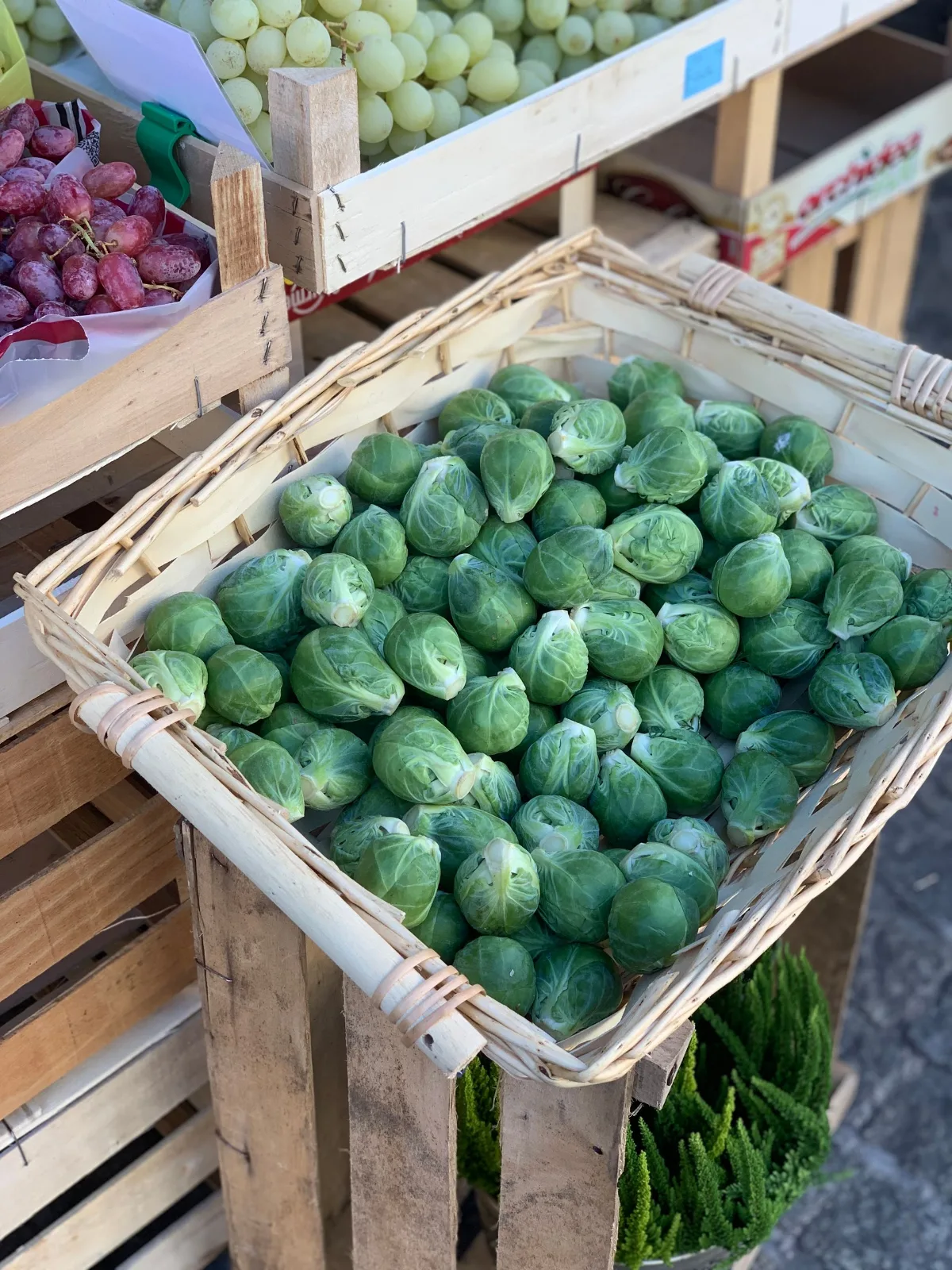
Brussels sprouts
Brassica oleracea (Gemmifera Group)
Also known as Brussel sprouts.
Brussels sprouts are a long cool-season brassica that forms small heads along a tall stem. Timing and steady feeding matter more than almost anything else.
- Grows well in
- Temperate, Cool / mountains, Mediterranean
- Lifecycle
- Cool-season annual vegetable
- Light
- Full sun
- Mature size
- Usually about 60–120 cm tall and 45–60 cm wide, with sprouts forming up the main stem.
- Spacing
- About 45–60 cm apart so the plants have room to make strong stems and large leaves.
- Growth habit
- Tall, upright brassica with a stout central stem and small cabbage-like sprouts forming in the leaf joints.
- Native range
- Cultivated group; its wild ancestor Brassica oleracea is native to the Atlantic coasts of Great Britain, France and Spain.
- Natural habitat
- Cultivated crop with no separate wild habitat; wild Brassica oleracea grows naturally on seaside cliffs.
When to plant
Temperate
January–March
Cool / mountain
January–March
Mediterranean
January–March
Planting
Sow in summer so plants are well developed by autumn and mature through cool weather. Give them plenty of space and support if exposed.
Position and light
Full sun.
Soil
Deep, fertile, well-drained soil with organic matter.
Watering
Keep moisture consistent through the long growing period.
Feeding
Brussels sprouts are heavy feeders; keep nutrition steady during leaf and stem growth. Side-dress with a nitrogen-rich fertiliser or blood and bone during the vegetative stage, then ease off as sprouts begin forming to avoid loose, leafy sprouts.
Pruning
Remove damaged lower leaves as plants grow. Do not strip healthy leaves unnecessarily. Some gardeners pinch out the growing tip a few weeks before the expected final harvest to encourage the remaining sprouts to mature evenly.
Harvest
Sprouts form up the stem and are harvested when firm. Crop time is long, often several months.
Propagation
Grow from seed.
Common problems
Cabbage white caterpillars, aphids and warm weather can reduce sprout quality.
Worth knowing
Brussels sprouts are slow to mature and occupy a bed for most of a cool season, so they suit gardeners who can leave the space committed for several months rather than rotating quickly between crops. A light frost is not a problem; many gardeners find the sprouts taste sweeter after cold weather, because the plant converts some starches to sugars in response to chilling. Lower leaves naturally yellow and drop as the stem lengthens and this is not a sign of disease on its own.
Grow Brussels sprouts with Brancho
Add it to My Garden and Brancho works out what it needs next, timed for your climate.
How it grows around Australia
Growing this too? Share what you've noticed in your garden.
Grow a Little Wild
New plants to try, useful growing tips and a few garden jobs based on what you grow.