


Plant profile
Calendula
Calendula officinalis
Also known as Pot marigold, Common marigold, Garden marigold.
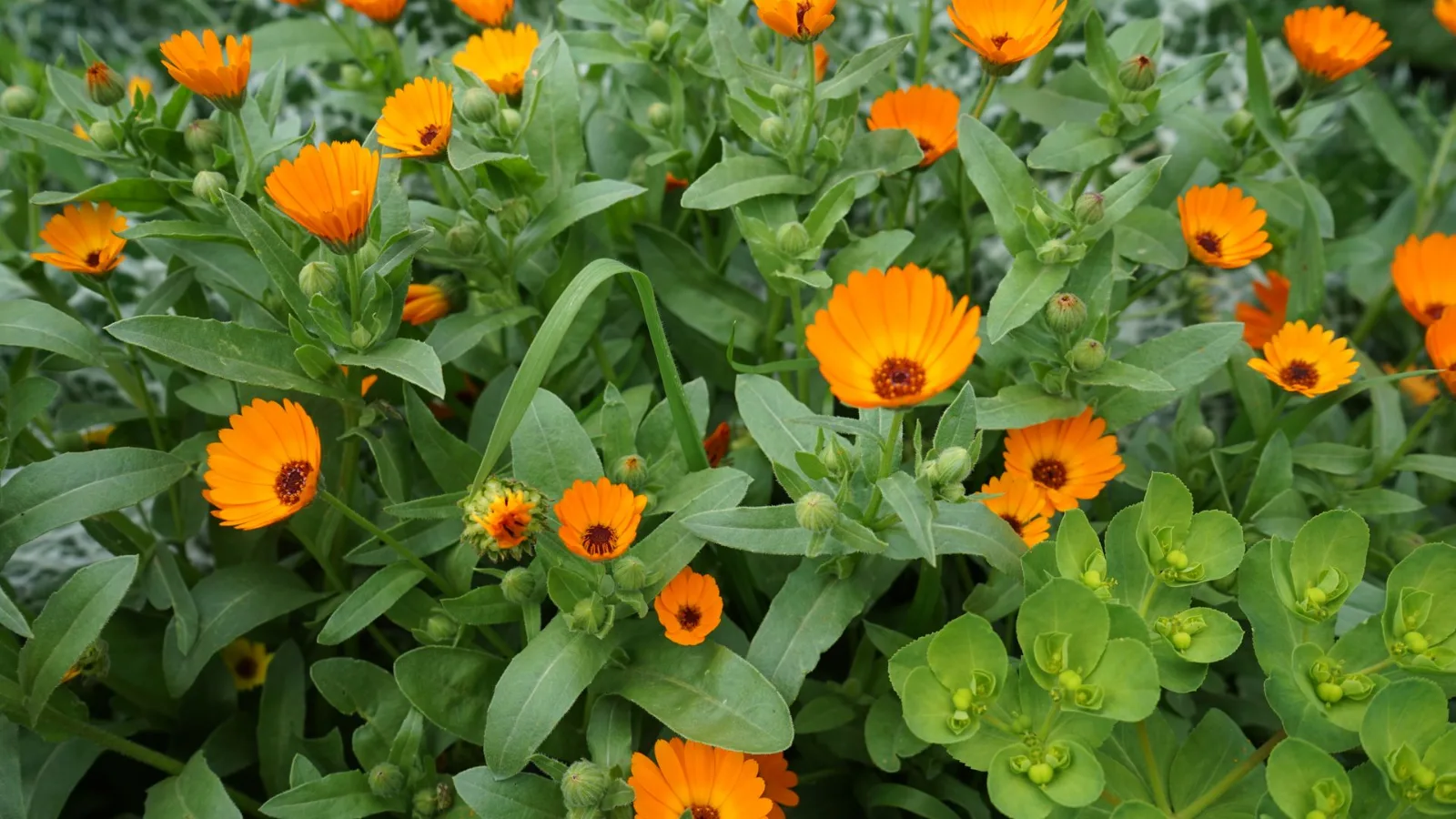
Calendula is a cheerful, fast-growing annual with orange or yellow daisy-like flowers. It is happiest in mild weather, flowers for months with regular picking and is useful for pollinators as well as edible petals.
- Grows well in
- Tropical, Subtropical, Temperate, Cool / mountains, Arid / inland, Mediterranean
- Lifecycle
- Annual or short-lived biennial
- Light
- Full sun, Part shade
- Mature size
- Usually 20–50 cm tall and around 20–40 cm wide, depending on variety and conditions.
- Spacing
- About 20–30 cm apart for most garden forms, with wider spacing in humid climates for airflow.
- Growth habit
- Bushy annual with branching stems and repeated daisy-like flowers.
- Native range
- Western Mediterranean; Kew records the native distribution in Spain.
- Natural habitat
- Mediterranean grassland, open scrub and disturbed sunny ground.
When to plant
Tropical
April–August
Subtropical
March–September
Temperate
March–November
Cool / mountain
August–November
Arid inland
March–September
Mediterranean
March–October
In tropical and subtropical gardens, grow it through the cooler, drier part of the year. In temperate and cool climates, spring and autumn sowings are both useful depending on local frost.
Planting
Plant seedlings at the same depth they were growing in the punnet, into free-draining soil. Avoid crowding, especially where humidity is high.
Position and light
Full sun gives the heaviest flowering. Light part shade is useful in hot climates, especially for cool-season crops in the subtropics and tropics.
Soil
Light, ordinary to moderately fertile soil with good drainage. Calendula does not need rich soil and can become lush and floppy if heavily fed.
Watering
Water young plants regularly until established. After that, water when the upper soil begins to dry. Avoid keeping foliage and crowns constantly wet in humid weather.
Feeding
Usually only light feeding is needed. In containers, an occasional dilute balanced feed is enough; in good garden soil, compost at planting may be sufficient.
Pruning
Pinch young tips if plants are leggy and deadhead spent flowers regularly to keep new buds coming. Cut tired plants back or remove them when heat and disease take over.
Harvest
Pick clean, fully opened flowers or petals as needed. Frequent flower harvest also acts as deadheading and extends the display.
Propagation
Easy from seed. Sow direct or transplant young seedlings. It readily self-seeds where conditions suit.
Common problems
Aphids and powdery mildew are the main problems. Heat, humidity and overly rich soil can shorten the flowering season.
Safety notes
Only eat correctly identified, unsprayed flowers. People sensitive to plants in the daisy family may also be sensitive to calendula.
Worth knowing
Regular picking keeps more flowers coming, and the petals can be used fresh in salads or as a bright garnish. Plants are easy to raise from seed and often flower quickly in cool to mild weather.

Grow Calendula with Brancho
Add it to My Garden and Brancho works out what it needs next, timed for your climate.
How it grows around Australia
Growing this too? Share what you've noticed in your garden.
Grow a Little Wild
New plants to try, useful growing tips and a few garden jobs based on what you grow.