
- Grows well in
- Subtropical, Temperate, Cool / mountains, Mediterranean
- Lifecycle
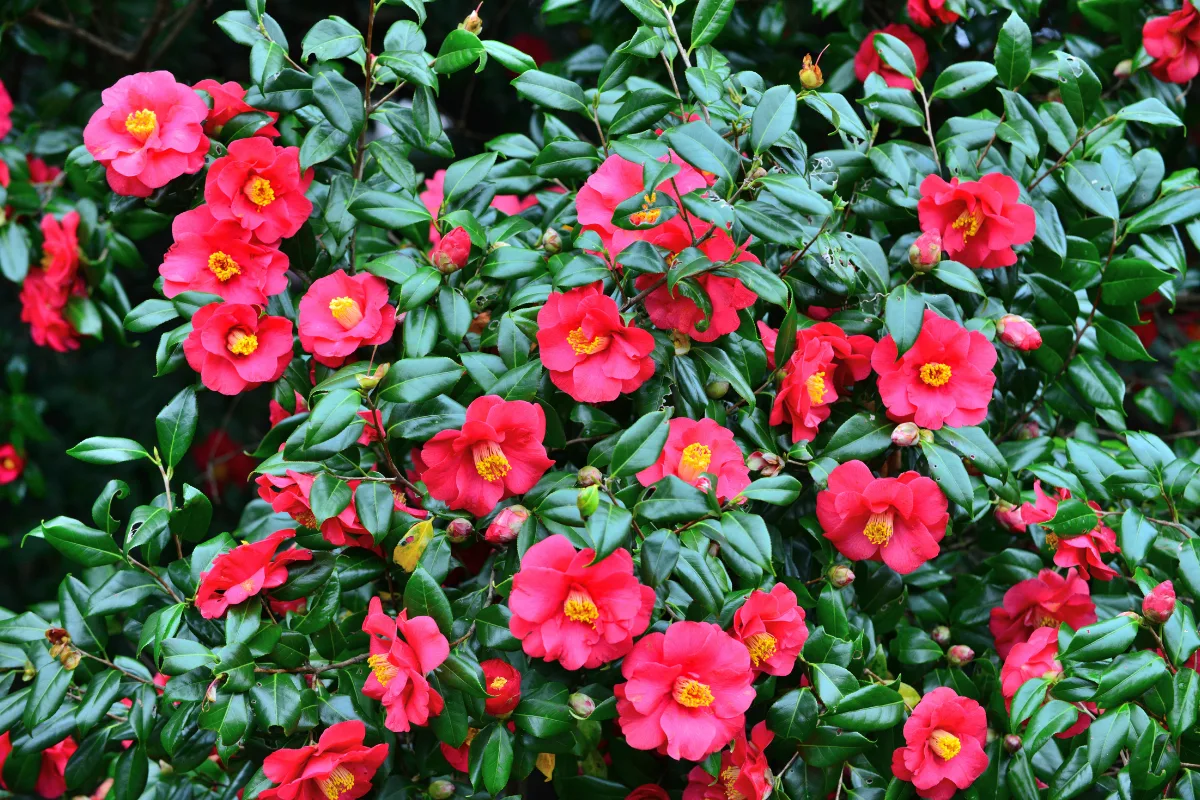
- Evergreen flowering shrub
- Light
- Part shade, Shade
- Mature size
- Commonly 1–4 m tall and 1–3 m wide, depending on cultivar
- Spacing
- About 1.5–3 m apart
- Growth habit
- Dense evergreen shrub or small tree
- Native range
- China (Shandong and eastern Zhejiang), Jeju Island in Korea, central and southern Japan, and Taiwan.
- Natural habitat
- Subtropical woodland and forest, including shaded forest understorey and forest margins from lowlands into mountains.
When to plant
Subtropical
March–June
Temperate
March–May
Cool / mountain
September–November
Mediterranean
March–May
Autumn is ideal in mild climates; spring suits colder districts once hard frost has passed.
Planting
Plant with the top of the root ball level with the surrounding soil. Keep mulch away from the trunk and avoid deep planting.
Position and light
Part shade with protection from hot midday and afternoon sun. In subtropical climates, morning shade can help flower buds open cleanly.
Soil
Acidic to slightly acidic, fertile, free-draining soil with plenty of organic matter.
Watering
Keep moisture steady while buds form and through warm weather. Water deeply rather than keeping the surface constantly wet. Irregular watering while buds are forming is a common cause of bud drop.
Feeding
Top-dress with compost and use a fertiliser suited to acid-loving shrubs after flowering or as spring growth starts.
Pruning
Prune lightly after flowering if needed to shape the shrub or reduce height. Camellias tolerate pruning, but routine hard cutting is unnecessary. Old, overgrown plants can be cut back hard after flowering and will usually reshoot from older wood over a season or two.
Propagation
Semi-hardwood cuttings, grafting or seed; named cultivars need vegetative propagation to stay true.
Common problems
Tea scale, mites, sooty mould associated with sap-sucking insects, bud drop and sunburn can occur.
Worth knowing
Camellia japonica flowers are prone to browning from both frost and botrytis petal blight, so flower damage is not always a sign of poor culture. Grafted plants can occasionally send up vigorous shoots from below the graft union; these should be removed or they will eventually overtake the named cultivar. Camellias are naturally long-lived, and old plants in established gardens can remain productive for many decades with only routine care.
Grow Camellia with Brancho
Add it to My Garden and Brancho works out what it needs next, timed for your climate.
How it grows around Australia
Growing this too? Share what you've noticed in your garden.
Grow a Little Wild
New plants to try, useful growing tips and a few garden jobs based on what you grow.