
Plant profile
Cardamom
Elettaria cardamomum
Also known as green cardamom, true cardamom, small cardamom.
Cardamom is a beautiful tropical ginger with tall green leaves, pretty flowers and the fragrant seed pods we use in cooking. It loves a warm, sheltered spot under taller trees, with rich soil and regular water. In tropical Australia it makes a lovely understory plant, and in the right conditions you might even harvest your own spice.
- Grows well in
- Tropical, Subtropical
- Lifecycle
- Evergreen rhizomatous perennial herb
- Light
- Part shade, Shade
- Mature size
- Usually around 2 to 4 m tall in a warm tropical garden. The clump slowly gets wider as new shoots grow from its underground stems.
- Spacing
- Give each clump around 1.5 to 2 m of space so it has room to grow.
- Growth habit
- A tall, clumping ginger with underground stems called rhizomes. New leafy shoots grow from the rhizomes, while flowers and pods appear on separate low stalks.
- Native range
- The Western Ghats mountains in southern India. Cardamom is not native to Australia.
- Natural habitat
- The shady floor of humid tropical forests in the Western Ghats mountains of southern India, often in cooler, higher areas.
When to plant
Tropical
September–March
Subtropical
October–February
In tropical Australia, you can plant or divide cardamom during warm, humid weather, as long as the soil drains well. In the subtropics, spring and early summer are good times to get a new clump established before cooler weather. Protect young plants from cold winds.
Practical uses
Cardamom's fragrant little seeds are lovely in cooking, and the leaves are useful in the kitchen too. There are a few ways you can use both parts of the plant.
- Seeds for cooking: Crack open a pod and crush the seeds when you're ready to use them. They're beautiful in tea, coffee, rice, curries, biscuits and cakes. You can also cook with whole pods and take them out before serving. If you grow your own, dry the pods well before putting them away.
- Leaves for cooking: Cardamom leaves have a gentler fragrance than the seeds. In India, people have used them to wrap rice, fish and vegetables while cooking. You can use the long leaf stalks to tie the parcels too.
- Fragrant oil: Cardamom seed oil goes into food flavourings, perfumes, soaps and other cosmetics. It's another reason this spice has been valued for so long.
Permaculture uses
Cardamom grows well under tropical fruit trees. It loves the filtered sunlight there, and the protection from strong winds. It grows well with other tropical plants like ginger, turmeric and black pepper.
The clump gets wider over time, with tall leafy stems and flowers that grow close to the ground. It makes a lovely green layer in a tropical food forest, with the bonus of fragrant pods if your plants flower and fruit. Have a look under the leaves when you're harvesting, because the pods are easy to miss.
Cardamom's useful for chop and drop too. When you cut off old leaves or stems, chop them into smaller pieces and leave them on the ground as mulch. You can leave them right where they fall. Super easy! Cardamom prefers good soil and regular watering, so add compost and mulch to keep it growing beautifully.
Wildlife and pollinators
Cardamom flowers grow close to the ground and offer nectar and pollen to bees and other visitors. Some of these animals move pollen between the flowers, which helps the plant grow seed pods.
What about Australian gardens?
We haven't found a reliable Australian study naming the insects or birds that regularly pollinate cardamom here. If yours flowers, have a look around the low flower stalks. We'd love to hear what you spot in the comments below the profile.
What researchers found in India
A study in the Western Ghats mountains in southern India followed the animals visiting wild and cultivated cardamom. Here's what they found:
- 🐝 Bees: Asian honey bees, giant honey bees and Indian stingless bees helped pollinate cultivated cardamom. Wild cardamom relied more on solitary bees, including Amegilla and Megachile.
- 🐦 Birds: Purple sunbirds and little spiderhunters also transferred pollen between cultivated cardamom flowers. They visited much less often than the main bee pollinators.
- 🦋 Butterflies: Several butterfly species visited the wild flowers for nectar. They didn't pollinate the flowers in that study.
We're still learning which animals visit cardamom flowers in Australian gardens.
Planting
Plant cardamom during warm weather, either from a nursery plant or a piece of an established clump. Choose somewhere sheltered with plenty of filtered light. Mix compost into the soil, plant it at the same depth it was growing before and water it well. Add mulch around the clump, keeping it clear of the new shoots. If rain leaves puddles in the spot for days, choose somewhere with better drainage.
Position and light
Cardamom loves bright shade. Under an open tropical fruit tree works beautifully, with enough light coming through the leaves to help it flower. Strong afternoon sun can burn its leaves, and it might flower less in deep shade. It also likes protection from drying winds, especially when it's getting established.
Soil
Give cardamom good, rich soil with plenty of compost. It likes soil that holds moisture but still drains well, and slightly acidic conditions suit it best (around pH 5 to 6.5). Keep the soil covered with leaf mulch to help it stay moist. If you have heavy clay or a spot that gets very wet in summer, plant the clump on a raised mound so the roots don't sit in water.
Watering
Cardamom likes regular watering, especially while it's getting established and when it's flowering. Check the soil under the mulch. If it's starting to dry, give it a good soak. During the wet season, rain might do most of the work for you. Just make sure water can drain away, because the underground stems can rot if the soil stays waterlogged.
Feeding
Give cardamom a good layer of compost when new shoots start growing in warm weather. You can add a little complete fertiliser too, following the directions on the pack. Top up the mulch when it gets thin, but keep it away from the new shoots and the flower stalks growing around the base.
Pruning
Cut off old, yellow or damaged stems near the ground to keep the clump tidy. Have a look around the base before you start, because cardamom flowers grow on their own low stalks and are easy to miss. If the clump gets too crowded, divide it during warm weather. You can use the old leaves and stems as mulch around the garden.
Harvest
Cardamom flowers and pods grow on stalks near the ground, so look under the leafy stems when you're checking for a harvest. Pick the pods when they're full-sized and still green, before they split open. The seeds inside should be turning brown or dark. Pods don't all ripen at once, so you may get to pick several times. Dry them well and store them in an airtight jar to keep their flavour. Cardamom usually needs a few years to start cropping. The spice grows commercially in cooler, humid tropical highlands, so you may get fewer pods in very hot coastal gardens even when the plant grows beautifully.
Propagation
Dividing a healthy clump is the easiest way to grow more cardamom. Dig up a section with some roots, a piece of the underground stem (rhizome) and at least one growing shoot. Plant it straight away, water it in and keep it shaded while it settles. You can also grow cardamom from fresh seed, but the seeds don't stay viable for long. The dried pods you buy for cooking are usually picked before they're ripe, so they aren't a reliable source of seed.
Common problems
Brown leaf edges can mean too much sun, drying wind or problems with watering. Check the soil before changing how often you water. If the shoots turn yellow or collapse and the soil stays wet, have a look at the drainage. Mites or thrips can sometimes damage the leaves, especially when the plant is stressed. A sheltered spot, healthy soil and steady moisture will help it grow well.
Worth knowing
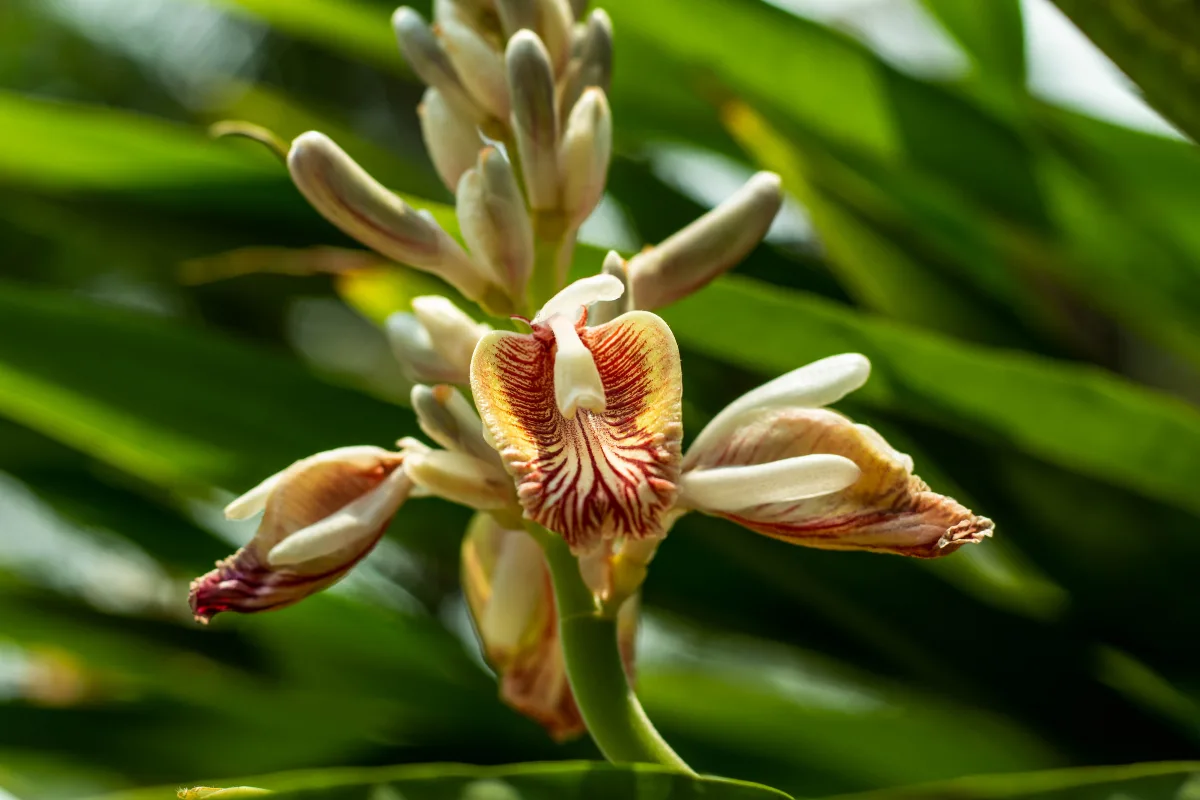
Cardamom belongs to the ginger family, along with ginger and turmeric. Its pale flowers have lovely purple markings, and you'll find them growing around the base of the clump. True green cardamom is Elettaria cardamomum. The larger, smoky black cardamom used in some cooking comes from a different plant, Amomum subulatum.
Companion and understory planting
In a humid tropical garden, try cardamom with ginger or turmeric. They like similar warmth, moisture and filtered light, and the different leaves make a lovely mix under trees. Give each clump room to grow as it gets bigger.
Cardamom also grows with black pepper, tea and areca palms in traditional mixed plantings in India. Black pepper climbs while cardamom stays in a clump below, which makes an interesting combination in a layered garden. If you're planting under a big tree, check the soil during dry weather. The tree will be taking up water from that area too.
Livestock and safety
We haven't found reliable information about horses, cattle, sheep, goats or poultry eating cardamom leaves, stems, roots or pods. So we're leaving its livestock safety as unknown for now.
If your animals can get into the garden, grow cardamom where they can't browse it until there's better information.
Traditional uses
Cardamom has been part of Indian cooking and traditional medicine for centuries. In Ayurveda, an Indian medical tradition, green cardamom is known as ela or sukshmaila. People valued its fragrant seeds long before cardamom became a familiar spice around the world.
- Food and drinks: Indian recipes have used cardamom to flavour rice, sweets and spiced drinks for hundreds of years. In Kashmir, it's a traditional ingredient in kahwa, a fragrant tea. Historical recipes from Indian royal kitchens also include cardamom in sherbets and rice dishes.
- Freshening breath: People have traditionally chewed cardamom seeds after meals. The seeds have also been included in scented mouth-freshening mixtures.
- Ayurvedic preparations: Traditional practitioners have used cardamom in preparations for digestive discomfort and nausea. Historical examples include roasted seeds boiled with betel nut, cardamom added to tea, and seed infusions used as gargles for sore throats. These are examples of how people used the plant, rather than home treatment instructions.
Cardamom has also travelled widely through the spice trade. Its uses in cooking and herbal traditions are part of a much longer history than the little green pods we buy today.
Growth and roots
Cardamom grows from rhizomes, which are thick underground stems. New leafy shoots come up from them, and the clump gets wider as it grows. A healthy plant can stay in the same spot for years.
- Tall shoots: The upright stems make the leafy clump. Cut off old or damaged ones when they start to die back.
- Flowers and pods: These grow on their own stalks around the base, sometimes hidden under the leaves. You'll often need to move the foliage aside to spot them.
- Dividing the clump: When it gets crowded, dig up a piece with roots and a healthy shoot. Plant it somewhere warm and shaded, then water it in.
- Space: Give the clump room to grow wider, and leave yourself a way to get close enough to check the flowers and pick the pods.
References
- Kew Science - Elettaria cardamomum: accepted name and distribution
- Kew Science - Cardamom species profile: uses, growth and cultivation
- Tamil Nadu Agricultural University - Cardamom cultivation
- Annals of Botany - Domestication of cardamom and its pollinators
- ITIS - Tetragonula iridipennis (formerly Trigona iridipennis)
- Agroforestry Systems (2026) - Cardamom under shade trees in Guatemala
- CCRAS Dravya - Elettaria cardamomum (Sukshmaila), Indian Ayurvedic botanical record
- ITIS - Purple Sunbird (Cinnyris asiaticus), accepted scientific name
Grow Cardamom with Brancho
Add it to My Garden and Brancho works out what it needs next, timed for your climate.
How it grows around Australia
Growing this too? Share what you've noticed in your garden.
Grow a Little Wild
New plants to try, useful growing tips and a few garden jobs based on what you grow.