
Plant profile
Chickpea
Cicer arietinum
Also known as garbanzo, garbanzo bean.
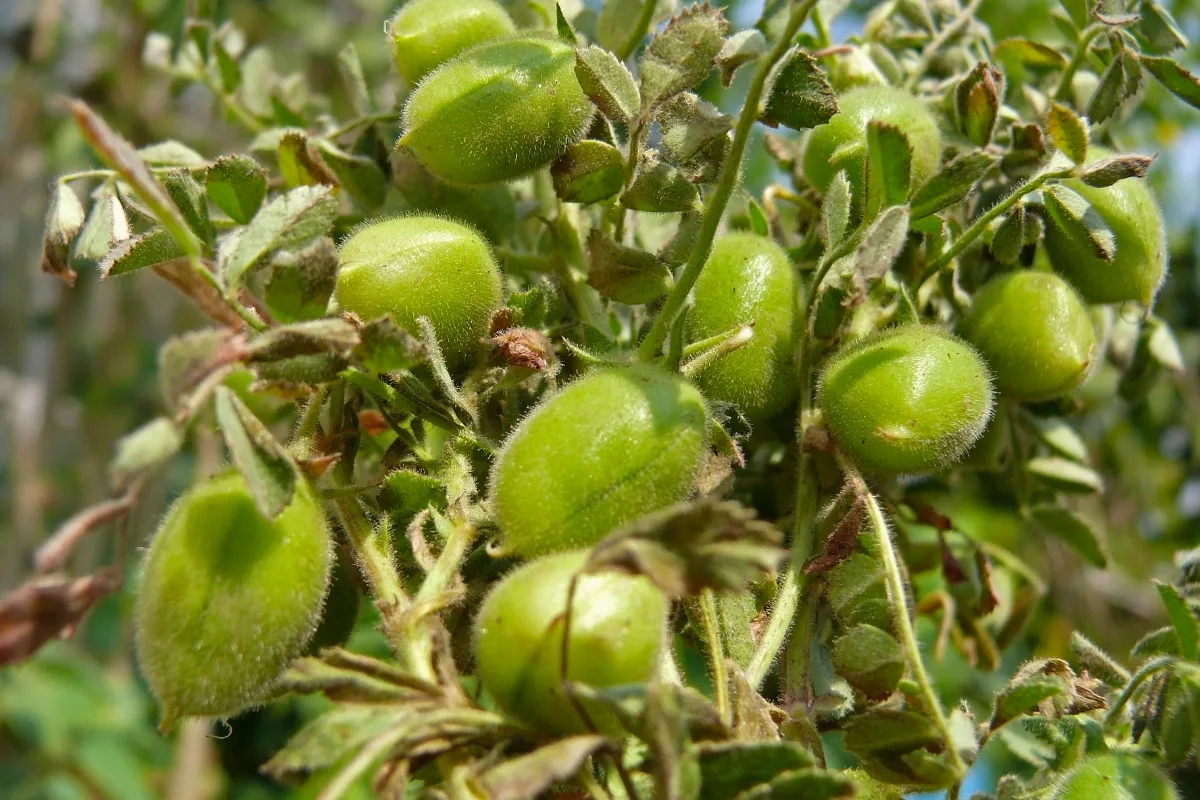
Chickpeas are cool-season legumes with small pea-like flowers followed by short pods that usually hold one or two seeds. You can pick the beans green or let them mature for a dry harvest. They grow best with plenty of sun, free-draining soil and a mild, relatively dry growing season.
- Grows well in
- Tropical, Subtropical, Temperate, Cool / mountains, Arid / inland, Mediterranean
- Lifecycle
- Cool-season annual pulse crop
- Light
- Full sun
- Mature size
- Usually about 30–60 cm tall and 30–45 cm wide, forming a low, branching bush
- Spacing
- About 10–20 cm between plants; allow wider rows or extra space in humid districts for airflow
- Growth habit
- Low, branching annual legume with finely divided leaves, small pea-like flowers and short seed pods
- Native range
- South-eastern Türkiye to Iran
- Natural habitat
- Temperate and semi-arid open ground, rocky slopes and scrub.
When to plant
Tropical
April–June
Subtropical
April–July
Temperate
April–July
Cool / mountain
August–October
Arid inland
April–July
Mediterranean
April–June
Grow chickpeas through the cooler, drier part of the year. In tropical and subtropical districts, sow for the dry-season crop once intense summer rain has eased. Temperate, Mediterranean and many arid districts generally sow from autumn into winter; very cool areas may need later sowing so seedlings are not exposed to prolonged severe frost.
Planting
Direct-sow chickpeas where they are to grow because seedlings do not need transplanting. Sow into moist, well-prepared soil and avoid sites where water sits after rain. If chickpeas or compatible pulses have not been grown in the soil before, use a chickpea-specific rhizobial inoculant so the roots can form effective nitrogen-fixing nodules. Protect emerging seed from birds, mice and other seed-eaters where these are a problem.
Position and light
Full sun is best. Give plants an open position with good airflow, particularly in districts with cool or humid weather during the growing season.
Soil
Free-draining loam, clay loam or sandy loam is suitable. Chickpeas generally perform best in neutral to mildly alkaline soil and are less suited to strongly acidic or poorly drained ground. They work with compatible rhizobial bacteria in root nodules to fix nitrogen from the air, so they do not need a nitrogen-rich bed.
Watering
Water to establish seedlings, then water deeply when the root zone is becoming dry. Chickpeas tolerate drier conditions better than saturated soil, but prolonged moisture stress during flowering and pod fill can reduce the crop. Avoid overhead watering where Ascochyta or other foliar diseases are a concern.
Feeding
Usually very little nitrogen is needed. Compost before sowing is enough in many garden soils, while phosphorus or other nutrients are only useful where the soil is deficient. If plants remain pale and root nodules are absent or ineffective, check inoculation and soil conditions rather than automatically adding a high-nitrogen fertiliser.
Pruning
No routine pruning is needed. Remove badly diseased plants and dispose of infected material rather than leaving it among healthy plants. At the end of the crop, healthy roots and residues can be cut down or composted.
Harvest
For fresh green chickpeas, pick plump pods while they are still green and shell them soon after harvest. For dry chickpeas, leave pods on the plant until they are tan and dry and the seeds are hard, then cut or pull the plants and finish drying them under cover if rain threatens. Shell only when the pods and seed are fully dry for storage.
Propagation
Grow from seed. Chickpeas are usually direct-sown rather than raised as seedlings. Seed saved from healthy open-pollinated plants can be replanted, but avoid keeping seed from crops affected by serious seed-borne disease.
Common problems
Ascochyta blight is the most important disease to watch for and spreads readily in cool, wet conditions; lesions can occur on leaves, stems and pods. Botrytis grey mould and root diseases can also occur where crops stay damp. Aphids, native budworm, birds and mice may damage plants or seed. Rotate chickpeas away from previous pulse crops and avoid crowding to reduce disease pressure.
Safety notes
Chickpea allergy can occur, as with other legumes.
Worth knowing
Chickpeas are sold mainly as desi and kabuli types. Desi types usually have smaller, darker, more angular seed, while kabuli types are generally larger and paler. Chickpea does not “make its own nitrogen”: compatible bacteria living in root nodules fix atmospheric nitrogen in partnership with the plant, and some of that nitrogen can return to the soil through roots and crop residues.
Grow Chickpea with Brancho
Add it to My Garden and Brancho works out what it needs next, timed for your climate.
How it grows around Australia
Growing this too? Share what you've noticed in your garden.
Grow a Little Wild
New plants to try, useful growing tips and a few garden jobs based on what you grow.