


Plant profile
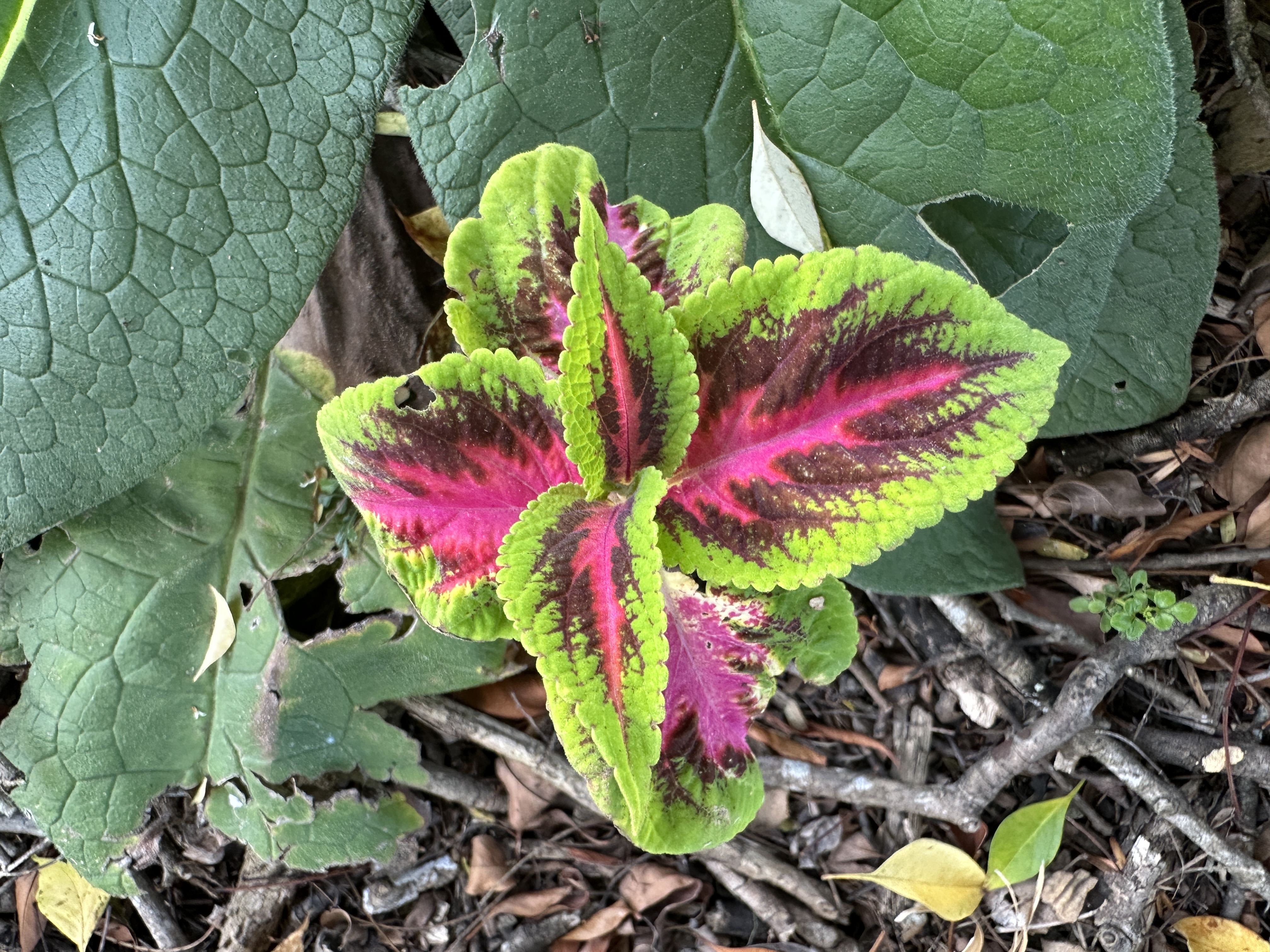
Coleus
Coleus scutellarioides
Also known as Painted nettle, Solenostemon, Plectranthus scutellarioides.
Coleus is the fastest way to get colour into a shady spot. Cuttings root in a glass of water, plants fill out in weeks, and pinching the tips keeps them bushy instead of lanky.
- Grows well in
- Tropical, Subtropical, Temperate, Arid / inland
- Lifecycle
- Tender perennial, grown as a summer annual in cool areas
- Light
- Part shade, Shade, Full sun
- Mature size
- 30 to 90 cm tall and wide, depending on variety and pinching
- Spacing
- 30 to 45 cm apart
- Growth habit
- Soft, branching, mounding bush with square stems
- Native range
- Mainland South-East Asia through the Malay Archipelago to the Ryukyu Islands of southern Japan, and northern Australia
- Natural habitat
- Wet tropical forest, woodland margins and shaded rocky places.
When to plant
Tropical and subtropical: most of the year, best in the warm months. Temperate: mid-spring to summer. Cool: after the last frost only.
Full growing guide
How to Grow Coleus Plants in Australia
Coleus can stay dense and colourful for months if the light is right. Learn how to pinch, water and propagate plants without losing their best colour.
Read the full growing guidePlanting
Plant once the cold has gone and the soil has warmed. In tropical and subtropical gardens coleus can go in most of the year. In temperate and cool areas plant from mid-spring, after the last frost, and treat it as a summer plant. Pots and hanging baskets suit it well.
Position and light
Most types colour best in bright shade or morning sun. Newer sun-tolerant varieties handle full sun if they get enough water, but hot afternoon sun scorches leaves on the older shade types. Deep shade gives leggy growth and dull colour.
Soil
Rich, free-draining soil with compost dug through. In pots use a quality potting mix and do not let it dry to dust.
Watering
Water regularly through the warm months. Coleus wilts fast when dry and usually recovers, but repeated wilting costs you leaves. Pots may need water daily in summer heat.
Feeding
Feed lightly and often. A liquid feed every two to three weeks in the growing season keeps the leaves large and coloured. Heavy feeding gives soft growth that flops.
Pruning
Pinch the growing tips every few weeks to keep the plant bushy. Pinch off flower spikes as they appear if you want leaves rather than seed. Letting it flower is fine, but growth slows and the plant tires sooner, so it is a trade-off rather than a mistake.
Harvest
Grown for foliage, not food. Leaves are not eaten.
Propagation
Cuttings root easily. Take a tip about 10 cm long, strip the lower leaves and put it in water or damp mix in a warm, bright spot. Roots usually show in one to two weeks. Take cuttings in autumn to carry favourite colours through winter indoors in cold areas.
Common problems
Leggy stems mean not enough light or no pinching. Scorched pale patches mean too much hot sun. Slugs and snails chew young plants. Mealybug and whitefly turn up on indoor plants. Cold nights below about 10 degrees cause blackened, collapsing growth.
Safety notes
Coleus is listed as toxic to dogs, cats and horses, and the sap can irritate skin. Not for eating.
Worth knowing
Coleus is short-lived, and that is fine. Take fresh cuttings each year instead of nursing an old woody plant, and you keep the same colours from season to season. Coleus scutellarioides also occurs naturally in northern Australia, although cultivated forms are grown much more widely.

Grow Coleus with Brancho
Add it to My Garden and Brancho works out what it needs next, timed for your climate.
How it grows around Australia
Growing this too? Share what you've noticed in your garden.
Grow a Little Wild
New plants to try, useful growing tips and a few garden jobs based on what you grow.