
Plant profile
Croton
Codiaeum variegatum
Also known as garden croton.
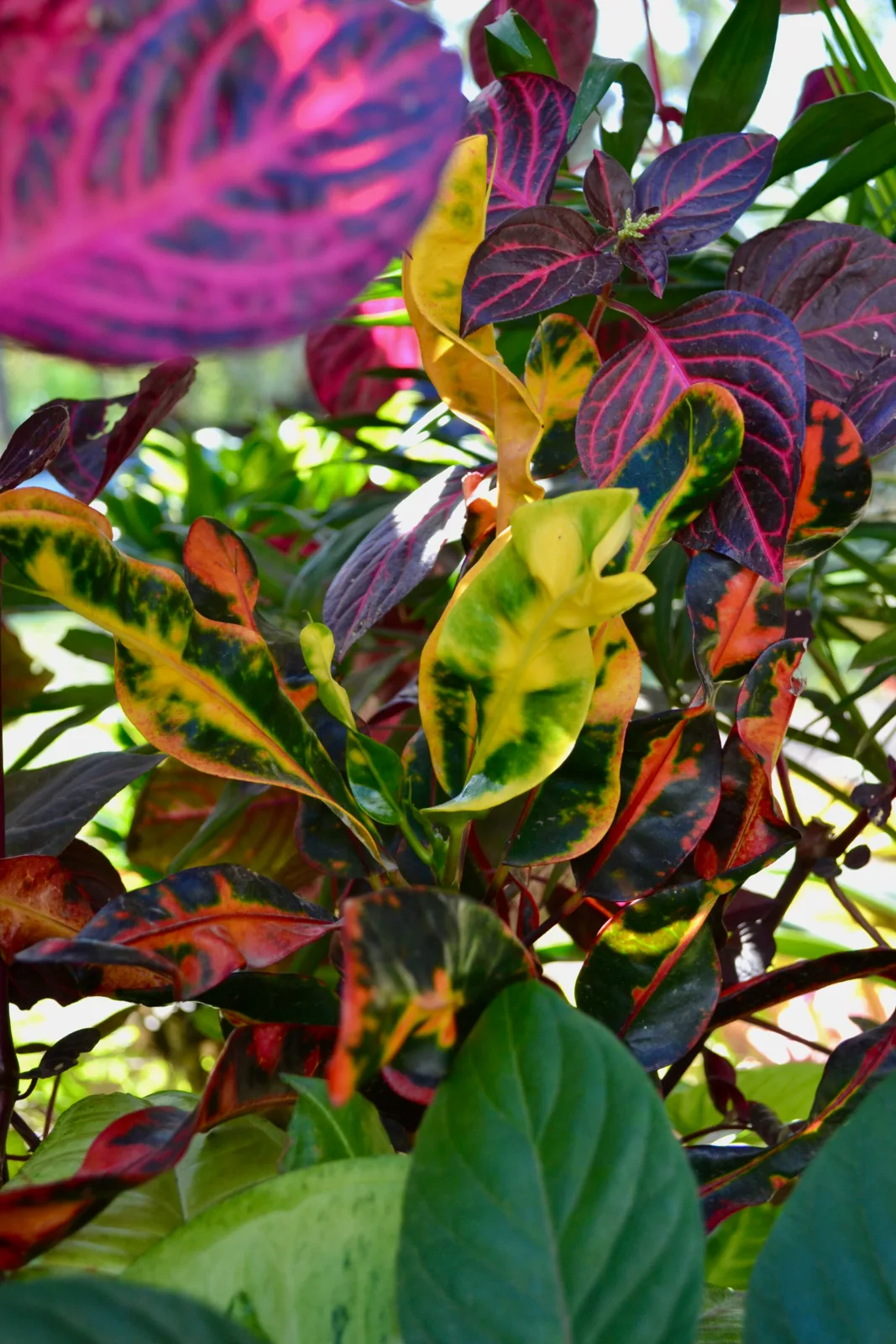
Croton is a warm-climate evergreen shrub grown for thick, colourful leaves in green, yellow, orange, red, pink and deep burgundy. The species is native to Queensland as part of a wider Malesian–south-west Pacific range, while garden crotons are highly selected cultivars. Outdoors they suit tropical and subtropical gardens; indoors they need strong light to hold their colour.
- Grows well in
- Tropical, Subtropical, Temperate
- Lifecycle
- Evergreen tropical shrub
- Light
- Full sun, Part shade
- Mature size
- Usually about 1–3 m tall outdoors, depending on cultivar and pruning; container plants are commonly kept around 0.5–1.5 m
- Spacing
- About 0.8–1.5 m apart for most garden cultivars; allow more room for large forms or closer spacing for a clipped foliage screen
- Growth habit
- Branching evergreen tropical shrub with thick leathery leaves that vary widely in shape and colour between cultivars
- Native range
- Malay Archipelago to the south-western Pacific, including Queensland
- Natural habitat
- Wet tropical forest and humid woodland.
When to plant
Tropical
August–April
Subtropical
September–March
Temperate
October–February
Tropical and subtropical: plant through the warm part of the year when regular water is available. Temperate: plant or repot in spring once nights are warming, and protect plants from cold and frost.
Planting
Plant crotons during warm weather into fertile soil that drains freely. Keep the root ball at the same depth it was in the pot and mulch around the plant without piling material against the stems. In cooler districts, a large pot is useful because you can move the plant into a warmer, brighter position when temperatures drop.
Position and light
Crotons colour best in strong light. In tropical and subtropical gardens, full sun to bright part shade works well, although some cultivars keep cleaner foliage with protection from the harshest afternoon sun. Indoors, use the brightest position you can provide without suddenly moving a shade-grown plant into intense direct sun. Low light usually produces greener, more open growth.
Soil
Use fertile, free-draining soil with plenty of organic matter. Crotons grow well in rich tropical garden soil but decline where water sits around the roots. In pots, use a quality potting mix with good drainage rather than garden soil.
Watering
Water regularly through warm active growth, then let excess water drain. Established garden plants cope with some dry weather, but repeated drying can cause leaf drop and poor growth. Indoor and container plants need less water when conditions are cool or light levels are low. Check the mix before watering again rather than using a fixed schedule.
Feeding
Feed during active growth with a complete controlled-release fertiliser or a dilute liquid feed. Garden plants in good soil usually need less than container plants. If colour is poor, check light first rather than assuming the plant needs more fertiliser.
Pruning
Tip-prune young plants to encourage branching, or shorten tall bare stems during warm weather to bring growth lower down the plant. Crotons usually reshoot below a cut. Wear gloves when pruning because the milky sap can irritate skin and eyes.
Harvest
Croton is grown for foliage rather than food. Cut stems can be used as short-lived decorative foliage indoors, but handle the sap carefully and keep cut material away from children and pets that chew plants.
Propagation
Stem cuttings and air layering are the usual ways to copy a named cultivar. Take semi-hardwood cuttings during warm weather, keep them humid and bright, and use a free-draining propagation mix. Gardening Australia also demonstrates rooting croton cuttings in water before potting them on.
Common problems
Spider mites can leave leaves finely speckled, while mealybugs and scale feed on stems and leaf joints, especially on indoor plants. Leaf drop can follow cold weather, sudden changes in light or very dry soil. Constantly wet potting mix can affect the roots. If new leaves look much greener than older ones, the plant may need brighter light rather than more fertiliser.
Safety notes
Croton sap can irritate skin and eyes, and the plant should not be eaten. Gloves are useful when pruning.
Worth knowing
The garden croton is Codiaeum variegatum, not a member of the separate Croton genus. The species is native to Queensland as well as parts of Malesia and the south-west Pacific, but the colourful plants in gardens are selected cultivars and can look very different from wild material. Leaf shape varies from broad and oak-like to narrow, twisted or interrupted forms.
Grow Croton with Brancho
Add it to My Garden and Brancho works out what it needs next, timed for your climate.
How it grows around Australia
Growing this too? Share what you've noticed in your garden.
Grow a Little Wild
New plants to try, useful growing tips and a few garden jobs based on what you grow.