
Plant profile
Curry plant
Helichrysum italicum
Also known as curry herb, curry plant herb, Helichrysum italicum.
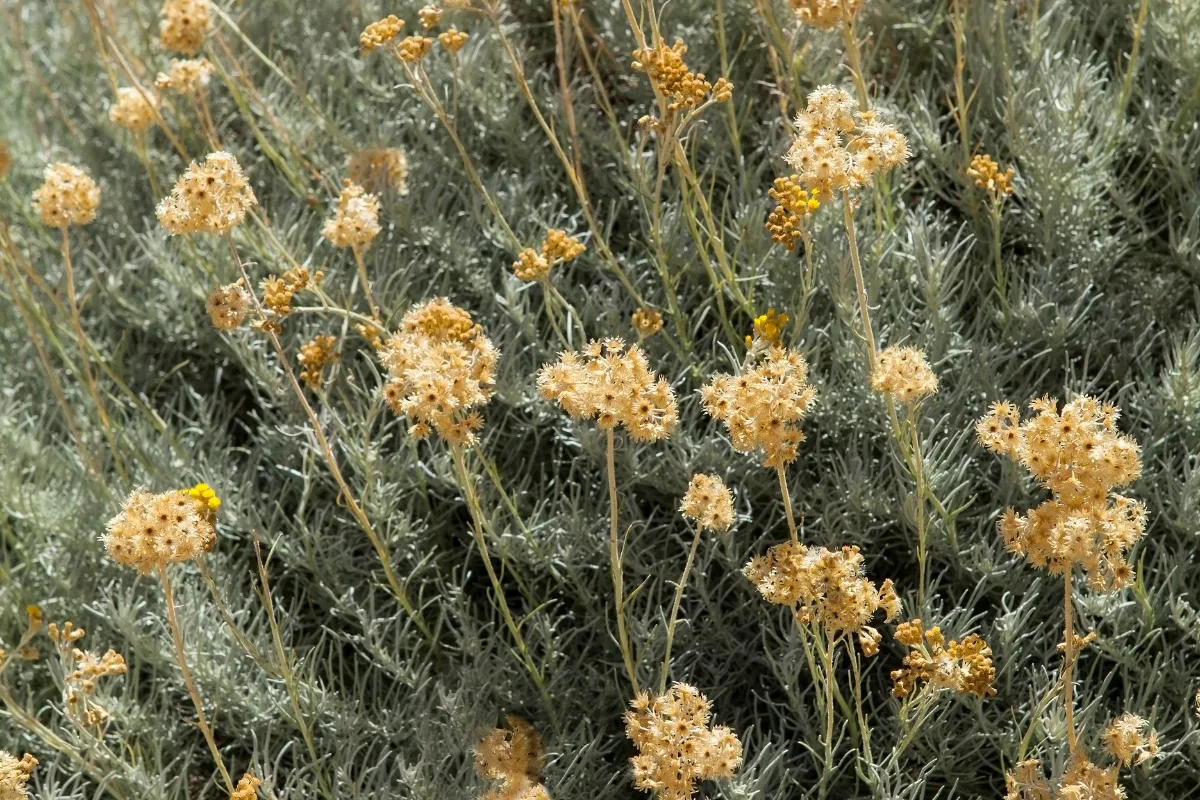
Curry plant is the silver-leaved Mediterranean herb that releases a strong curry-like scent when you brush the foliage. The narrow grey leaves and small yellow flower heads also make it an attractive dry-garden plant. It is not the curry leaf tree, and in humid gardens I would give it the driest, sunniest spot available.
- Grows well in
- Subtropical, Temperate, Cool / mountains, Arid / inland, Mediterranean
- Lifecycle
- Evergreen woody aromatic perennial
- Light
- Full sun
- Mature size
- Usually around 40–60 cm tall and 50–80 cm wide.
- Spacing
- About 45–60 cm apart.
- Growth habit
- Small woody mound of narrow silver-grey aromatic leaves with clusters of yellow button flowers.
- Native range
- Mediterranean region
- Natural habitat
- Dry Mediterranean scrub, rocky slopes and coastal ground.
When to plant
Subtropical
April–August
Temperate
March–May, September–November
Cool / mountain
September–November
Arid inland
March–May, September–November
Mediterranean
March–May, September–November
Autumn or spring planting suits temperate and Mediterranean districts. In subtropical areas, establish it in the cooler, drier season.
Planting
Plant high in very free-draining soil and give it full sun. In humid districts, a pot, raised bed or gravelly mound makes drainage much easier.
Position and light
Full sun keeps the plant compact and silver. Shade produces softer, looser growth and slower drying after rain.
Soil
Lean, gritty, sharply drained soil suits it. Avoid rich, moisture-retentive beds.
Watering
Water while establishing, then let the soil dry between drinks. Established plants handle drought far better than wet roots.
Feeding
Feed sparingly. A light spring feed is enough in poor soil; heavy fertiliser creates soft growth.
Pruning
Trim after flowering or when stems become lanky, keeping cuts in leafy growth rather than bare old wood.
Harvest
Sprigs can be cut for aroma and cautious culinary use, but this is not the same plant as curry leaf tree and is not a direct substitute for Murraya koenigii.
Propagation
Take semi-ripe or softwood cuttings during active growth. Seed can also be used.
Common problems
Root rot and fungal dieback are the main problems in humid or wet soil. Woody open centres develop if plants are never trimmed.
Worth knowing
This is the plant that smells like curry; the leaves used as a major ingredient in Indian cooking come from the separate curry leaf tree, Murraya koenigii.
Grow Curry plant with Brancho
Add it to My Garden and Brancho works out what it needs next, timed for your climate.
How it grows around Australia
Growing this too? Share what you've noticed in your garden.
Grow a Little Wild
New plants to try, useful growing tips and a few garden jobs based on what you grow.