



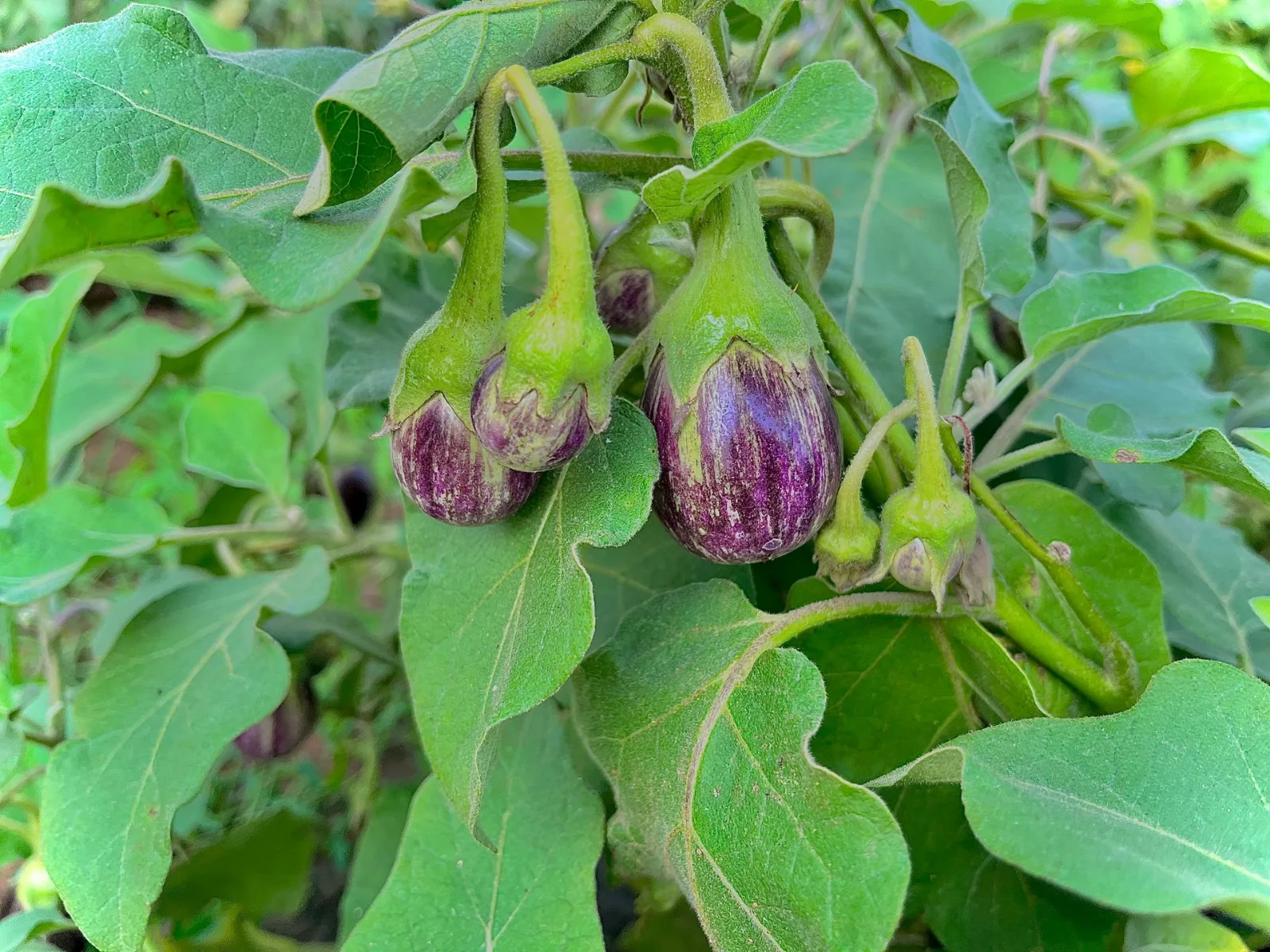
Plant profile
Eggplant
Solanum melongena subsp. melongena
Also known as Aubergine, Brinjal, Baingan.
Eggplant needs warmth and patience, then it crops for months. In frost-free gardens a healthy plant can carry through a second year and fruit earlier than any new seedling.
- Grows well in
- Tropical, Subtropical, Temperate, Arid / inland, Mediterranean
- Lifecycle
- Warm-season annual; perennial in frost-free gardens
- Light
- Full sun
- Mature size
- 60 cm to 1.2 m tall
- Spacing
- 50 to 70 cm apart
- Growth habit
- Bushy upright plant with large leaves, often with small spines on stems and calyx
- Native range
- An ancient cultivated form originating from Yunnan in southern China through mainland South-East Asia
- Natural habitat
- The cultivated eggplant comes from warm, wet tropical regions rather than having one clearly defined wild habitat.
When to plant
Tropical
March–August
Subtropical
August–December
Temperate
October–December
Arid inland
September–November
Mediterranean
September–December
Tropical: dry season, roughly March to August. Subtropical: spring, and again in late summer. Temperate and mediterranean: plant out after the last frost, from mid-spring. Arid: spring, with shade cloth in extreme heat.
Planting
Start seed in punnets in a warm spot six to eight weeks before the soil warms up, or buy seedlings. Plant out only once nights are mild, because cold checks the plant and it takes weeks to recover. Stake at planting, since a loaded plant leans over.
Position and light
Full sun.
Soil
Rich, free-draining soil with plenty of compost. Do not plant where you grew tomatoes, capsicum, chilli or potatoes last season.
Watering
Deep, regular watering. Uneven watering causes bitter fruit and blossom end rot. Mulch well to even it out.
Feeding
Compost at planting, then a potassium-leaning fertiliser every three to four weeks once the first flowers show. Too much nitrogen gives a big bush and little fruit.
Pruning
Remove the lowest leaves for airflow. Pinch the tip when the plant is about 60 cm to encourage branching. In frost-free areas cut the plant back by half at the end of the season and it will crop again the following year.
Harvest
Pick when the skin is glossy and the fruit gives slightly when pressed. Dull skin and hard seeds mean it stayed on too long. Cut the stem with secateurs rather than pulling. Regular picking keeps new fruit setting.
Propagation
From seed, which needs warmth to germinate. Cuttings also strike from soft growth in warm weather.
Common problems
Twenty-eight spotted ladybird chews lacy patterns in the leaves; pick them and their larvae off. Fruit fly stings the fruit in most of Australia, so use exclusion bags or netting where it is a problem. Aphids and whitefly on new growth. Verticillium wilt in soil with a history of tomato family crops, which is why rotation matters.
Safety notes
Eggplant is in the nightshade family. The fruit is eaten cooked; the leaves and stems are not food.
Worth knowing
Salting eggplant is mostly unnecessary with modern varieties, which are far less bitter than they used to be. Picking the fruit young matters more.

Grow Eggplant with Brancho
Add it to My Garden and Brancho works out what it needs next, timed for your climate.
How it grows around Australia
Growing this too? Share what you've noticed in your garden.
Grow a Little Wild
New plants to try, useful growing tips and a few garden jobs based on what you grow.