
Plant profile
Heliconia rostrata
Heliconia rostrata
Also known as Hanging lobster claw, Lobster claw.
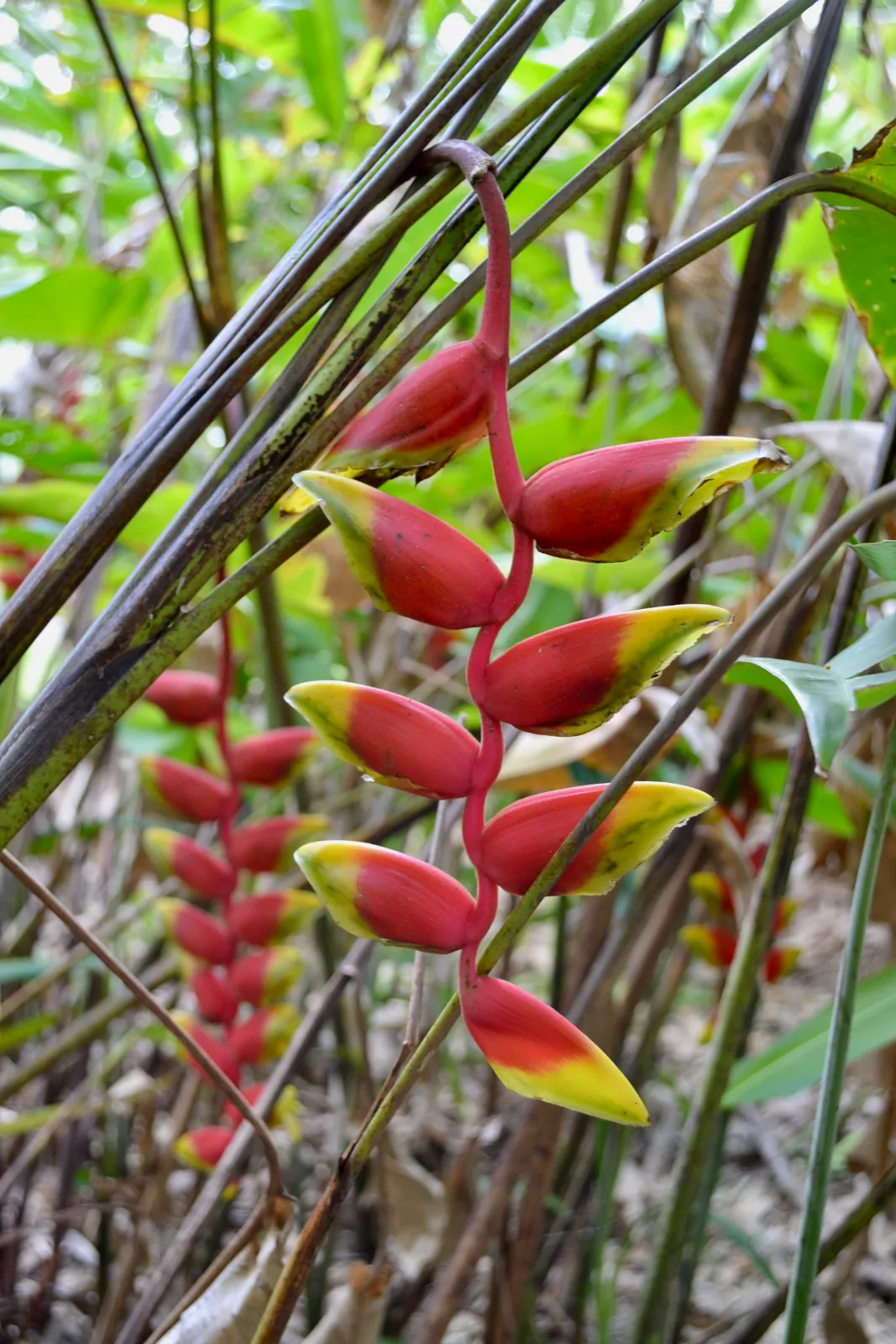
Heliconia rostrata is the classic hanging lobster-claw heliconia, with long pendulous red-and-yellow bracts below tall leafy stems. It grows best in warm, sheltered tropical and subtropical gardens with rich soil, regular moisture and good drainage. Give the clump room to widen and protect the large leaves from strong wind.
- Grows well in
- Tropical, Subtropical
- Lifecycle
- Tropical rhizomatous flowering perennial
- Light
- Full sun, Part shade
- Mature size
- About 1.5–2.5 m tall and 1.5 m or more wide
- Spacing
- About 1–1.5 m apart
- Growth habit
- Clumping rhizomatous perennial with upright leafy pseudostems and long pendulous flower spikes
- Native range
- Western South America: Bolivia, Colombia, Ecuador and Peru
- Natural habitat
- Wet tropical forest, forest margins and streamside areas.
When to plant
Tropical
September–April
Subtropical
September–December
Plant through the warm growing season in the tropics. In subtropical areas, spring to early summer gives the clump time to establish before cool weather.
Planting
Plant rhizomes or nursery plants into rich, free-draining soil and leave room for the clump to widen. Protect young plants from strong wind.
Position and light
Full sun to part shade in a warm sheltered position. Part shade often keeps the foliage cleaner in very hot exposed gardens.
Soil
Rich, moisture-retentive but free-draining soil with plenty of organic matter.
Watering
Keep moisture consistent through active growth. Water deeply in dry weather rather than giving frequent shallow splashes.
Feeding
Top-dress with compost and use a balanced fertiliser during warm active growth if the soil is not already rich.
Pruning
Cut finished flowering stems and badly damaged old stems close to the base so new shoots have room.
Harvest
Flower stems can be cut for arrangements once the bracts are well coloured.
Propagation
Divide rhizomes, keeping healthy roots and at least one strong shoot or bud with each division.
Common problems
Frost damage, wind-torn leaves and rhizome rot in poorly drained soil are the main problems.
Worth knowing
The colourful hanging structure is made up of bracts; the true flowers are much smaller and sit inside them. Each leafy stem flowers once, then can be cut at the base after the display finishes while new shoots replace it. Heliconia rostrata has hanging flower bracts; upright heliconias may be other species or hybrids with different sizes and growth habits.
Grow Heliconia rostrata with Brancho
Add it to My Garden and Brancho works out what it needs next, timed for your climate.
How it grows around Australia
Growing this too? Share what you've noticed in your garden.
Grow a Little Wild
New plants to try, useful growing tips and a few garden jobs based on what you grow.