
Plant profile
Heliconia 'Dwarf Jamaican'
Heliconia stricta 'Dwarf Jamaican'
Also known as Dwarf Jamaican heliconia.
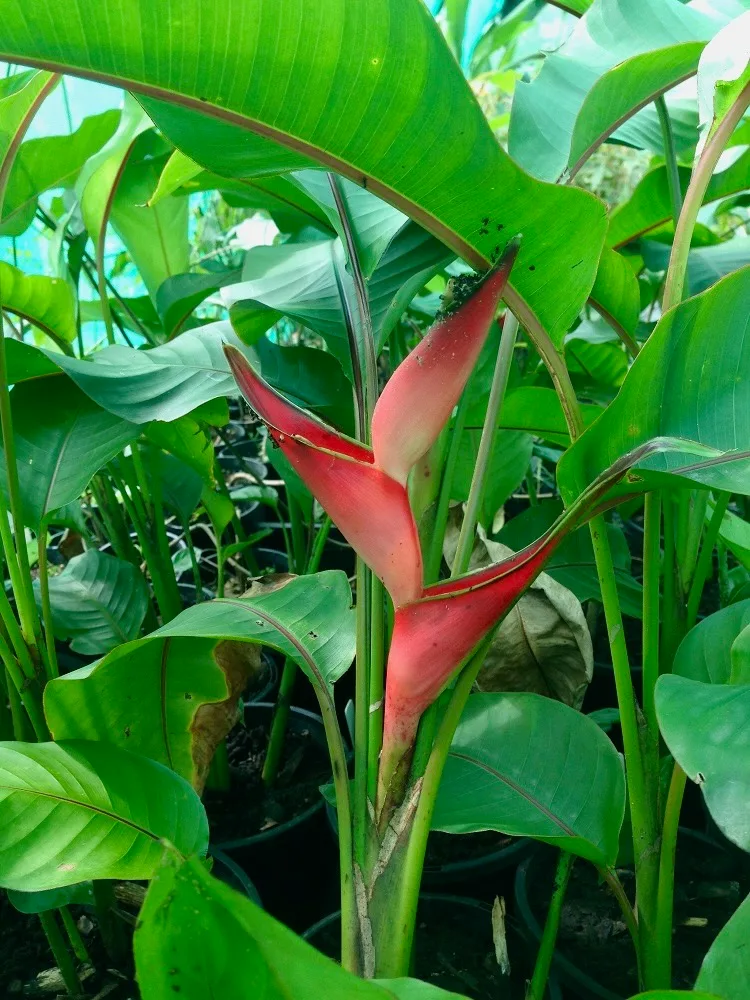
Heliconia 'Dwarf Jamaican' is a compact heliconia with upright pink-red bracts and banana-like leaves. Its small size makes it useful in pots and low tropical plantings.
- Grows well in
- Tropical, Subtropical
- Lifecycle
- Evergreen rhizomatous tropical perennial
- Light
- Part shade, Full sun
- Mature size
- Usually 40–90 cm high, forming a compact clump
- Spacing
- About 50–80 cm apart
- Growth habit
- Compact rhizomatous clump with upright leaves and flower bracts
- Native range
- Cultivar of Heliconia stricta, a species native to tropical South America
- Natural habitat
- Wet tropical forest, forest margins and moist streamside sites.
When to plant
Tropical
February–May, September–November
Subtropical
March–May, September–November
Temperate
September–November
Mediterranean
September–November
Tropical and subtropical: plant during warm weather with reliable moisture.
Planting
Plant rhizomes into rich free-draining soil and keep moisture steady while new shoots establish. Set the rhizome just below the surface with the growing points facing up, and allow room for the clump to widen sideways over several seasons.
Position and light
Part shade is ideal; it can take more sun with reliable water, though leaf edges can scorch in exposed, windy positions.
Soil
Rich, free-draining soil with plenty of organic matter. A slightly raised bed helps in heavy clay so the rhizomes are not sitting in saturated ground over winter.
Watering
Keep soil evenly moist through active growth. Mulch helps in hot weather. Growth slows over the cooler months, so ease back on watering then rather than keeping the soil wet while the plant is not actively growing.
Feeding
Feed during active growth with compost and a balanced fertiliser. Regular light feeding through the warm months suits it better than one heavy application, as flowering draws steadily on the rhizome's reserves.
Pruning
Remove spent flower stems and old damaged shoots at ground level.
Harvest
Flower stems can be cut for display. Cut the stem low on the plant once the bracts have opened fully, and the display will last well indoors.
Propagation
Divide rhizomes with healthy shoots and roots attached.
Common problems
Snails, caterpillars and leaf spotting can occur. Cold weather slows growth.
Worth knowing
This is a distinct plant from the tall Heliconia rostrata grown for hanging lobster-claw bracts, and the two are often confused in nurseries. The compact size makes it one of the few heliconias that suits a large pot on a warm sheltered patio, where the clump can be moved under cover through cold snaps. Bracts stay colourful for weeks on the plant and are long-lasting in a vase. Clumps build slowly from the rhizome and can stay in the same position for a long time before they need lifting.
Grow Heliconia 'Dwarf Jamaican' with Brancho
Add it to My Garden and Brancho works out what it needs next, timed for your climate.
How it grows around Australia
Growing this too? Share what you've noticed in your garden.
Grow a Little Wild
New plants to try, useful growing tips and a few garden jobs based on what you grow.