



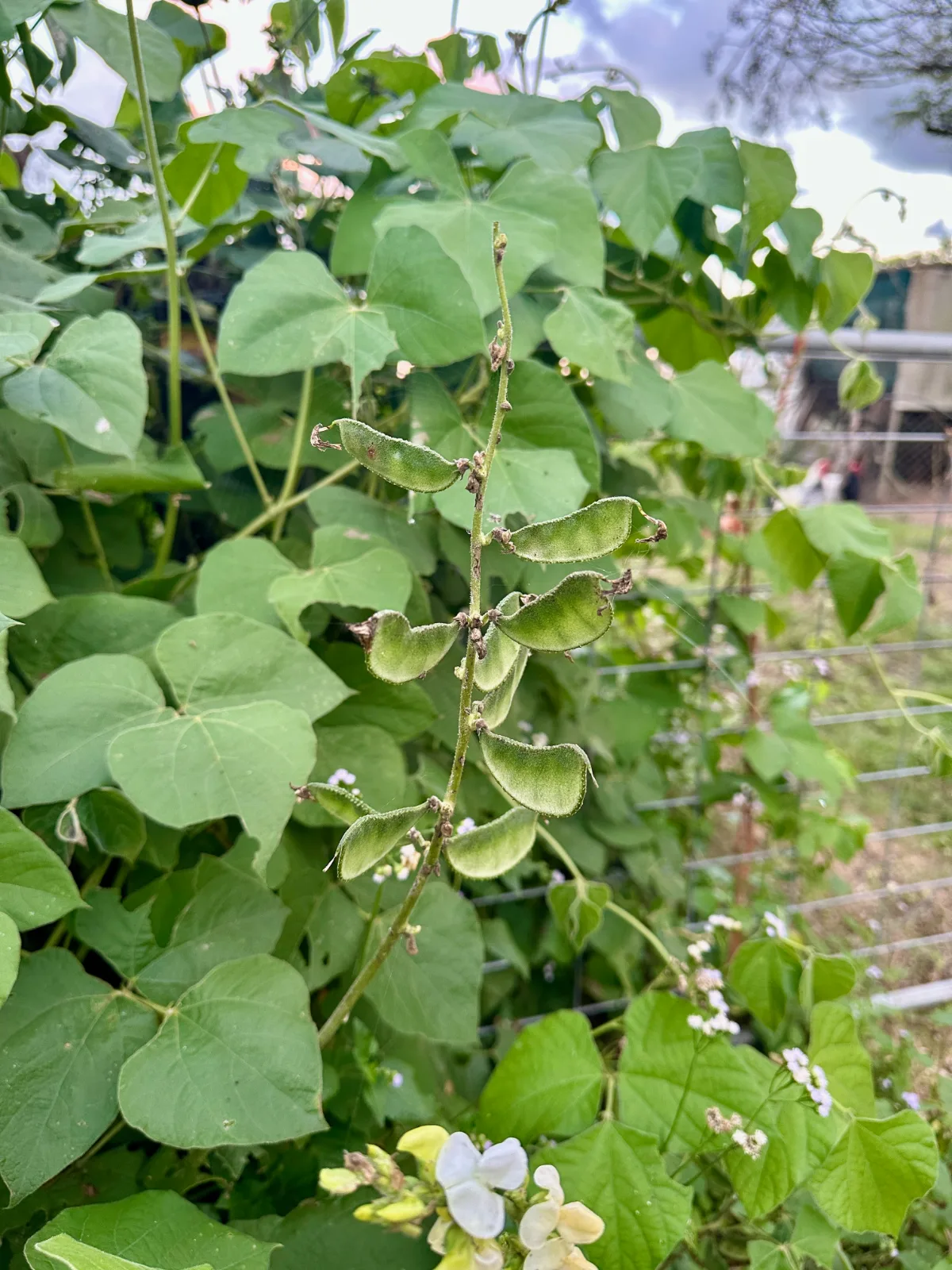
Plant profile
Lablab
Lablab purpureus
Also known as Hyacinth bean, Dolichos bean, Poor man's bean.
Lablab is a vigorous climbing bean that can cover a fence in a single warm season. It produces purple flowers and handles hot weather better than many common beans. Prepare it properly before eating, and read the safety notes before you cook it.
- Grows well in
- Tropical, Subtropical, Temperate, Arid / inland
- Lifecycle
- Climbing legume; annual in cool areas, perennial in warm
- Light
- Full sun
- Mature size
- 3 to 6 m of vine in a season
- Spacing
- 30 to 50 cm apart along a support
- Growth habit
- Twining climber with three-part leaves and purple or white flowers
- Native range
- Cape Verde, tropical and southern Africa, Madagascar and India
- Natural habitat
- Seasonally dry tropical woodland, grassland and forest margins.
When to plant
Tropical
September–January
Subtropical
September–December
Temperate
October–December
Arid inland
September–November
Tropical and subtropical: spring into the early wet. Temperate: late spring to early summer, after frost. Arid: spring with some water for establishment.
Planting
Sow lablab seed 2–3 cm deep directly where you want it to grow once the soil has warmed. Put a strong support in place before you sow. Lablab grows quickly and climbs well on fences, trellises and other sturdy structures.
Position and light
Full sun for flowers and pods. In shade you get a lot of vine and very little crop.
Soil
Any free-draining soil. Lablab handles relatively poor ground and, like other legumes, works with soil bacteria on its roots to fix nitrogen from the air.
Watering
Water while the plants are young and through flowering. Established vines handle dry weather well and are a good choice for a hot, dry summer.
Feeding
Very little. Compost at planting is enough. Extra nitrogen produces a mass of leaves and few pods.
Pruning
Cut it back whenever it outgrows its space, and it will regrow. Cut the whole vine back hard at the end of the season, or pull it out and dig the growth in as a green manure.
Harvest
Pick young flat pods while they snap easily and cook them thoroughly. Mature dry seed can be saved, but see the safety notes for how it must be prepared. Flowers and young shoots are used in some cuisines.
Propagation
From saved dry seed. Keep it dry and it stores well.
Common problems
All vine and no pods usually means too much nitrogen or not enough sun. Pod-sucking bugs and caterpillars show up in warm humid weather. Powdery mildew can coat the leaves late in the season. Pick up dropped pods if you do not want extra seedlings next season.
Safety notes
Raw and mature lablab beans contain cyanogenic compounds and are not safe eaten raw or undercooked. Young pods must be cooked properly. Dry mature seed must be soaked, the soaking water discarded, then boiled in fresh water until fully cooked, following a trusted recipe for this specific bean. Do not eat any part of an unknown ornamental lablab variety on the assumption it is food. Cases of poisoning have come from poorly prepared mature beans.
Worth knowing
Lablab is also grown as a stock forage and green manure crop in Australia, which is why the seed is easy to buy in bulk. Fodder varieties are bred for bulk, not eating quality, so choose a vegetable variety if you want food. My horses go crazy for Lablab! It needs protecting from livestock if you don't want them to wipe it out overnight.

Grow Lablab with Brancho
Add it to My Garden and Brancho works out what it needs next, timed for your climate.
How it grows around Australia
Growing this too? Share what you've noticed in your garden.

Grow a Little Wild
New plants to try, useful growing tips and a few garden jobs based on what you grow.