
- Grows well in
- Tropical, Subtropical, Temperate
- Lifecycle
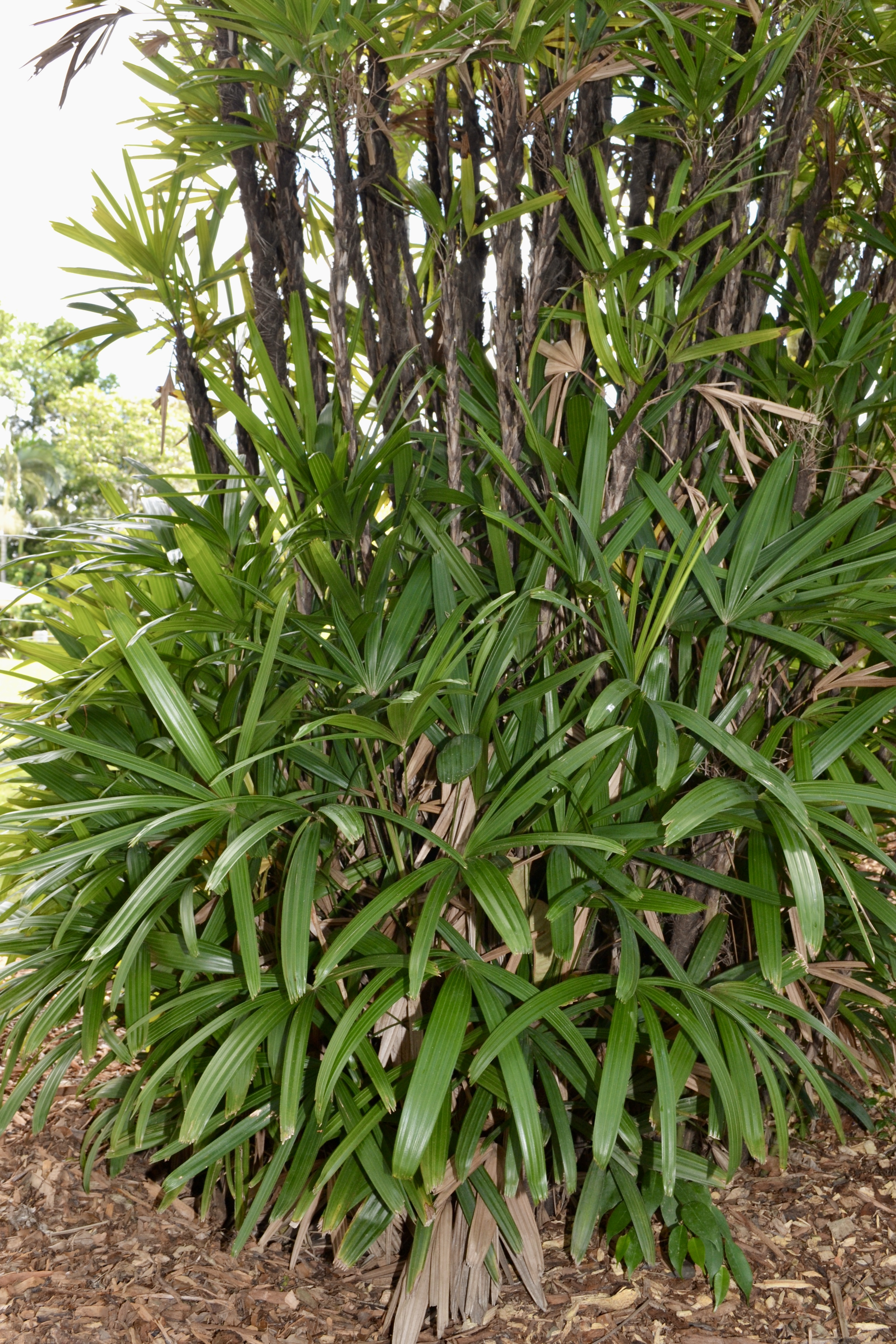
- Evergreen clumping palm
- Light
- Part shade, Shade
- Mature size
- Usually 2–4 m high outdoors, with clumps widening several metres over time
- Spacing
- About 1–2 m apart outdoors
- Growth habit
- Clumping fan palm spreading slowly by rhizomes and suckers
- Native range
- Guangdong in southern China to north-central Vietnam
- Natural habitat
- Wet tropical and subtropical forest understorey, including shaded rocky or limestone woodland.
When to plant
Tropical
February–May, September–November
Subtropical
March–May, September–November
Temperate
September–November
Mediterranean
September–November
Tropical and subtropical: plant most of the year with reliable moisture. Temperate: spring after cold weather.
Planting
Plant into free-draining soil or potting mix and keep evenly moist while the roots establish. Allow room for the clump to widen by suckers.
Position and light
Bright shade to part shade outdoors; bright indirect light indoors. Harsh afternoon sun can scorch the leaves.
Soil
Rich, free-draining soil or quality potting mix with regular organic matter.
Watering
Water when the upper soil begins to dry. Established outdoor clumps tolerate short dry periods better than potted plants.
Feeding
Use compost outdoors or a light palm fertiliser during active growth. Potted plants need lighter, regular feeding.
Pruning
Cut dead fronds and unwanted old canes close to the base. Thin crowded stems if you want a more open clump. Individual old canes can be cut at the base without taking down the whole clump. This is useful for thinning a dense screen while keeping younger stems intact.
Propagation
Divide rooted suckers from established clumps.
Common problems
Scale, mealybugs and spider mites can occur, especially indoors. Brown leaf tips often follow dry air, salt buildup or uneven watering.
Worth knowing
Rhapis excelsa forms a colony of slim stems rather than one trunk. That makes it easy to divide and useful where you want a leafy screen in shade. It is one of the more shade- and low-light-tolerant palms grown indoors in Australia, and long-lived potted specimens can be kept the same size for a long time by root pruning and repotting into the same pot.
Featured In
Grow Lady palm with Brancho
Add it to My Garden and Brancho works out what it needs next, timed for your climate.
How it grows around Australia
Growing this too? Share what you've noticed in your garden.
Grow a Little Wild
New plants to try, useful growing tips and a few garden jobs based on what you grow.