
Plant profile
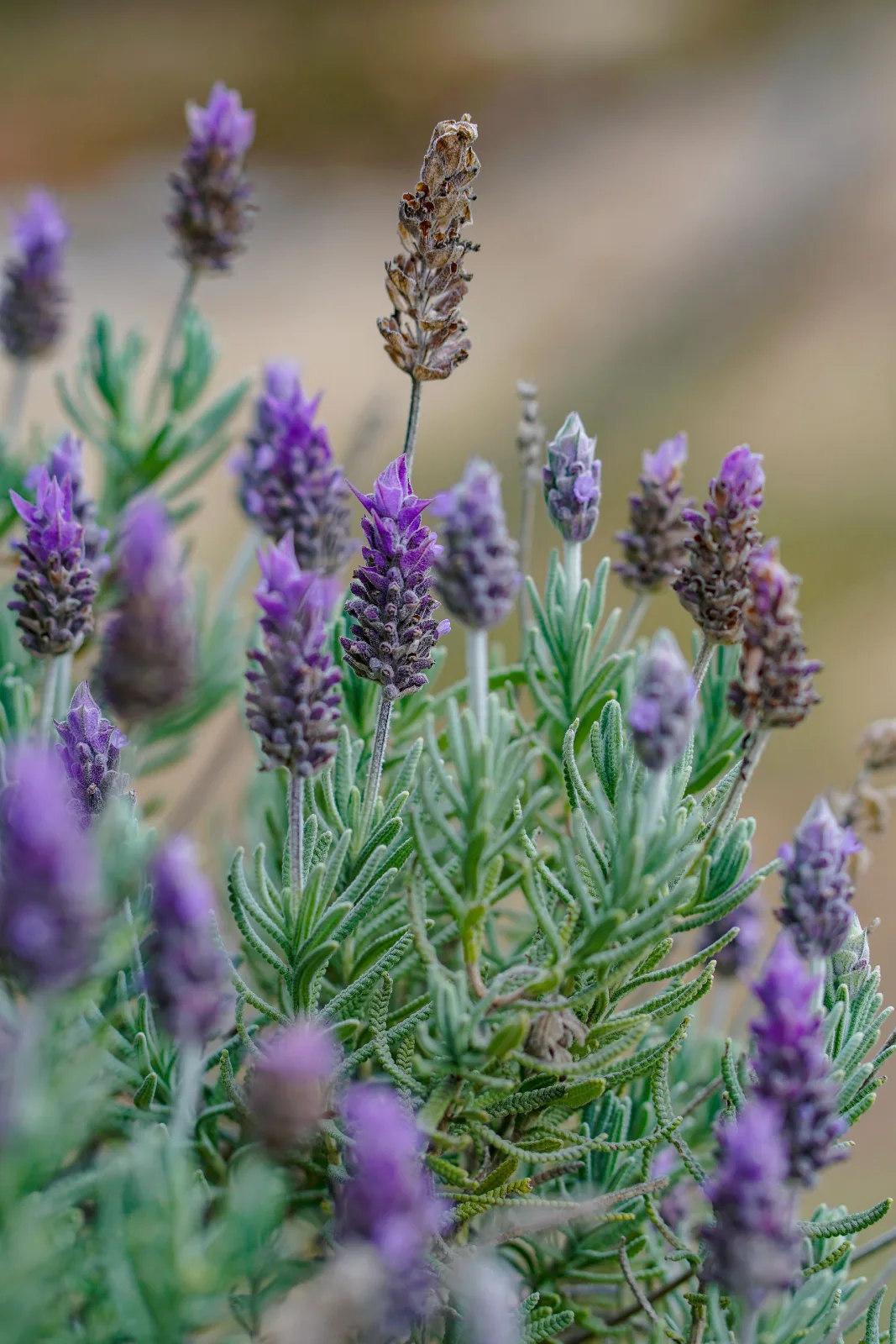
Lavender
Lavandula spp.
Lavender is a sun-loving woody perennial that needs excellent drainage and regular light pruning to stay compact.
- Grows well in
- Subtropical, Temperate, Cool / mountains, Arid / inland, Mediterranean
- Lifecycle
- Evergreen woody flowering perennial
- Light
- Full sun
- Mature size
- Most garden lavenders grow about 50 cm–1 m tall and wide, although compact and large cultivars vary considerably.
- Spacing
- About 50–75 cm apart for a dense hedge, or roughly 75 cm–1 m apart where you want individual shrubs to stay distinct.
- Growth habit
- Evergreen woody perennial forming a rounded aromatic shrub with upright flowering spikes.
- Native range
- Atlantic islands west of Europe and North Africa through the Mediterranean, north-eastern Africa and the Arabian Peninsula to India
- Natural habitat
- Dry Mediterranean scrub, rocky slopes, open woodland and sunny stony ground.
When to plant
Subtropical
March–June
Temperate
March–June, September–October
Cool / mountain
September–October
Arid inland
March–June, September–October
Mediterranean
March–June, September–October
Planting
Choose a lavender type suited to your climate and plant into full sun with excellent drainage. Keep the crown slightly proud of heavy soil and leave enough space between plants for airflow, especially in humid coastal districts.
Position and light
Full sun is essential for compact growth, strong fragrance and good flowering. Shaded plants stretch, flower less and are slower to dry after rain.
Soil
Use free-draining soil and avoid rich, water-retentive beds. Raised planting or gravelly, sandy amendments can help where native soil is heavy, but drainage across the whole root zone matters more than a small amended planting hole.
Watering
Water young plants while they establish, then allow the soil to dry between deep waterings. Established lavender handles dry conditions better than continually damp soil. In humid climates, avoid routine overhead watering late in the day.
Feeding
Lavender usually needs little feeding. A small amount of compost or low-nitrogen fertiliser is enough on poor ground; rich feeding produces soft growth and can shorten plant life in humid conditions.
Pruning
Trim after flowering to keep plants dense and avoid hard cuts into leafless old wood; a light shear over the whole bush encourages even new growth rather than a few long shoots.
Harvest
Cut flower stems as buds begin opening for drying, or leave them for pollinators.
Propagation
Take semi-hardwood or tip cuttings from healthy non-flowering growth to copy a good plant. Seed is useful for species and variable strains but will not reproduce named cultivars reliably.
Common problems
Root and crown rots, fungal leaf problems and woody open centres are the main garden issues. Humid coastal conditions and slow-draining soil increase disease pressure. Replace badly woody plants from cuttings rather than cutting hard into bare old stems and hoping every type reshoots.
Worth knowing
Lavenders differ significantly between English, French, Spanish and hybrid types, so climate suitability matters. Light pruning after flowering keeps the plant dense, but many types do not recover well from hard cuts into leafless old wood. Bees and other pollinators use the flowers heavily.
Grow Lavender with Brancho
Add it to My Garden and Brancho works out what it needs next, timed for your climate.
How it grows around Australia
Growing this too? Share what you've noticed in your garden.
Grow a Little Wild
New plants to try, useful growing tips and a few garden jobs based on what you grow.